Law
The landscape of the law in India
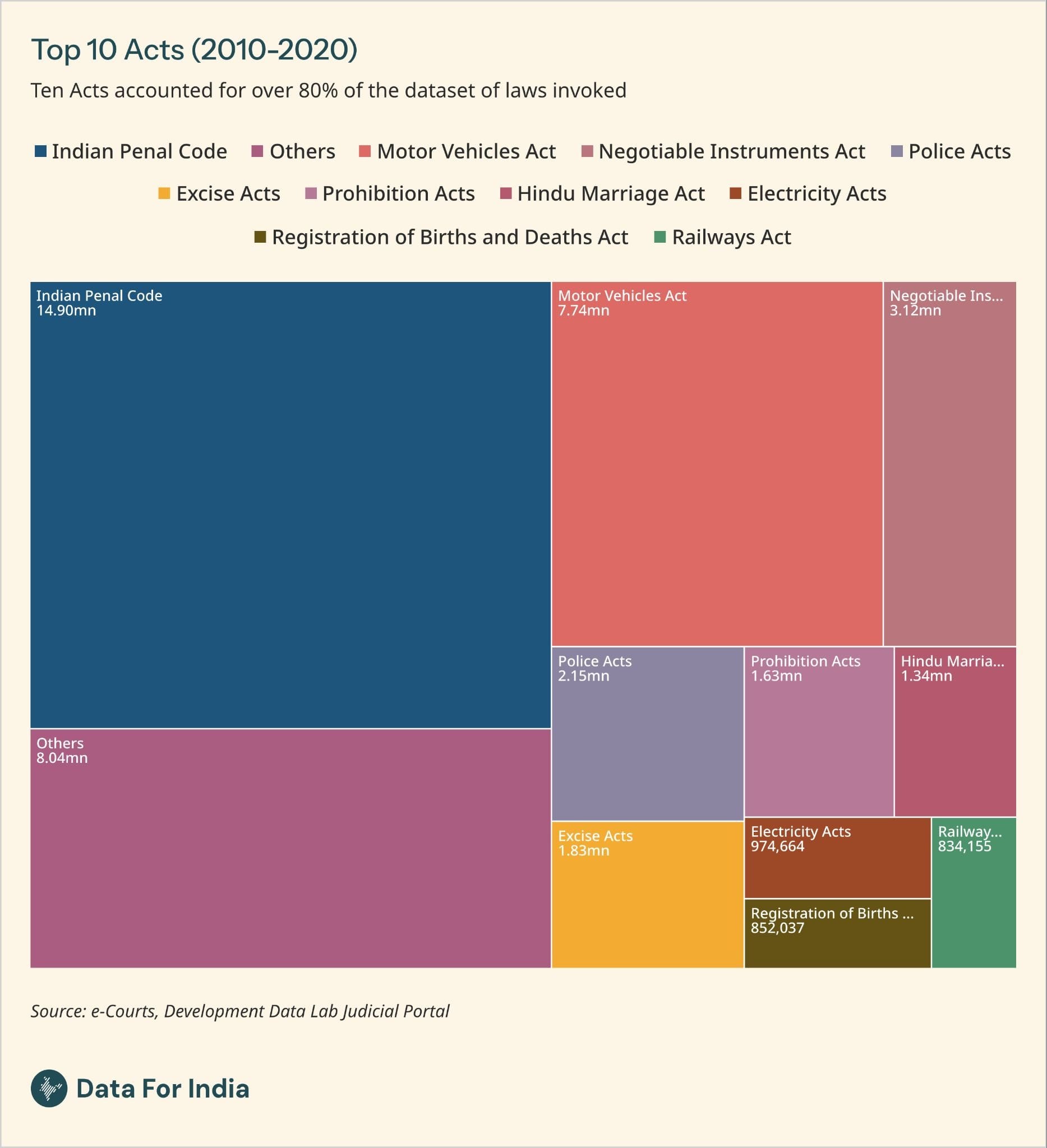
We analyse ten years of case records - over 43 million in all - from all of India's subordinate courts to provide a unique picture of the most commonly invoked civil and criminal laws in India.
You will receive a confirmation email shortly. Be sure to click the confirmation link to complete your subscription.
Please try again later.
Population
A child born in India today can expect to live much longer than her parents and grandparents. In this piece we examine what life expectancy is, how it has grown, and where inequalities in outcomes persist.
Measurement
In the absence of Indian poverty estimates for over a decade, the World Bank's estimates have become the key source of data for India. We track the methodological changes that underpin the Bank's new estimates, and their impact on Indian data.
India has reached a key demographic milestone - fertility in India is now below replacement levels. In India's southern and western states, fertility levels are now particularly low. Birth rates are projected to fall further.
India's relative youth has set it up for demographic and economic opportunities. But what is the demographic dividend, and is India still in a position to take advantage of it?
The number of children who do not survive until their first birthdays has fallen dramatically. Yet parts of the country have relatively high Infant Mortality Rates, and the first week of a child's life remains a time of high risk.
Indian children are among the shortest in the world. While the rates of child stunting have declined over time, a substantial share of Indian children, especially in poorer states and among marginalised groups, are stunted.
In June 2025, the World Bank revised its global poverty lines, producing new estimates for the levels of poverty in India and the rest of the world. In this piece, we look at the different poverty lines, their impact on poverty numbers for India, and how they were constructed.
Most of India's manufacturing workforce is in the unorganised sector, working in small, family-run units. In this piece we look at the size and scale of unorganised manufacturing in the country, what these units make and whom they employ.
There has been a steady increase in the share of Indian families who live in safe and durable houses. The way durability is defined affects the numbers, and variations are driven not just by wealth, but also by geographical factors.
Household ownership of computers in India remains low, particularly in rural India. The share of Indian adults who report being able to use a computer is also growing very slowly.
A higher education is seen as a pathway to better jobs and wages. We examine the work that India's 140 million graduates do, and whether having a higher education is a guarantee of better employment.
One economic activity - tailoring - has come to play a significant role in Indian manufacturing, transforming women's employment in the sector in particular. We look at the growth of this activity, what tailoring work looks like, and what it means for India's manufacturing sector.
India's Periodic Labour Force Survey is a vital source of employment data, and drives research and policy. We track changes in its methodology and their implications, key uses of the dataset, and important debates around its methodology and findings.
Capturing the true situation of manufacturing employment in India is a vital part of understanding its economy. We examine the implications of using different data sources to track manufacturing.
Our full range of articles organised by topic