One of independent India's most remarkable successes has been the vast improvement in its life expectancy. In 1950, a child born in India could expect to live only until the age of 41, while a child born in the United Kingdom the same year could expect to live to 69 years. By 2024, not only had life expectancy in India gone up to 72 years, but the gap between India and the UK had also narrowed substantially, to now being less than a decade apart.
Life expectancy at birth is the average number of years a newborn would live if they were exposed to the sex- and age-specific death rates prevailing at that time. This is a hypothetical measure that assumes current mortality rates will remain constant throughout the individual's life, providing a snapshot of a population's overall health and mortality conditions at that time.
Data for India and other countries from 1950 to 2024, and projections from 2024 to 2100, come from the World Population Prospects, 2024 Revision, published by the United Nations Population Division. Data for rural and urban India, and for Indian states, comes from India's Sample Registration System's Abridged Life Tables.[1]
Life expectancy has risen steadily in India. The only recent time that life expectancy in India slid backwards was during the COVID-19 pandemic, when life expectancy fell in most countries, reflecting the prevailing health conditions at the time. By 2022, life expectancy was back to its pre-pandemic levels, and on the path to growth once again.
Life expectancy at different age groups
Life expectancy at birth is a crude measure, because it averages the death rates for all age groups in a population to produce an estimate of how long a child born in that year could live if the death rates remain unchanged. But if the life expectancy at birth in India is now 72, it doesn't mean that a 70-year-old can only expect to live two more years.
Life expectancy at a particular age is affected by what mortality rates at that age are.
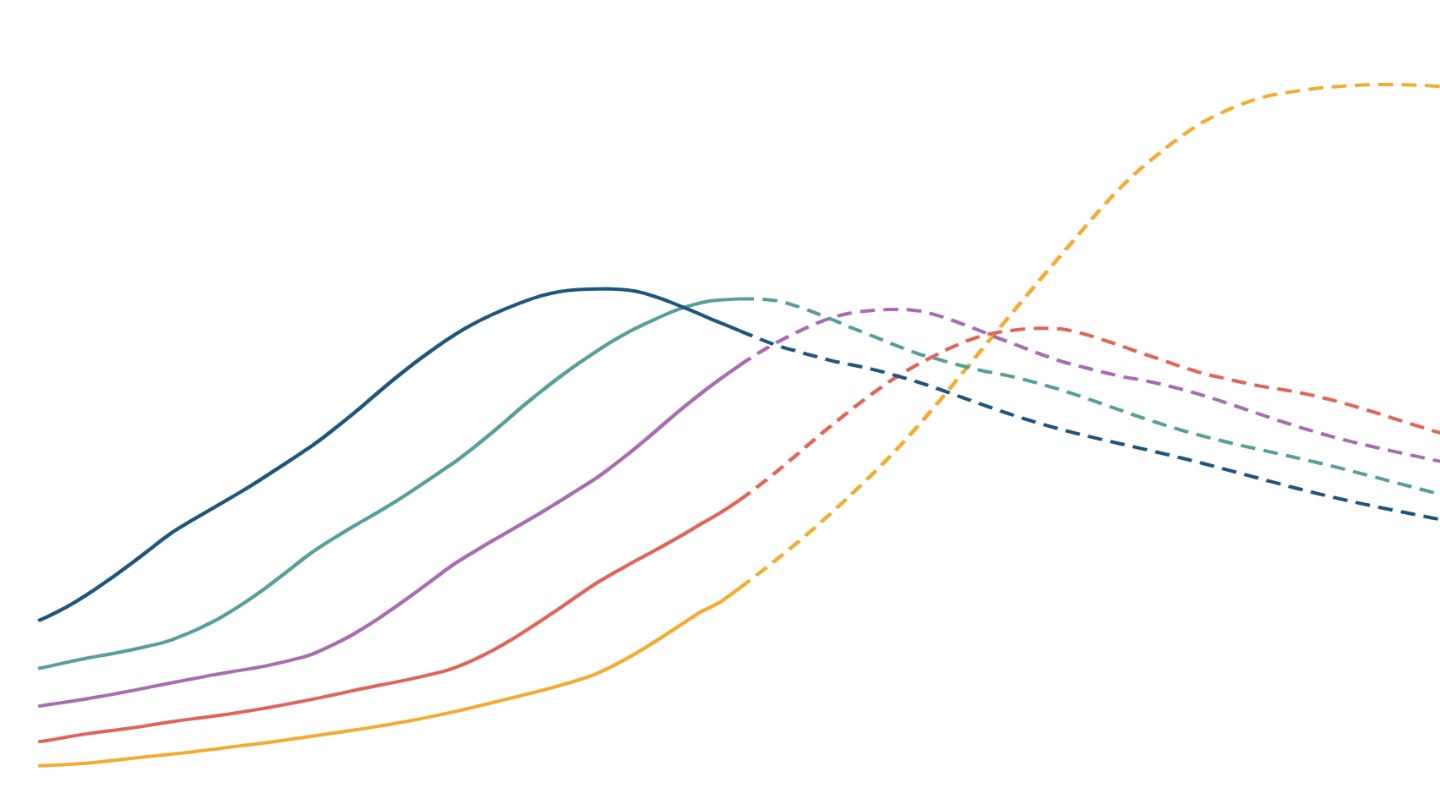
In India, as in most developing countries, mortality rates are high among infants and young children. As a result, life expectancy increases substantially once a person has successfully made it through early childhood. While life expectancy at birth in India is now 72 years, a 15-year-old today can expect to live to be nearly 75. An Indian who has already made it to age 65 can expect to live to be over 81.
Moreover, life expectancy is a snapshot indicator - today's 15-year-old will see her life expectancy grow over time.
Life within India
The expectation of life is not uniform across the country. There is a significant urban advantage, with an urban Indian expected to live three years longer than a child born in rural India.
Despite improvements across the country, there are also significant inter-state differences in life expectancy - a child born in Kerala in 2021 can expect to live ten years longer than a child born in Chhattisgarh today.
India's belated female advantage in life expectancy
Across the world, women tend to live longer than men, owing to a combination of biological and social factors - girls are more likely to survive infancy and younger childhood than boys for largely biological reasons. In young adulthood, men are more likely to succumb to accidental deaths; and in old age, men are likely to have higher mortality rates from non-communicable diseases, in part on account of differences in health behaviours.
However this global trend did not hold true in India in the first few decades of Independence. In the 1950s, Indian men lived longer than women. That male advantage was reversed only in the early 1980s. By 2024, a newborn girl could expect to live more than three years longer than a boy born in the same year.
This female advantage in life expectancy is also large and well established only in India's richer states. In India's poorer states, the female advantage in life expectancy is relatively small and newer.
This is partly explained by the fact that the female advantage in survival appears only in adulthood in India; age-specific death rates from India's Sample Registration System show us that death rates are largely equal for boys and girls in infancy, childhood and young adulthood. As a result, India's relatively younger states with higher infant and child populations are yet to see this female advantage.
[1] The SRS Abridged Life Tables produce estimates each year for five overlapping years: 2017-2021, 2018-2022, 2019-2023 for example. Data For India uses the mid-year for each report. The most recent report was for 2019-2023, and Data For India uses it to produce regional estimates for 2021.