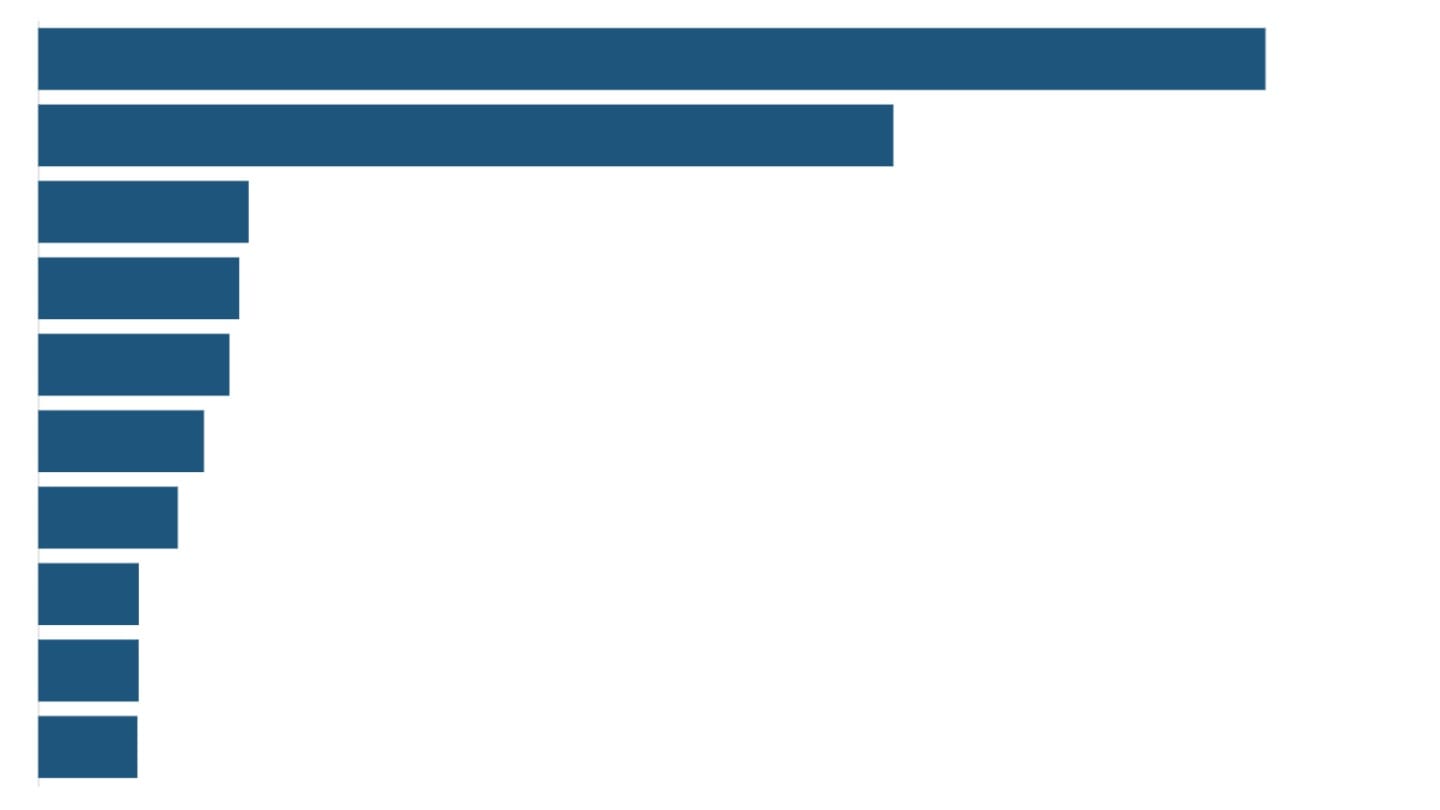
Since the first mobile phone call in India was made in 1995, the rapid uptake of mobile phones and mobile internet has transformed the way Indians communicate, learn, work and shop. .
Rise of the mobile phone
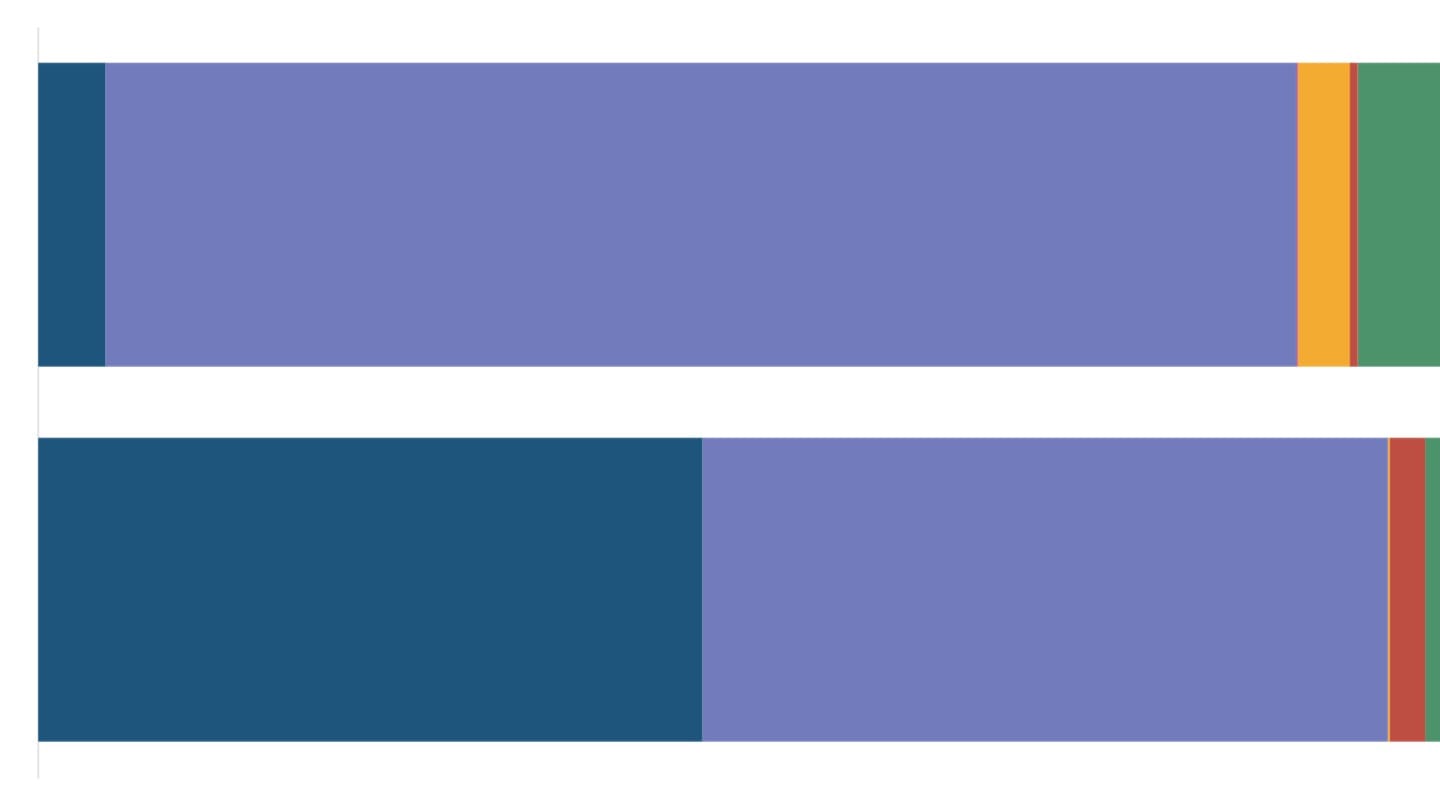
India has had landline phones for over 100 years, but their ownership remained limited. Only 7% of Indian households owned a landline phone in 1999. Household ownership of landlines increased to 14% of households by 2005, when it peaked.[1] By 2023, less than 1% of Indian homes had landline phones.[2]
Mobile phone ownership, on the other hand, took off rapidly, and democratised phone ownership in a way that landline phones were never able to. In 2008, there were 346 million registered mobile SIM cards in India. Between 2008 and 2018, this number more than tripled, and has remained about the same since.
There are now over 1.1 billion active SIM cards[3] in India for a population of 1.4 billion people.[4] With 81 mobile connections for every 100 people in 2024, India ranked 136th out of 162 countries in terms of mobile phone penetration.[5]
Mobile phone connections exploded across the globe after the 2000s. Not only richer countries, but even poorer countries had reached the level of having 100 mobile connections per 100 people by the early 2020s. Vietnam and Bangladesh are among the countries where the number of SIM cards exceeds the national population. Globally, too, there are now more SIM cards than the number of people. That, however, is not yet the case in India.[6]
The number of registered mobile SIM cards in a country may capture the number of mobile phones in the population as a whole, but it does not capture how many people use mobile phones and who they are.
For instance, even in a country with 100 SIM cards for every 100 persons, some individuals may own more than one SIM card while some others may not be using phones at all. Additionally, mobile phones used by businesses count towards the number of active SIM cards, but do not contribute towards individual ownership of phones.
The gap between registered SIM cards and actual phone use is filled in through data generated from national household surveys, some of which record information by directly asking households what they own and whether they use it.
Mobile phone usage in India
To understand how many people actually use phones and who they are, we look at a nationally representative sample survey of over a million people conducted by the NSO. The Comprehensive Annual Modular Survey asked respondents about their mobile phone and internet usage.
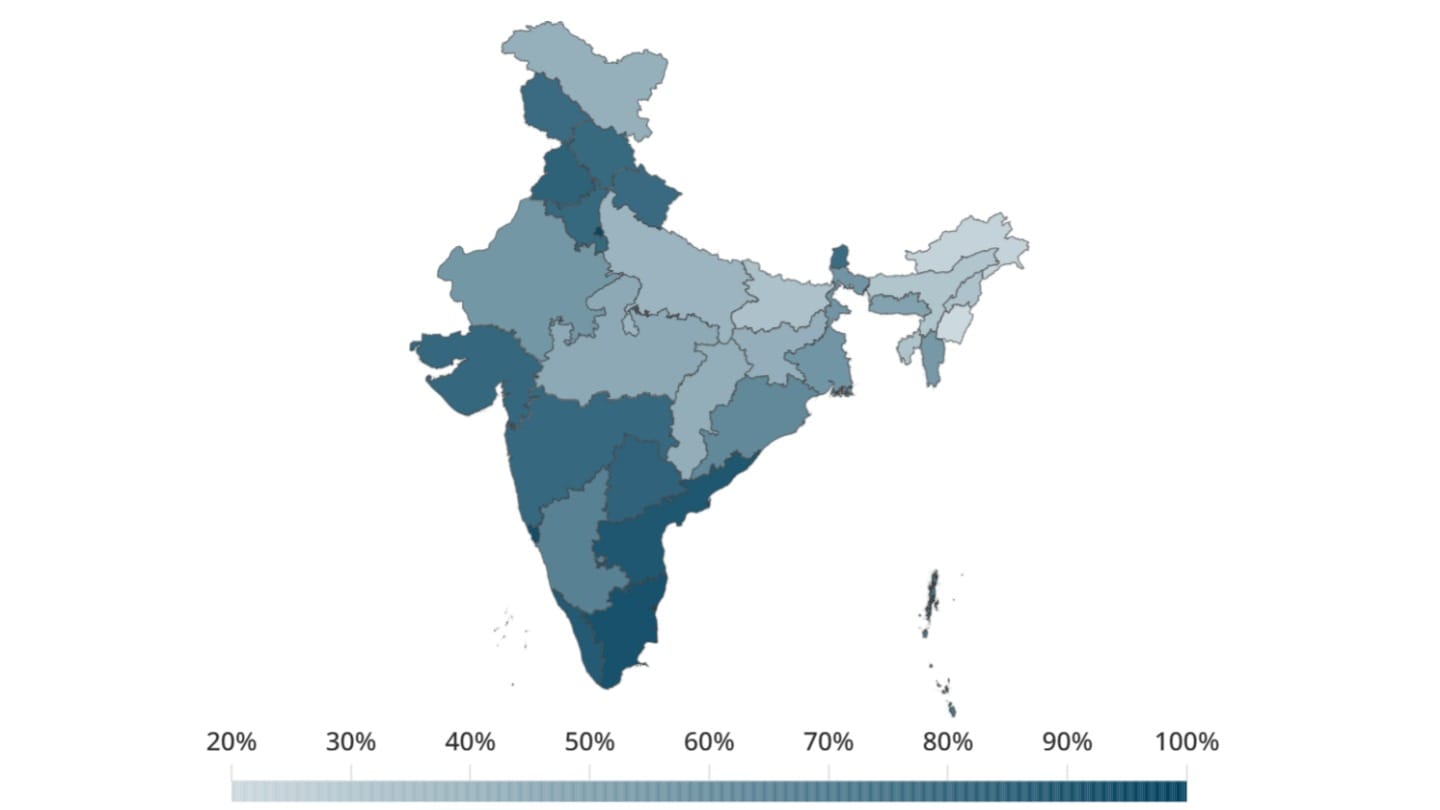
The survey asked respondents whether they had used a mobile telephone with an active SIM card at any point during the three months preceding the survey. 85% of adults or about 850 million people reported that they had.[7]
Rates of phone usage were slightly lower among women: about eight in ten women had used phones as against over nine in ten men.
A majority of Indian phone users share their phone with a family member, and are not exclusive users of the device. Sharing of mobile phones is more likely among women than among men.
As of 2023, about 15% of Indians above the age of 15, or roughly 150 million people, said that they had not used a phone in the three months preceding the survey.
The non-usage of mobile phones at the individual level is not on account of a lack of access at the household level. Nine in ten people who do not use a phone live in households that own a mobile phone.[8]
The difference between those who use phones and those who do not use the phone can be explained using a few demographic and socioeconomic factors. Education and age, in particular, show a substantial impact on phone use.
Phone usage is the least common among the illiterate. An illiterate person is only half as likely to use a mobile phone as a person with basic education. On the other end of the spectrum, nearly all Indians with a higher education use a mobile phone.
Phone usage is nearly universal among young people, but drops with age. The gender gap in phone usage also widens with age. A 20-year-old woman may be as likely to have used a mobile phone as a 20-year-old man, but less than 50% elderly women use phones against 70% of elderly men.
Phone usage is lower in rural areas and in poorer households. However even among the poorest 20% of Indians, three in four individuals report using a mobile phone.
Access to the internet
The rise of mobile phones also powered the spread of internet availability in India. In the ten years from 2014 to 2024, India added nearly 900 million mobile broadband connections, but only 30 million wired internet connections.
There were around one billion mobile broadband internet subscribers in India in 2024.[9] This number of broadband subscriptions is close to the adult population (15+ years) in the country. This does not, however, mean that all adults are internet subscribers.
Similar to mobile phone ownership and use, household surveys also record information on internet access and usage. They point towards similar expansion of household-level internet access. Just 2% of homes in India had internet access in 2009. But as mobile phones became ubiquitous and mobile broadband entered the space, the pace of internet access accelerated. By 2014, nearly three in ten homes had internet access, and by 2023, about eight in ten homes were connected to the internet.[10]
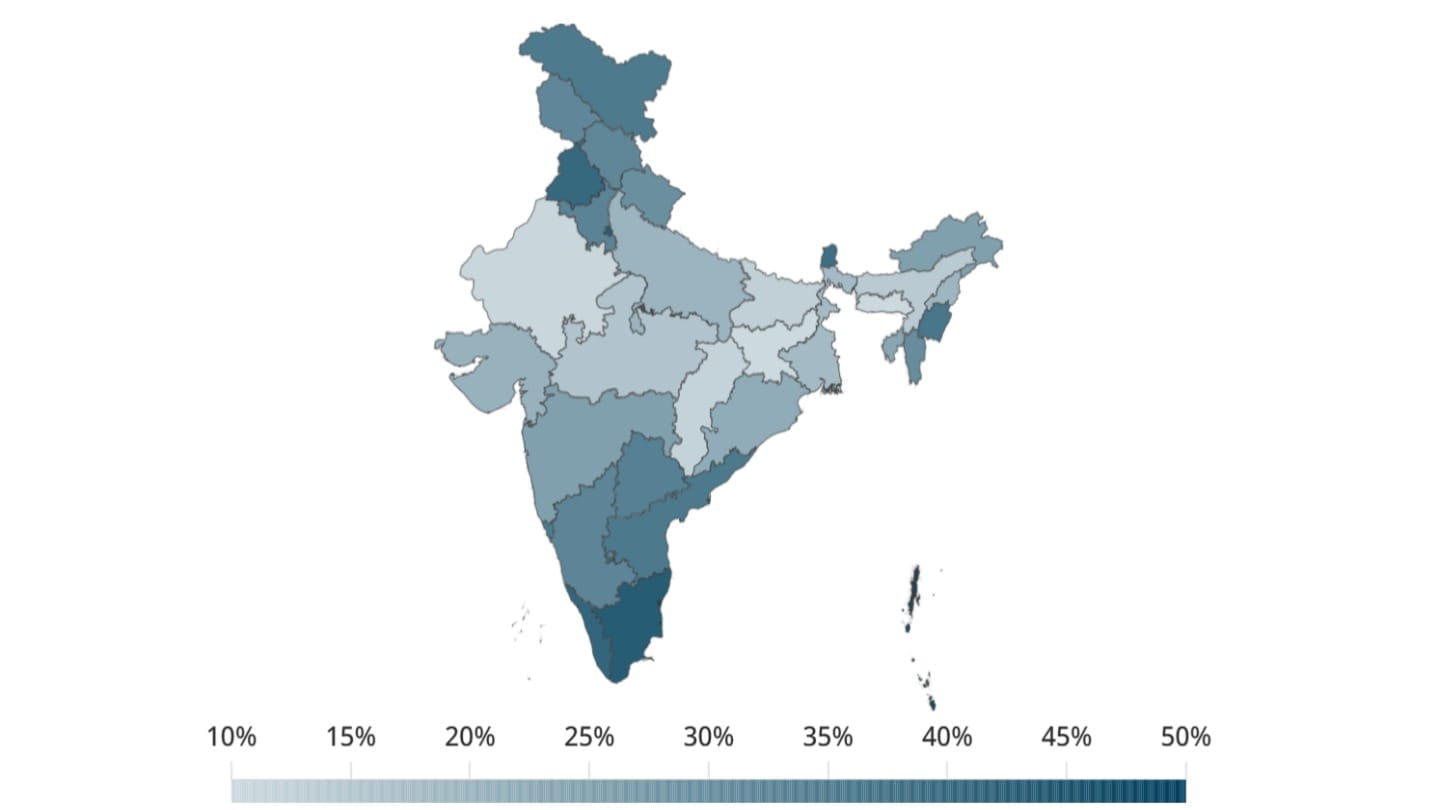
Alongside household access, the usage of the internet has risen too. As of 2023, six in ten Indians had used the internet at least once in the three months preceding the survey.[11]
This level of internet use puts India below the median country, or in the lower half, in the list of 160 countries for which comparable data is available. India ranks roughly 100th of 160 countries.[12]
Similar to mobile phone use, internet usage is also higher among younger, male urban, better educated and richer Indians. While more than two-thirds of men had used the internet, only half of women had.
The effects of education and age are particularly strong. For instance, while four in five Indians in their teenage and early twenties use the internet, only two in five Indians above the age of 60 use it.
The digitally disconnected
Although phones are the primary way of accessing the internet, not everyone with a mobile phone uses the internet. More than a third of women who use phones do not use the internet.
A small, and shrinking, share of Indians have used neither a phone nor the internet recently. While fewer than one in ten men had used neither the phone nor the internet, more than one in five women had not used either.
Those who had neither used the phone nor the internet tended to be elderly or were more likely to belong to poorer households.
Pandemic-driven changes in the trajectory
The global coronavirus pandemic accelerated technology adoption in India. In just the three years between 2020 and 2023, phone usage rose from 70% of adults to 85%.[13]
Driving this dramatic increase in phone use is the uptake among children and teenagers. Among children between the ages 5 and 14, one in six reported having recently used a mobile phone in 2020, but by 2023, this had risen to nearly four in six children. Teenagers are now more likely to have used the internet recently than people in their forties.
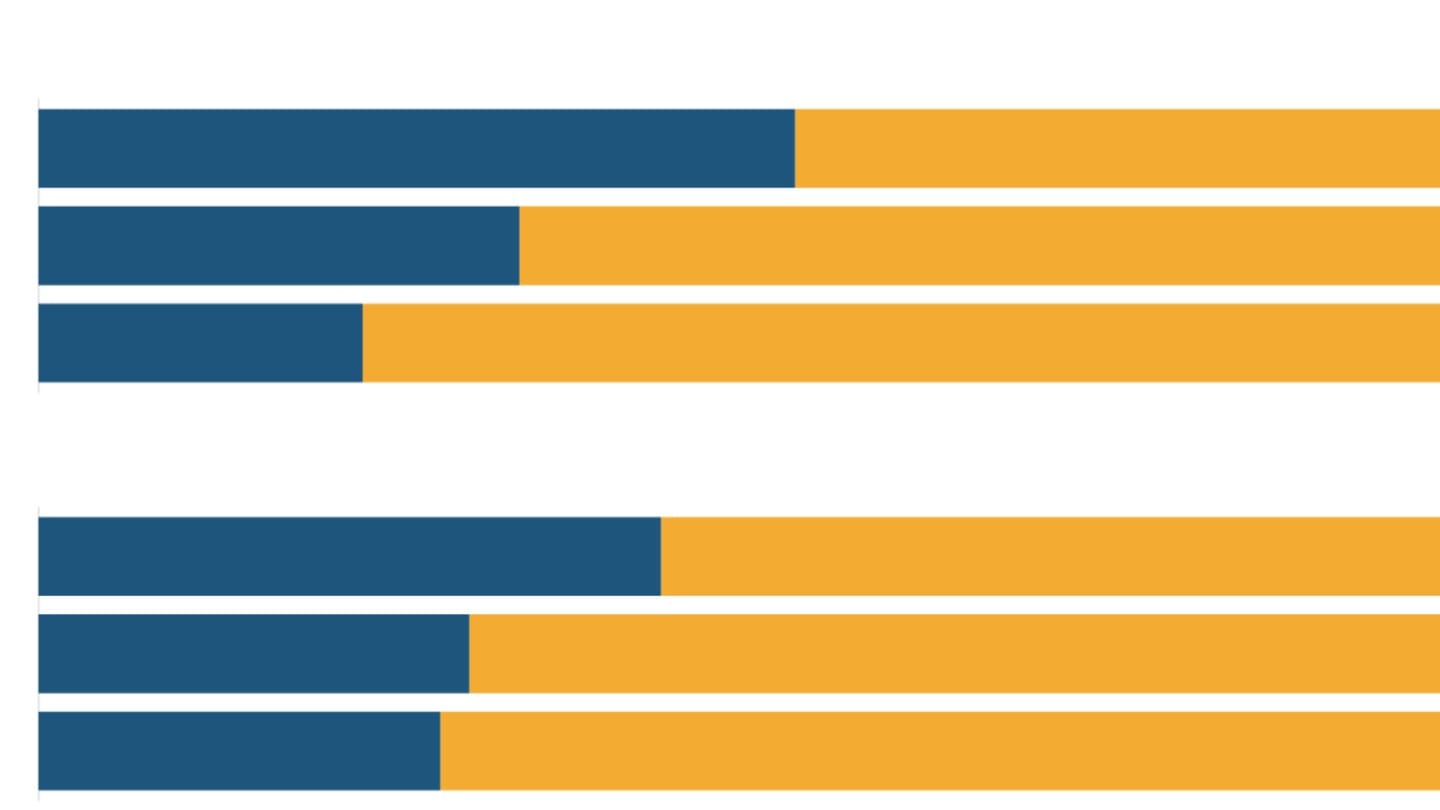
Inequities in phone usage - among the rural and urban populations, between men and women, and among the rich and poor - are also narrowing. While phone usage among the poorest men grew from 74% to 84% in three years, it grew from 39% to 67% for the poorest women[14].
Despite rapid growth in phone use among women, the gender gap still persists. But it's closing, driven largely by children and the youth. The gender gap in phone usage is nearly zero among children.
The gap between women and men in internet use has been shrinking fast over the past few years. In 2021, a nationally representative survey found that 33% of women and 54% of men between the ages of 15 and 49 used the internet. By 2024, a more recent round of the same survey found that the internet usage had increased to 64% among women and 81% among men in the respective age groups.[15]
[1] National Family Health Survey rounds.
[2] Comprehensive Annual Modular Survey (NSS Round 79).
[3] As of August 2024, after excluding out-of-service and out-of-use SIM cards.
[4] Official projections for 2024 by the Registrar General and Census Commissioner of India, the national census authority.
[5] World Bank World Development Indicators (data is sourced from the International Telecommunication Union). Data refers to the year 2023, the latest available in the database.
[6] According to the International Telecommunications Union (ITU), the world had close to 9 billion SIM cards by 2023.
[7] We look at the population above age 15 for this question. According to the official projections by the Government of India, there were a little more than 1 billion Indians above 15 in 2023.
[8] The Comprehensive Annual Modular Survey (CAMS) asks the head of the household whether the household has a mobile phone, and asks individual household members if they use a mobile phone.
[9] Telecom Subscription Report, December 2024, Telecom Regulatory Authority of India.
[10] NSS 66th Round (2009-2010), Household Consumer Expenditure Survey, asked the head of the household whether the "household has access to internet at home on the date of survey". NSS 71st round (2014), Social Consumption, Education Survey asks the question slightly differently: "If any member of the household aged 14 years & above has access to [use] internet facility, then the household would be considered as having internet access." The Comprehensive Annual Modular Survey (CAMS) (NSS Round 79, 2022-23) asks households whether they have access to a broadband internet facility within the household premises.
[11] The Comprehensive Annual Modular Survey (CAMS) asks individual respondents whether the respondent has used the internet at least once during the three months preceding the survey. For those who respond "no" to this question, the CAMS further asks if the respondent used the internet at least once during the last 12 months. Internet usage among the 15+ population was 58% in both the three-month and 12-month reference periods.
[12] The International Telecommunication Union (ITU) records the proportion of individuals who used the Internet from any location in the last three months (via fixed or mobile network). It uses data officially provided by national statistical offices and telecommunication ministries. We consider countries with more than a million people.
[13] 2020:The Multiple Indicator Survey (NSS Round 78). 2023: Comprehensive Annual Modular Survey (NSS Round 79).
[14] The poorest among both women and men refers to the lowest fifth of the population according to the monthly per capita consumption expenditure.
[15] The fifth round of the National Family Health Survey (NFHS-5) was conducted between 2019 and 2021. The NFHS asks women between the ages of 15 and 49, and men between the ages of 15 and 54, about their internet use. NFHS-6, the sixth round, was conducted in 2023-24.