Temperature is a key measure of the earth's energy balance, reflecting how much heat the planet retains. Global temperatures have been rising at a clear and measurable pace, with the past decade (2015-2025) being the warmest ever, and approximately 1.1°C warmer than pre-industrial levels (1850-1900).[1]
Every fraction of a degree of warming matters: according to the Intergovernmental Panel on Climate Change (IPCC), each additional 0.1°C increases the intensity and frequency of heatwaves, rainfall extremes and droughts. A warming world is already witnessing intensifying climate hazards including sea-level rise, more frequent and severe heatwaves and shifts in precipitation patterns impacting ecosystems, water security and human communities globally.[2]
India's warming mirrors this global trend with the past decade (2015-2025) being the hottest on record and 2024 standing out as the warmest year in over a century. For India, these trends carry direct implications for agriculture, water security, public health and energy demand.
Short-term or year-on-year fluctuations in temperature are not uncommon. While individual years may be unusually warm or cool on account of natural climate cycles, the underlying trend becomes clear when examining data over decades.
This article examines long-term temperature trends for over a century across India using high-resolution gridded data from the India Meteorological Department (IMD)[3], tracing how mean, maximum and minimum temperatures have changed from the early 20th century to the present.
Rising temperatures
Temperatures are typically measured in three ways - minimum, maximum and mean - each capturing different aspects of daily and seasonal thermal trends. The national minimum temperature is the average of the lowest temperatures recorded each day across the country, while the national maximum temperature is the average of the highest daily temperatures.[4] The national mean temperature is estimated as the average of the daily mean values for all stations.[5]
Mean temperature rise
The national mean temperature, though an average for an entire country, gives a snapshot of the overall trend in temperatures over time. Indian data shows that from 1901 to 2024, the mean temperature for India increased by approximately 0.9°C.
This increase in temperature was relatively modest in the early decades, followed by more rapid warming from the 1990s onward. The warmest years in India's 124-year temperature record are overwhelmingly concentrated in the recent period, with the highest mean temperature of 25.7 °C occurring in 2024.
Increasing minimum and maximum temperatures
Averages are affected by both the minimum and the maximum temperature. While both the minimum and maximum temperature have risen over time, minimum temperatures increased slightly more (+0.97 °C) than maximum temperatures (+0.88 °C). This means that over time, the daily temperature range in India is narrowing, a pattern consistent with climate change driven by rising greenhouse gas concentrations.[6].
These changes have accelerated over time, with the past decade seeing both the highest minimum temperature in 2024, and the highest maximum temperature in 2016.
Temperature Anomalies
In climate analysis, temperature anomalies are more informative than absolute temperature values. Temperature anomalies are defined as deviations from a long-term reference average. Across India, absolute temperatures vary widely due to differences in latitude, elevation and proximity to the coast. Temperature anomalies address this by comparing each location to its own long-term average, effectively normalising for geographic differences. This makes it possible to identify and compare underlying warming trends consistently across regions, seasons, and time periods even where absolute temperatures differ sharply.[7]
Meaningful temperature anomalies depend on a clearly defined and standardised baseline. The IMD follows World Meteorological Organization (WMO) guidelines in defining a climatological normal as the average of a climate variable over a continuous 30-year period. These baselines are updated every decade to ensure that "normal" conditions reflect the most recent climate context and provide relevant reference points for climate monitoring and operational decision-making.[8]
Historically, different 30-year periods have been used as baselines for analysing temperature change including the periods of 1951-1980 and 1981-2010. Following a global update led by WMO and national meteorological services, the 1991-2020 period has now been adopted as the most recent global climatological normal and is the current standard for operational reporting by many countries including India.[9] This period represents the current official baseline used in IMD climate reporting and reflects the most recent 30-year average climate conditions in India.[10] The choice of baseline affects the magnitude of anomalies, or the difference from the long-term average. So, a warmer baseline may yield smaller recent anomalies, while an older, cooler baseline produces larger positive anomalies for the same years.
IMD and other meteorological services compute temperature anomalies by subtracting the mean temperature for a chosen baseline period from observed temperatures for the same month or year. Positive temperature anomalies indicate that observed temperatures are higher than the long-term average (baseline) for that period, while negative anomalies indicate temperatures below the historical baseline. Across all baseline choices - 1951-1980, 1981-2010, or 1991-2020 - temperature anomalies show a persistent upward trajectory.
Rising overall temperature anomalies
When viewed relative to the 1991-2020 baseline, India's temperature anomaly record highlights the extent to which recent decades depart from historical conditions. While year-to-year variability remains evident driven by natural climate fluctuations, the persistence of positive anomalies in recent years reflects temperatures that are consistently warmer than the long-term baseline average. This pattern is consistent with global observations of sustained warming associated with increasing greenhouse gas concentrations.[11]
Prior to the early 1980s, anomalies fluctuated with a relatively even distribution of warmer- and cooler-than-normal years. From the early 1980s onward, anomalies became predominantly positive. In recent decades, nearly all years lie above the historical average, with anomalies, or the difference from the average, increasing in magnitude. The warmest years on record lie in the most recent decades, with 2024 registering about 0.65°C above the long-term average and many of the highest anomaly years clustered in the last two decades.
India's annual mean temperature in 2024 was +0.65°C above the 1991-2020 average, making it the warmest year in the observational record since 1901. This record continues a marked pattern of intense recent warming with the five warmest years being-2024 (+0.65°C), 2016 (+0.54°C), 2009 (+0.40°C), 2010 (+0.39°C), and 2017 (+0.38°C), all occurring in the last two decades. This means that 10 of the 15 warmest years on record have fallen within the last fifteen years (2010-2024). Moreover, the past decade stands as the warmest on record, with a decadal mean temperature anomaly of +0.31°C above the recent long-term average.
Comparing recent temperatures to a warmer baseline makes anomalies look smaller, even though temperatures remain high and the long-term warming trend continues. For instance, the mean temperature anomaly for 2024 is: +0.98°C relative to 1951-1980; +0.78°C relative to 1981-2010 and +0.65°C relative to 1991-2020. This occurs because the 1991-2020 baseline already incorporates several decades of warming, so recent temperatures are compared to a warmer "normal." Despite these different numerical values, the directional trend is the same across all baselines.
Anomalies in maximum and minimum temperatures
Mean temperatures are an average of both daytime (maximum) and night-time (minimum) temperatures, while temperature anomalies show how much this mean temperature differs from a long-term reference average for a given place and time. Disaggregating temperature trends into maximum and minimum components reveals important differences in how warming is unfolding across India.
Analysis of temperature anomalies relative to the 1991-2020 climatological normal shows that warming is not uniform across the daily temperature cycle. At the national scale, maximum temperature anomalies exhibit a pronounced upward trend, rising faster than mean temperature anomalies. This pattern reflects hotter days when elevated maximum temperatures directly translate into higher heat stress and increased cooling demand.
At the same time, night-time temperatures have frequently matched or exceeded daytime anomalies relative to the recent baseline. This difference highlights how night-time temperatures are rising faster relative to the recent baseline period, even if absolute increases in daytime heat often draw greater attention.
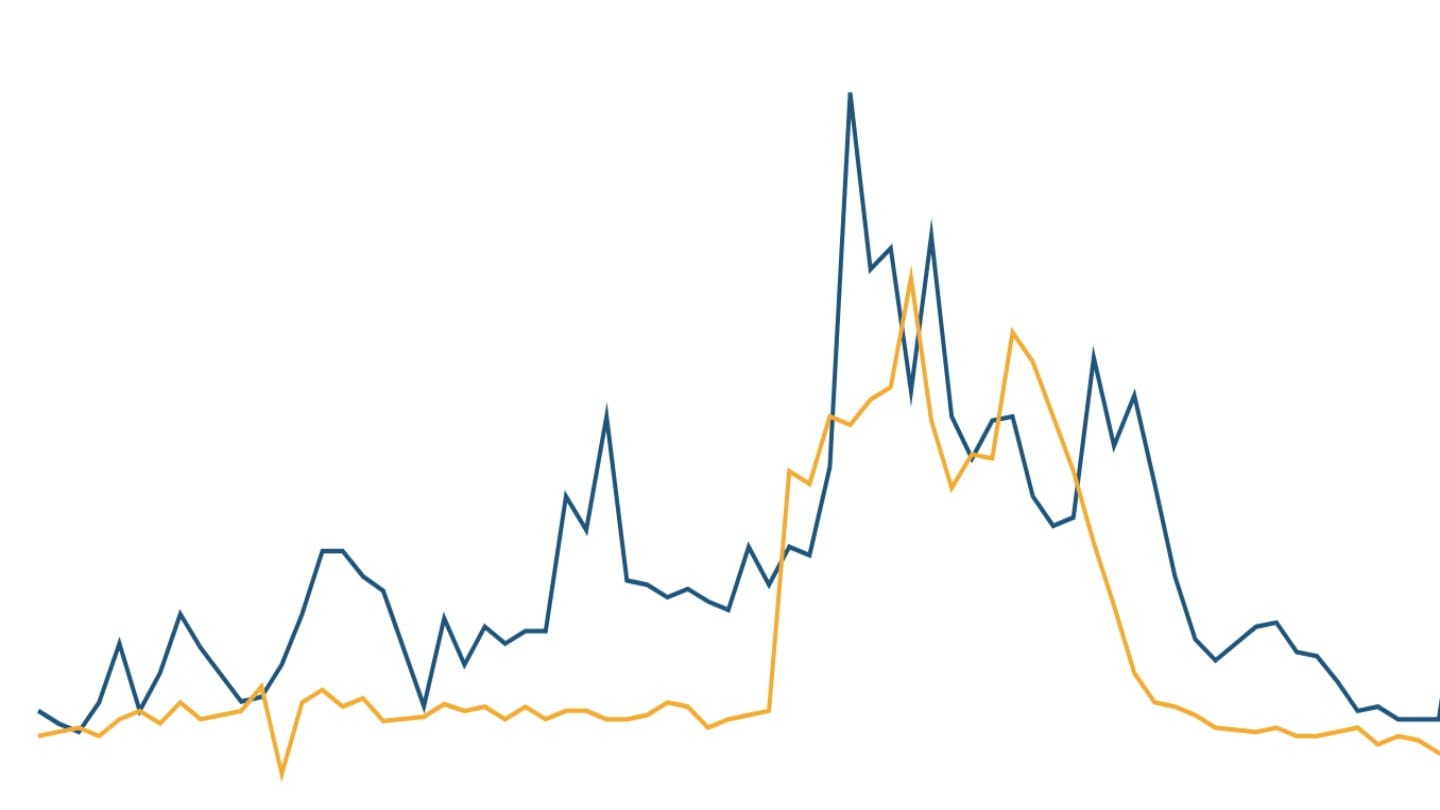
Since 2020 in particular, India's temperatures have remained consistently above the 1991-2020 baseline across all indicators. Mean temperature anomalies typically range between about +0.3°C and +0.6°C, placing every year in this period in the warmer-than-normal category. Maximum temperature anomalies are of similar magnitude (roughly +0.4°C to +0.7°C), reflecting the continued prevalence of hotter days. Minimum temperature anomalies remain persistently positive too, often in the range of +0.4°C to +0.9°C. The concurrence of elevated daytime and night-time temperatures shows that warming in India is not driven by isolated extremes, but by a continued upward shift in the overall temperature distribution.
Climate variability and Climate change
Interpreting temperature data correctly requires distinguishing between three related but distinct concepts: weather, climate variability, and climate change.
Weather refers to short-term atmospheric conditions experienced over days or weeks. Climate variability and climate change can be distinguished in temperature records by examining patterns over different time scales. Climate variability refers to short- to medium-term fluctuations (typically from months to a few decades) in temperature around a long-term average). In observed temperature data, this is reflected in year-to-year ups and downs, with some years or short periods being warmer or cooler than average. These variations are typically driven by natural processes within the climate system such as ocean-atmosphere interactions and do not exhibit a consistent long-term direction.[12]
Climate change, however, refers to a persistent, long-term directional shift in the climate state, typically over decades or longer affecting key climatic parameters such as temperature and precipitation. As defined by the Intergovernmental Panel on Climate Change, it is "a change in the state of the climate that can be identified by changes in the mean and/or the variability of its properties and that persists for an extended period, typically decades or longer".[13] In the context of modern warming, this shift is overwhelmingly driven by human-induced increases in greenhouse gas concentrations, which trap heat in the climate system and raise background temperatures over time.[14]
Understanding this distinction is essential for accurate interpretation of temperature rise. Individual hot or cool years may reflect climate variability, but they do not define the long-term state of the climate. Climate change is identified by the cumulative pattern that emerges over time, where variability continues but occurs around a steadily rising mean.
India's temperature record shows a clear shift from short-term variability-driven fluctuations to persistent warming over multiple decades, indicative of climate change.
(Nileena Suresh and Apoorv Anand contributed research to this article.)
[1] Synthesis Report: Summary for Policymakers (2023), Intergovernmental Panel on Climate Change (IPCC).
[2] Climate Change 2022: Impacts, Adaptation and Vulnerability - Summary for Policymakers (2022), Pörtner et al., Intergovernmental Panel on Climate Change (IPCC).
[3] The India Meteorological Department (IMD) computes national and regional temperature series by aggregating observations from a network of weather stations distributed across the country. Daily observations from these stations undergo quality control and are then interpolated to a regular grid covering India. For each grid cell, daily and monthly averages are computed. The national value is derived by estimating the area‑weighted average of all grid‑cell values, ensuring that larger regions contribute proportionally more to the national average.
[4] India's surface air temperature data are sourced from the India Meteorological Department's (IMD) national observation network comprising over 500 manual observatories and more than 1000 Automatic Weather Stations (AWS). While advancements in instrumentation and an expanding network of monitoring stations have significantly enhanced data accuracy, long-term climate analyses rely on quality-controlled subsets of several hundred stations with continuous records. For long‑term climate analysis, the IMD uses a homogenised subset of approximately 700 stations with continuous records. Each station records daily maximum and minimum temperatures, contributing roughly 1,460 data points per station annually. This translates to over 500,000 station‑level observations per year that form the basis of the gridded dataset.
[5] Development of a high resolution daily gridded temperature data set (1969-2005) for the Indian region, (2009). Srivastava et. al, Indian Meteorological Department.
[6] Summary for Policymakers in Climate Change 2021: The Physical Science Basis (2021), Masson-Delmotte et. al, Intergovernmental Panel on Climate Change (IPCC).
[7] WMO Guidelines on the Calculation of Climate Normals (WMO-No. 1203), (2017). World Meteorological Organization (WMO). .
[8] WMO Guidelines on the Calculation of Climate Normals (WMO-No. 1203), (2017). World Meteorological Organization (WMO).
[9] The 1991-2020 baseline replaces earlier reference periods and serves as the benchmark for identifying whether recent temperatures are warmer or cooler than what is currently considered "normal". This 30-year window is long enough to average out short-term weather events and multi-year cycles (like El Niño), providing a stable reference point for what the climate was like in the recent past.
[10] IMD's New Normal for the Period 1991-2020 (2021). India Meteorological Department, Ministry of Earth Sciences, Government of India.
[11] Summary for Policymakers in Climate Change 2021: The Physical Science Basis (2021), Masson-Delmotte et. al, Intergovernmental Panel on Climate Change (IPCC).
[12] WMO Guidelines on the Calculation of Climate Normals (WMO-No. 1203), (2017). World Meteorological Organization (WMO); Intergovernmental Panel on Climate Change (IPCC) (2021), Climate Change 2021: The Physical Science Basis - Summary for Policymakers.
[13] Climate Change 2021: The Physical Science Basis-(Annex VII: Glossary), (2021), edited by V. Masson‑Delmotte et al., IPCC.
[14] Summary for Policymakers in Climate Change 2021: The Physical Science Basis (2021), Masson-Delmotte et. al, Intergovernmental Panel on Climate Change (IPCC).