The rate of murder, or `intentional homicide', is widely used as an indicator of public safety in a city or country. The United Nations also considers the intentional homicide rate to be an important indicator towards the goal of peace, justice and strong institutions under its Sustainable Development Goal framework.[1]
The United Nations Office on Drugs and Crime (UNODC) defines intentional homicide in its International Classification of Crime for Statistical Purposes (ICCS) as "unlawful death inflicted upon a person with the intent to cause death or serious injury".
UNODC considers statistics put out by India's National Crime Records Bureau (NCRB) under three offences to calculate intentional homicides in India:
1. Culpable homicide that is murder (punishable under Sec. 103 under Bharatiya Nyaya Sanhita or previously, Section 302 of the Indian Penal Code);
2. Culpable homicide not amounting to murder (punishable under Sec. 105 under BNS or previously, Section 304 of IPC)[2]; and
3. Dowry death (defined and punishable under Section 80 of BNS or previously, Section 304B of IPC[3]).[4]
The UNODC adds up the number of victims under each of these crimes to give a total count of the victims of intentional homicide and a rate of victimisation (number of victims per 100,000 population).[5] We follow this classification in this piece.
In 2023, India recorded nearly 37,500 incidents of intentional homicides. The majority of these were murders, followed by dowry deaths.
Trend over time in India
Reported intentional homicides
India has published its official annual crime reports since 1953.[6] All reports since 1953 have contained the number of incidents and the rate of murder as registered by the police. All reports since 1972 have also separately reported the incidence and rate for culpable homicide not amounting to murder, and since 1995 for dowry death, an offence added to IPC in 1986.
In 1953, India reported fewer than 10,000 murder cases, following which the number of reported murders continued to rise. At its peak in 1991, the number of murder cases in the country rose to over 39,000 reported cases, and has since been on a downward trajectory.
The early 1990s also saw the peak of the incidence of culpable homicide not amounting to murder, following which the number consistently declined to just over 3,500 cases in 2023. Compared to murder, the number of cases registered under this are usually much lower since the conditions for a culpable homicide to not be categorised as a murder are also limited.[7]
Dowry death cases have been separately recorded since 1995 and showed an initial increase, peaking in 2011 at over 8,500 cases. Since then, the number of registered cases has been decreasing, with the NCRB recording over 6,000 cases under the section in 2023.[8]
Crime rates
The rate of intentional homicide relative to India's population has been declining as well. In 1991, the rate of murder peaked at 4.6 reported murders for every 100,000 people. Since then there has been a steady decline, reaching a historical low in 2017, and eventually touching 2.0 in 2023.[9]
The rate of culpable homicide not amounting to murder peaked at 0.6 in 1984, but has stabilised at 0.3 in the last two decades.
In 2012, the NCRB revised its methodology of calculating the rate of dowry deaths. Instead of considering the total population of the country, it began to calculate the rate using the population of women (that is, the number of reported cases per 100,000 women). Since 2013, the rate has declined steadily, and was 0.9 reported dowry death cases for every 100,000 women as of 2023.
Homicide in global context
Taken together, the rate of intentional homicide in India was 2.7 in 2023.[10]
While India had the second highest number of victims of intentional homicides after Brazil as of 2022,[11] this is largely on account of the size of its population. Relative to its population, its rate of intentional homicide is 46th among the 108 countries who have data available for the year.
Among the top ten most populous nations, India's rate of victimisation of homicide is the third lowest after China and Indonesia. Mexico, Brazil and Nigeria among these countries have particularly high rates of homicide.
Over the years there have been many cross-national studies to identify the main determinants of homicide rates. While many find a correlation with economic development, poverty and inequality, a number of studies find that specifically for countries with low incomes and levels of development, the variation cannot be explained without cultural and other factors.[12]
Brazil has made recent improvements, with its rate of victimisation coming down from 31 victims of intentional homicide per 100,000 population in 2017 to just over 19 in 2023. Mexico's victimisation rate on the other hand has been on a historic incline: in the early to mid 2000s, the rate was about a third of what it was in 2023. This increase starting from 2007 has been attributed to the 'drug war' initiated by Mexico against drug cartels and the infighting between the cartels.
Regional trends in murder rates
In 2023, the states of Uttar Pradesh, Bihar, Maharashtra, Madhya Pradesh and Rajasthan recorded the highest number of murder cases. In terms of murder rate, which is relative to their populations, Manipur, Jharkhand, Arunachal Pradesh, Haryana and Chhattisgarh were, however, the top five states in 2023. The increase in the murder rate in Manipur in 2023 was driven by widespread ethnic violence, with its recorded murders climbing from 47 to 151 between 2022 and 2023
Historically, the highest murder rates in the country over the years were at times of insurgencies and conflicts. The highest murder rates have been in Jammu & Kashmir between 1990 to the mid-2000s, and in Punjab in the late 1980s and early 1990s. From the 1960s to until recently, the muder rate was consistently high in five north-eastern states of Arunachal Pradesh, Manipur, Meghalaya, Nagaland and Tripura. A murder rate of 16.4 in Manipur in 1993 is the highest throughout the history of the publication of our crime data.
Motives of homicide
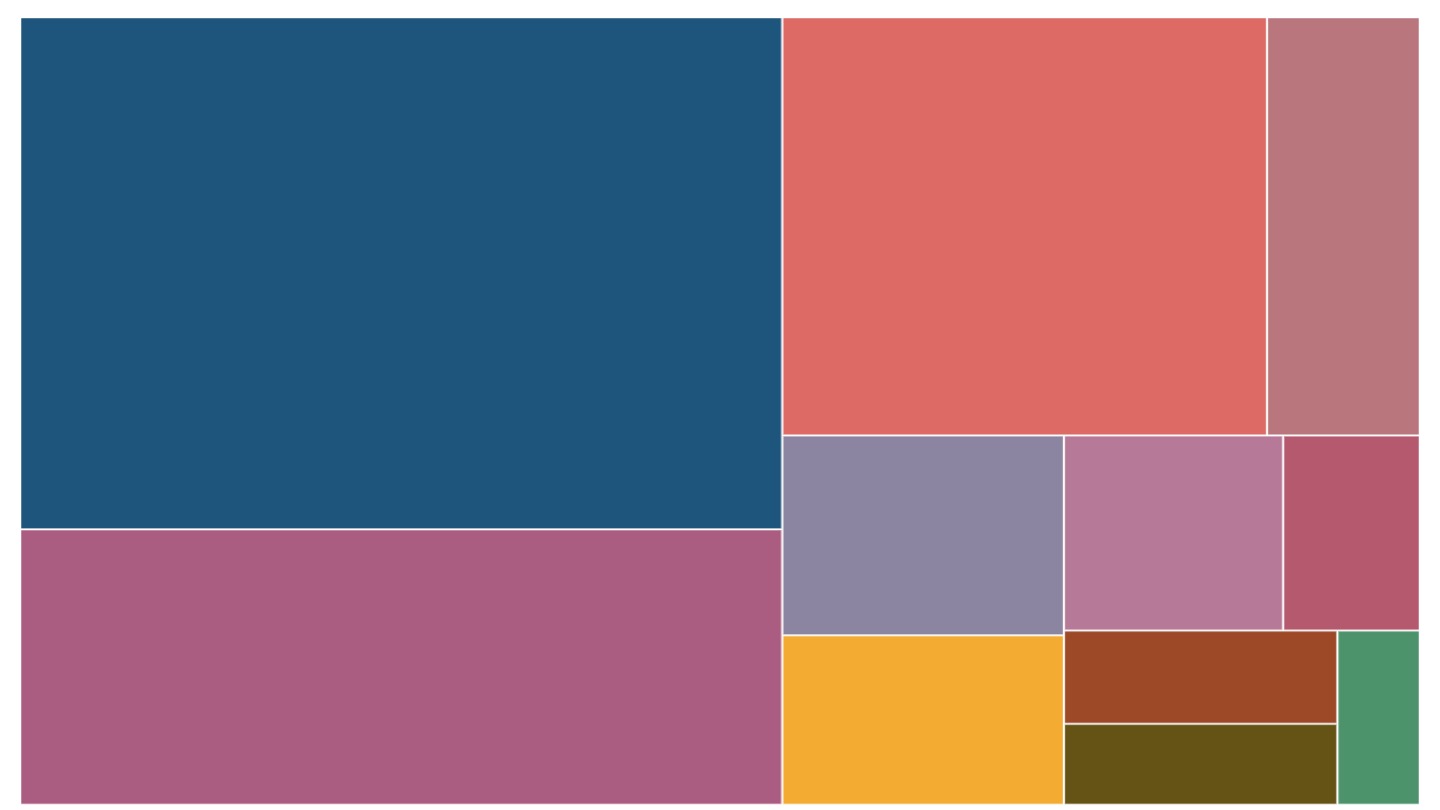
The NCRB reports also capture the motives for murders. Overall, in 2023, over 12% of the nearly 28,000 murders recorded were attributed to a 'personal vendetta or enmity', followed by nearly as many attributed to 'family dispute' and slightly fewer to 'petty quarrel/ dispute'. 'Love affairs' and 'illicit relationships' together contributed to 10% of murders and 'property disputes' were recorded by the police as the motive for 7% of all murders. This has largely been the pattern that has been consistent over the years.
Gender of the victims and the accused
Over the years, men have accounted for a higher proportion of victims of murder. In 2023, nearly three in four victims were men. Since 2017, the NCRB has also included 'transgender' as a category of gender.
Data on murder victims over time shows that the decline in the number of reported murders was driven by fewer male victims of murder. The number of female victims of murder has remained virtually unchanged over the last 25 years, even as the number of male victims of murder fell by over 30% over the same time period.
Men are overwhelmingly also the accused in murder cases. The NCRB recorded 54,925 people arrested for murder in 2023, of whom 94% were men.
Accuracy of the count
The number of intentional homicides are drawn from the incidents, i.e. First Information Reports (FIR) registered by the police under three offences in India. Like anywhere else, homicides reported in India may not be equal to the actual number of homicides in a year. There may be deaths that were never reported and there may be intentional homicides that are improperly identified by the police as unintentional homicides or accidental deaths or suicides.
Apart from the law enforcement agencies, a few other sources capture the homicide rate globally. This includes the Mortality Database of the World Health Organization (WHO), Global Health Estimate (GHE) also by the WHO, and the Global Burden of Disease estimates by the Institute for Health Metrics and Evaluation (IHME) at the University of Washington. Both GHE and IHME estimate India's homicide rate to be higher than the one recorded by UNODC based on the NCRB reports. In 2021, GHE recorded the rate as 3.66 and IHME as 3.69 against UNODC's 2.92. However, both use mathematical models to estimate the number of deaths rather than actually counting them, and there is no definite qualitative evidence of an underestimation.
[1] Target 16.1 is to "significantly reduce all forms of violence and related death rates everywhere".
[2] Culpable homicide not amounting to murder is homicide that is considered less serious than murder. One example of this would be a death caused when two people are in a sudden fight and one of them kills the other only in the heat of the moment, without any premeditation to cause the death. It is punishable by an imprisonment of up to ten years, or in certain situations, with imprisonment for life but is not punishable by death.
[3] "Dowry death": "Where the death of a woman is caused by any burns or bodily injury or occurs otherwise than under normal circumstances within seven years of her marriage and it is shown that soon before her death she was subjected to cruelty or harassment by her husband or any relative of her husband for, or in connection with, any demand for dowry…"
[4] Since NCRB reports follow the principal offence rule, the cases under the three offences are unlikely to overlap i.e. if there was a case registered under both murder and dowry death, it is likely to be reported under only one of the two offences.
[5] NCRB's summary statistics record three things: 1. "Incidences (I)" i.e. number of cases registered under an offence. A case is registered when the police register a First Information Report (FIR); 2. "Victims (V)" i.e. number of total victims under all the cases registered; 3. "Crime Rate" i.e. the number of cases of a crime per 100,000 population. UNODC does not use "crime rate (R)"; instead, it calculates the rate of victimisation based on the number of victims. It uses the UN Population Division's population estimates and therefore its total rate is different from the one calculated using India's estimate. UNODC's methodology and meta-data can be found here.
[6] The NCRB took over the responsibility for it in the year 1986, publishing reports for all years since 1983, the latest being for the year 2023. Prior to this, the Intelligence Bureau, the Central Bureau of Investigation and the Bureau of Police Research and Development have all held this responsibility. The relevant data for the years 1962 and 2012 is missing on NCRB's website completely. Some of the other years have smaller gaps.
[7] These conditions are mainly defined as exceptions to murder- when there is culpable homicide but is in self-defence, a result of grave and sudden provocation to the offender or in a sudden fight, done in pursuit of public justice by a public servant or someone aiding them, or is with the consent of an adult deceased. This makes it a lower degree of homicide. Given that whether an exception is in play is a complicated question which often comes down to presentation of evidence by the parties and its evaluation by a judge. At the stage of registering an offence the police might choose to register it as murder.
[8] Some cases of deaths with respect to dowry demands are also captured by the NCRB under murder, with the alleged motive recorded as being related to dowry. These may have been cases where the dowry death provision could not or was not invoked. Dowry death can only be invoked when the death is caused within seven years of marriage. Deaths caused by a husband or his relative in connection with a demand for dowry outside of this period can be registered as murder or culpable homicide not amounting to murder, depending on other factors. In 2023, 833 murder cases were in connection with dowry according to the NCRB.
[9] There is some lack of clarity with respect to the population considered as the denominator to calculate the rate of murder in its early years since the reports do not clearly mention this.
[10] NCRB uses only the population of women to calculate the rate of dowry whereas the rate for murder and culpable homicide not amounting to murder use the total population and therefore adding the three rates would not be appropriate. We calculated the crime and victimisation rate by adding incidences and victims, respectively under the three offences and dividing them by 100,000 of the total population for the year.
[11] 2022 is the latest year for which the UNODC has India's data; though India's crime statistics for 2023 is out.
[12] Marc Ouimet, A World of Homicides: The Effect of Economic Development, Income Inequality, and Excess Infant Mortality on the Homicide Rate for 165 Countries in 2010, Homicide Studies 16(3), pp. 238-258 (2012) is one such study. Some studies such as Jerome L. Neapolitan, Cross-National Variation in homicides: The Case of Latin America, International Criminal Justice Review, 4(1) (May 1994), and Julio H. Cole and Andrés Marroquín Gramajo, Homicide Rates in a Cross-Section of Countries: Evidence and Interpretations, Population and Development Review 35(4), pp. 749-776 (December 2009) consider countries in Latin America to be incomparable with other developing countries when it comes to homicide rates because of certain region-specific factors.