Manufacturing is a key source of economic value and employment in India. It takes place both in organised settings, such as factories, and in unorganised settings, including small household units. The bulk of manufacturing's economic value, however, is generated by the organised sector.[1] More than 200,000 factories employed around 18.5 million people in 2024.[2] Where these factories are located-and where their workers are concentrated? In this piece, we examine the regional distribution of factories and factory employment across India.
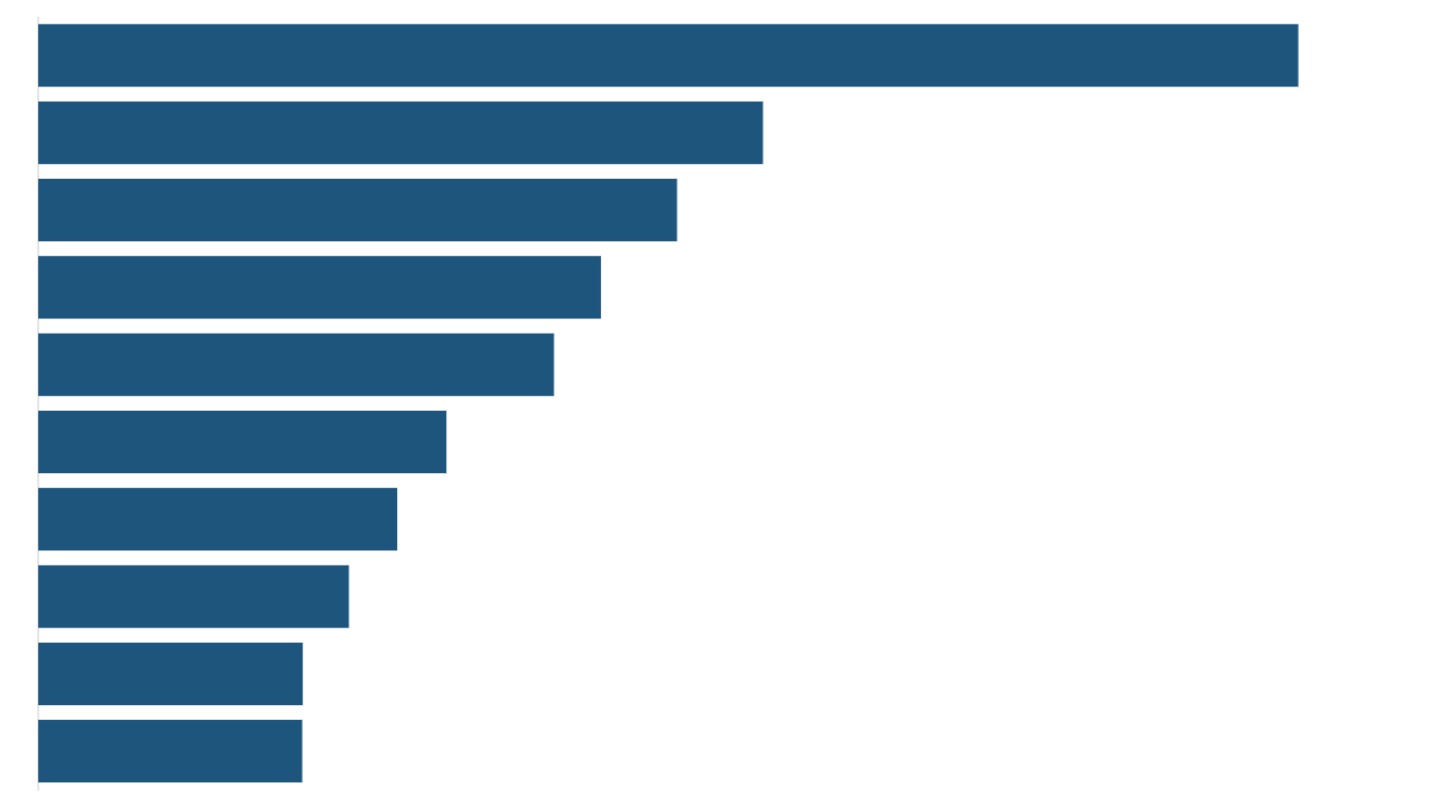
Half of India's factories are concentrated in just five states - Tamil Nadu, Gujarat, Maharashtra, Uttar Pradesh and Karnataka. Tamil Nadu has over 30,000 operational factories.
In the central and eastern parts of the country that are relatively poorer, organised manufacturing remains limited in scale. There are less than 5,000 operational factories in Madhya Pradesh and Chhattisgarh, and less than 3,000 in Bihar and Jharkhand.
The contribution of manufacturing to the state economy varies widely across states, from making up less than 1% of the Gross Value Added (GVA) in Mizoram to 35% in Gujarat.[3] Manufacturing contributes between 15% and 20% to the state GDP in Haryana, Tamil Nadu and Maharashtra.[4]
Manufacturing employment hubs
Indian manufacturing exists across a wide range of industries, some of them widely dispersed across the country, and others heavily geographically concentrated.[5]
The manufacture of food products is the industry that employs the most Indian factory workers, accounting for over two million jobs. The manufacture of textiles and wearing apparel is another key source of factory jobs, collectively employing over three million people.
The manufacture of food products is widely dispersed throughout the country, with Maharashtra being the leading employer. Tamil Nadu followed by Gujarat are India's textile manufacturing hubs, while Tamil Nadu is India's apparel manufacturing hub, with more than one in three apparel factory workers in the state alone. Tamil Nadu is also the hub of computer and electronics manufacturing workers, followed by Uttar Pradesh.
The manufacture of basic metals is largely confined to the mineral-rich states of Odisha, Chhattisgarh and West Bengal, as well as Maharashtra and Gujarat. Most of India's tobacco manufacturing workers, meanwhile, are in one state alone - Telangana - which is home to two in three workers in this sector.
Nearly half of Indian factory workers in automobile manufacturing belong to two states alone - Tamil Nadu and Maharashtra.
Manufacturing value hubs
The factories that employ the most people are not always those that produce the most economic value, measured in terms of Gross Value Added.[6]
The manufacture of basic metals - which includes the production of iron and steel from ore, manufacture of copper, chrome and lead - is the highest contributor to GVA from manufacturing, adding about Rs 250 billion (11% of aggregate GVA from manufacturing) in value in 2023, but is the third highest in employment generation.
Chemical and chemical product manufacturing, which added Rs 210 billion in value in 2023 (9% of the GVA from organised manufacturing) employed one million people.
The manufacture of coke and refined petroleum products is the third largest contributor to value added from organised manufacturing, adding Rs 190 billion in value, but employs less than 1% of factory workers.
The factory groups that produce the highest economic value are concentrated in a few states, which are not those with the most factories or the most factory employment.
Basic metals activity is concentrated in Odisha, Maharashtra, Chhattisgarh, Gujarat and West Bengal, while the chemicals industry is concentrated in Gujarat, Maharashtra and Tamil Nadu. The manufacture of coke and refined petroleum products is concentrated in Gujarat and Maharashtra.
The manufacture of vehicles, mainly in Tamil Nadu, Maharashtra and Haryana, and the manufacture of pharmaceuticals, concentrated in Gujarat, Maharashtra and Himachal Pradesh, are the next biggest contributors to economic value from organised manufacturing.
(Ishan Deodhar worked as a research intern with Data For India from March to July 2025.)
[1] Provisional estimates of gross domestic product (2024-24), National Statistics Office.
[2] Provisional estimates of national income (2022-23), National Statistics Office.
[3] Summary results, Annual Survey of Industries 2022-2023, Ministry of Statistics and Programme Implementation.
[4] The Annual Survey of Industries records detailed information on the number of workers, the value of the economic output, and the products manufactured by factories. The results of ASI are representative at the state level. We look at employment and the economic output of factories by their broad economic sector and by state.
[5] One way to classify economic activities is by defining their industry sector based on what they produce. India's National Industrial Classification defines 24 types of manufacturing industries, from food to rubber to automobiles.
[6] Gross Value Added is a key economic indicator of a factory (also of the economy as a whole) and is defined as the value of products produced in the factory (output) minus the value of goods used to produce them (input).