Editions list close
  • July 2026

    July 20, 2026

    More than a quarter of rural households have no separate kitchen

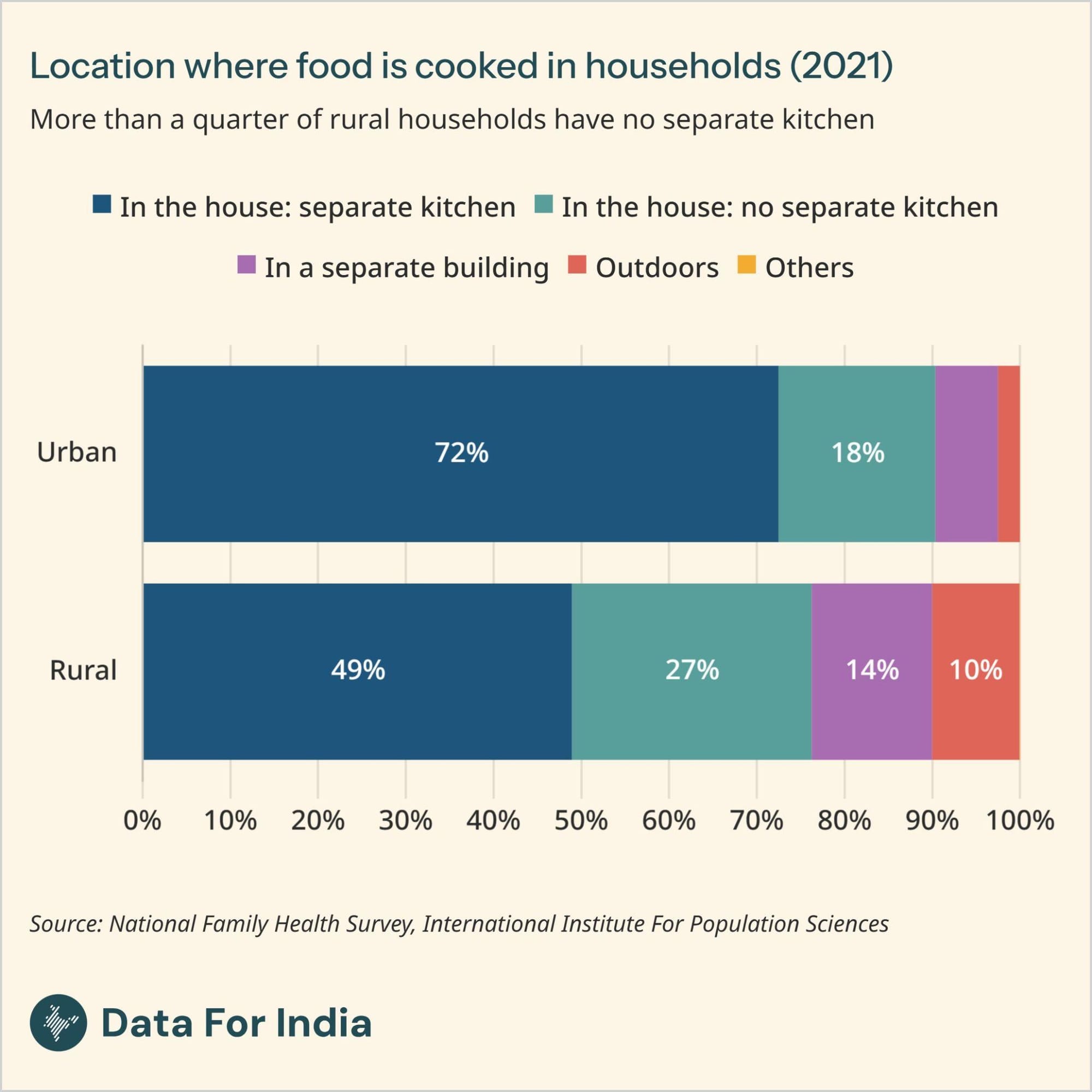
    There is no separate kitchen space to cook food in more than one in four rural households in India. Even in urban areas, nearly one in five households where cooking takes place indoors do not have a separate kitchen.

    The National Family Health Survey, conducted in 2019-21, asked household heads whether cooking is usually done inside the house, in a separate building, or outdoors. If cooking was done inside the house, the survey further asked whether there is a separate room used as a kitchen. The responses reveal that a large share of Indian households lack a dedicated cooking space.

    A majority of urban households cook their food in a separate kitchen. In rural areas, on the other hand, fewer than half of households use a separate kitchen within the house.

    These arrangements have major long-term health implications. Cooking without a separate kitchen means that smoke from stoves or chullahs can easily spread through the living space, reducing the indoor air quality and exposing all household members to harmful pollutants. Inhaling this for a prolonged period of time increases risk of respiratory diseases including lung cancer.

    In most Indian households, this responsibility falls primarily on women, making them particularly vulnerable to the health risks associated with household air pollution. This is particularly the case in rural areas where fewer than half of households use clean cooking fuels such as LPG.

    Read more about the use of cooking fuel in India.


    Living Conditions
    Copy citation
    1. More than a quarter of rural households have no separate kitchen by Nileena Suresh, Data For India (July 2026): https://www.dataforindia.com/data-bytes/more-than-a-quarter-of-rural-households-have-no-separate-kitchen/

  • July 2026

    July 13, 2026

    The choice of baseline affects how we see warming

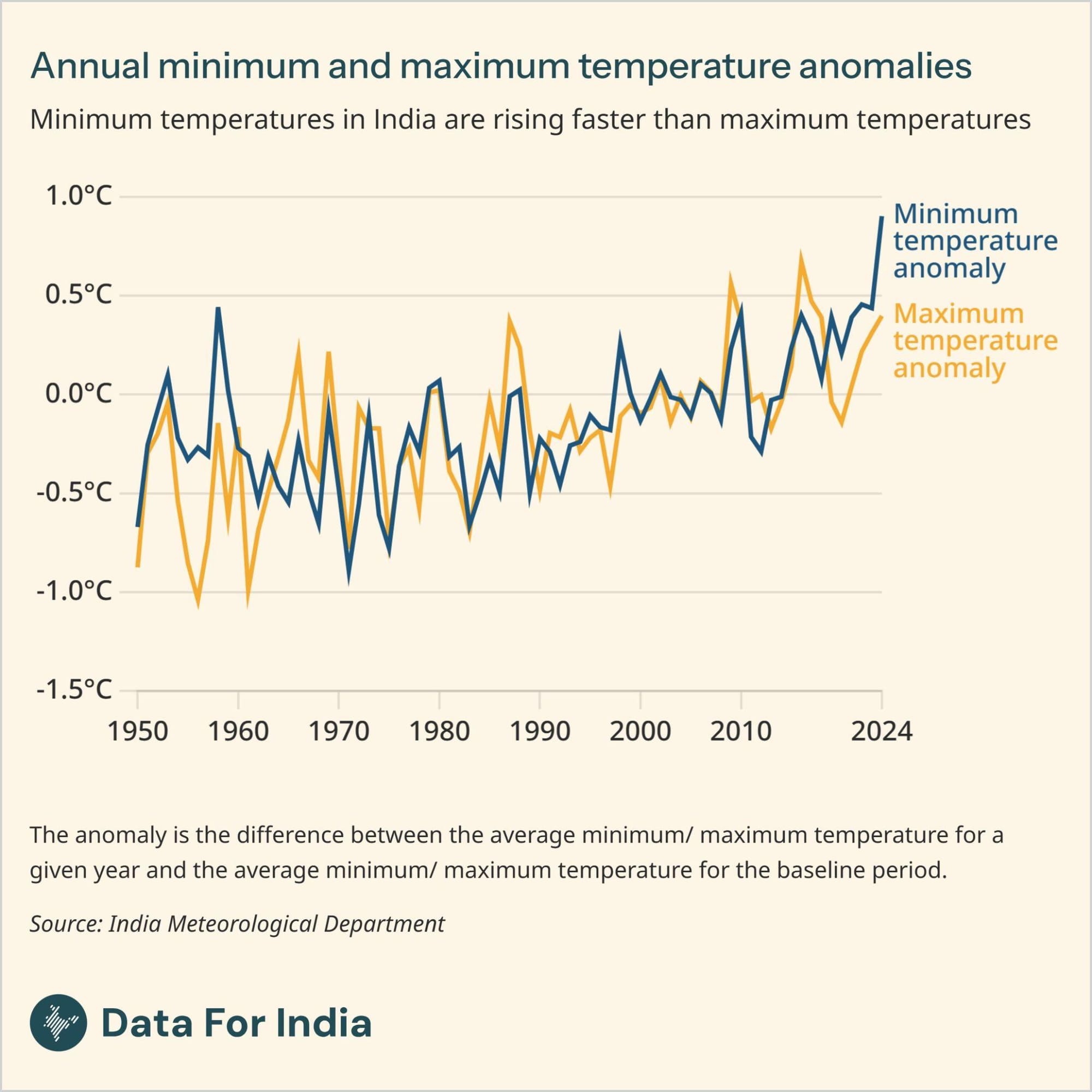
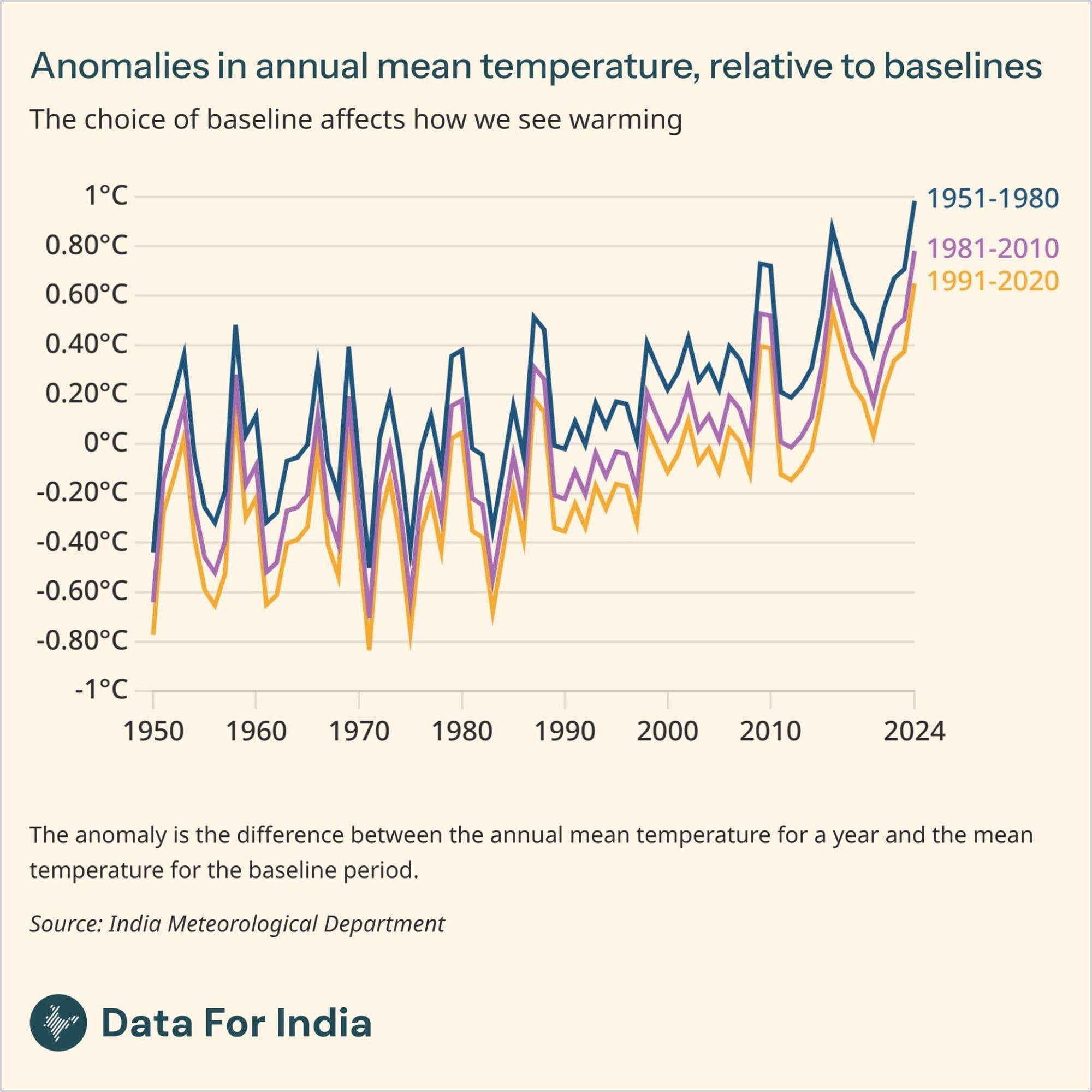
    One of the best measures to understand warming is through temperature anomalies. A temperature anomaly is the departure of the temperature for a particular year from a baseline. Positive anomalies indicate warmer than average conditions, while negative anomalies indicate cooler conditions when compared to the baseline.

    This baseline or reference period is also referred to as the Long Period Average (LPA), and represents the average climatic conditions over a multi-decadal period of typically 30 years when measuring changes in temperature.

    Temperatures today are typically measured against a reference period of 1991-2020, which is the baseline now in use by the India Meteorological Department, the official source of climatological data in India. However, looking at a range of baselines can provide important insights.

    Using older baselines, such as 1951-1980, produces larger positive anomalies for present day temperatures with the anomaly estimated to be 0.98°C in 2024. More recent baselines, such as 1991-2020 produce smaller anomaly values for the same year with anomalies reducing to around 0.65°C. An intermediate baseline of 1981-2010 shows warming of a magnitude in between the two at approximately 0.78°C for 2024.

    Updating baselines is important for climate monitoring because newer reference periods represent the current climatic conditions experienced by populations better. At the same time, older baselines highlight the cumulative scale of long-term warming. All baselines, however, show a warming trend.

    Read more about what is driving rising temperatures in India.


    Climate
    Copy citation
    1. The choice of baseline affects how we see warming by Juhi Chatterjee, Data For India (July 2026): https://www.dataforindia.com/data-bytes/the-choice-of-baseline-affects-how-we-see-warming/

  • July 2026

    July 6, 2026

    Women's absence from India's workforce is most evident in their 20s

    Welcome to the first edition of Data Bytes. Here's a little about our thinking behind launching this format. A new Data Byte will land in your inbox every Monday morning.

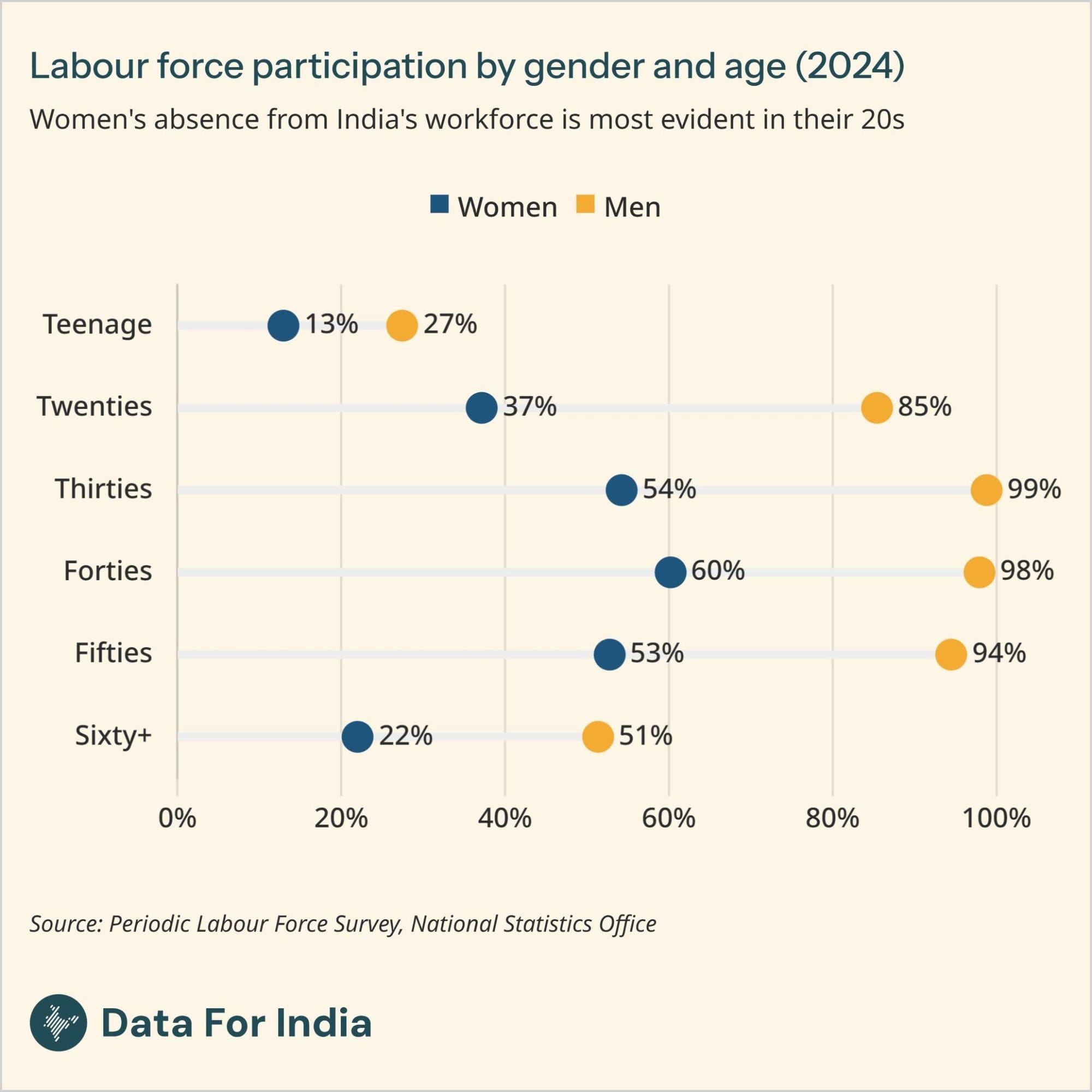
    The share of people in an age group who are either working or looking for work is known as the labour force participation rate (LFPR). The LFPR is an important indicator to measure whether most adults are in the productive economy. In India, female labour force participation is far lower than that of males at every age.

    Across the world, labour force participation rises with age once adults complete their education, and then falls in old age. This is certainly the case for men in India.

    Men's LFPR increases sharply from the teenage years until the mid-twenties, and remains at nearly 100% during the prime working years. It then reduces slowly until the age of 60, and sharply after that.

    The likelihood of an Indian woman being in the labour force (two in five) is half of that of an Indian man (four in five). In India's Periodic Labour Force Survey, women report household duties, including child care and chores, as the main reason for staying out of the labour force.

    But the gap between male and female labour force participation rates is widest in their twenties and thirties. The main reason for this demographic blip in women's labour participation is child-bearing and child-rearing. About 70% of births in India are now to women in their twenties.

    Read more about what brings women back into the labour force here.


    Work
    Copy citation
    1. Women's absence from India's workforce is most evident in their 20s by Abhishek Waghmare, Data For India (July 2026): https://www.dataforindia.com/data-bytes/womens-absence-from-indias-workforce-is-most-evident-in-their-20s/

  • July 2026

    July 2, 2026

    India's dependency ratio will soon rise for the first time in 70 years

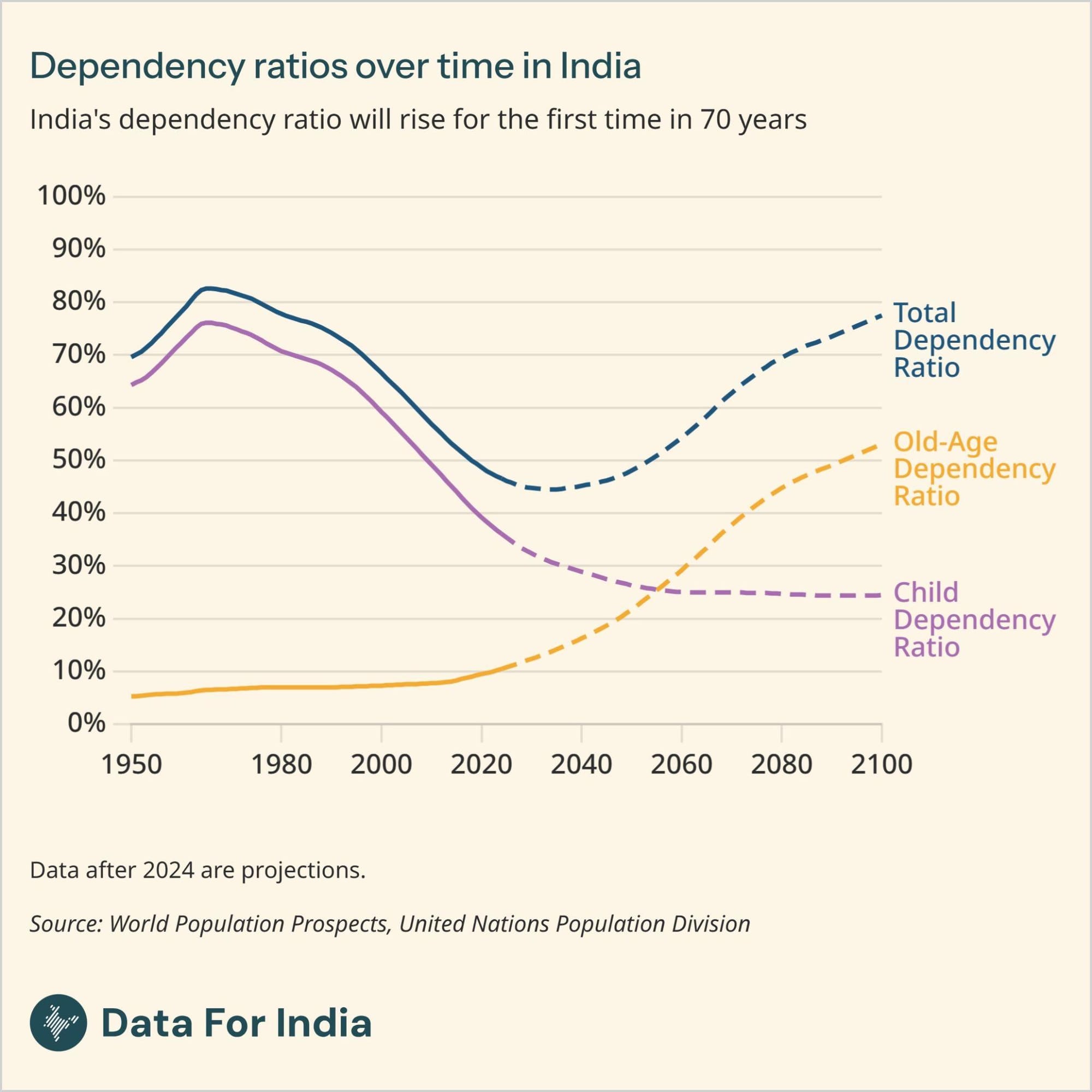
    The population dependency ratio is the share of those segments of the population who are dependents - children and the elderly - relative to those parts of the population who can be economically productive. A higher dependency ratio means that a country will need to spend more money on welfare measures like education, childcare, eldercare and pensions, while having a smaller base of people who can produce the wealth that is needed to fund such a safety net.

    India's 'demographic dividend' was in part fueled by the decline in its total dependency ratio since the 1960s. As population growth began to slow down, more adults (aged 15-64 years) of working age were part of the population, forming a large workforce able to fuel the economy. This was reflected in the falling child dependency ratio - the ratio of children (aged 0-14 years) relative to the population.

    But the total dependency ratio is made up of two parts - the child dependency ratio and the old-age dependency ratio. As India ages, the old-age dependency ratio keeps rising, and within the next ten years, this will drive the first increase in India's total dependency ratio in 70 years. This has implications for growth, development, eldercare and society.

    Read more about how dependency ratios differ by state in India.


    Population
    Copy citation
    1. India's dependency ratio will soon rise for the first time in 70 years by Rukmini S, Data For India (July 2026): https://www.dataforindia.com/data-bytes/indias-dependency-ratio-will-soon-rise-for-the-first-time-in-70-years/

  • July 2026

    July 2, 2026

    The usage of tobacco is much higher in India's central and eastern states

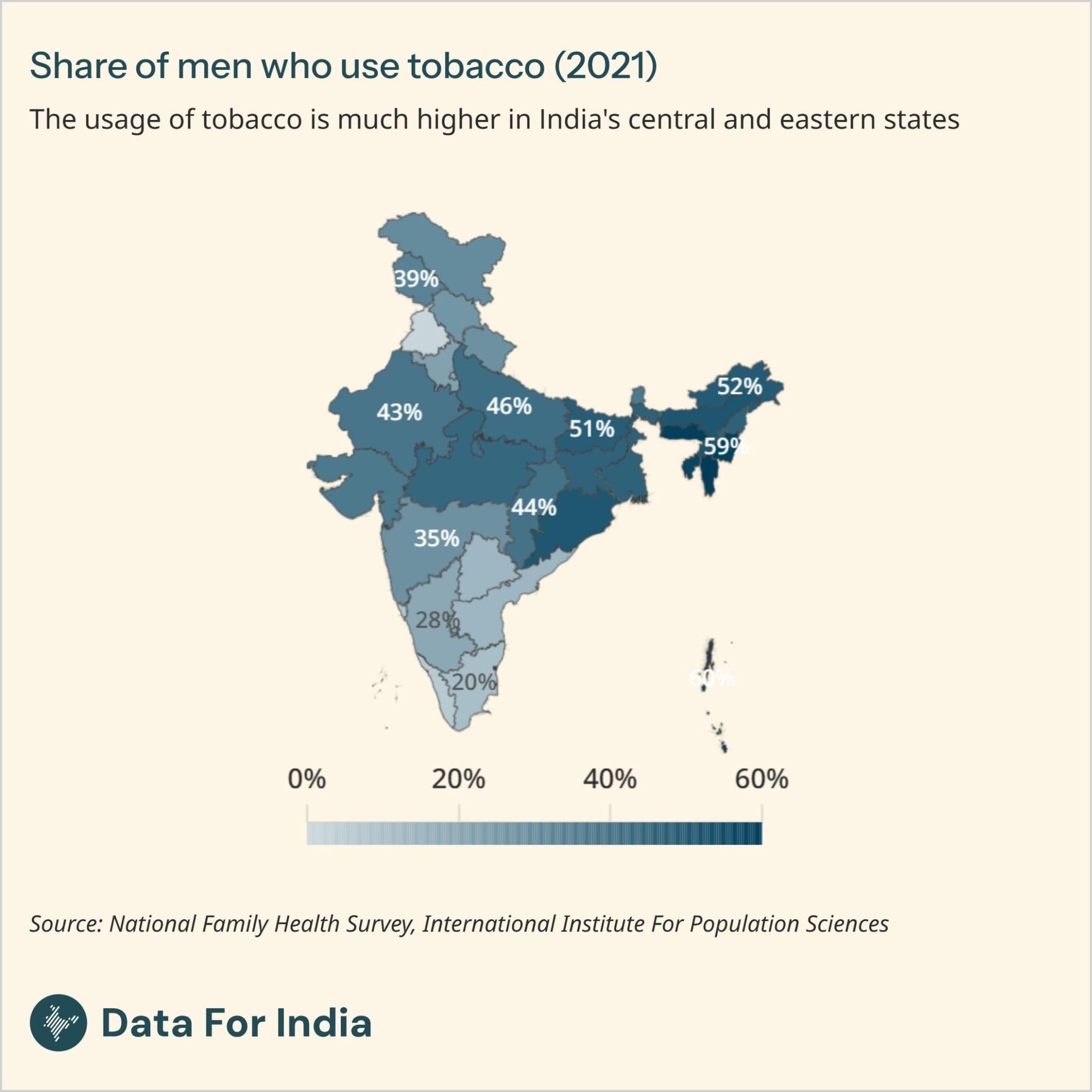
    The usage of tobacco varies by region in India and is highest in its eastern states and lowest in the southern states and in Punjab.

    Almost four in ten men aged 15-49 use tobacco in some form, according to the National Family Health Survey (2019-21). Given that fewer than one in ten women use tobacco, we look at data for men to understand regional patterns in tobacco consumption.

    Tobacco use is highest in India's north-eastern states, where more than half the male population uses tobacco or tobacco products. Several eastern states, including Odisha and Bihar, also report very high tobacco use among men at over 50%, followed by Jharkhand and West Bengal.

    In contrast, many states in the south, as well as Punjab, have much lower levels of tobacco consumption.

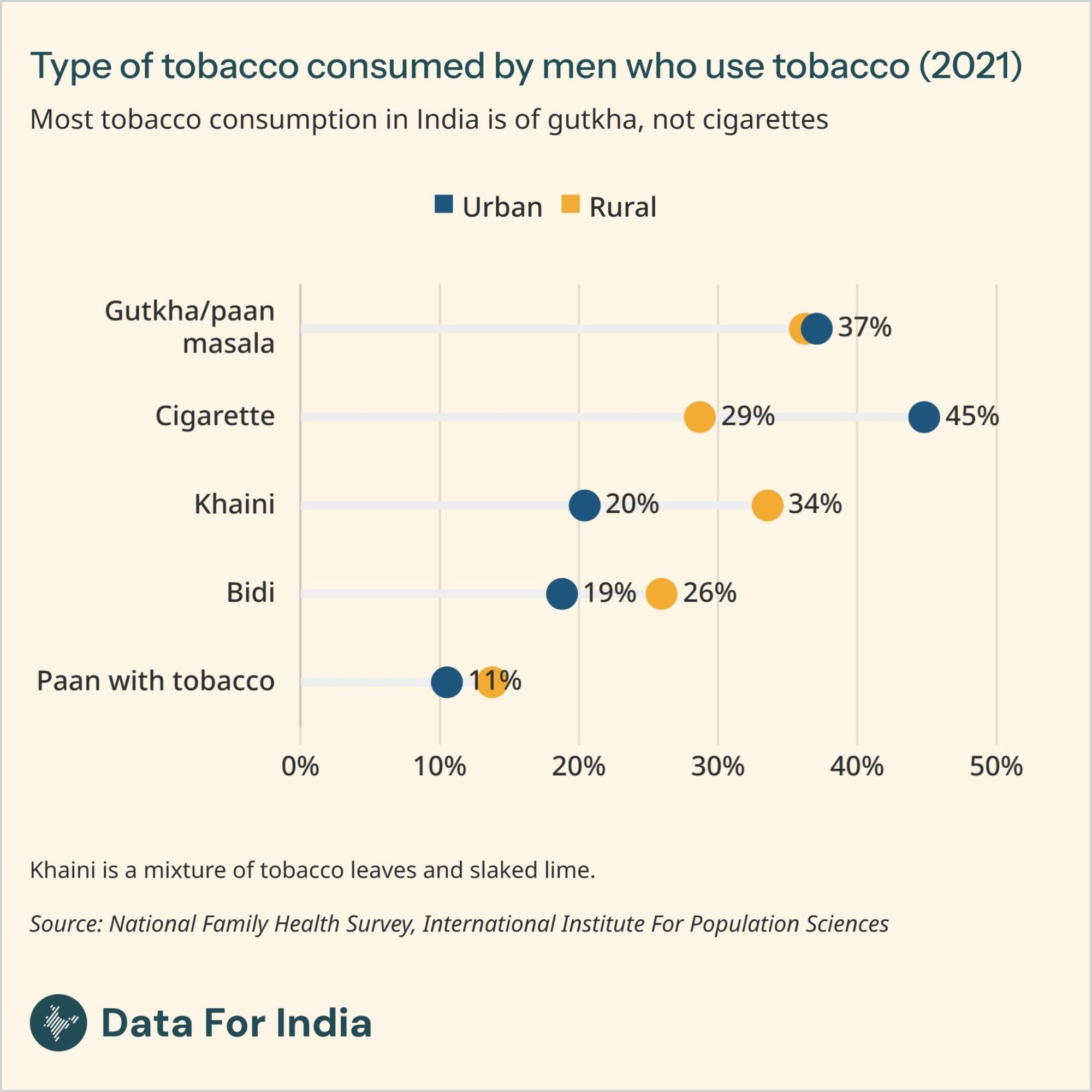
    The type of tobacco consumed also varies widely across states. In western and central India, most men who use tobacco consume chewing products such as gutkha, paan masala and khaini. In the southern and northern states, where overall tobacco use is lower, smoking bidis or cigarettes is more common among those who do consume tobacco. In the north-eastern states, patterns differ by state, with chewing tobacco more common in Assam, Arunachal Pradesh and Manipur, while smoking is more prevalent in Meghalaya and Mizoram.

    All forms of tobacco have serious health consequences and are a major risk factor for serious non-communicable diseases, like cancers, heart disease and respiratory illnesses.

    Read more about the rise of non-communicable diseases in India.


    Health
    Copy citation
    1. The usage of tobacco is much higher in India's central and eastern states by Nileena Suresh, Data For India (July 2026): https://www.dataforindia.com/data-bytes/the-usage-of-tobacco-is-much-higher-in-indias-central-and-eastern-states/

  • July 2026

    July 2, 2026

    Five states contribute to 96% of court cases older than 20 years

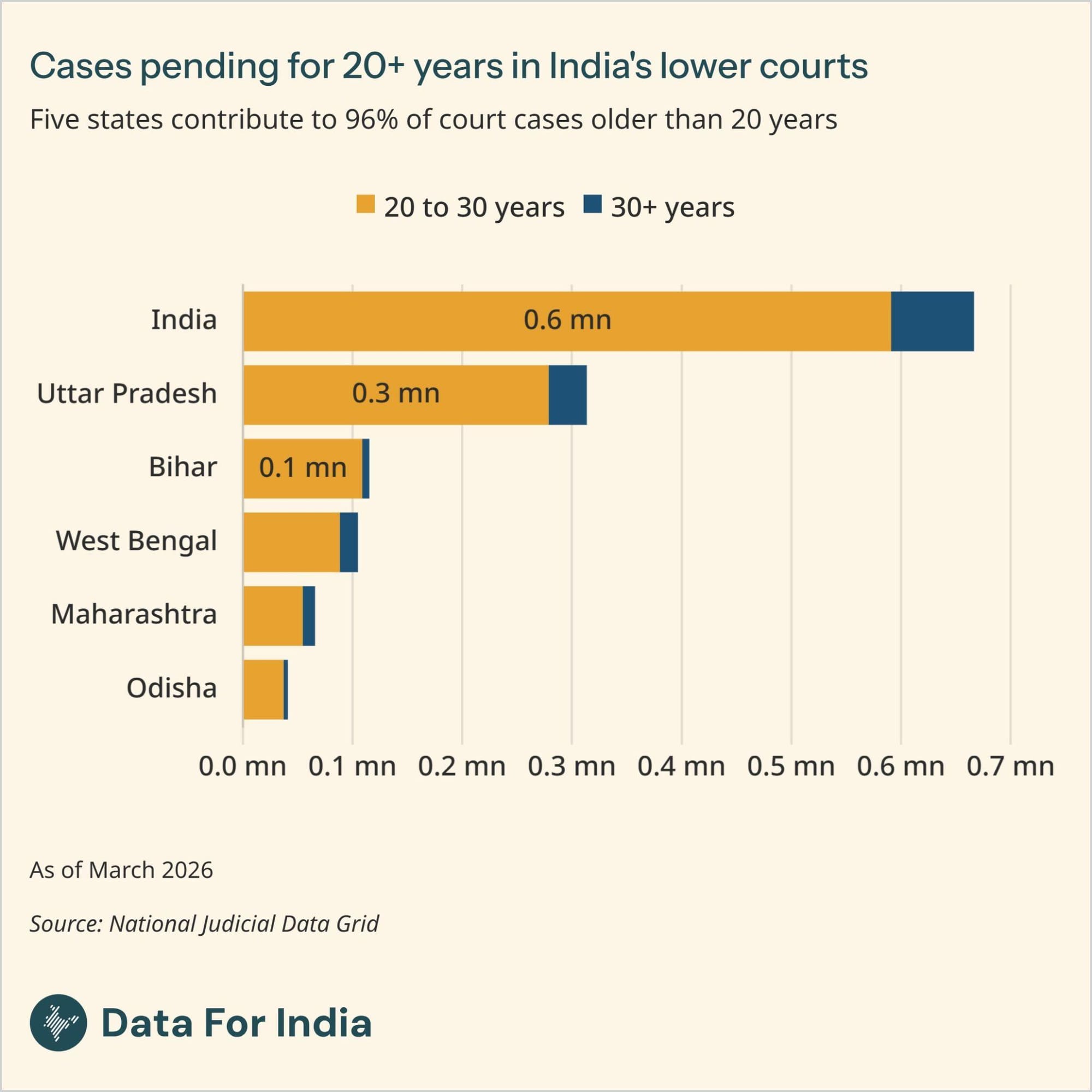
    India's district and subordinate courts, the first rung of the judicial hierarchy, had 48 million pending cases as of March 2026. Of these, over 650,000 cases were pending for over 20 years, and over 75,000 were older than 30 years.

    Five states - Uttar Pradesh, Bihar, West Bengal, Maharashtra and Odisha - are the major contributors to India's oldest court backlogs, accounting for 96% of all cases older than 20 years in lower courts.

    Pendency in these five states is high not just at the level of lower courts, but also at the High Court level. These five states together account for 46% of India's population, but for 56% of all pending cases.

    India's Supreme Court in 2024 recommended a detailed strategy for a phase-by-phase reduction of pendency, prioritising the disposal of cases older than 30 years, 20-30 years and 10-20 years, in that order. For these five states, the plan called for complete disposal of cases older than 30 years by June 2025, and the disposal of all cases in the 20-30 years bracket by December 2025.

    However, these states have not been able to meet the target. Nationally as well, the number of cases in the 20-30 years bracket increased by 20% since 2022.

    Read more about the types of cases that clog India's courts here.


    Law
    Copy citation
    1. Five states contribute to 96% of court cases older than 20 years by Ameya Bokil, Data For India (July 2026): https://www.dataforindia.com/data-bytes/five-states-contribute-to-96-of-court-cases-older-than-20-years/