Editions list close
  • September 2026

    September 28, 2026

    The richest Indian households can eat fruit most often
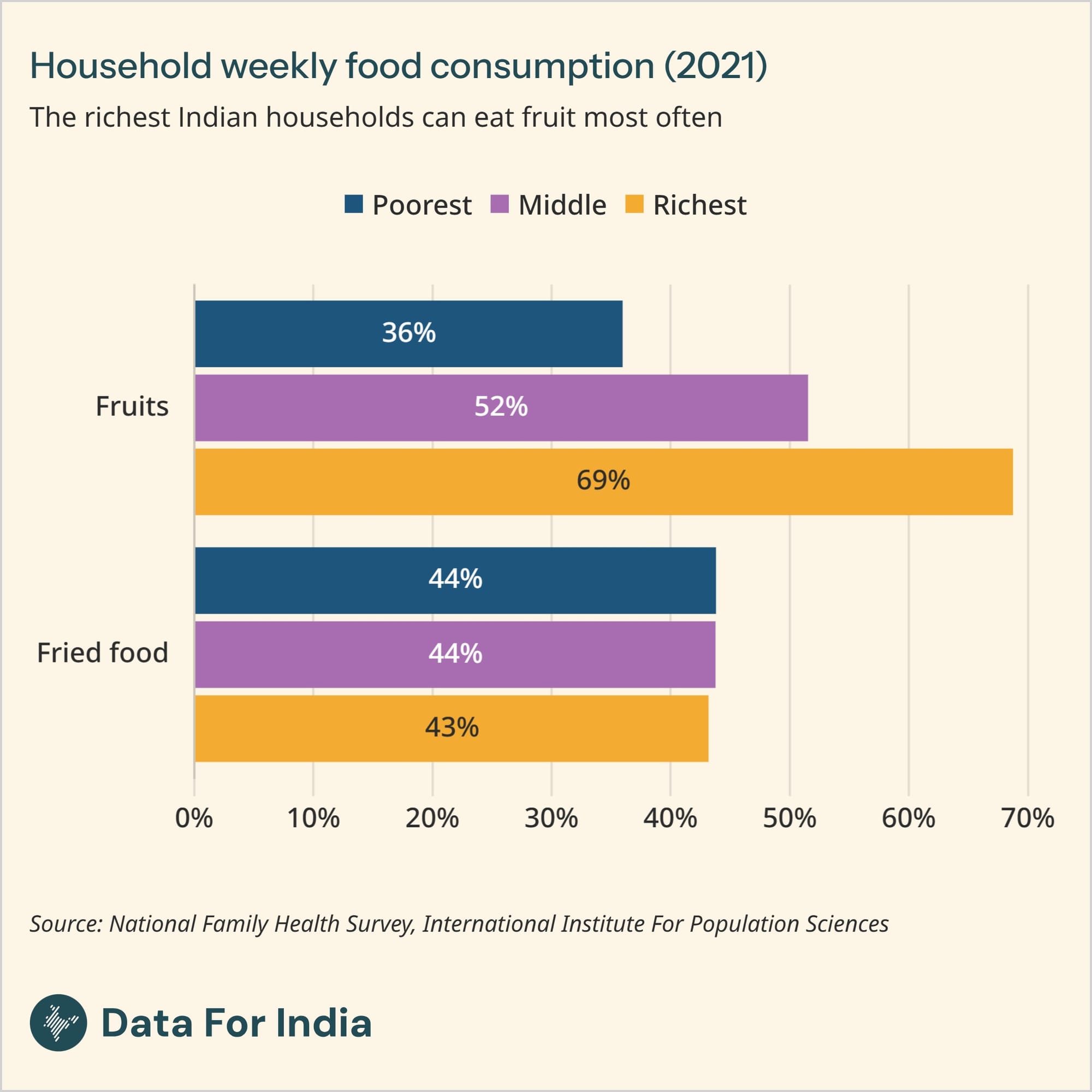
    India's richest households are nearly twice as likely to eat fruit every week as those who live in its poorest households. In contrast, rich and poor households are equally likely to eat fried foods.

    The National Family Health Survey asks respondents a series of questions on how often they consume specific food items. Respondents are asked whether they eat items such as fruits, fried foods, milk and vegetables daily, weekly, occasionally, or not at all. The survey also measures household wealth using an index based on assets and housing conditions. Households are then ranked and divided into five equal groups or quintiles.

    Those in poorer households eat fried food more frequently than fruits. According to the National Institute of Nutrition, unhealthy, highly processed, high-fat, sugar and salt foods have become more affordable and accessible than the healthier alternatives like fruits. Low fruit intake can lead to deficiencies in essential vitamins and minerals, which can affect immunity and overall health. At the same time, frequent consumption of fried food is associated with higher risks of obesity, heart disease and other non-communicable diseases. Together, these trends suggest that poorer households may be more exposed to both under-nutrition and diet-related health issues.

    There are also differences across regions and gender. Urban populations tend to consume fruits more frequently than rural populations, although fried food consumption remains common in both. Women generally report slightly lower consumption of both fruits and fried foods compared to men.

    Read more about the food habits of Indians.

    Living Conditions
    Copy citation
    1. The richest Indian households can eat fruit most often by Nileena Suresh, Data For India (September 2026): https://www.dataforindia.com/data-bytes/the-richest-indian-households-can-eat-fruit-most-often/

  • August 2026

    August 31, 2026

    More pre-teens in India have used the internet than people in their 40s

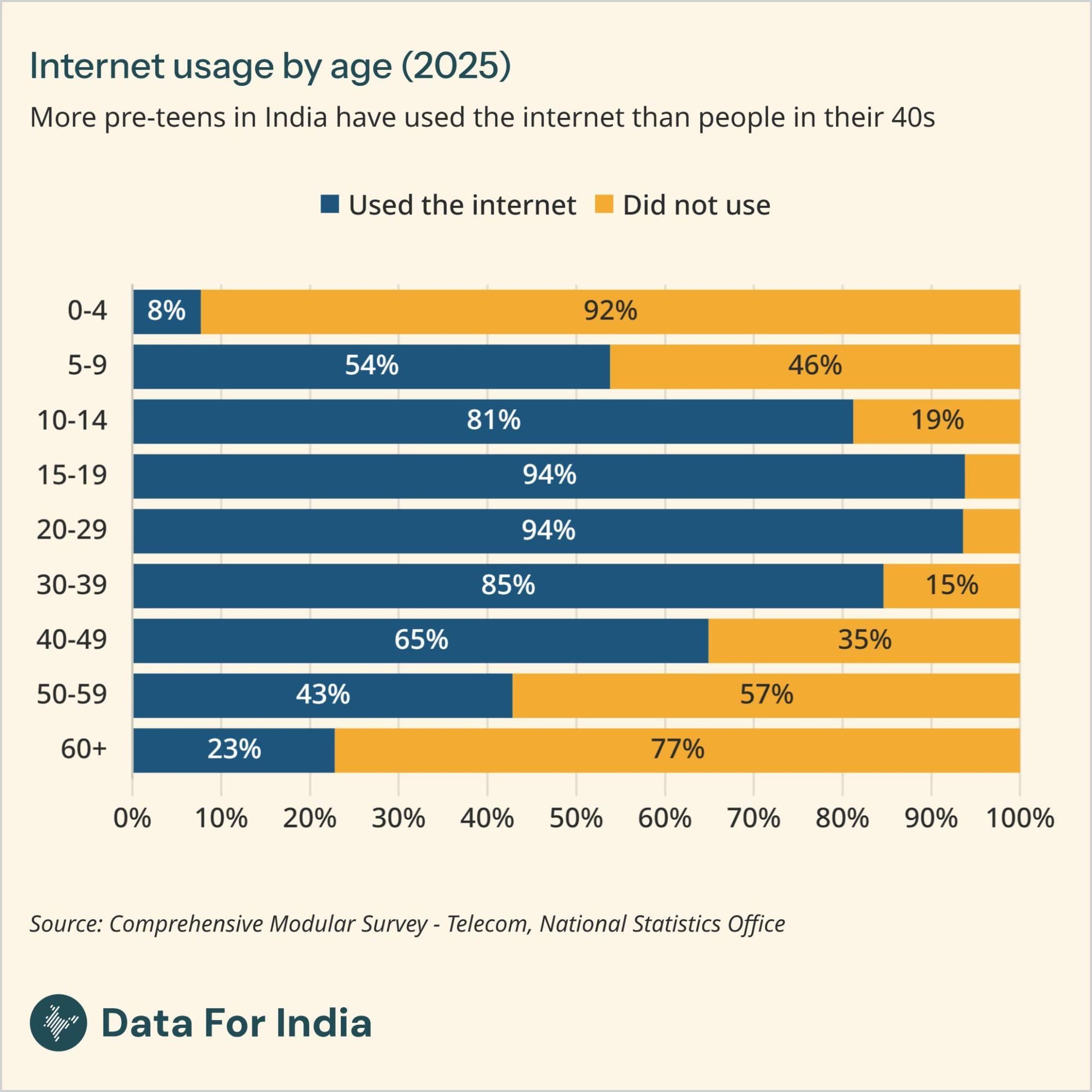
    Internet usage in India is heavily concentrated among younger people. Of the 60% of Indians who had used the internet as of 2025, most are in their teens and twenties.

    Internet usage among people in their thirties and forties, on the other hand, is much lower. Fewer than half of people in their 50s, and fewer than a quarter of people over the age of 60 use the internet. In contrast, nearly all Indians in their late teens and in their twenties use the internet.

    This data comes from the Comprehensive Modular Survey - Telecom, a nationally representative survey conducted by India's National Statistics Office. The survey asked people who reported they had used a phone or a computer whether they were able to use the internet, and whether they had used the internet at least once in the three months preceding the survey.

    A substantial number of children have also used the internet. More than half of children between five and nine years of age (54%) reported having used the internet at least once in the three months preceding the survey. Children between five and nine years of age are more likely to have used the internet than people in their fifties.

    Access to the internet increased sharply during the COVID-19 pandemic, particularly among children and teenagers, likely as a result of lockdowns and online schooling.

    Read more about who in India doesn't yet use phones or the internet.


    Living Conditions
    Copy citation
    1. More pre-teens in India have used the internet than people in their 40s by Abhishek Waghmare, Data For India (August 2026): https://www.dataforindia.com/data-bytes/more-pre-teens-in-india-have-used-the-internet-than-people-in-their-40s/

  • July 2026

    July 20, 2026

    More than a quarter of rural households have no separate kitchen

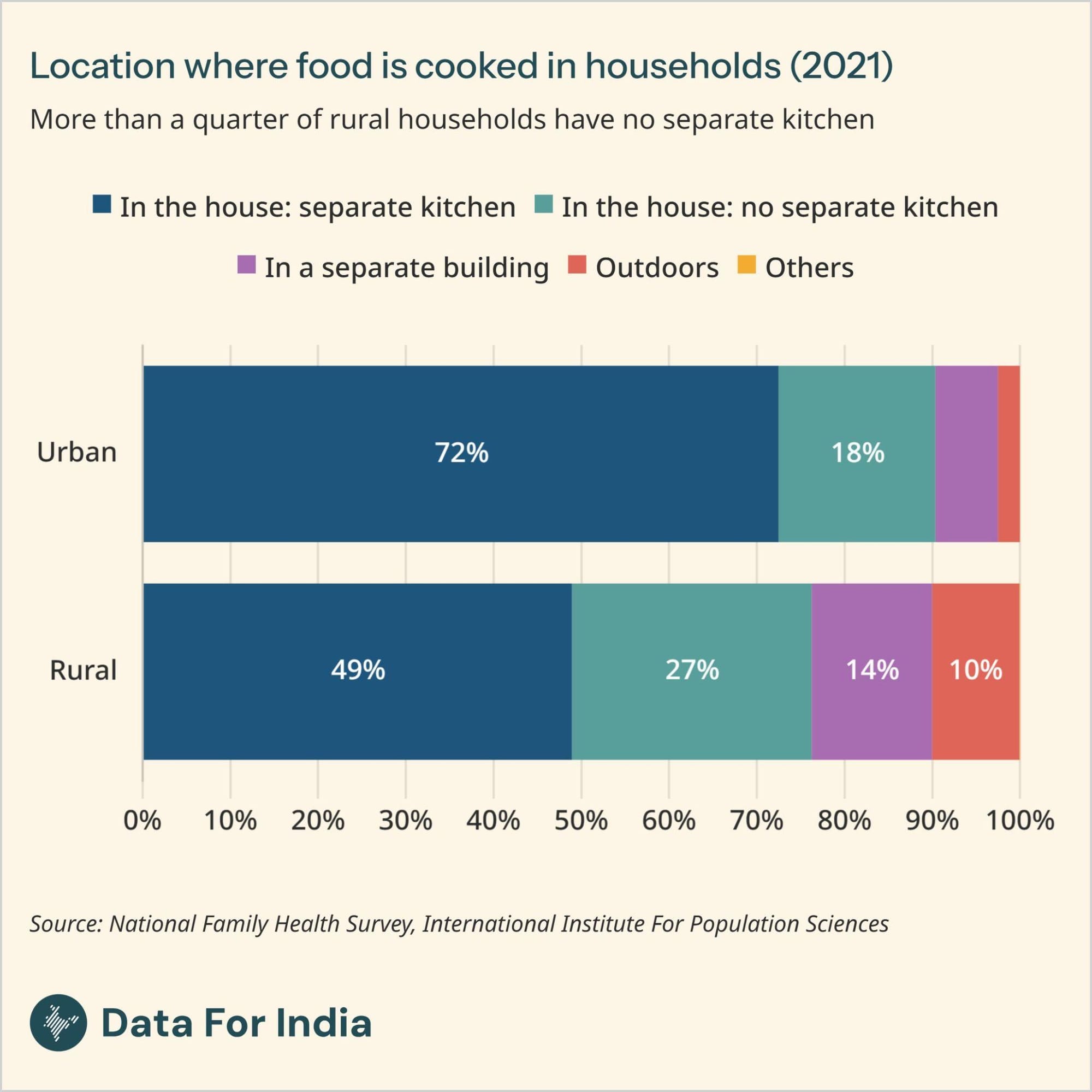
    There is no separate kitchen space to cook food in more than one in four rural households in India. Even in urban areas, nearly one in five households where cooking takes place indoors do not have a separate kitchen.

    The National Family Health Survey, conducted in 2019-21, asked household heads whether cooking is usually done inside the house, in a separate building, or outdoors. If cooking was done inside the house, the survey further asked whether there is a separate room used as a kitchen. The responses reveal that a large share of Indian households lack a dedicated cooking space.

    A majority of urban households cook their food in a separate kitchen. In rural areas, on the other hand, fewer than half of households use a separate kitchen within the house.

    These arrangements have major long-term health implications. Cooking without a separate kitchen means that smoke from stoves or chullahs can easily spread through the living space, reducing the indoor air quality and exposing all household members to harmful pollutants. Inhaling this for a prolonged period of time increases risk of respiratory diseases including lung cancer.

    In most Indian households, this responsibility falls primarily on women, making them particularly vulnerable to the health risks associated with household air pollution. This is particularly the case in rural areas where fewer than half of households use clean cooking fuels such as LPG.

    Read more about the use of cooking fuel in India.


    Living Conditions
    Copy citation
    1. More than a quarter of rural households have no separate kitchen by Nileena Suresh, Data For India (July 2026): https://www.dataforindia.com/data-bytes/more-than-a-quarter-of-rural-households-have-no-separate-kitchen/