Rainfall shapes nearly every dimension of India's economy, ecology and food systems. With over half of India's cultivated land dependent on rain-fed agriculture, the timing and distribution of the monsoon are critical for rural livelihoods and national food security.[1] Rainfall fluctuates sharply from year to year, varies widely across regions, and is influenced by complex interactions among ocean temperatures, atmospheric circulation, land conditions and large-scale climate systems.
Long-term observations compiled by the India Meteorological Department (IMD) indicate that although total annual rainfall across India has remained broadly stable since the early twentieth century, there is considerable variability. This article examines long-term rainfall patterns across the country, analysing trends, anomalies and changes in frequency and intensity of rainfall.
Long-term trends
Rainfall data in India comes from observational records maintained by the IMD. These datasets combine observations from thousands of rain gauges across India and extend back to 1901 making them among the longest rainfall records available for any tropical monsoon region.
Over time, the IMD has converted these station observations into spatially continuous datasets known as gridded datasets, which fill in the gaps between rainfall measurements from individual stations across a regular grid covering the entire country. The most widely used dataset from the IMD provides rainfall values at a spatial resolution of 0.25 degrees,[2] enabling researchers to analyse rainfall patterns at relatively fine spatial scales. These gridded datasets are widely used in climate research because they allow rainfall patterns to be examined consistently across both space and time.
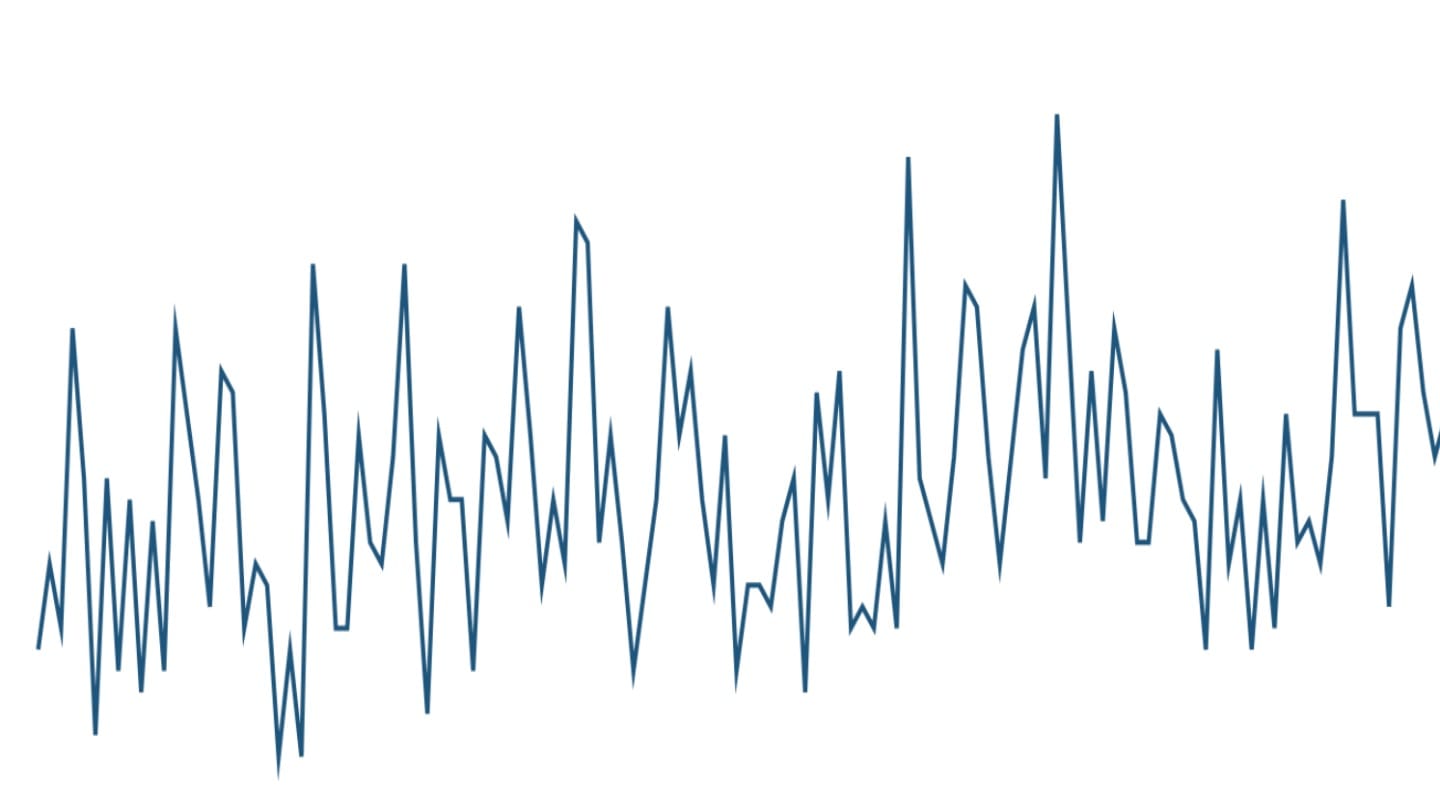
On average, India receives between 1,000 and 1,300 mm rainfall over the course of a year based on the all-India long-term average calculated over 1901-2024. Over the past century, there have been considerable year-to-year fluctuations, but the cumulative annual rainfall has remained broadly stable,[3] showing only a weak and statistically insignificant decline.[4]
This marks India's annual rainfall patterns as distinct from its temperature trends, where we see a clear increase in average temperatures over time. While rising temperatures reflect a strong and persistent warming signal associated with climate change, rainfall is influenced by a far more complex combination of atmospheric circulation, ocean temperatures, monsoon dynamics and regional weather systems.[5] As a result, annual rainfall exhibits much greater natural variability, which can mask long-term trends when examined at the national scale.
Rainfall anomalies - deviations from the 'normal'
Rather than absolute totals alone, expressing changes in rainfall as anomalies allows for determination of whether a year was wetter or drier than normal, enabling comparisons across regions with very different rainfall regimes and making it easier to identify long-term climate patterns.
A rainfall anomaly is defined as the deviation of observed rainfall from a long-term average. The deviation can be expressed either in millimeters or as a percentage departure from the long-term mean, which is the most commonly used measure in climate analysis. The benchmark used for such comparisons is the Long Period Average (LPA),[6] the average rainfall over a defined region calculated over a long-term base period, typically spanning 30-50 years. Using such an extended period smoothens out fluctuations in individual years caused by climate phenomena such as El Niño[7] and La Niña[8], providing a stable reference against which individual years can be evaluated.
The official rainfall normals used in India are calculated by the IMD, which currently uses the 1971-2020 period as its climatological baseline. Based on this dataset, the LPA for India's annual rainfall is 1160.1 mm.
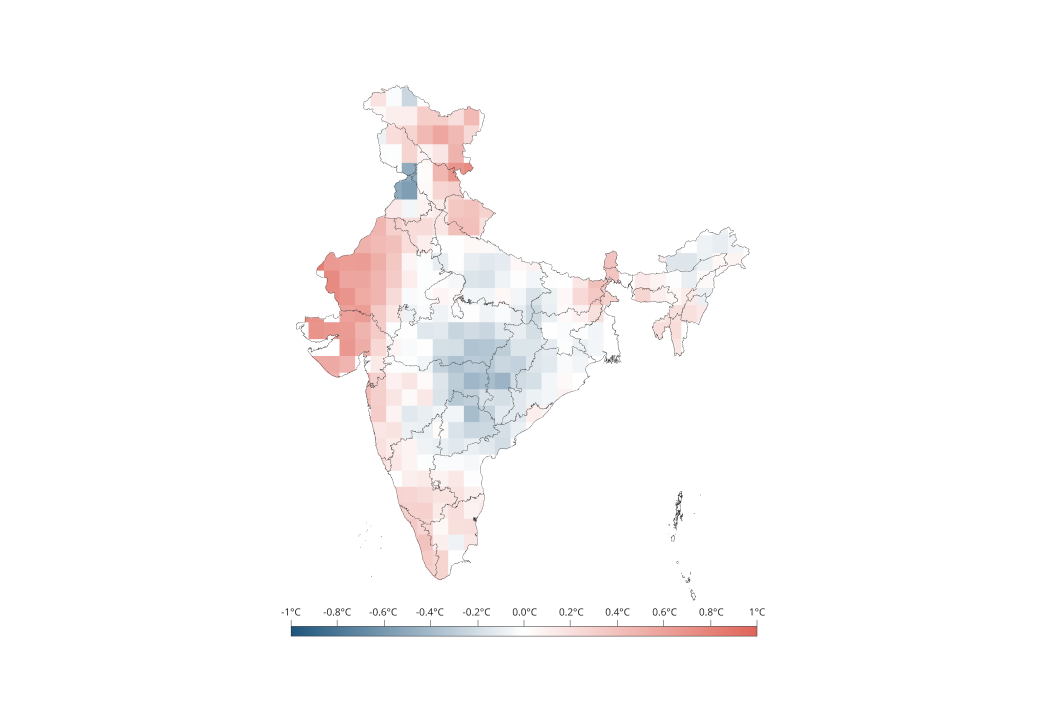
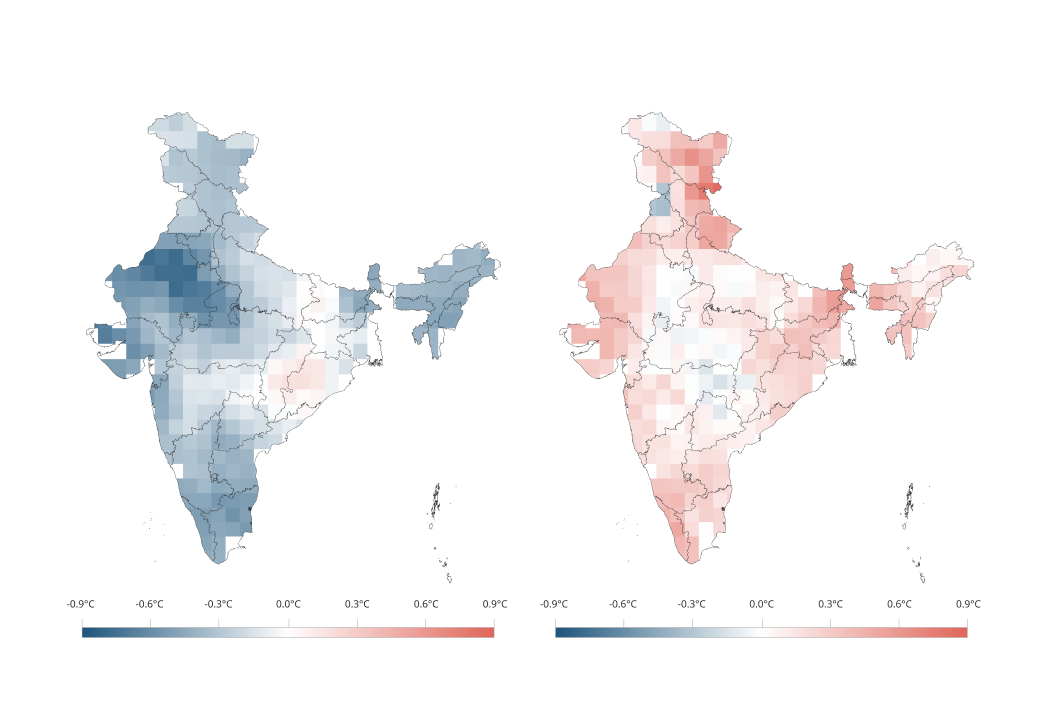
At the national scale, India's annual rainfall record shows only a mild change in the long-term trend. Over the past century, there has been a modest but statistically weak reduction in annual rainfall. The first half of the 20th century (1901-1959) experienced rainfall about 3.6% above the long-term average, while recent decades are effectively close to the baseline. However, this apparent stability masks considerable variability. Individual years have recorded substantial positive and negative departures. These fluctuations matter because even a moderate deviation at the national level often translates into devastating regional floods and droughts.
Classification of rainfall
To interpret rainfall variability consistently, the IMD classifies each year according to its percentage departure from the Long Period Average (LPA).[9] By grouping each year into one of the five categories, it illustrates how rainfall outcomes have been distributed historically and how this distribution has shifted across decades.[10]
The IMD classifies annual rainfall into the following categories:
- Deficient (less than 90% of the LPA) and below-normal (90-96% of the LPA) indicating drier‑than‑usual conditions;
- Normal (96-104% of the LPA) represents the expected range;
- Above-normal (104-110% of the LPA) and excess (more than 110% of the LPA) signal wetter‑than‑usual years.
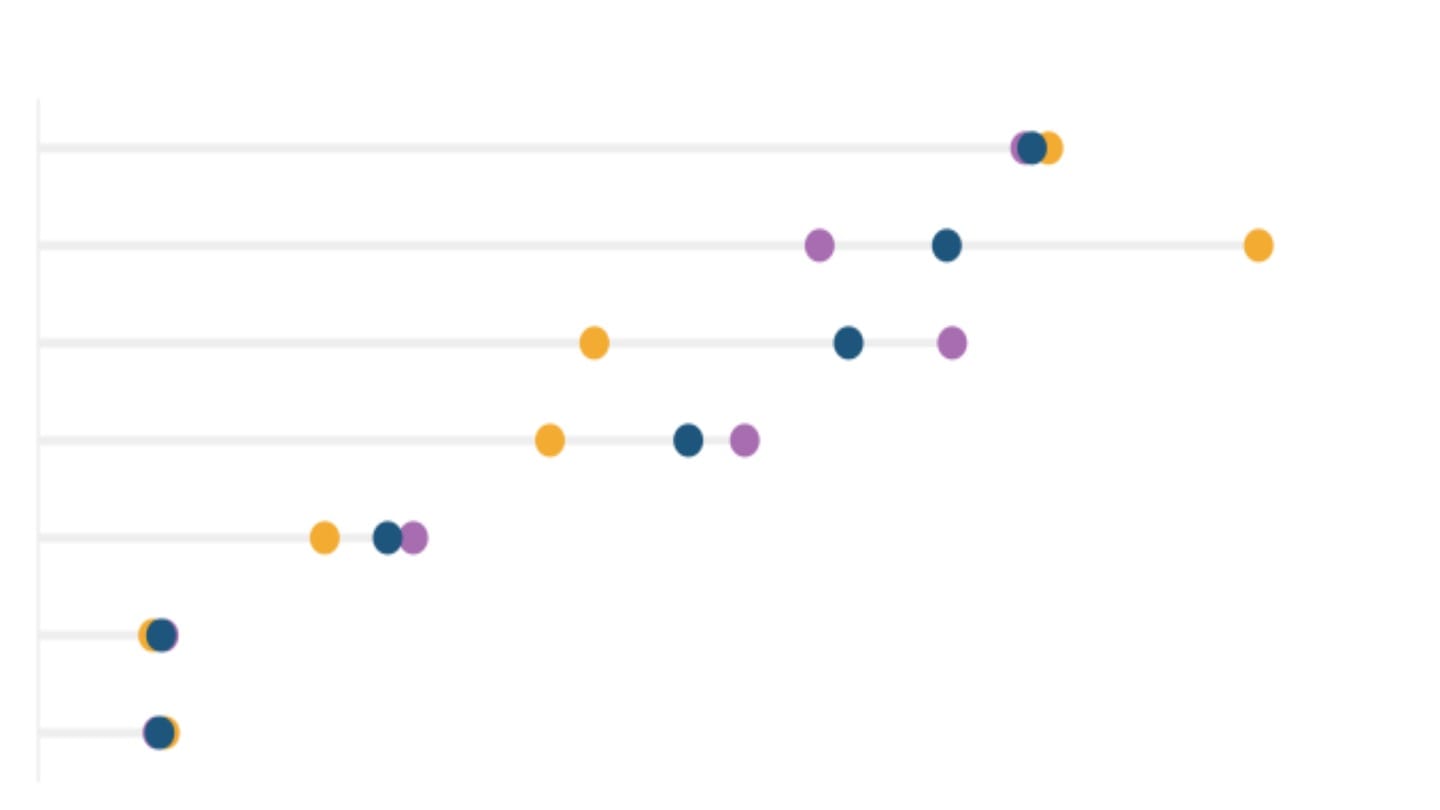
Across 1901-2024, the distribution of rainfall categories provides a useful picture of the variability in patterns of rainfall in India. Overall, the distribution shows that 27% of years fall within the normal range. A further 44% of years are either 'below normal' or 'above normal', meaning that they fall in the near-normal range. However, roughly one-third of years experience substantial departures from the long-term average. Of these, 10% of years saw deficient rainfall, while 19% saw excess rainfall. The presence of both deficient and excess years reflects the inherent variability of rainfall in India,[11] with significant implications for agriculture and water resources.
Cyclical shifts in rainfall
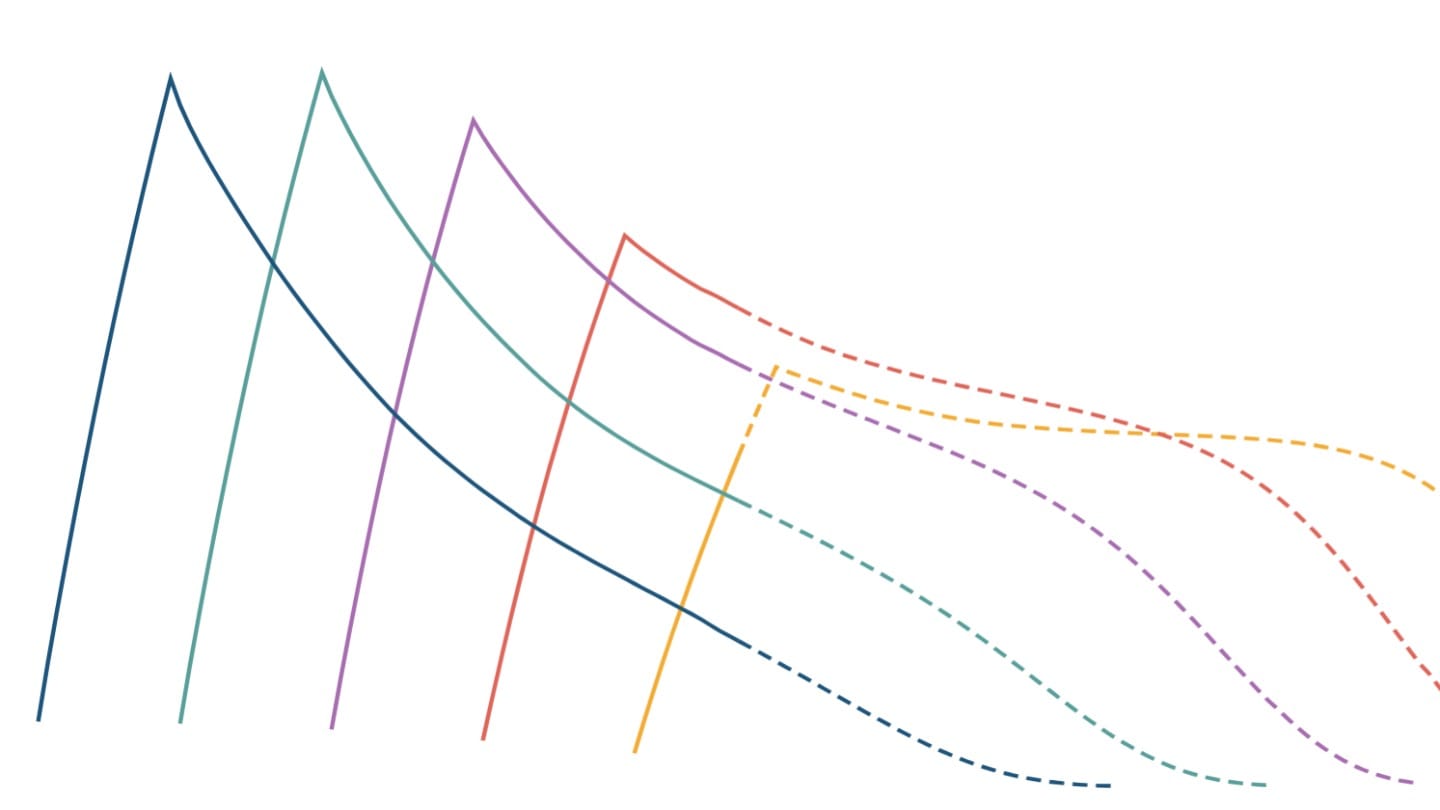
An annual breakdown of the classification of rainfall shows that India's rainfall does not follow a simple, sustained upward or downward trajectory. Instead, the record is marked by multi-decadal epochs[12] of relatively wetter, drier and more stable conditions. The early twentieth century was variable, followed by a notably wetter phase from 1920-1940, succeeded by a move towards more below-normal and deficient years between 1960-1970. The period post-2000 confirms the shift toward increased variability and the breakdown of the earlier multi‑decadal rhythm. The early 2020s are predominantly wetter than normal. These clusters illustrate why India's rainfall cannot be adequately described by its century-scale average alone: the experience of rainfall changes considerably depending on the period being examined.
Rainfall behaves differently from temperature
Patterns of rainfall in India are characterised less by a steady trend and more by alternating periods of surplus, deficit and stability. Importantly, these shifting patterns must be interpreted in the context of the inherent complexity of rainfall as a climate variable. While rainfall has oscillated between wet and dry epochs with no sustained long‑term trend, temperature has shown a clear and persistent upward trajectory.[13] Unlike temperature which responds relatively directly to concentration of greenhouse gases, rainfall is governed by a number of non-linear interactive feedbacks.[14] These processes operate across spatial scales making rainfall highly heterogeneous and variable across space and time.
[1] Challenges and Opportunities in Rainfed Agriculture (2025), Singh et. al., ICAR-Central Research Institute for Dryland Agriculture.
[2] In a gridded rainfall dataset at a spatial resolution of 0.25°, the country is divided into grid cells of roughly 25 × 25 km. Each grid cell represents an area-averaged estimate derived from multiple nearby rain gauge stations rather than a single-point observation. These datasets are constructed from a dense observational network, with quality control procedures applied to remove erroneous values and ensure temporal consistency before generating the gridded surface.
[3] While the national average displays limited systematic change when viewed over broad timescales, regional and seasonal patterns exhibit significant trends including declines in monsoon rainfall in parts of central and western India and increases in rainfall extremes in other regions.
[4] Tests of statistical significance for rainfall trends such as the Mann-Kendall (MK) test have been applied to determine whether observed changes over time are likely due to natural variability or represent a meaningful long-term trend. The MK test is widely used for analysing consistent increases or decreases over time without assuming a specific pattern in the data.
[5] Monsoon rainfall is influenced by interactions between land-sea temperature contrasts, atmospheric circulation, sea surface temperatures in the Indian, Pacific and Atlantic Oceans, snow cover and large-scale climate phenomena. Among the most important of these are the El Niño-Southern Oscillation (ENSO), which often suppresses monsoon rainfall during El Niño years and enhances it during La Niña years, the Indian Ocean Dipole (IOD), which can either offset or amplify ENSO's influence depending on its phase and the Madden-Julian Oscillation (MJO), which affects rainfall on intra-seasonal (weeks to months) timescales.
[6] The benchmark for what constitutes a "normal" year has been periodically reduced as the climate changes. The current baseline period is 1971‑2020, which replaced the 1961‑2010 period in 2022. As a result, the all‑India annual rainfall normal decreased from 1176.9 mm to 1160.1 mm (a reduction of 16.8 mm or 1.4%).
[7] El Niño and La Niña are opposite phases of the El Niño-Southern Oscillation (ENSO), a climate pattern in the tropical Pacific Ocean. El Niño (warmer ocean conditions) is generally associated with weaker monsoons and below-normal rainfall in India, while La Niña (cooler conditions) tends to strengthen monsoon rainfall. ENSO is a major driver of year-to-year variability in Indian rainfall, though its effects can vary depending on regional and ocean-atmosphere conditions.
[8] Parliament Question: Impact of La Niña on Climate Patterns (2025), Ministry of Earth Sciences, Press Information Bureau.
[9] Frequently Asked Questions (FAQs) on Monsoon, Climate Research and Services, Pune, India Meteorological Department (IMD).
[10] Because the annual LPA has been reduced (dropping by roughly 16.8 mm in the latest revision compared to the earlier normal of 1176.9 mm based on the 1961-2010), a year that might have been classified as "below normal" in the early 20th century may now be classified as "normal" or "above normal" because the average it is being measured against has decreased.
[11] Variability of Summer Monsoon Rainfall in India on Inter-Annual and Decadal Time Scales (2013), Joseph et al., Atmospheric and Oceanic Science Letters / Taylor & Francis.
[12] Epochs represent shifts in the underlying climate system driven by changes in ocean temperatures, atmospheric circulation, and large‑scale phenomena such as the El Niño‑Southern Oscillation (ENSO) and the Indian Ocean Dipole (IOD)¹. The IMD identifies epochs by analyzing the cumulative departure of rainfall from the long‑period average over successive years². When the departure remains consistently positive over a decade or more, it signals a wet epoch, and a dry epoch when consistently negative. This method smooths out year‑to‑year variability and reveals the underlying multi‑decadal rhythm of the monsoon
[13] Climate Change 2021: The Physical Science Basis, (2021), edited by V. Masson‑Delmotte et al., IPCC.
[14] Feedbacks are processes where a change in one climate variable (e.g., temperature, water vapour) leads to further changes that can amplify (positive feedback) or dampen (negative feedback) the original change. For temperature, the dominant feedbacks are relatively well understood and operate at large scales. For rainfall, feedbacks are more numerous, complex and harder to quantify.