The informal sector and informal employment are frequently mentioned in discussions on India's labour force or the economy, but its definitions are not well documented.
In this piece, we document the concepts and definitions recommended by international agencies, as well as the ways in which India's official labour statistics have adopted these definitions of what informality means.
What determines informality?
The two approaches to informality in international labour statistics are based on two fundamental concepts in economics: production and labour.
Economic activity or the production of goods and services is carried out by economic units such as enterprises or households.[1] The formal and the informal sectors are defined based on how these economic units are incorporated and what they do.[2]
Another way of understanding informality is through the working arrangements of people employed by these enterprises. Based on the status of their employment and the conditions of their work, the workforce can be categorised in two ways: formal employment and informal employment.[3]
The International Conference of Labour Statisticians (ICLS) hosted by the International Labour Organization (ILO) produces guidelines which are then adopted by countries for use in their own national statistics.
India's National Statistics Office conducts the annual Periodic Labour Force Surveys (PLFS), which use these guidelines to capture informality in India.
Employment in the formal and informal sector
This approach to informality is based on the characteristics of the enterprise in which the worker works.
International definitions
Indian labour statistics (as of 2026) use the informal sector guidelines developed by the 15th ICLS in 1993 to define the formal and informal sectors based on the characteristics of the enterprises.
Enterprises that are formally recognised as producers of goods and services in the form of registration with tax authorities or filing returns under certain laws comprise the formal sector. Enterprises with legal status such as private companies (financial and non-financial corporations) and the government make up the formal sector.
Unrecognised enterprises primarily run out of and by households that sell their produce or service in the market generally make up the informal sector.
The 15th ICLS guidelines left activities in agriculture that pertain to farming out of the scope of the informal sector although agriculture is largely an informal activity.[4] It pointed out that developing countries have a large agriculture sector and recommended keeping agriculture out of the purview of the informal sector while conducting labour surveys as collecting information on agricultural enterprises through labour surveys could incur significant costs. They advocated separate national surveys for agricultural enterprises. The fact that it is difficult to separate market sale and own-use consumption in such enterprises was cited as another reason. However, this could change in the future: more recent consensus from international agencies, such as the 19th ICLS (2013), proposes the inclusion of farming inside the informal sector.
The informal sector in India's labour statistics
The process of transforming the consensus reached on the international stage into the operational aspects of national labour surveys generally takes decades. India's employment surveys (EUS) used the 15th ICLS (1993) guidelines for the first time in the EUS of 2004-05. The same guidelines remain in operation for the most recent survey, the PLFS conducted in 2026.
The PLFS asks those respondents who report as workers about the "type of enterprise" they work in. Based on the ICLS guidelines, if a respondent says that she works in the government, public sector companies, private limited and listed companies, local bodies or autonomous institutions, she is said to be working in the formal sector.
Household enterprises such as proprietorships, where an individual is the sole owner of the enterprise, and partnerships, where two or more owners run a household enterprise, are categorised by the PLFS into the informal sector, but with an important exception: farming activities. Workers engaged in such enterprises are termed as informal sector workers.
In our work on informal employment, we group all enterprises not classified in the PLFS as formal or informal - those engaged in farming, households that produce only for own-use consumption, cooperatives, trusts and others - together as a residual category, called "Farming/others".
The PLFS records cooperatives, trusts, and households as separate types of enterprises. Cooperatives and trusts could either be registered or unregistered entities, and could fall either in the formal or the informal sector.[5] But the PLFS does not record information on their legal-administrative status. Since the two together account for only 1% of the national employment, we include them in the residual sector. The residual sector (named Farming/Other) also includes households that produce goods and services only for own-use consumption.[6]
Informal and formal employment
This approach looks at employment based on certain conditions that make a job formal in nature. It focuses on the employment benefits that an employee derives from the working arrangement with the employer.
International definitions
The ICLS recognised the informal sector and the need to measure it in the 1980s, and arrived at the first consensus on its definition in the 1990s. This approach was based on the type of organisation of the enterprise.
The 17th ICLS defined formal and informal jobs based on parameters such as registration under national labour laws, taxation status, availability of social protection or entitlement to employment benefits.[7]
When employment is covered by formal arrangements such as written contracts or social protections, it is termed as formal employment. Informal employment is defined as employment that is not governed by any formal arrangements between the economic unit and the worker.
Employees who work in the formal sector but without any formal arrangements are also considered to be in informal employment.
Informal employment in India's labour statistics
While the ILO-ICLS norms define formal and informal jobs, they do not specify how these criteria should be combined to create a measure of informal employment in the workforce. Countries have applied different criteria to do that.[8]
To measure informality from the point of view of conditions of employment, India's labour surveys started recording information on three aspects of the employer-employee relationship from the 61st round (2004-05). They covered whether there was a job contract, whether it offered any social security benefits, and whether the employee was eligible for paid leave.
The PLFS publishes the share of workers that report having these benefits separately. But the PLFS does not specifically term those who fulfil these conditions as having formal jobs.
In our work on informal employment, we define a formal job as having the following three features: a job contract that is for a period more than one year, at least one social protection among healthcare/maternity, provident fund/pension and gratuity, and being eligible for paid leave.[9]
Workers who reported having at least two of the three characteristics are considered to be in formal employment. Workers without formal jobs are considered to be in informal employment.
How the two approaches relate to each other
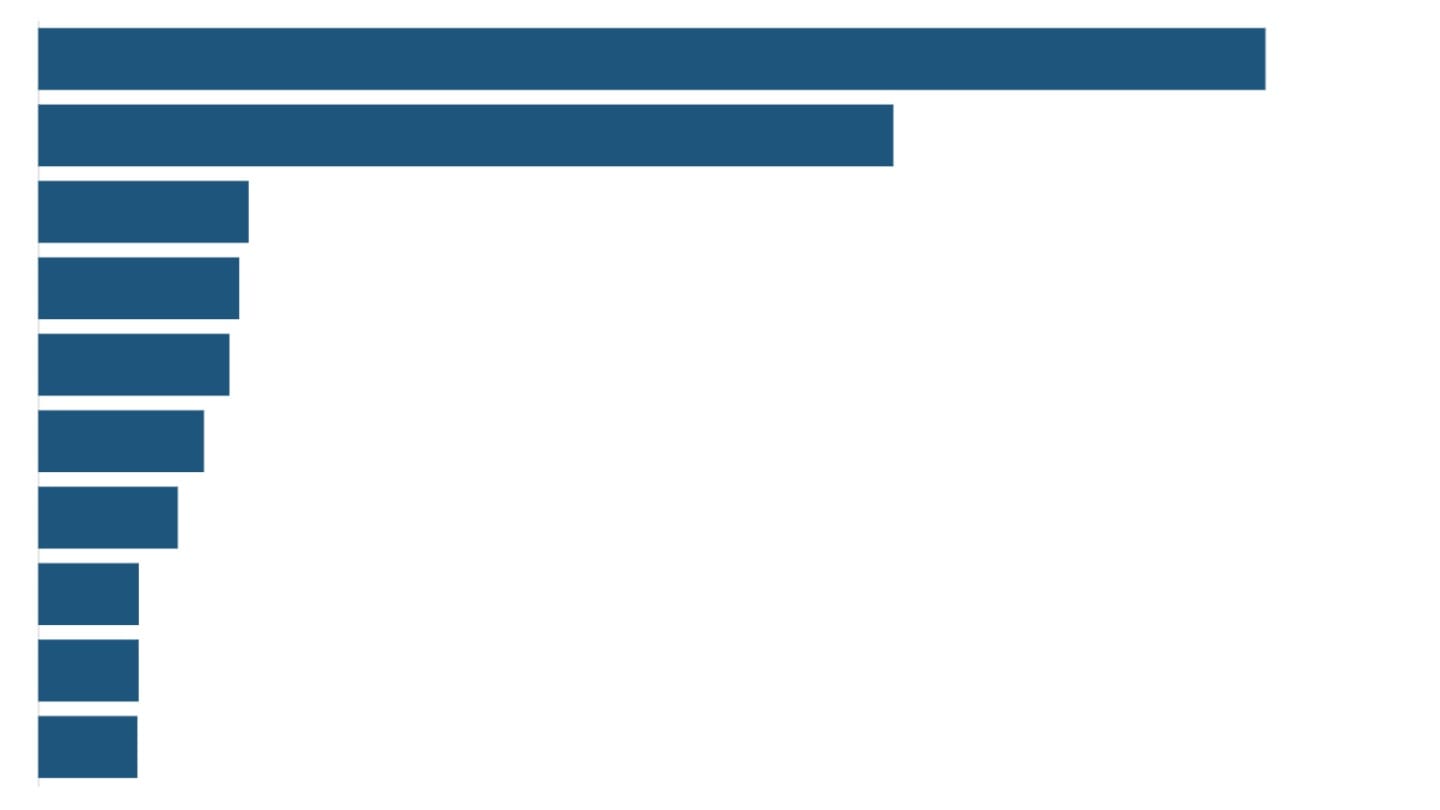
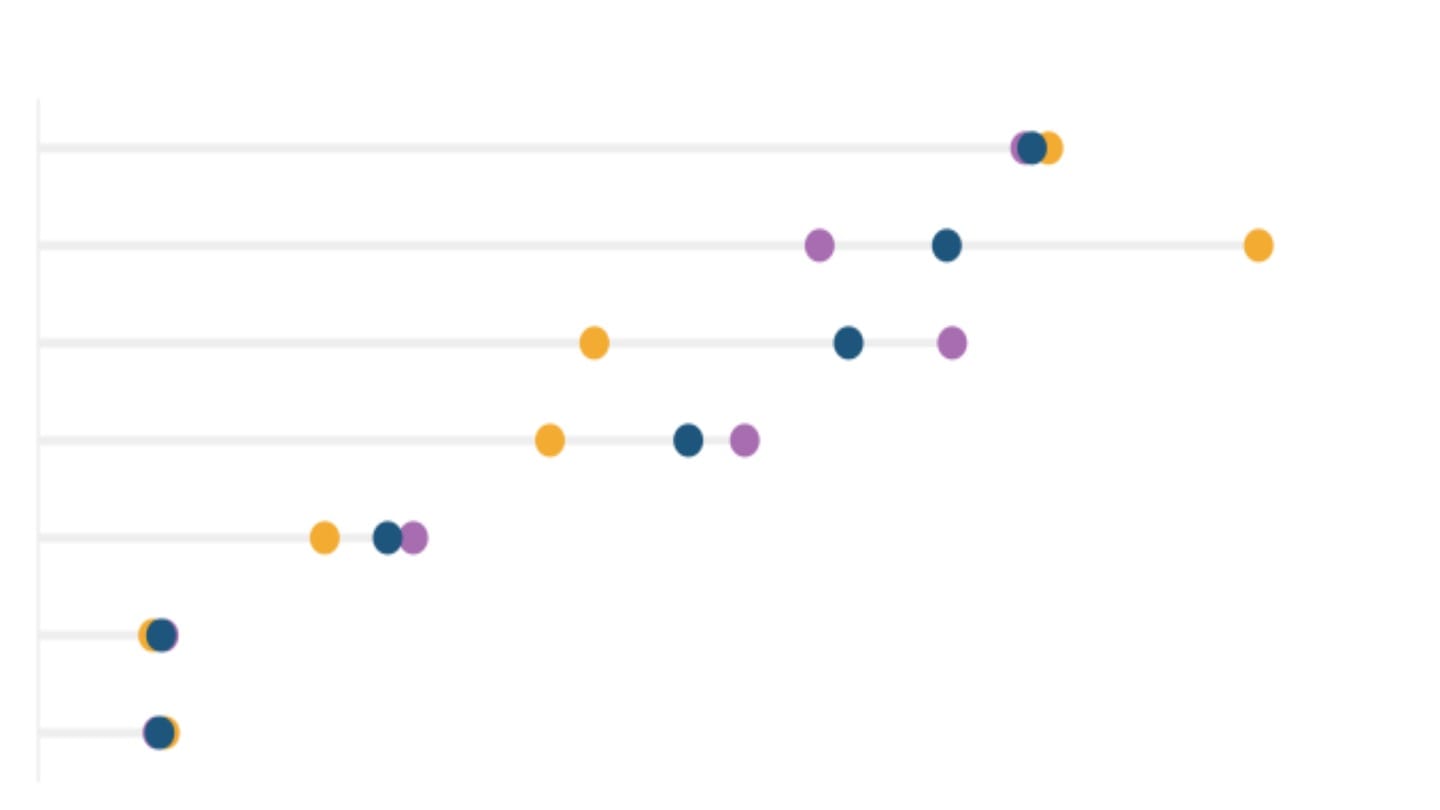
The two approaches produce similar estimates of the size of the informal workforce. The enterprise-based approach suggests that 12% of India's workforce is employed in the formal sector, while the protections-based approach suggests that a little less than 10% workers are in formal employment. This represents a small, yet significant difference.
One key reason for this difference is that the formal sector in India is not entirely made of formal jobs. About 30% of formal sector jobs are informal in nature, meaning that these are jobs in the formal sector, but without worker protections. One example is of government jobs, which are usually considered to be formal jobs. Yet, half of the government jobs in rural areas were informal jobs in 2024, according to the PLFS. These include jobs in the Union and state governments, local bodies, and autonomous bodies run by the government.
One key difference between the two approaches is how the two look at self-employment, which accounts for 60% of India's workforce.
In the enterprise-approach, not all self-employment is in the informal sector; workers who are self-employed in farming, which is categorised as being out of both the formal and informal sectors, are counted in the residual sector.
In this approach, self-employment is roughly equally divided into the informal sector and the residual sector led by farming. About 180 million self-employed workers are engaged in the informal sector, while close to 190 million self-employed are in farming and other sectors.
In the working conditions approach, on the other hand, self-employment in any form is a part of informal employment.[10]
[1] The statistics on informality generally cover the informal nature of two kinds of activities, namely the productive activities of economic units and the productive activities of persons in these economic units.
[2] The 15th ICLS guidelines, used in India's statistics to define the informal sector, do not include agricultural activities related to farming in the informal sector. Such economic activities are considered to be out of the formal and the informal sector.
[3] The set of informal jobs according to 17th ICLS guidelines includes employees not covered by legal protections or social security, apart from own-account workers, employers, contributing family workers, and members of informal producer cooperatives.
[4] The 15th ICLS advocated the option to exclude agricultural activities due to practical challenges such as the increased cost of data collection and the need to adapt data collection methods. Newer guidelines have proposed removing this option.
[5] Cooperatives and trusts that are registered under law would be categorised under the formal sector, but unregistered units in these categories could fall in the informal sector. India's labour survey does not distinguish between the two, and they are thus categorised neither as a part of the formal sector nor as a part of the informal sector.
[6] The 15th ICLS agreed upon the exclusion of households exclusively engaged in the production of goods and services for self-use. Agreements in more recent ICLS have resulted in the carving out of the "households own-use production sector" as a sector that is separate from the formal and the informal sectors.
[7] Apart from the self-employed workers, who are by definition engaged in informal jobs, employees (salaried or casual workers) are considered to be in informal jobs if their employment relationship is not subject to national labour laws, income tax, social protection or entitlement to employment benefits.
[8] Although the 17th ICLS guidelines define formal jobs and informal employment using a set of criteria, they do not specify the way in which they could be combined such that they suit the situation in respective countries.
[9] The PLFS includes three questions that determine the nature of employment: existence of a job contract, availability of social protection, and eligibility for paid leave. But since international guidelines do not arrive at a conclusive combination, the PLFS leaves out the construction of formal and informal employment using this information. We generate a method that generates estimates of formal and informal employment for India using our own method that uses these three points of information.
[10] Self-employed workers in agriculture are left out of the informal sector in the enterprise-based approach. But in the working conditions approach, they are subject to the same conditions that categorises a job as formal or informal; "Measuring informality: A statistical manual on the informal sector and informal employment", Point 2.88.