The total annual rainfall across India has remained broadly stable since the early twentieth century. However, this stability masks important differences in how rainfall is distributed across seasons. These changes have important implications for agriculture, water resources and climate adaptation planning, where seasonal timing and reliability of rainfall are as important as the magnitude of rain received. Using more than 120 years of India Meteorological Department (IMD) data, we look at the distinct trends emerging across pre‑monsoon, monsoon, post‑monsoon and winter, to understand not just how much it rains, but also how the patterns of rainfall are changing.
This seasonal lens reveals a more nuanced story than national averages alone can tell. By breaking down the data by season, we uncover trends such as the decline of winter rainfall, the increasing variability of post monsoon rain and a modest increase in pre‑monsoon rainfall. The strongest long-term changes are occurring not in the magnitude of annual rainfall, but in the timing, distribution and variability of rainfall across seasons. Understanding these seasonal shifts helps explain changing weather and climatic patterns and supports better planning for water resources, agriculture and climate adaptation.
Measuring changes in seasonal rainfall
To enable consistent seasonal analysis across India's diverse climate zones, the IMD has transformed station-based rainfall observations into spatially continuous gridded datasets[1]. These datasets fill in the gaps between rainfall measurements from individual stations across a regular grid covering the entire country. IMD provides rainfall data at a 0.25° × 0.25° resolution allowing seasonal totals and anomalies to be analysed at relatively fine spatial scales. This gridded approach is particularly useful for seasonal studies, as it enables consistent comparison of rainfall patterns across regions and over time.[2]
The analysis presented in this article combines three complementary measures of seasonal rainfall change: long-term trends which show whether rainfall has increased or decreased over time; year-to-year variability measured using the Coefficient of Variation (CV)[3] which indicates how consistently rainfall occurs; and rainfall anomalies which compare observed rainfall with its long-term average to identify unusually wet or dry seasons. Together, these measures provide a more complete picture of how India's rainfall seasons are changing.
Rainfall anomalies are expressed as the deviation of observed rainfall from a long-term average usually expressed as a percentage. This allows seasons with very different average rainfall to be compared on a common scale and indicates whether a season was wetter or drier than the 'normal'.
The benchmark used for such comparisons is the Long Period Average (LPA), the average rainfall over a defined region calculated over a long-term base period, typically spanning 30-50 years.[4] Using such an extended period smoothens out short-term fluctuations in individual years caused by climate phenomena such as El Niño[5] and La Niña,[6] providing a stable reference against which individual years can be evaluated.
The India Meteorological Department (IMD) currently uses the 1971-2020 period as its official baseline. Based on this, the LPA for India's south-west monsoon is 868.6 mm, with rainfall between 90% and 110% of the LPA classified as normal. Rainfall below this range is classified as below normal or deficient, while rainfall above it is categorised as above normal or excess. Similar LPAs are calculated for winter, pre-monsoon and post-monsoon, providing a consistent basis for comparing seasonal rainfall across the annual cycle.
Total seasonal rainfall
India's rainfall is governed by distinct seasonal systems, following the classification of the IMD. The south-west monsoon (June-September) dominates the hydro-climate of India delivering approximately 75-80% of annual rainfall. This core monsoon period is driven by the seasonal reversal of winds and the formation of cyclonic systems in the Bay of Bengal. The north-east monsoon (October-December), also termed the post-monsoon season, provides a crucial secondary rainfall period, particularly for southern states. Additional precipitation arrives through winter rainfall (January-February), associated with western disturbances originating in the Mediterranean region[7] and pre-monsoon rainfall (March-May), which brings thunderstorms, lightning and hail.
The absence of a strong directional trend indicates that natural variability continues to dominate the seasons. Among India's four seasons, pre-monsoon rainfall is the only season to show a modest long-term increase over the period 1901-2024.
While these four seasons together determine cumulative rainfall, they have not changed uniformly over the last 120 years. Annual rainfall has remained broadly stable, but long-term trends, year-to-year variability and rainfall anomalies reveal distinct changes across seasons.
Winter rainfall: a significant decline
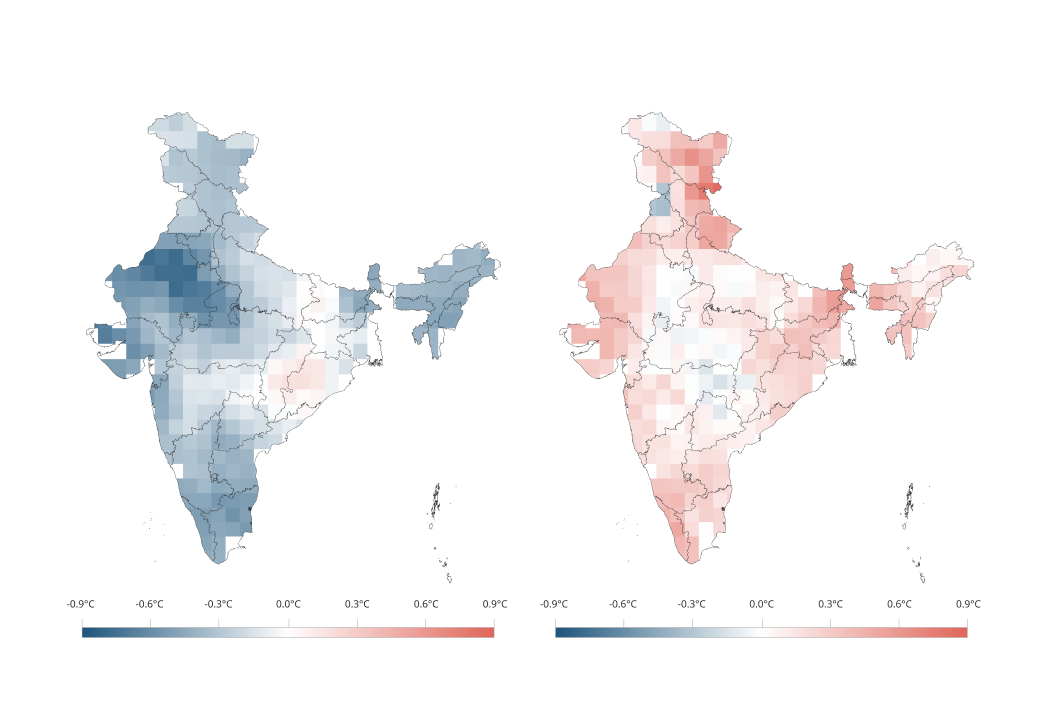
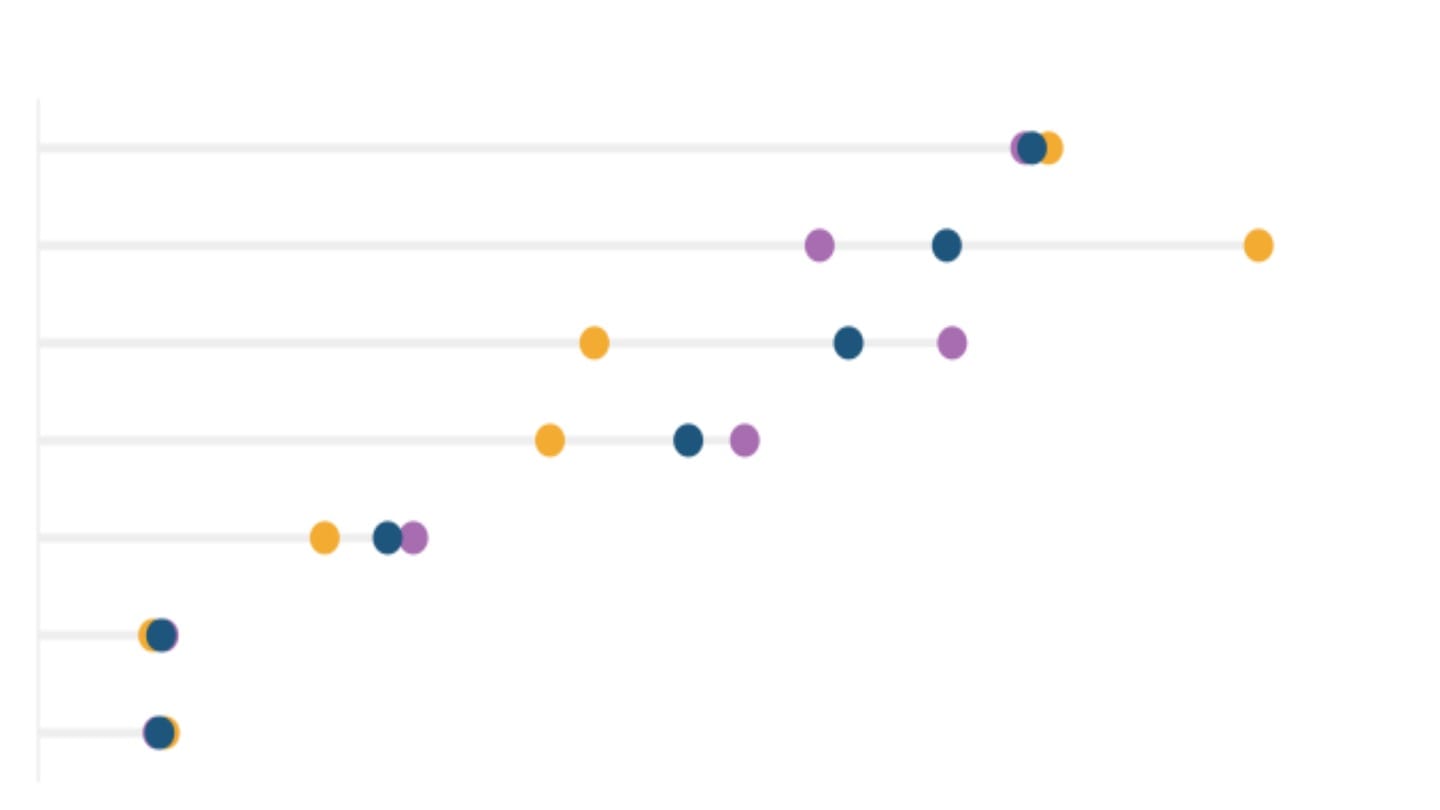
Of the four seasons, winter shows the most pronounced decline in relative terms with rainfall decreasing by about 25% (over 1901-2024), indicating a substantial weakening. Notably, winter is also the only season where the trend is statistically significant suggesting that this decline is robust and consistent.
Winter rainfall is also the most variable from year to year with the highest Coefficient of Variation (34%) reflecting the erratic behaviour of western disturbances. For northern India, where winter rains fed by western disturbances are crucial for the rabi crops (especially wheat and mustard), this shift translates directly into higher irrigation demand leading to increased energy usage and greater groundwater stress.
Rainfall anomalies reinforce this long-term decline. In the first half of the 20th century (1901-1950), winter rainfall was on average 16.6% above the LPA indicating that winters during this period were generally wetter than the baseline. In contrast, in recent decades (2015-2025) have averaged 3.2% below the LPA representing a net decrease of nearly 20 percentage points from surplus to deficit, reflecting a shift towards drier winter conditions.. At the same time, winter rainfall remains highly variable, ranging from +92.7% (2005) to -71% (1902), highlighting the high volatility of winter alongside its directional decline. This means that even though winters are becoming drier on average, one year can still experience exceptionally heavy winter rainfall while another may receive very little. Together these findings suggest that winter rainfall has not only declined over the long term, but also remained highly erratic and uncertain.
The south-west monsoon: stable despite a modest decline
The monsoon season shows a moderate decline of 2.5% in total rainfall over the period of 1901-2024.[8] However, this decline is not statistically significant, meaning that it could be attributed to natural multi‑decadal variability since the monsoon has historically alternated between wet and dry epochs lasting 30‑40 years.[9]
The south-west monsoon has the lowest variation (9.8%), signifying that despite occasional droughts and floods, the total monsoon rainfall at all‑India level is steady.
Rainfall anomalies reinforce this picture of long-term stability. During the first half of the twentieth century (1901-1959), monsoon rainfall averaged around 3.9% above the Long Period Average (LPA). In recent decades (2015-2025), this surplus has narrowed to approximately 0.6% above the LPA, indicating a modest weakening but no clear departure from normal conditions.
Taken together, the long-term trend, low variability and relatively stable rainfall anomalies suggest that the south-west monsoon has remained comparatively resilient. This also explains why the annual rainfall in India has remained broadly stable despite more pronounced changes in the other seasons.
Pre-monsoon rainfall: A modest increase
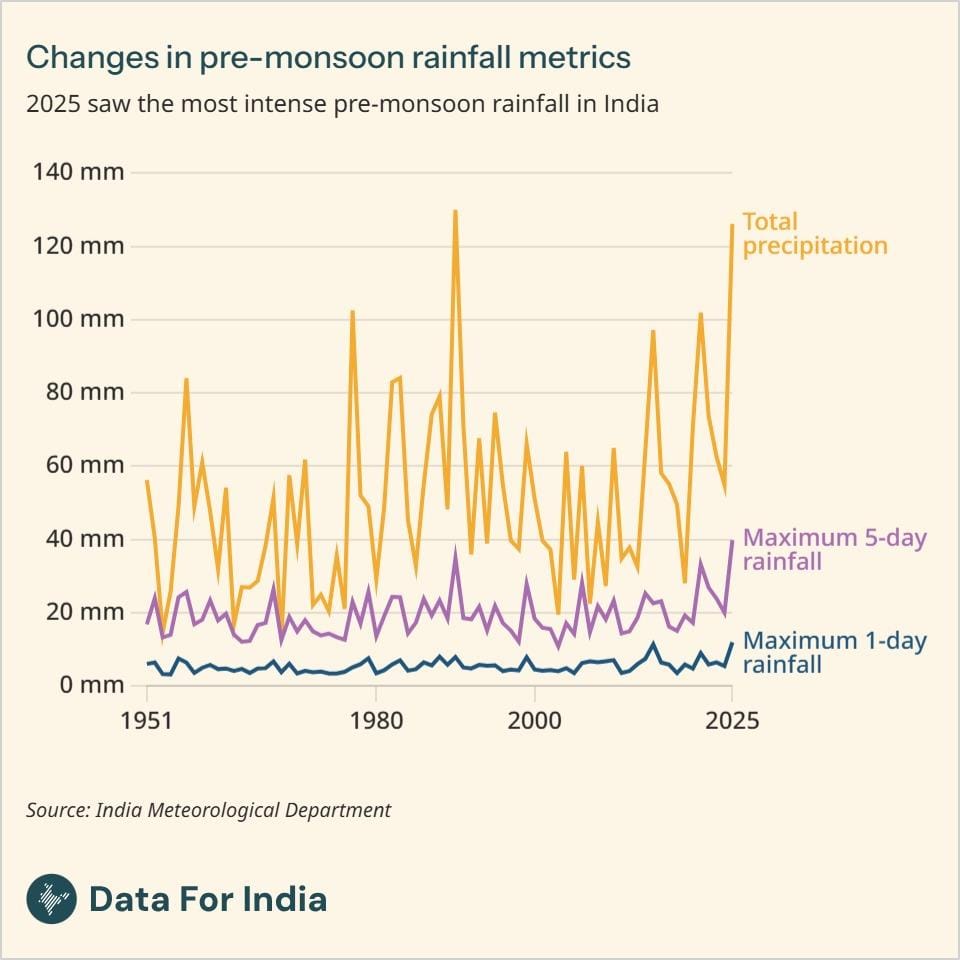
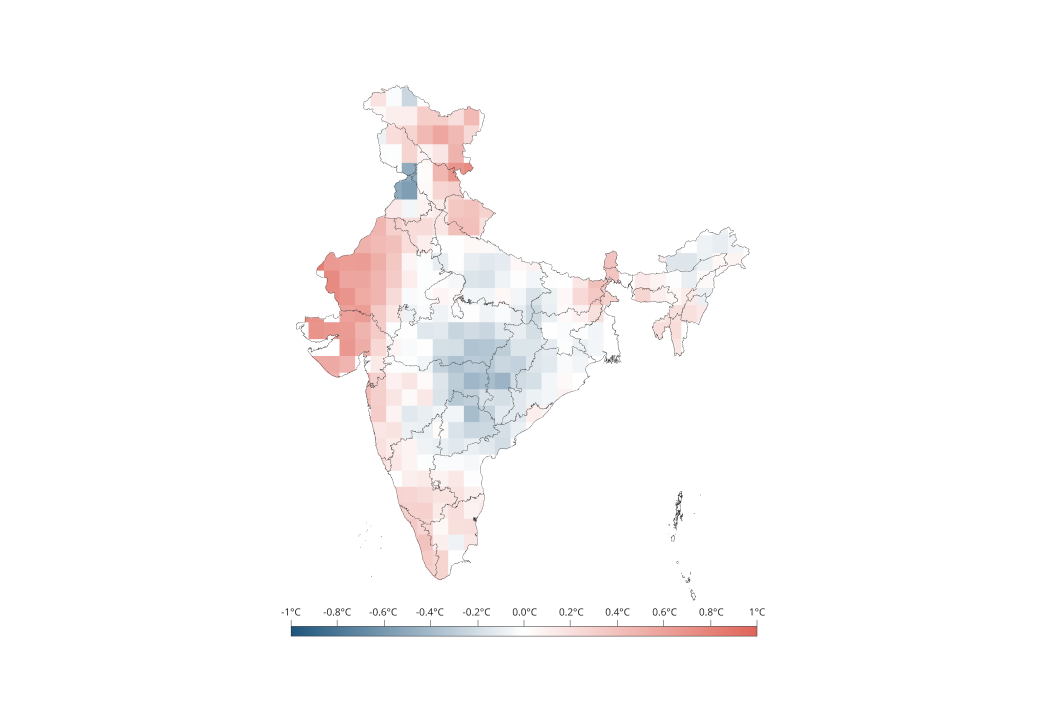
The pre-monsoon season is the only period exhibiting an increase with annual rainfall rising by approximately 5.8% (between 1901-2024) suggesting a modest but sustained rise. This aligns with recent IMD observations of more frequent pre‑monsoon thunderstorms and heavier May rains, including the highest all India average monthly rainfall for May in 2025 since 1901.[10] While the increase is considerably smaller than the decline observed in winter rainfall, it nevertheless distinguishes the pre-monsoon from the other seasons, all of which exhibit either declining or broadly stable rainfall totals.
Despite this increase, pre-monsoon rainfall continues to show considerable year-to-year variation. With a Coefficient of Variation (CV) of 17%, the season is more variable than the south-west monsoon but less erratic than winter and post-monsoon rainfall.
Rainfall anomalies reinforce this picture of only modest long-term change with the season remaining centred around a largely unchanged long-term average, despite considerable year-to-year variability.. These variations reflect the influence of short-term weather systems, including thunderstorms and convective activity that characterise the pre-monsoon season.
Using the IMD's 1971-2020 climatological baseline, the LPA for pre-monsoon rainfall is 129.01 mm. Over the period 1901-2024, the mean anomaly is just -0.28 mm, indicating that seasonal rainfall has remained close to the long-term average. The near-equal distribution of positive anomaly years (58) and negative anomaly years (66) indicates that despite modest long-term increases in total rainfall, pre-monsoon rainfall has largely remained centred around its average. Nevertheless, pre-monsoon rainfall shows considerable year-to-year variability. Seasonal rainfall anomalies typically remain within a range of about -23.6 mm to +29.4 mm around the LPA with 80% of years falling within this band.
Overall, pre-monsoon rainfall shows a contrasting pattern compared to winter and the monsoon season. While it is the only season with a long-term increase in rainfall, the magnitude of this change remains modest, and rainfall continues to vary considerably from year to year.
Post-monsoon rainfall: increasing variability
Over the period 1901-2024, post-monsoon rainfall shows a slight decline of 2.3%, indicating relatively minor long-term changes compared to other seasons. However, the overall trend masks important changes.
Post-monsoon rainfall stands out for its variability and a shift in long-term behaviour. In contrast to the south-west monsoon, the post-monsoon season (or the north-east monsoon) is far more variable with a variation of 27% making it significantly less predictable. This difference is particularly important for southern India where a substantial share of annual rainfall occurs during October-December. Unlike the relatively reliable south-west monsoon, the higher variability of post-monsoon rainfall leads to more frequent swings between floods and dry spells.
Rainfall anomalies also indicate a shift in the behaviour of the season over time. Against an LPA of 118.37 mm (1971-2020), the average anomaly between 1901 and 2024 was only +2.53 mm, indicating that rainfall has remained close to the long-term average when considered over the entire record. While the long-term trend remains relatively small, average post-monsoon rainfall has declined from around 4.3% above the LPA in the early decades to near-normal levels in recent years, indicating a loss of historical surplus rainfall. Since the 1960s, the season has experienced more frequent deficit years and fewer extreme surplus years.
The changing seasonal patterns underpinning stable long-term rainfall
The long-term rainfall record shows that India's rainfall story is not one of a clear decline in annual totals, but of changing seasonal patterns. While the south-west monsoon, which contributes the largest share of India's annual rainfall, has remained relatively stable despite a slight weakening, other seasons show more distinct shifts. Winter rainfall has experienced the most pronounced change, with a substantial and statistically significant decline over the last 120 years, alongside high year-to-year variability. In contrast, pre-monsoon rainfall is the only season showing a long-term increase, although the rise remains modest.
[1] The analysis of long-term rainfall trends relies on observational records maintained by the India Meteorological Department. These datasets combine observations from thousands of rain gauges across India and extend back to 1901 making them among the longest rainfall records available for any tropical monsoon region.
[2] In a gridded rainfall dataset at a spatial resolution of 0.25°, the country is divided into grid cells of roughly 25 × 25 km. Each grid cell represents an area-averaged estimate derived from multiple nearby rain gauge stations rather than a single-point observation. These datasets are constructed from a dense observational network, with quality control procedures applied to remove erroneous values and ensure temporal consistency before generating the gridded surface.
[3] The Coefficient of Variation (CV) tells us how much the rainfall changes from year to year. A low value means the rainfall is consistent, while a high value means it is unpredictable with some years being wet, while others are dry.
[4] The benchmark for what constitutes a '"normal'" year has been periodically reduced as the climate changes. The LPA for the southwest monsoon was changed from about 890 mm (1951-2000) to 880 mm (1961-2010) and is currently 868.6 mm (1971-2020),
[5] El Niño and La Niña are opposite phases of the El Niño-Southern Oscillation (ENSO), a climate pattern in the tropical Pacific Ocean. El Niño (warmer ocean conditions) is generally associated with weaker monsoons and below-normal rainfall in India, while La Niña (cooler conditions) tends to strengthen monsoon rainfall. ENSO is a major driver of year-to-year variability in Indian rainfall, though its effects can vary depending on regional and ocean-atmosphere conditions.
[6] Parliament Question: Impact of La Niña on Climate Patterns (2025), Ministry of Earth Sciences, Press Information Bureau.
[7] The western disturbance is an extra-tropical storm originating over the Mediterranean that brings winter rain and snow to northern India and is critical for rabi crops. Due to climate change, the frequency and intensity of strong western disturbances have declined while their activity has shifted toward the pre‑monsoon months, contributing to a drying trend in the winter rainfall.
[8] Total change in seasonal rainfall over 1901-2024 is calculated by using the trend slope (mm/year) to obtain percentage change relative to the long‑term seasonal mean (1901-2024). Percentage change is then obtained by dividing this total change by the long‑term seasonal mean and multiplying by 100. This method expresses the net linear shift relative to the long term mean allowing for comparison across seasons.
[9] An 'epoch' refers to a multi-decadal phase typically spanning around 30-40 years during which the monsoon exhibits a tendency toward relatively wetter or drier conditions compared to the LPA. These epochs do not imply uniform conditions, rather they are characterised by substantial year-to-year variability with individual dry or wet years occurring within an overall wetter or drier phase.
[10]Press Release on Climate Summary for the month of May 2025 (2025), India Meteorological Department, Ministry of Earth Sciences.