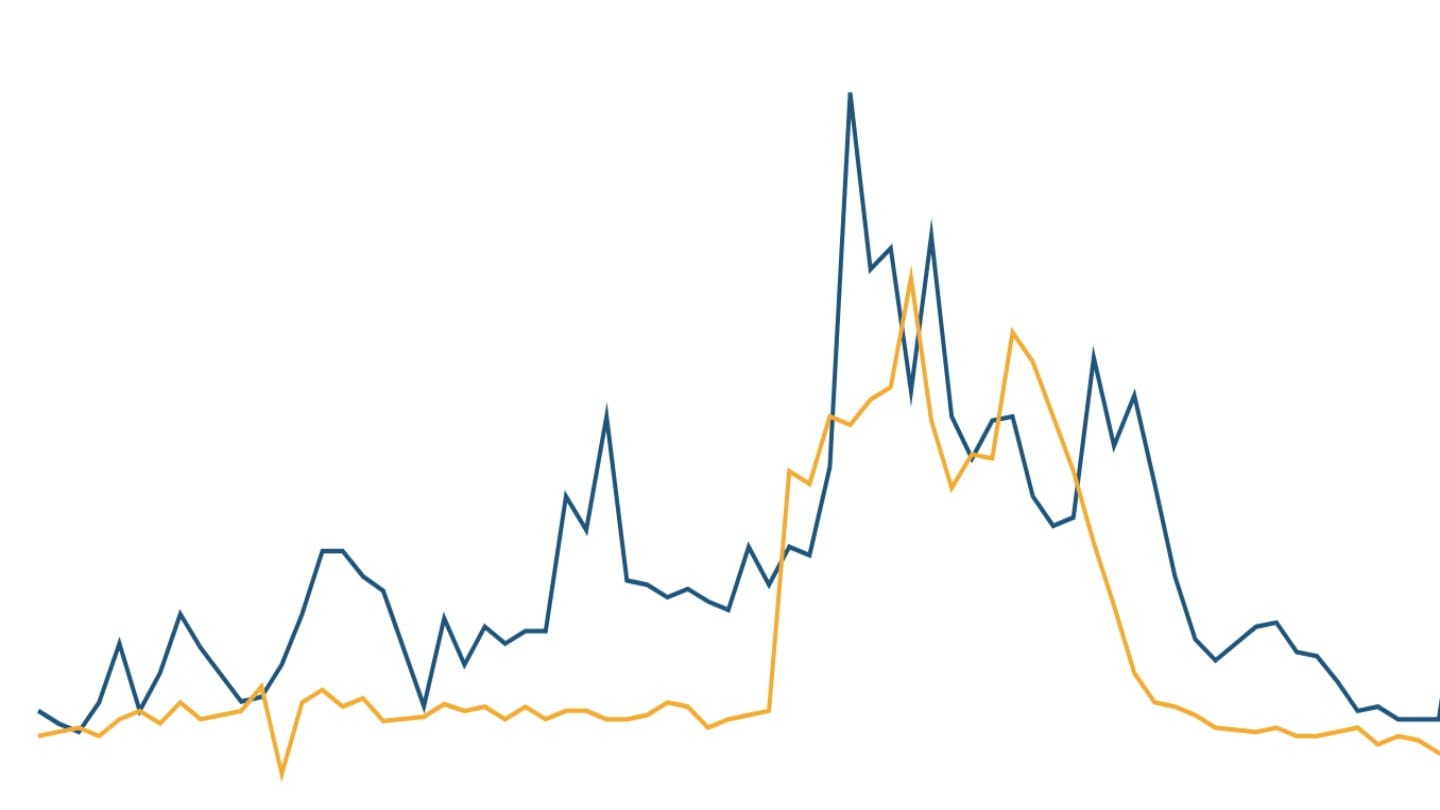
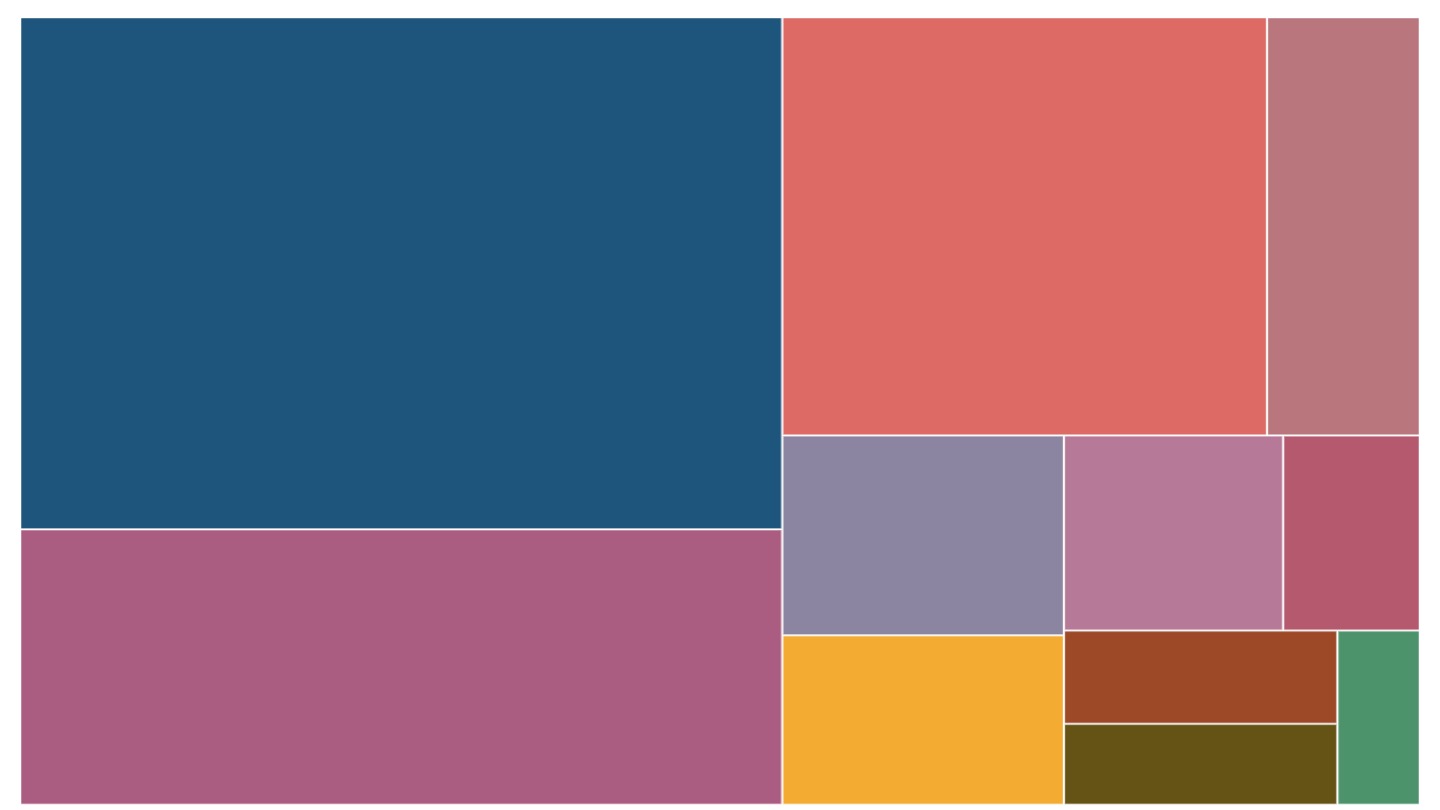
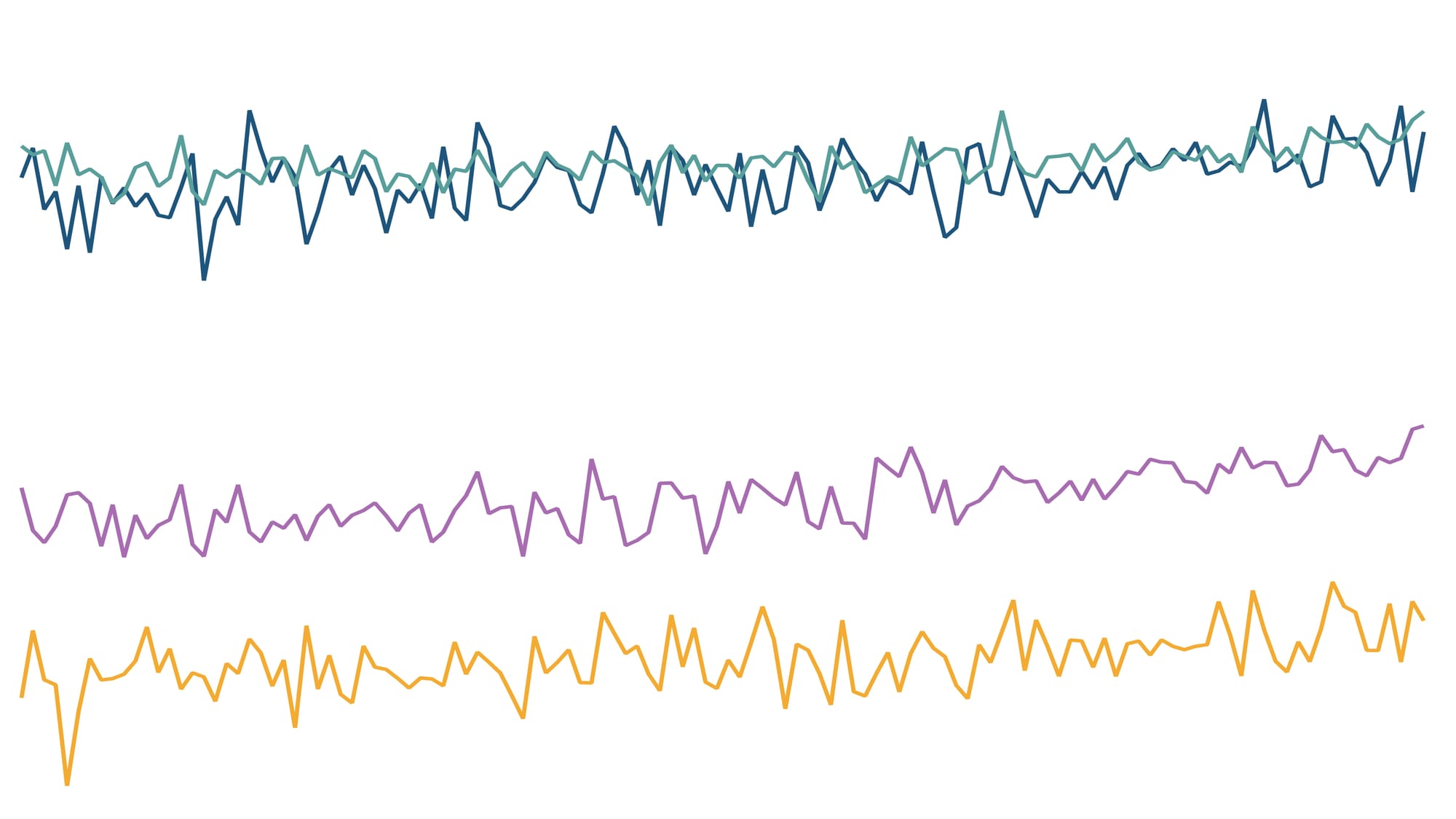
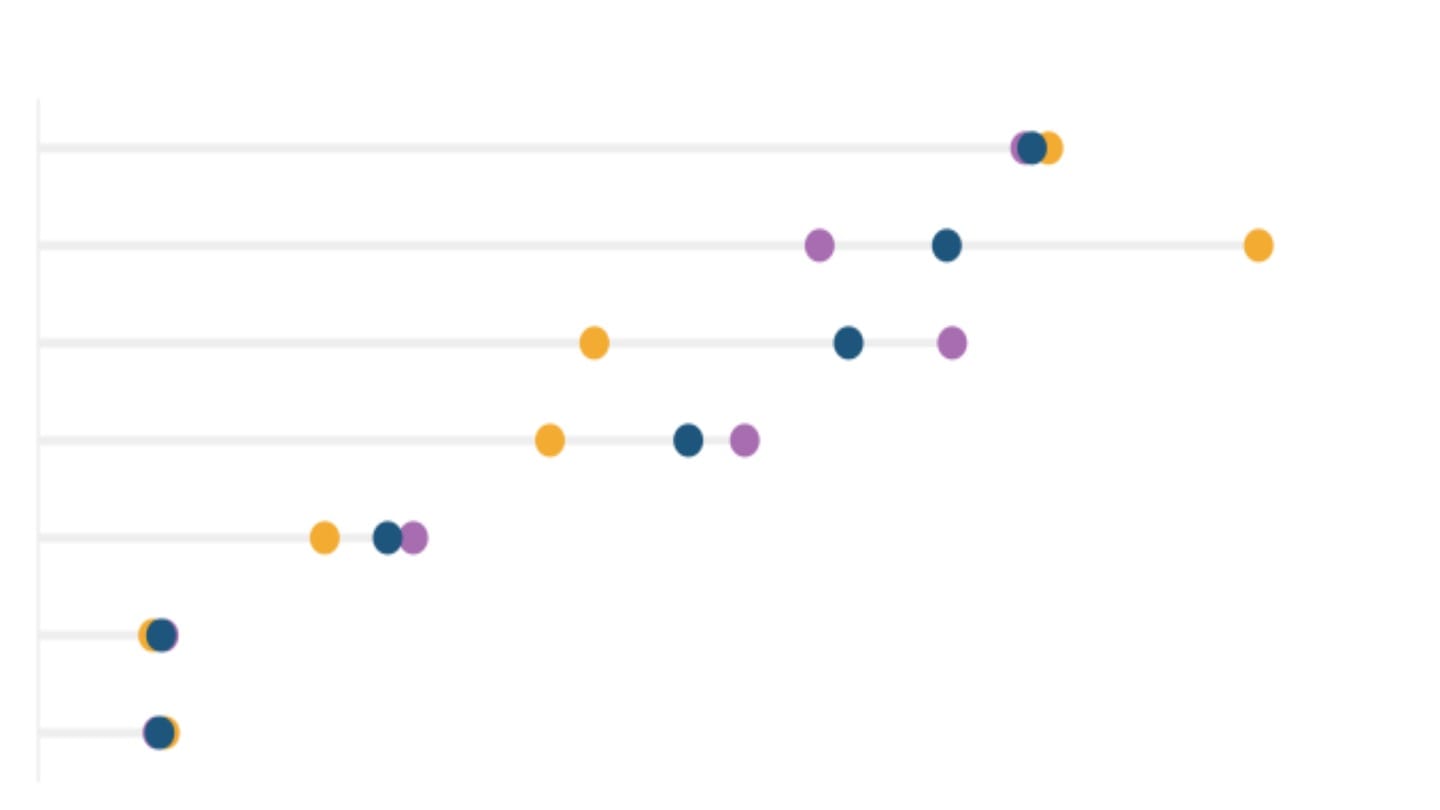
The issue of judicial pendency - the mounting number of cases pending before courts that are yet to be finally decided or 'disposed of' - has become an area of concern in India. At the end of 2025, the Indian government reported that there were 54 million cases pending across the three levels of the Indian judiciary - district and subordinate courts, High Courts and the Supreme Court. District and subordinate courts, the first rung of the judicial system in the country, account for nearly 48 million of these pending cases.[1] Not only is the issue of pendency large, but it's also growing. Between 2018 and 2025, the number of new cases filed every year outstripped those disposed of by courts in most years.[2]
A growing pendency number signifies increasing delay for litigants,[3] and has therefore been a major cause of concern for the judiciary and governments. The Law Commission of India noted that, "Denial of 'timely justice' amounts to denial of 'justice' itself . . . Timely disposal of cases is essential for maintaining the rule of law and providing access to justice which is a guaranteed fundamental right. However . . . the judicial system is unable to deliver timely justice because of [the] huge backlog of cases."[4]
Trends in pendency in Indian courts
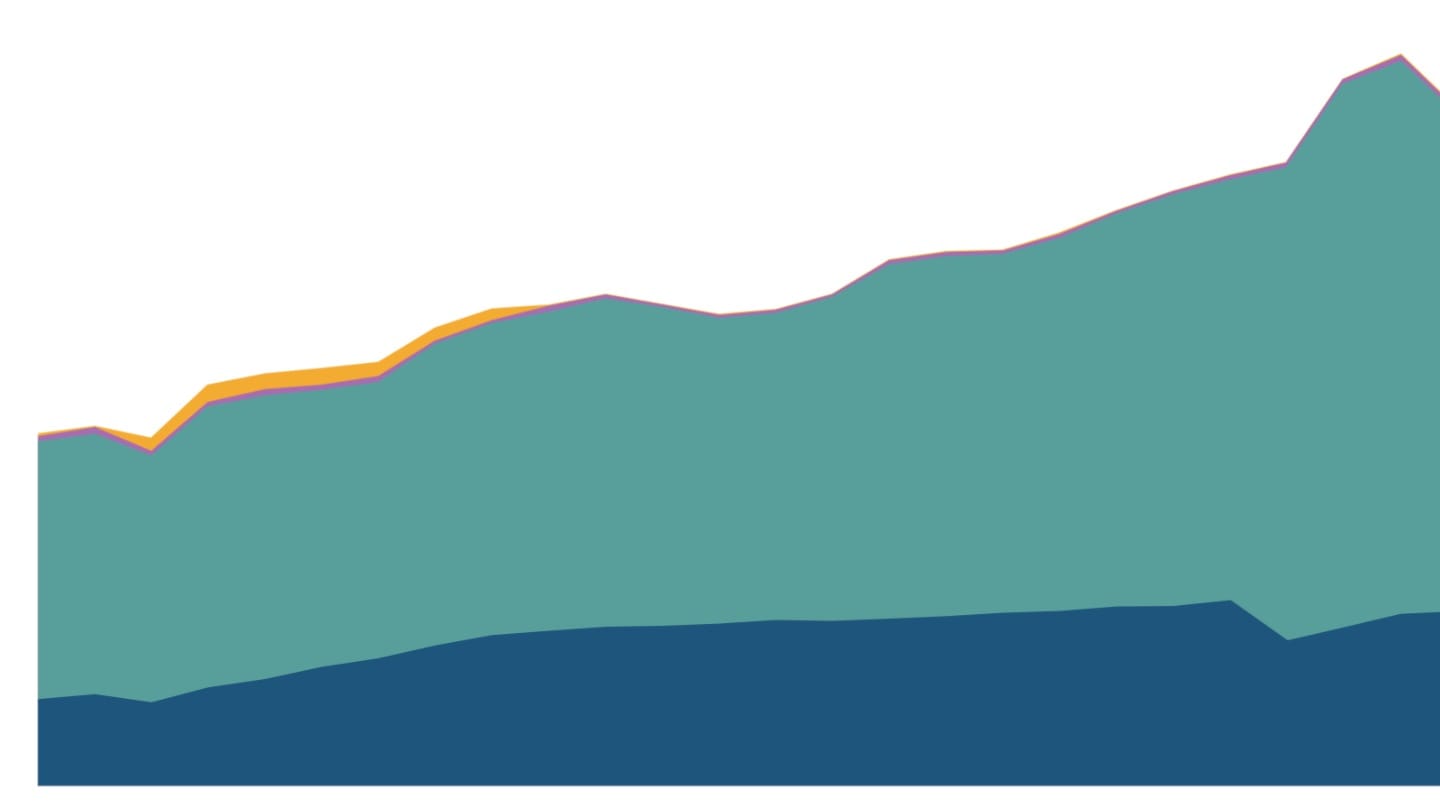
The total pendency at the end of 2025 was 54 million cases, a rise of 80% over the last decade. The pendency number for the subordinate courts shows the biggest change, from 26 million to 48 million cases, an 85% increase. A big chunk of the increase was between the end of 2019 and the end of 2021, a period during the COVID-19 pandemic which kept the courts from functioning effectively.[5]
The pendency in all High Courts cumulatively and in the Supreme Court of India have both gone up nearly 50% in this period.
Trends in pendency among Indian states
Among Indian states, some in particular have seen their pendency worsen substantially.
In the subordinate courts of the National Capital Territory of Delhi and Haryana, the pendency increased threefold in both, from under half a million to 1.6 million and 1.5 million, respectively, over the last decade. Uttar Pradesh and Maharashtra were the two big states where pendency doubled in the same period, from 5.5 million to 11.3 million and three million to six million, respectively.
On the other hand, subordinate courts in Gujarat were the only ones that reduced their cumulative pendency over the last decade.
Among the High Courts of Indian states, the High Courts of Rajasthan, Himachal Pradesh and Uttarakhand saw considerable increase in their pendency in this period, the first by 200% and the latter two by over 150%. However, there were a few High Courts that brought down their pendency, including Tripura, Jammu & Kashmir and Ladakh, and Calcutta High Courts.
The magnitude of pendency
Not only are cases pending before Indian courts - they have also been pending for a long time.
In the district and subordinate courts, nearly one in three cases have been pending for longer than five years, and one in ten for longer than ten years.[6]
The state of delay is worse in the High Courts, where almost every other case is older than five years, and every fourth case older than ten years. It is marginally better in the Supreme Court, where just over one in four cases are older than five years and 45% cases are in their first year.
The case-age distribution varies quite dramatically between states. In Bihar, for instance, more than half of all cases are older than five years. At the other end, only 6% of cases in subordinate courts in Tripura are older than five years. Other smaller states also fare better than larger states which have a larger number of courts and caseloads. Some researchers have attributed the pendency in Bihar and Uttar Pradesh to inadequate infrastructure, and in particular to the fact that on an average the two states have just two court complexes in every district as opposed to a state like Andhra Pradesh which has 14 in every district.[7]
Among the High Courts, the Allahabad High Court which serves the state of Uttar Pradesh, and the Bombay High Court which serves the states of Maharashtra and Goa, have the majority of their cases older than five years.
Civil and criminal
Broadly, cases are classified as civil or criminal in nature.
Civil cases here include suits that are proceedings initiated by private parties over rights and obligations against other private parties, as well as appeals filed by any of the parties against an order of a court below it. Before the High Courts and the Supreme Court, civil cases also include most of the litigations on constitutional questions.
At the level of district and subordinate courts, the category of criminal cases includes trials to determine guilt before both the Magistrates and Sessions Judges as well as applications for bail. Challenges to orders passed in such cases and certain Constitutional cases before the High Courts and the Supreme Court when they involve the criminal process-for instance, related to arrests, detentions and police investigations-are also considered criminal cases.
While all three types of courts hear both types of cases, there is a wide discrepancy in the ratio between civil and criminal cases pending before subordinate courts on one side, and the High Courts and the Supreme Court on the other.
About 23% cases were civil and 77% cases were criminal in nature before the subordinate courts as of March 2026. This is the reverse of the Supreme Court where 79% were civil and 21% were criminal cases.
In the High Courts, this split was 70% and 30%. This is in part because of writ petitions, which are petitions filed before the High Court and the Supreme Court for the enforcement of fundamental rights and law, are an important part of the two courts' original jurisdictions,[8] and are also the biggest category of cases pending before High Courts. Writ Petitions are more commonly filed in respect of subject matters that are civil in nature than those that are criminal in nature.[9] As a result, there are 18 civil writ petitions pending for every one criminal writ petition. High Courts are also sometimes the first courts people approach when they have a civil dispute, for instance when the dispute involves a high monetary value. Criminal cases are however not first brought to High Courts for the trial process.[10] Criminal cases are almost exclusively directly tried in subordinate courts. These are cases mainly filed at the behest of the police while representing the state, and form the biggest category of cases pending before the subordinate courts, overshadowing the civil cases that are mostly filed by private citizens.
What drives high pendency?
Judicial pendency has proved to be a difficult problem to solve for the judiciary and the executive.
One part of the problem is the shortage of judges as well as staff at all levels of the judiciary. In early 2025, the overall vacancy in the High Courts was found to be 33% and in subordinate courts to be 21%.[11] The Allahabad High Court, for instance, is among those with the highest vacancy of judges and pendency.[12] There was also a notable vacancy with respect to non-judicial staff that includes stenographers and law clerks. However higher judge strength alone does not ensure a higher disposal rate of cases.[13]
Inadequate court infrastructure, including a shortage of functioning courtrooms, court complexes and judges' housing, is another issue that affects the ability of the judiciary to function smoothly.
Inordinate delays during the court processes, whether during witness examination or pronouncement of judgment also leads to a high average time of disposal. Most cases pending in the subordinate courts are at the witness appearance stage.[14] Excessive adjournments sought by lawyers, non-appearance of witnesses and judges' absence are some reasons cases may be stuck during the court process.[15]
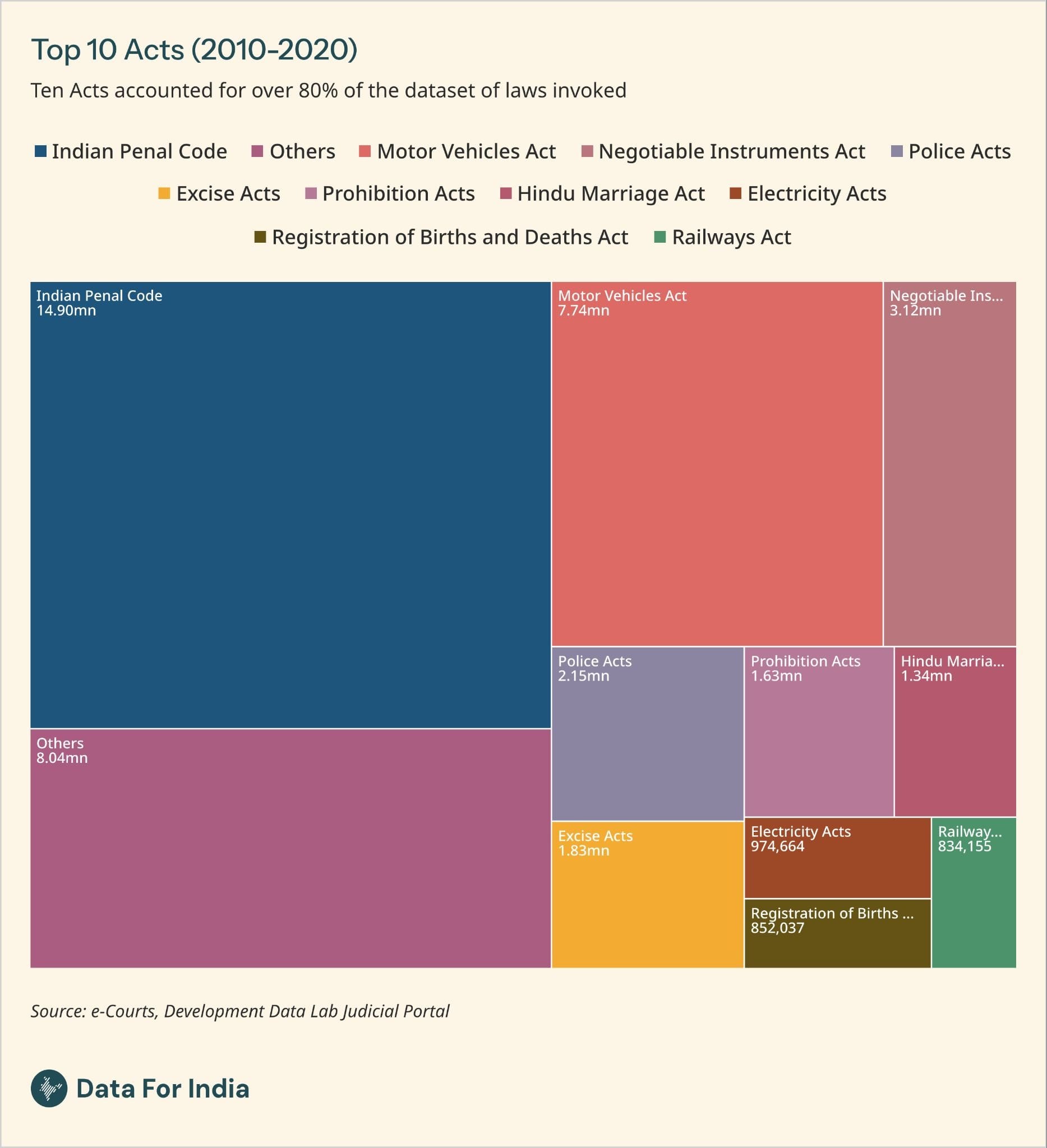
Beyond these issues, there is also the question of why so many cases are in the court system. One of these is the high number of appeals that the government itself files against lower court orders of which many fail.[16] Additionally, cases that involve traffic and other small violations that are punishable by fines also appear to push up the number of new cases filed in the subordinate courts.[17] These two data points also point to the fact that bringing down pendency requires the state to re-evaluate at least some questions around criminalisation and litigating.
One of the strategies adopted to reduce cases in court is the promotion of the Alternative Dispute Resolution mechanism where instead of the usual process, disputes are resolved through either less formal means like conciliation, mediation and Lok Adalats, or expert-determination such as arbitration, so that workload can shift out of courtrooms to other dispute-resolution fora that might work faster. Similarly, different tribunals have been set up to decide special cases like those under Company Law and Tax Codes. Many technological solutions too have been adopted over the last few decades, including online case-filing facilities, virtual courts, digitisation of records, an integrated case management system and the linking of police, prisons, courts and other institutions, as well as the ongoing integration of artificial intelligence tools into the judicial administration workflow.
[1] The District and subordinate courts, consisting of courts presided over by Civil Judges and District Judges on the civil side, and Magistrates and Sessions Judges on the criminal side, are the main courts of first instance, meaning that litigants approach them to file fresh civil cases, and are where criminal trials typically take place.
[2] The 2018 to 2025 institution versus disposal data has been taken from the National Judicial Data Grid (NJDG) portal.
[3] Sundaramurti Ramesh, The Cost and Efficiency of Judiciary as a Public Good, Daksh (April 27, 2026). Daksh's analysis suggests that the average time of disposal had increased significantly to 9 years by 2026.
[4] Law Commission of India, 'Arrears and Backlog: Creating Additional Judicial (wo)manpower' (July 2014).
[5] The 2014-2025 pendency data for subordinate courts by state, each High Court and the Supreme Court has been taken from the answers provided by the Ministry of Law and Justice in the Parliament on 16 December 2022, 4 December 2025, 13 February 2026 and 19 March 2026, which was taken from National Judicial Data Grid (NJDG) and the Supreme Court's records. The 2014-2020 pendency data taken by the Ministry from the Supreme Court's records is significantly lower for the Bombay High Court and the Madras High Court than the 2021-2025 data taken directly from NJDG, and is reflected in a jump in the data for these two courts between 2020 and 2021. This is as a result of different sources of data and does not reflect changes in the pendency numbers alone.
[6] The data for case-age pendency for subordinate courts in each state and union territory, each High Court and the Supreme Court was taken from the NJDG portal for the present date as on March 30, 2026.
[7] Shubham Pandey and Uday Shankar, Issue of Rising Arrears and Pendency in Indian Judiciary: A Consequence of Non-Adherence to Policy Recommendation and Uninformed Policymaking, SCC Online Times (February 7, 2023).
[8] High Courts and the Supreme Court have certain original civil and criminal jurisdiction, meaning that litigants can approach the courts directly instead of going first to the subordinate courts and reaching the two courts only upon appeal. Other examples of this include disputes between two states, or a state and the centre that the Supreme Court has the power to hear, as well as an election petition where election results can be challenged that High Courts have the power to hear.
[9] Subject matter of civil writ petitions could vary from issues such as those of individual appointments and admissions to larger concerns that may be taken up in public interest. On the other hand, the subject matters of criminal writ petitions may be illegal detentions, police investigations, custodial violence where time is often of the essence.
[10] The criminal trial is the process to determine guilt of the accused and includes recording of evidence and examination of witnesses.
[11] India Justice Report: Ranking States on the Capacity of Police, Judiciary, Prisons and Legal Aid (2025).
[12] India Justice Report: Ranking States on the Capacity of Police, Judiciary, Prisons and Legal Aid (2025).
[13] Arunav Kaul, Ahmed Pathan and Harish Narasappa, Deconstructing Delay: Analyses of Data from High Courts and Subordinate Courts in Approaches to Justice in India, Daksh (2018). Daksh in their analysis found a weak correlation between case clearance rate (the ratio of instituted cases to disposed cases) and judges' strength.
[14] National Judicial Data Grid- District Court of India (accessed on April 16, 2026).
[15] Vidhi Centre for Legal Policy, Inefficiency and Judicial Delay: New Insights from the Delhi High Court (March 2017).
[16] Aparna Chandra, Sital Kalantry and William H. J. Hubbard, Explosion, Exclusion, Evasion: The Burden of Backlogs in Court on Trial: A Data-Driven Account of the Supreme Court of India (2024). The authors found that in 73% of the cases admitted by the Supreme Court, governments were the appellants. The success rates of these appeals are varying, with lower than 50% success in tax matters for instance.
[17] In recent years, governments have attempted simplifying and digitising the process of paying fines through setting up of virtual courts.