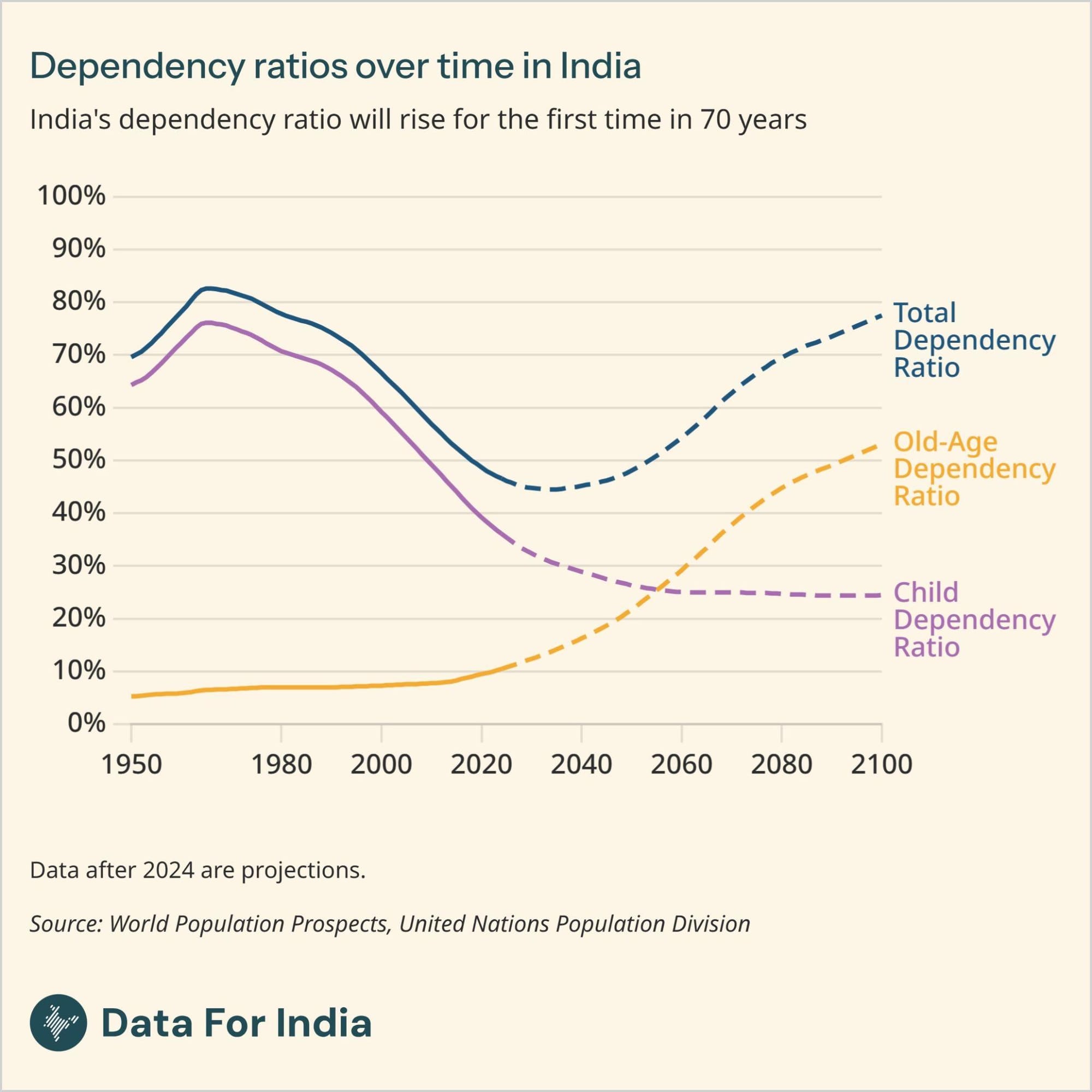
The gap in life expectancy between India and the UK has halved since Independence
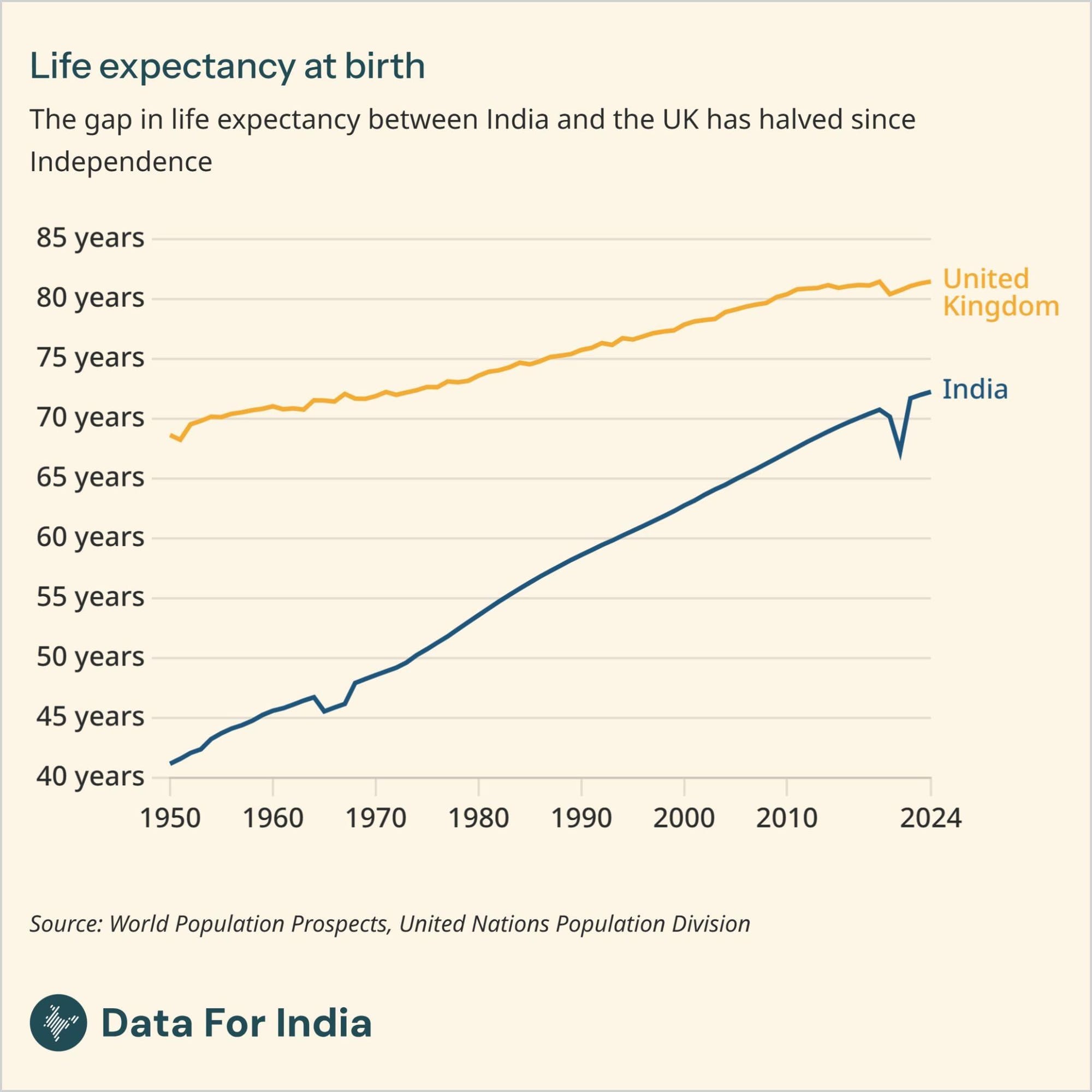
In 1950, a child born in India could expect to live only until the age of 41, while a child born in the United Kingdom the same year could expect to live to 69 years.
Life expectancy at birth is the average number of years a newborn would live if they were exposed to the sex- and age-specific death rates prevailing at that time. This is a hypothetical measure that assumes current mortality rates will remain constant throughout the individual's life, providing a snapshot of a population's overall health and mortality conditions at that time. Data on life expectancy for the countries of the world is periodically estimated by the United Nations Population Division.
In 1950, India was one of the world's poorest and least developed countries. By 2024, not only had life expectancy in India gone up to 72 years, but the gap between India and the UK had also narrowed substantially, to now being less than a decade apart.
The only recent time that life expectancy in India slid backwards was during the COVID-19 pandemic, when life expectancy fell in most countries, reflecting the prevailing health conditions at the time. By 2022, life expectancy was back to its pre-pandemic levels, and on the path to growth, once again.
Read more about why life expectancy is different at different age groups.