India's female labour force participation rate - the share of adult women who are in the workforce - is something of a global anomaly. While the share of Indian men in the workforce is comparable to other similar countries, the share of women in India who are doing work outside of household chores is among the lowest in the world.
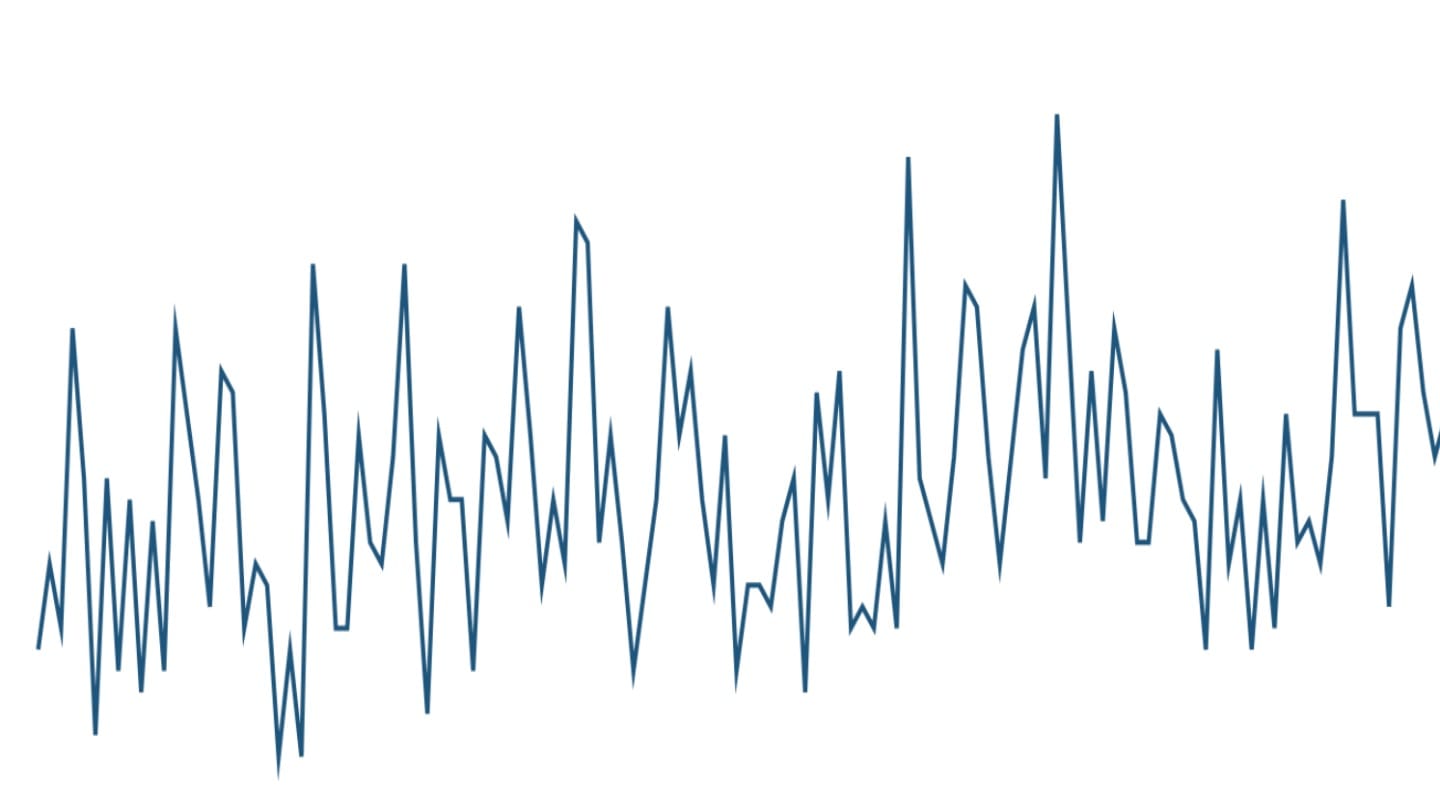
After declining for more than two decades from 2005 and reaching its lowest level in 2018, the female labour force participation rate increased sharply. In absolute terms, the number of women in the workforce more than doubled, from just over 100 million in 2018 to more than 200 million in 2024.[1]
Does this change mean that India's workforce is becoming more gender-equal?
Share of women in the workforce
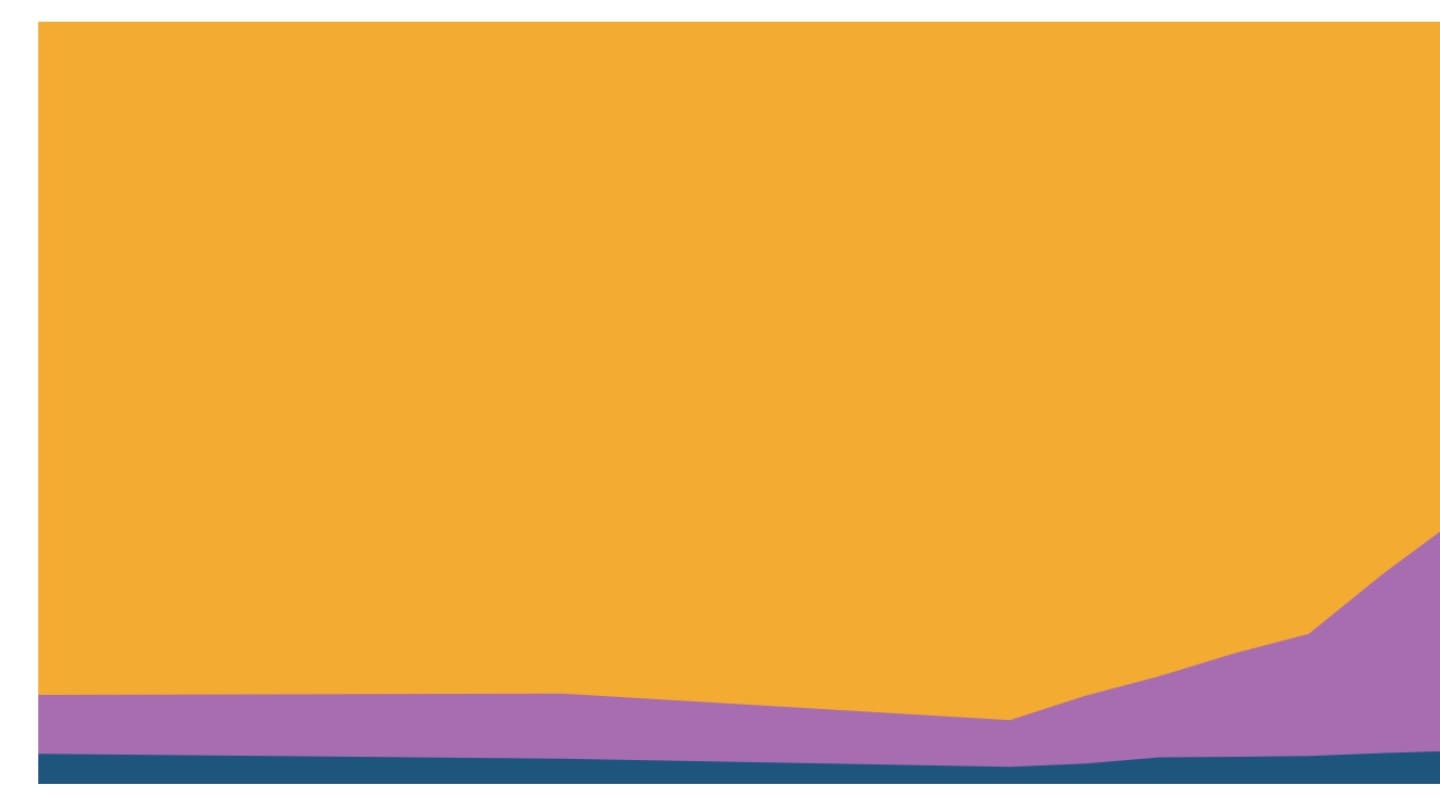
About one in three people in the workforce are women in 2025. While the share of women who are in the workforce has increased since 2018, it has only recovered to the level seen before 2005.
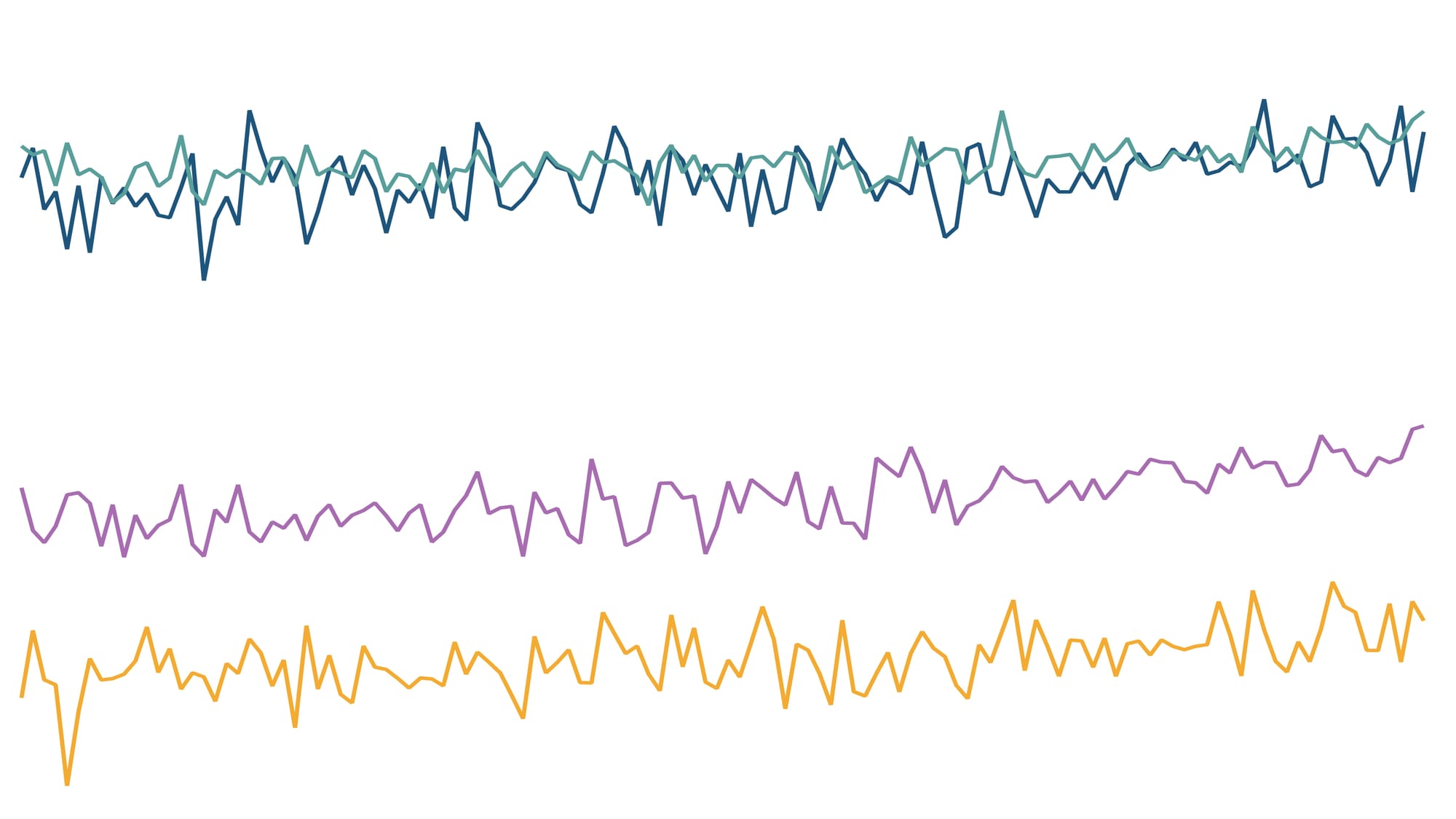
The share of women is higher in the rural workforce, where almost 38% of working people are women. In urban areas, women make up only about 25% of the workforce. However, the urban workforce has seen a more steady and sustained rise in women's participation, unlike the rural workforce, where the workforce participation rate among women fell between 2005 and 2018, and then recovered.
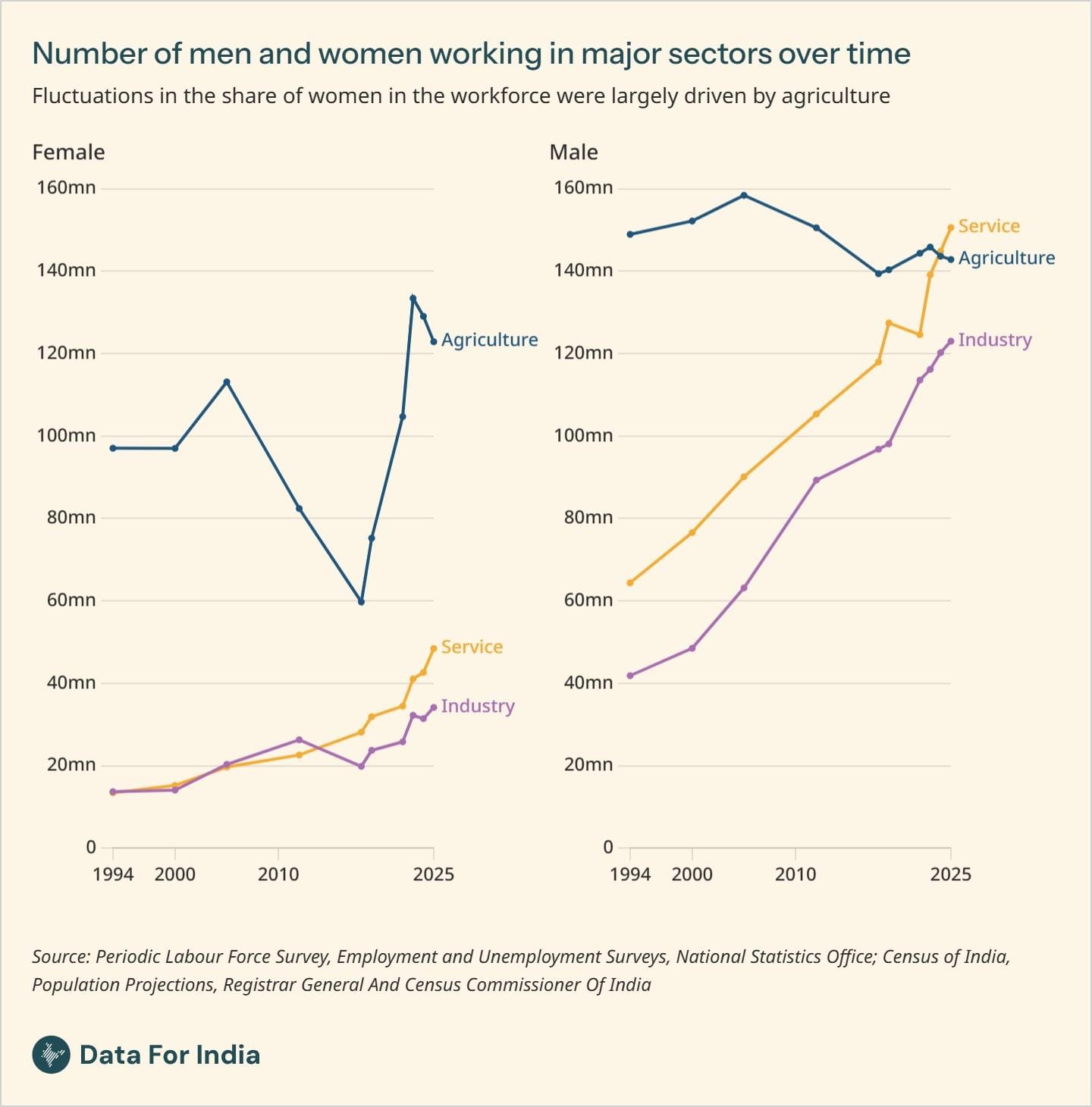
This reflects the different trends across economic sectors. In the agricultural sector, where most rural women work, almost half of the workforce is women. In contrast, less than a quarter of the workforce in industry and services, which are largely urban-centred, is women.
The increase in the share of women in the workforce was driven largely by rural and agricultural employment. This contrasts with men, for whom most new jobs have been in industry, particularly construction, and in services, notably transportation and trade.
Feminised economic activities
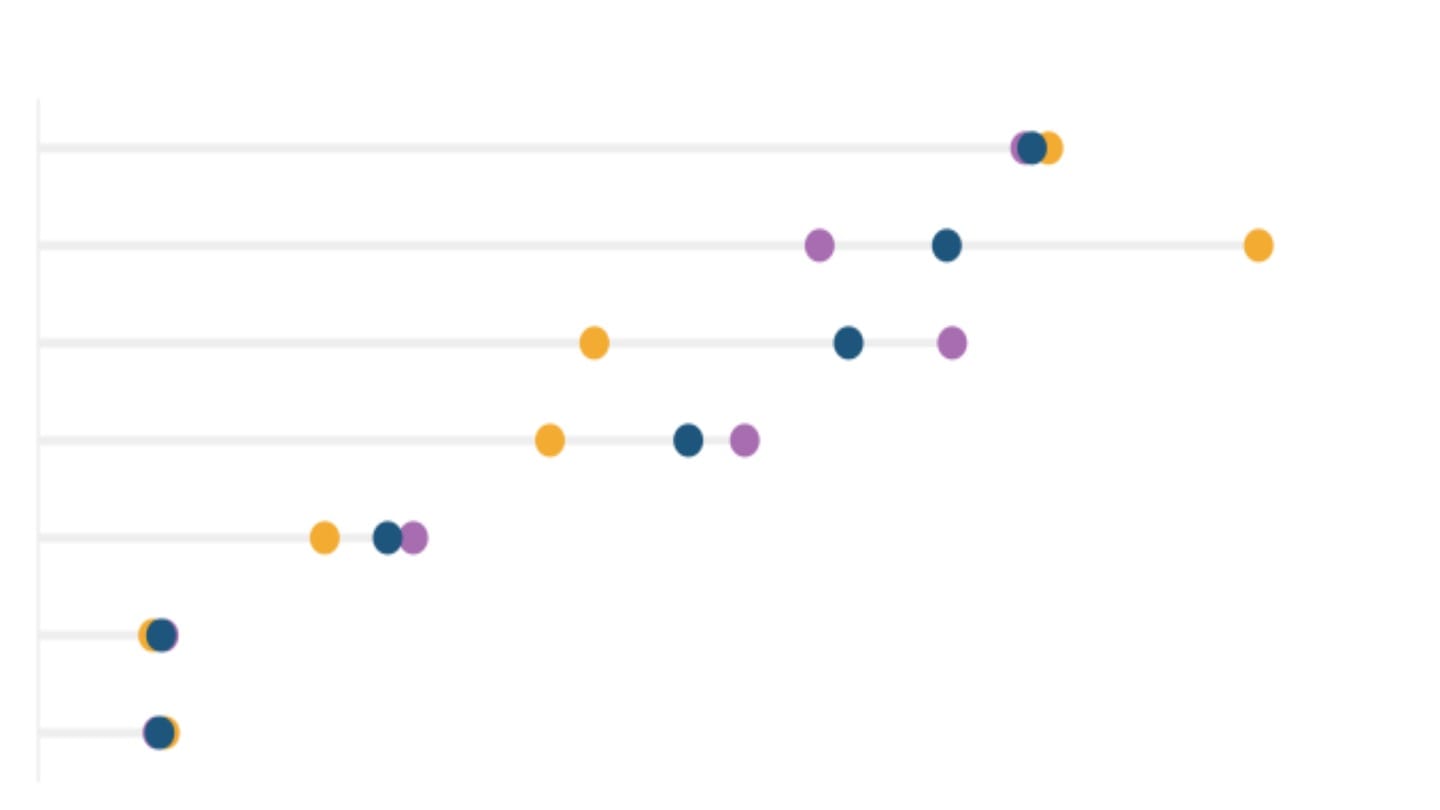
While women make up about a third of the overall workforce, their presence varies widely across economic activities. Some activities are highly feminised, meaning women make up a large share of their total workforce.
In this section, we look at activities within each major economic sector which employ a significantly higher share of women than men.
Dairy and Livestock
Most activities within agriculture have a significant share of women workers, but dairy and livestock rearing stands out. It is one of the few activities where eight in ten workers are women, and it alone accounts for over a fifth of all women working in agriculture. The largest share is engaged in raising and breeding of cattle and buffaloes and milk production, but it also includes rearing other animals like sheep, goat and poultry.
India is the world's largest milk producer, contributing 25% of global milk production.[2] Livestock and dairy account for almost a third of the gross value added (GVA) of the agriculture and allied sectors, making it an important and growing part of the economy.
The share of women in the sector has remained high over the past two decades and reached its highest levels in recent years as men's participation in agriculture overall has not increased. This is largely due to men shifting to non-farm work.[3]
Within agriculture, there is also a shift in the type of activity people engage in. Growing cereals, pulses, and other perennial crops remains the most popular activity, employing over half the workers in 2025, but this share fell from over 80% in 2000. Employment in these crop-growing activities has declined for both men and women over the past 25 years. Yet the number of women working in agriculture overall has continued to rise. This growth is driven largely by dairy and livestock activities and mixed farming, which combines crop cultivation with livestock rearing.
Bidi manufacturing
Bidi-rolling, or hand-rolling tobacco in tendu leaves, is one of the most feminised activities in the Indian economy. It is the second-largest employer of women within manufacturing after apparel. Roughly nine in ten bidi workers are women. Most of them are self-employed and work from home rather than in factories.
Tobacco manufacturing is not distributed evenly across the country, the industry is concentrated in a handful of states. West Bengal alone accounts for about 40% of all women employed in tobacco manufacturing nationally; Telangana is also a significant centre.
In 2000, over 20% of the workforce in this sector was men. By 2025, this had fallen to just 6%.
This is significant because bidi manufacturing is also a declining industry. Total employment in registered bidi manufacturing has fallen steadily since the early 2000s, due to a mix of declining smoking rates, tighter tobacco regulation, and mechanisation in tobacco processing.[4] The bidi industry contributed only 0.65% of the total gross value added (GVA) by the entire manufacturing industry. The average wage in this industry is less than a fifth of the average manufacturing wage. Yet even as the industry shrinks, its workforce has become increasingly female.
Domestic workers
Services now account for close to six in ten urban working women. Within the services sector, domestic work is an area where women's employment has grown substantially, particularly in urban India.
Domestic work is now the third-largest source of urban female employment in the country, after retail trade and education. Over one in ten women in the services sector is a domestic worker.
The activity is highly feminised not only in India, but also across the world. Globally, women make up over three-quarters of the domestic workforce. In India as well, female domestic workers outnumber men by a wide margin. Over 70% of domestic workers in India are female, and there are more than twice as many women engaged in household domestic work as men.
The number of women working as domestic workers has grown from about 1 million to 5.4 million over the past 25 years. This is now nearly the same as the number working in healthcare.
In 2000, the number of women domestic workers was similar to that in public administration. Twenty-five years later, there are three times as many women working as domestic workers as in public administration.
Education and retail trade - working in stores and shops - employ almost twice as many women as household domestic work. However, these sectors are not as heavily feminised. While women account for about half of the workers in the education sector, they are a much smaller share in retail trade. Moreover, four in ten women working in retail trade are unpaid helpers.
Feminisation in high-paying jobs
With the growing share of women in some sectors of the economy, we examine whether this is translating into better-paying, higher-quality jobs.
To understand this, we look at different service-sector activities, comparing the median salary with the share of women workers. We focus on salaried jobs, which are generally associated with higher wages, greater job security and more skilled work. The service sector has the highest share of salaried employment, with more than half of its workers in salaried jobs.
Among higher-paying activities within services such as computer programming, financial services and public administration, women make up less than a third of workers. In contrast, activities with a higher share of women workers, such as domestic work, social work and healthcare, tend to have lower median salaries of less than Rs. 20,000 a month. This difference is reflected in the overall earnings gap. Median monthly earnings among men in the service sector are Rs. 18,000, while among women they are just Rs. 10,500, less than two-thirds as much.
[1] Periodic Labour Force Survey (PLFS), July 2023-June 2024, NSO. Absolute numbers of women workers is calculated by taking the share of women engaged in economic activity from the PLFS and multiplying it with the total female population projected by the Registrar General of India (RGI) based on census data.
[2] Ministry of Fisheries, Animal Husbandry & Dairying.
[3] The move away from agriculture, Data For India.
[4] The Indian Bidi Industry: Trends in Employment and Wage Differentials (2020).