Inmates in Indian prisons belong to two main categories: those convicted of a crime after a criminal trial and sentenced with a period of imprisonment (commonly called convicts), and those undergoing trial and yet to be sentenced (commonly called undertrials in India, but may also be called unsentenced inmates or pre-trial detainees).
In most countries, there are more convicts than undertrials in prison. A higher proportion of convicts compared to undertrials is indicative of a criminal justice system that is able to convict more and convict faster.[1] The presence of persons not convicted of a crime in jail should be an exception; curtailing the personal liberty of someone who has not been found guilty is supposed to be done under limited conditions.[2] The proportion of undertrials in India's prisons is among the highest in the world, and is often referred to as the country's "undertrial problem", where this exception appears to have become a norm, turning the process into the punishment.[3]
Undertrial and convict proportions in India over time
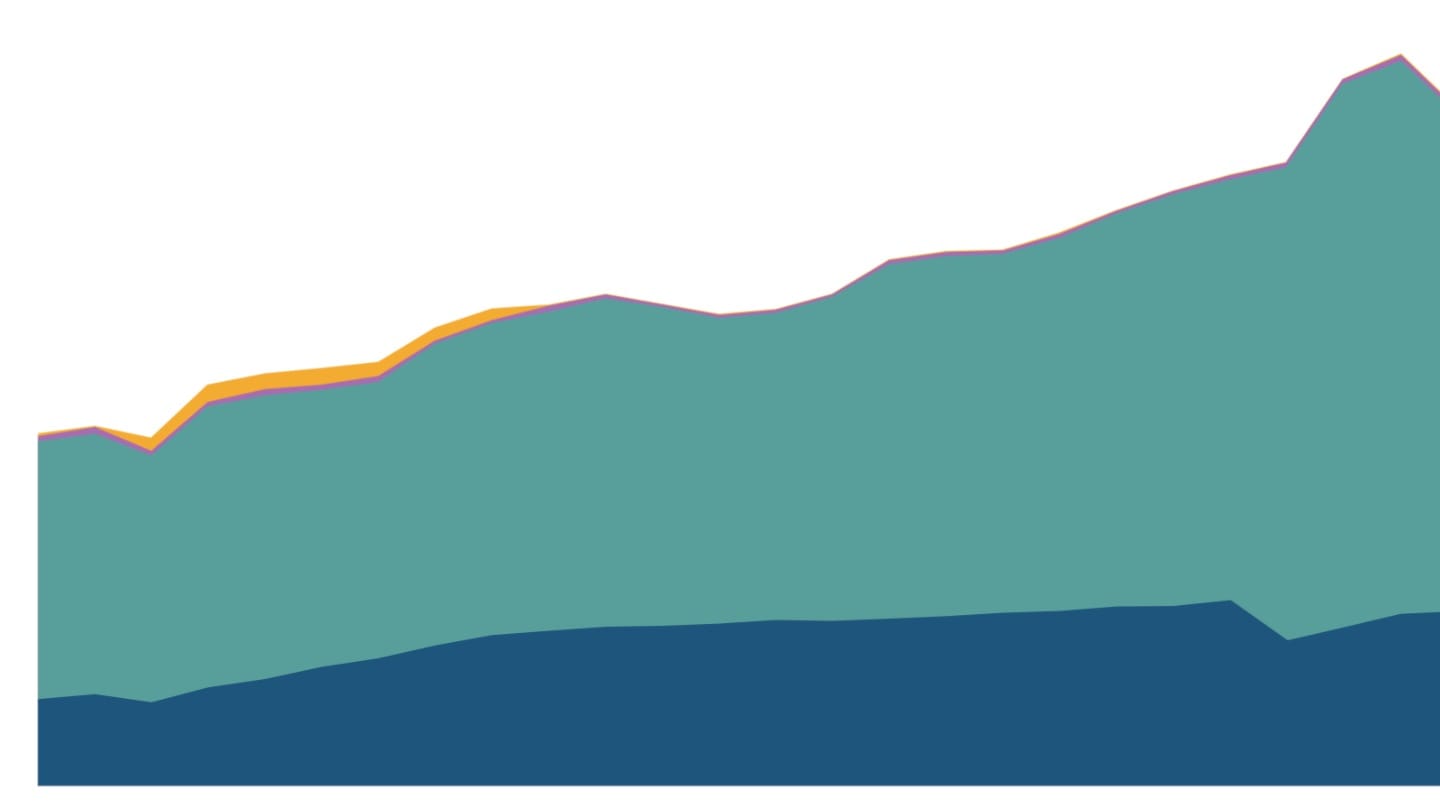
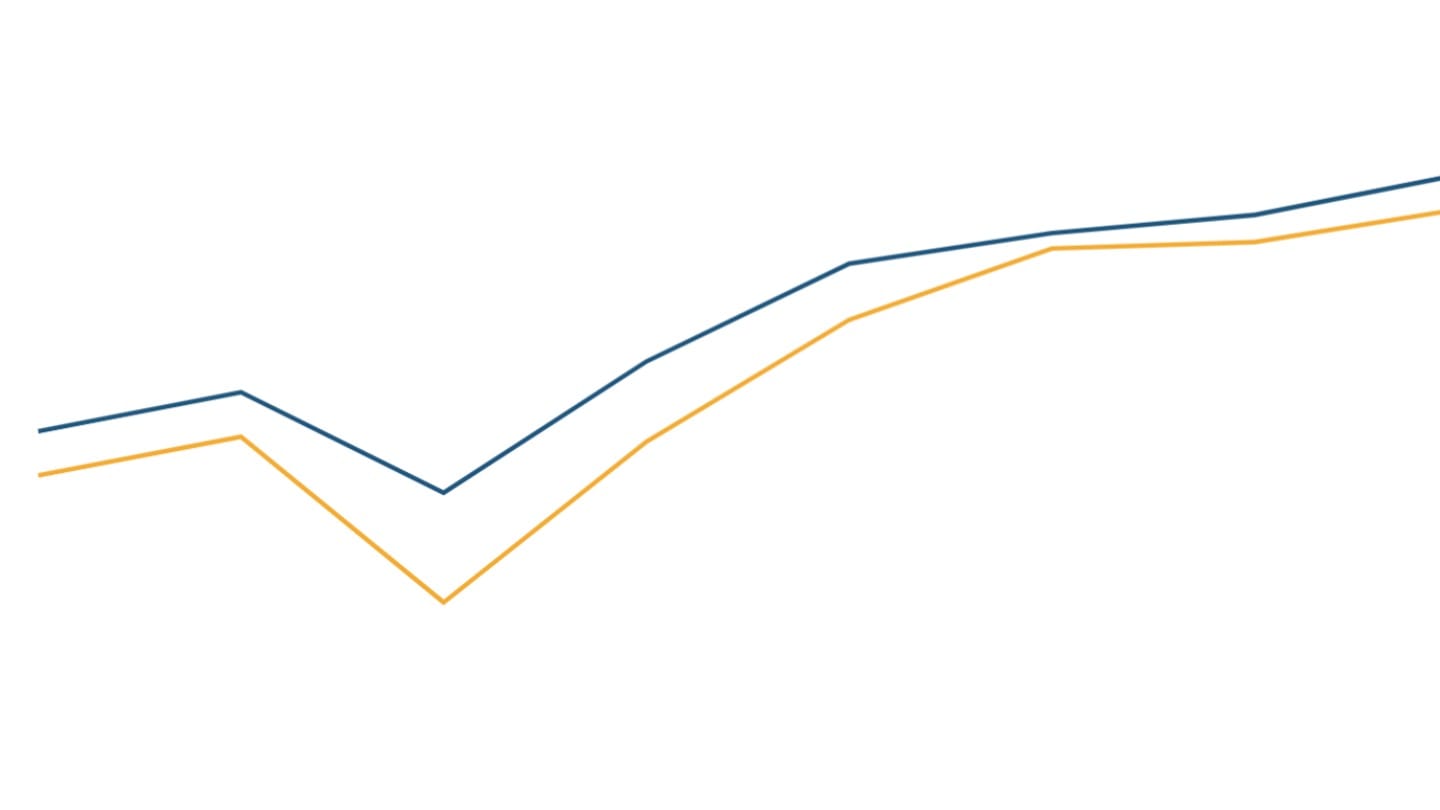
When the National Crime Records Bureau first published prison statistics for the entire country in 1998,[4] about 74% of all inmates in Indian jails were undertrials.[5] The share of undertrials gradually fell since then, and by 2011, this figure had dropped to below 65%. Since the early 2010s, however, the share of undertrials in India's prisons began to rise slowly, but it was in the first year of the COVID-19 pandemic in 2020 that the percentage jumped from 70% to 76%.
The undertrial population saw a record jump during the pandemic as a result of increased arrests (mainly under offences of violating the government's COVID lockdown restrictions) and the delay in bail hearings due to the courts' limited functioning.[6] The convict population, meanwhile, fell during the same period as a result of judges granting emergency parole to limit the spread of the pandemic in prison.
There has been a marginal correction in the growth of the undertrial population in the last few years, with a return to 74% by the end of 2023.
Undertrial or unsentenced population, globally
The high percentage of undertrial or unsentenced population in India is out of the ordinary compared globally. Most countries have fewer unsentenced inmates than those convicted, according to the United Nations Office on Drugs and Crimes (UNODC). Of 146 countries in the UNODC database, only Haiti had a bigger proportion of such unsentenced inmates than India.[7]
The problem also appears to be regional and historical:[8] Bangladesh is a close third, and both Pakistan and Sri Lanka feature in the top ten countries with at least two-thirds of their inmates as undertrials. Other countries with high undertrial shares were the Central and West African countries of the Democratic Republic of Congo, Gabon and Nigeria, besides Paraguay and Saint Lucia.
India was also second, in terms of absolute undertrial population, following the United States of America which has only a quarter of its prison population unsentenced but has an extremely large total prison population.
Share of undertrials in Indian states
This pattern, of undertrials exceeding convicts, is seen within India's states to varying degrees. Except for Andaman & Nicobar Islands, no state or union territory had more convicts than undertrials in 2023.[9] Madhya Pradesh was second, with convicts making up 49% of its prison population.
On the other end, the undertrial percentages were highest in Delhi and Bihar, where nine in ten incarcerated people are undertrials, followed by Jammu and Kashmir, Odisha and Maharashtra, among regions with significant total prison populations.
In the early 2000s many states showed signs of progress in bringing their undertrial proportion down; among them were Maharashtra, Rajasthan and West Bengal.[10] However, by the early to mid-2010s this progress had been undone.
A key to understanding the increase in undertrial percentage is to look at the offences that sent the undertrials to jails more closely.
Undertrial share by offences
There are distinct and important differences between the offences that most convicts are serving time for, and the offences that put most undertrials into Indian jails.
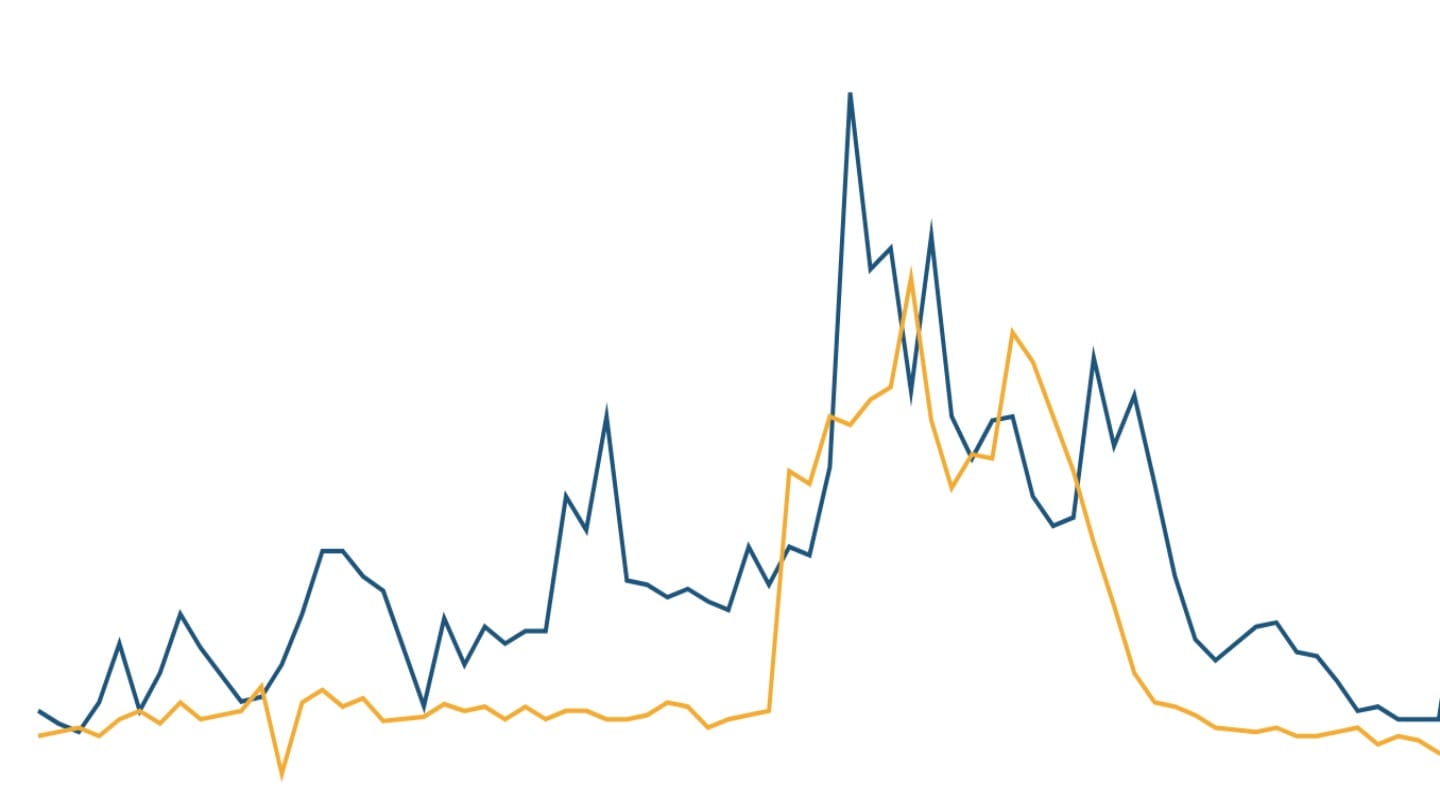
Over 45% of India's convicts are serving their sentence for murder. In comparison, just one-fifth of India's undertrials were accused of murder. The share of undertrials charged with murder has fallen steadily over time. Murder was the only major offence where the number of convicts exceeded undertrials for several years until 2020.[11]
Simultaneously, the share of undertrials charged under the Narcotic Drugs and Psychotropic Substances Act, 1985, (NDPS Act, India's primary anti-drug law) and for rape have grown. About 12% and 11% of undertrials were those accused of offences under the NDPS Act and for rape, respectively.
The high share of undertrials charged under the NDPS Act and with rape is a phenomenon mainly from the last decade, both having more than doubled since 2011. The increase in undertrials arrested under the NDPS Act and for rape far exceeds their numbers among convicts, suggesting that people are being arrested and sent to prison under these two laws at a higher rate than they are being convicted.
Nearly half of India's undertrial population growth and over 40% of the growth in the total prison population in absolute numbers in this period is on account of undertrials under the NDPS Act and rape. In 2011, the NDPS Act and rape contributed slightly over 10,000 undertrials each to India's prisons. By 2023, they were each contributing nearly 50,000 undertrials.
In both cases, but especially in the case of the NDPS Act, the rise in convicts has not been as significant.
The rise in the number of inmates in jail for rape has coincided with the period after the 2012 Nirbhaya case and the consequent amendments to the law on rape.[12] On the other hand, anti-narcotics campaigns initiated by the central government and campaigns initiated by different state police forces at different points of time have led to increasing cases and therefore, inmates in jails under the NDPS Act in this period.[13]
Alongside these offences, some other laws stand out in having a particularly large share of undertrials in jail, relative to convicts. Nearly all of the inmates in jail under excise laws - different state-specific laws which prohibit and regulate the trade of liquor and other intoxicants - have been undertrials since 2016.[14] Undertrial percentages have also been consistently high over the years for Arms Act and theft as well as other offences against property such as cheating, criminal breach of trust and dacoity.
In the case of the Excise Act and NDPS Act, it may also be that a large proportion of undertrials plead guilty and avoid being sentenced to prison but are released after paying fines, or that they are sentenced to prison for a very short period of time.[15]
In the case of property offences, conviction rates are low (in the range of 30-40% in 2023), meaning that a majority of the people who spend time in prison for these offences do not go back as convicts after the trial is complete.
Undertrials by offence in Indian states
Across a majority of Indian states, the two largest categories of undertrials are those charged with murder or rape. However, there are some local variations in the laws that put most undertrials in jail.
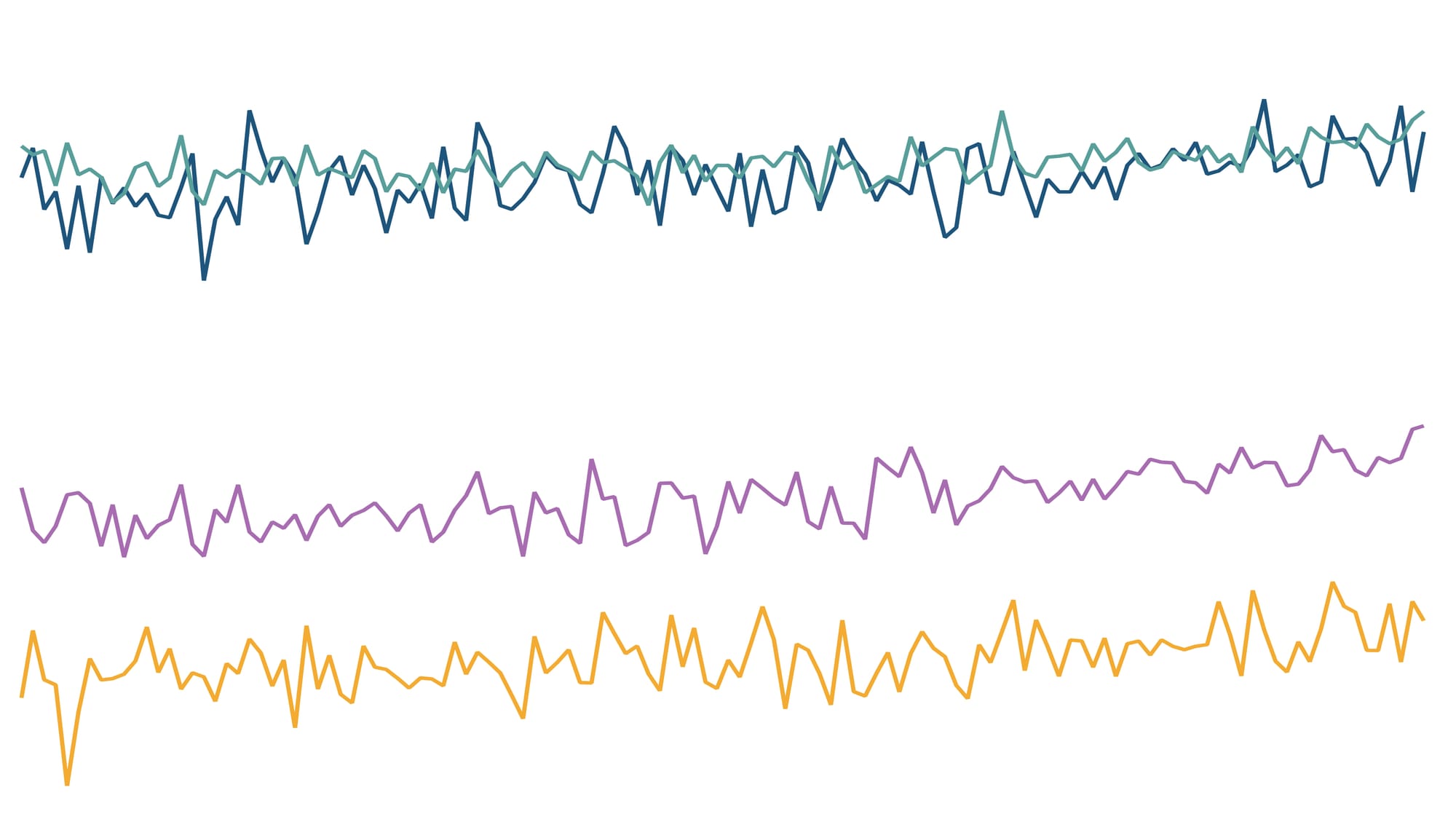
The proportion of undertrial inmates alleged to have committed offences under the NDPS Act has risen remarkably in some states-for example, from negligible in 1998 to nearly half of all undertrials in Himachal Pradesh and a third in Punjab by 2023.[16] Every state appears to have its own particular history and phases of enforcing anti-narcotics law. In Punjab, it gained steam in 2012, when both the number of cases and the number of people in jail under the NDPS Act increased.[17]
In other states, this increase is a more recent phenomenon; Mizoram, Kerala and Andhra Pradesh, which have had their own anti-drug abuse campaigns recently, have seen the proportion of undertrials under the NDPS Act double in the last three years.
While the NDPS contributed to this situation in many states, local laws are critical to understand the undertrial growth in other states. In Bihar, for example, the increase in the undertrial population since 2016 is to a significant degree an effect of the implementation of the Bihar Excise and Prohibition Act, 2016, the law that prohibits the trade and consumption of all kinds of liquor.
In the case of Jammu and Kashmir, the Arms Act has a significant percentage too.
Period of confinement of undertrial inmates
An important facet of India's undertrial population has historically been that it is a 'floating' one. This means that the overall high number is less a result of a large number of people undergoing prolonged incarceration, but more because of a very large number of undertrials continuously entering and leaving the prisons such that at any given point, there is a large number of undertrials in prisons.[18]
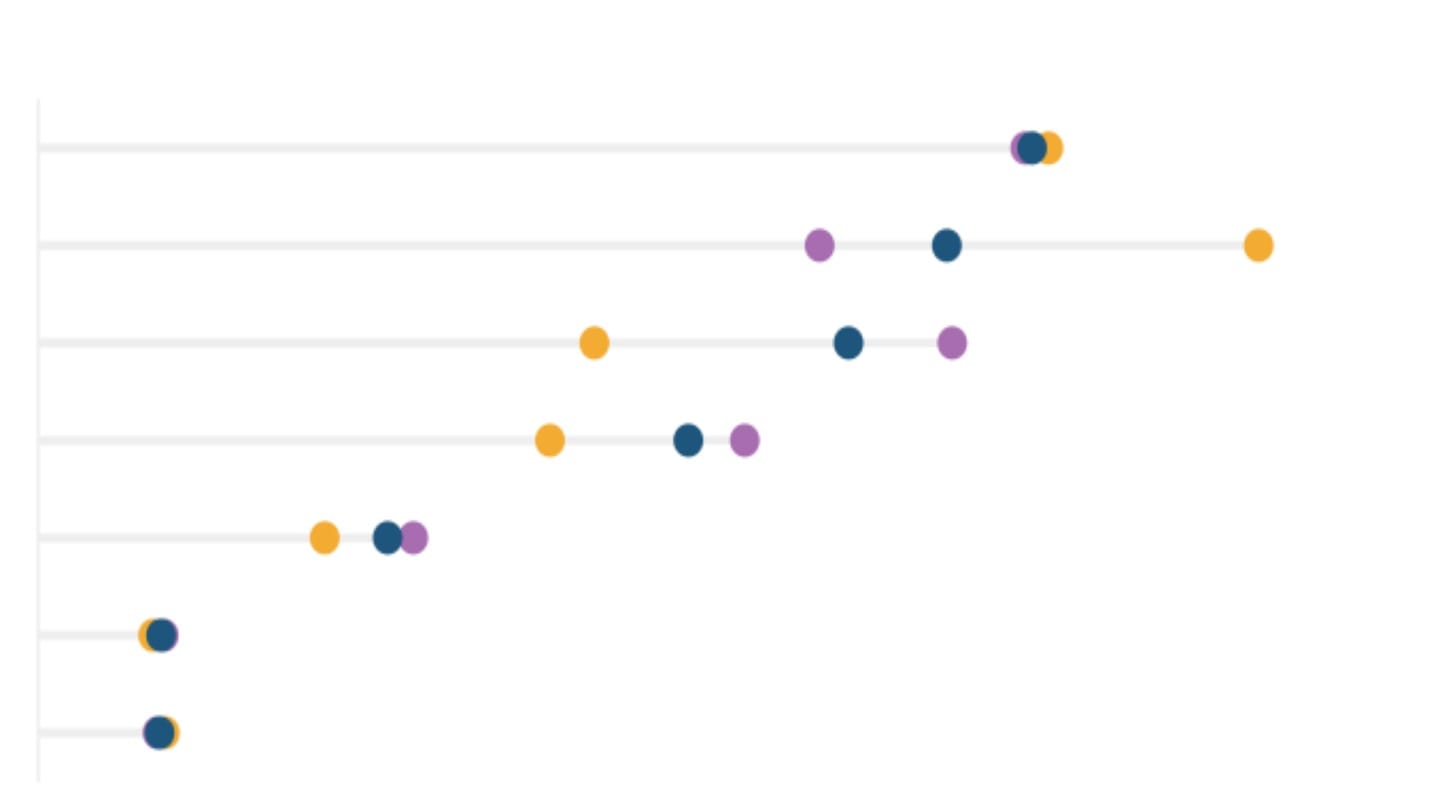
In 2023, a third of the undertrials were in jail for a period up to three months, half for less than six months and over two-thirds for a period less than a year. Slightly less than 3% of the undertrials were those incarcerated for over 5 years.
However, this is changing. The average period undertrials are spending in prisons is gradually increasing. From 2006 to 2019, the share of undertrials who were incarcerated for less than six months fell from 64% to 58%, and those incarcerated for less than a year fell from 80% to 74%. During the COVID-19 pandemic these shares fell even more rapidly to 53% and 69% respectively.
Meanwhile, the share of undertrials spending time in excess of five years in prisons grew from nearly zero to nearly three percent between 2012 and 2023, and those spending three to five years went from 4% to nearly 9%.
In absolute numerical terms, the population of undertrials spending five or more years grew from 1500 inmates in 2011 to over 10,000 in 2023.
The divergence in the median durations that the undertrials spend confined in jails by state is large. In 2023, among states with notable prison populations, Jammu and Kashmir was on one end with only 15% of undertrials incarcerated for less than three months, and with 37% who had spent two years and more in prisons. Kerala and Telangana were on the other end with nearly 70% of their prison populations having spent less than three months.
The difference in proportions may be related to the kinds of offences that persons were more frequently jailed for in a state: more arrests for less serious offences leads to shorter pre-trial incarceration, as well as access to bail. Trial courts deciding bail applications more slowly or rejecting them more frequently may lead to longer incarceration periods.
[1] Faster and higher percentages of convictions do not themselves imply fairness, and can often violate due process rights of the accused. A case in point is the high conviction rate and resultant high percentage of convicts in the United States of America. As research points out, this has been a result of the coercion on accused persons to plead guilty. See Ram Subramanian, et al., In the Shadows: A Review of the Research on Plea Bargaining, Vera Institute of Justice (September 2020).
[2] Law Commission of India, Amendments to Criminal Procedure Code, 1973- Provisions Relating to Bail (May 2017). Some of the grounds of rejecting bail application, thereby keeping a person in jail before conviction are related to the seriousness of the offence and the risks of absconding, tampering evidence and intimidating witnesses.
[3] This can have the effect of making notions of guilt and innocence irrelevant. See Abhinav Sekhri, Separating Crime from Punishment: What India's Prisons Might Tell Us about Its Criminal Process, National Law School of India Review, Vol. 33(2) (2021).
[4] Though the NCRB published its annual prison statistics for the first time in 1995, the first three years had the data for several major states missing. Detenues (those detained under a preventive detention law) and the residual 'others' together have only accounted for around 1 to 2 percent of the total prison population.
[5] In 1973, the Working Group on Prisons set up by the Ministry of Home Affairs, Government of India (MHA) recorded the undertrial percentages as 30% and 47% in 1961 and 1970, respectively. This was based on the daily average population of 16 states and two union territories. In the 1980s, the Justice Mulla Committee recorded the undertrial percentage in 1980 to be 58%, and in 1987 another MHA working group recorded it as 64% in 1986.
[6] Commonwealth Human Rights Initiative, Analysis of changes in prison population between December 2019 and November 2021 (July 2024); Sakshat Bansal and Shruti Sahni, Bail, Prisons and COVID-19: An Indian Perspective, Alternative Law Journal Vol. 46(4) pp. 326-331 (2021). The year 2022 ended with over 570,000 inmates but during the year, the number had risen to 620,000.
[7] Between 2021 and 2024, the last four years for which UNODC has data.
[8] Bangladesh, Pakistan and Sri Lanka also inherited the British colonial legal and prison system like India.
[9] In fact, in the history of NCRB prison statistics, there have been only a few occasions, all involving smaller states, that the number of convicts exceeded undertrials.
[10] Though, it is hard to pin down the reason, in the late 1990s and early 2000s, the Supreme Court ordered the release of undertrials who had spent excessive time in prisons, and later in 2005, the Parliament passed an amendment to the Code of Criminal Act introducing Section 436-A, that allowed undertrials to be released if they had served one-half of their sentence while awaiting the completion of their trial. This amendment came into force in June 2006. See Common Cause v. Union of India [(1996) 4 SCC 33] and subsequent orders passed in the same and connected cases.
[11] A contributing factor to the uniform increase in the undertrial percentages between 2019 and 2020 was the effort to decongest prisons by releasing inmates during the pandemic by way of parole for convicts and interim bail for undertrials. However only the convict population fell in 2020 and the undertrial population actually increased.
[12] The 2012 Nirbhaya case was a case of rape and murder in Delhi. Following protests after the incident, the central government brought amendments to the law on rape which among other things, widened the definition of rape, increased the age of consent for women from 16 to18 and introduced mandatory reporting requirements for hospitals, all aimed at bringing more cases under the ambit of law and increase reporting. Along expected lines, the number of cases of rape reported annually also increased rapidly 2013 onwards. However, the improved reporting may also be a result of higher willingness to report rapes as well as pressure on the criminal justice system to register complaints. See Akshay Bhatnagar, et.al., Sparking the #MeToo Revolution in India: The "Nirbhaya" Case in Delhi, Ideas for India (2019) which found a causal relationship between the incident and higher reporting using statistical analysis. Higher number of rape cases should not be understood to mean higher levels of crimes nor achievement of far-reaching reforms. See Preeti Pratishruti Dash, Rape Adjudication in India in the aftermath of Criminal Law Amendment Act, 2013: Findings from Trial Courts of Delhi, Indian Law Review (2020). Dash compared the outcomes of trial court judgments under the old law and the new 2013 amendments and found that the conviction rate had dropped for cases under the new law.
[13] The first National Policy on Narcotic Drugs and Psychotropic Substances was formulated in 2012 by the central government's Ministry of Social Justice and Empowerment which highlighted government's priorities including the strengthening of law enforcement as well as focusing on rehabilitation.
[14] In 2023, there were just 950 convicts under the Excise Acts versus about 17,659 undertrials.
[15] Neha Singhal and Naveed Mehmood Ahmad, Criminalisation Leads To Exploitation: The Mumbai Story No One Knows About, Vidhi Centre for Legal Policy (8 September 2020). In a study carried out by Vidhi Centre into 10,669 cases under the NDPS Act before Magistrates' courts in Mumbai, the researchers found that in 99.7% of the cases, the accused had pleaded guilty, with 90% of the cases disposed of on the same day they were brought to court. They also found that most commonly, the imprisonment ranged from one to eight days and the fines from Rs.100 to Rs. 8000.
[16] The consistent increase in share of undertrials under the NDPS Act in early 2010s for many states including Mizoram, Himachal Pradesh and Punjab corresponds with the beginning of the increase in their share nationally as seen in the previous section. Only Assam's rise in share is more recent.
[17] Among the triggers are reported to be the Punjab Government's own survey on drug addiction, a series of news reports and orders passed in public interest litigations including a suo motu proceeding before the Punjab and Haryana High Court. See Debasish Basu and Ajit Avasthi, Strategy for the management of substance use disorders in the State of Punjab: Developing a structural model of state-level de-addiction services in the health sector (the "Punjab model"), Indian Journal of Psychiatry, Vol. 57(1) (Jan-Mar 2015) which captures this history.
[18] This is also why bail side reforms, that is, trying to have people released sooner, would not solve this problem on its own. See Sudhir Krishnamurthy and Shishir Bail, Freeing the Undertrials, The Hindu (22 September 2014). They have hypothesised that the undertrial problem is thus a result of police making too many arrests at the investigation stage and securing very few convictions.