Minimum temperatures in India are rising faster than maximum temperatures
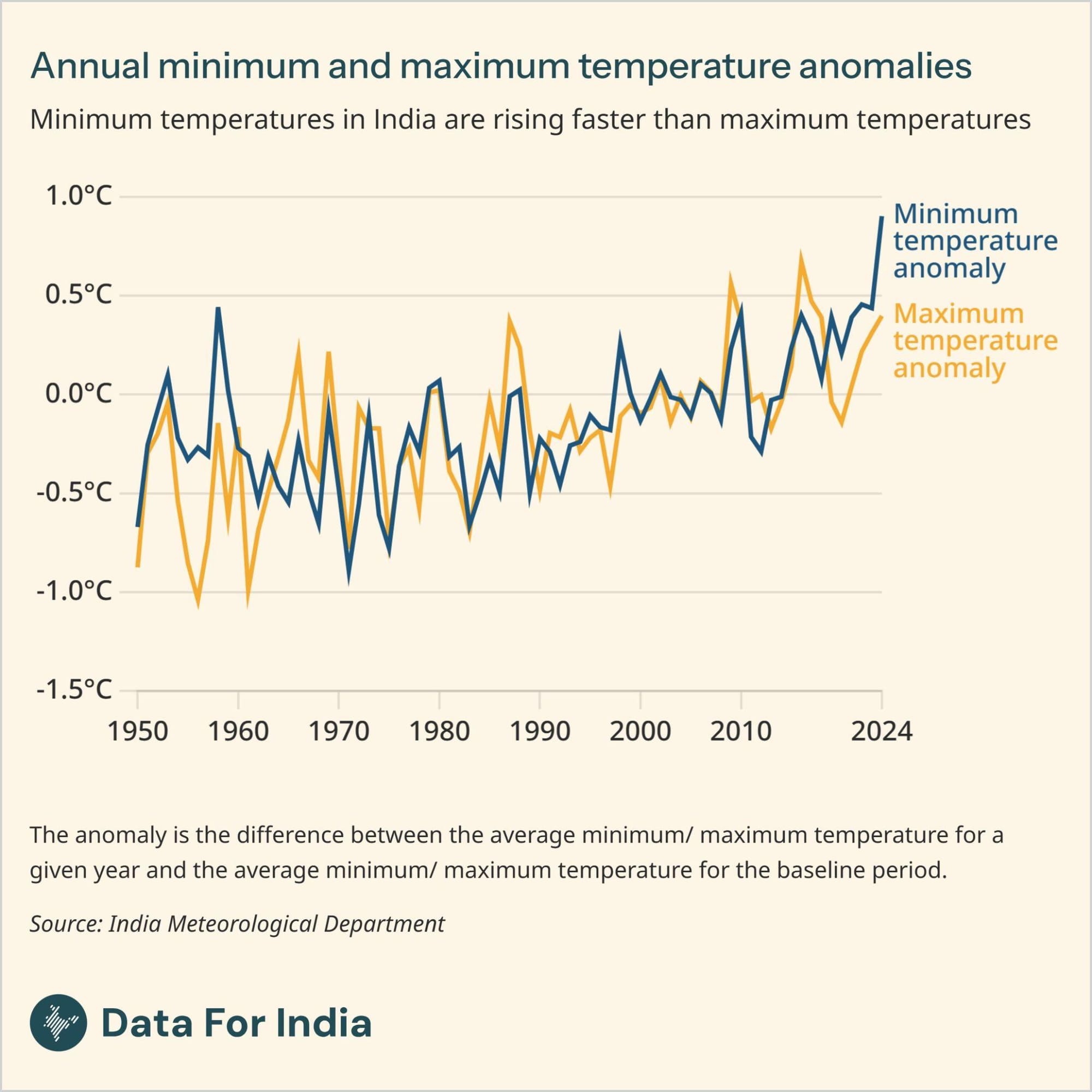
Warming in India is not occurring uniformly. While both daytime and night-time temperatures have risen over the past seven decades, minimum temperatures have increased faster than maximum temperatures, indicating that nights are warming more rapidly than days.
An anomaly is the departure of a given year's temperature from the long-term average over a reference period. The current baseline in use in India is the average of the 1990-2020 period.
During the 1950s up to the 1980s, both maximum and minimum temperatures fluctuated around the baseline, with some years warmer and some cooler.
In recent years, however, the data shows not just sustained warming, but a sharp acceleration, particularly in minimum temperatures.
Since 2020, the pace has increased markedly. The minimum anomaly rose from +0.43°C in 2023 to approximately +0.90°C in 2024 - the highest recorded value in the entire series. The maximum anomaly reached +0.40°C over the same period, showing the faster pace of increase in the minimum temperature anomaly.
Together, the persistence of positive anomalies and the faster increase in minimum temperatures point to a warming climate in which heat is becoming both more intense during the day and more sustained through the night. This asymmetry limits overnight recovery, raising health risks, affecting agriculture, increasing energy demand and intensifying heat stress on vulnerable populations.
Read more about the pace of warming in India.