As I watched the Australian Open men's final on Sunday, it occurred to me that the only thing that I watch on the television set in my house any more is major sporting events. It's the only thing I still need a large(r) screen for - it's hard to anxiously pace around the room at break point with phone in hand or laptop on lap. It's easy to predict a future in which we're going to see television ownership start to decline - but not yet.
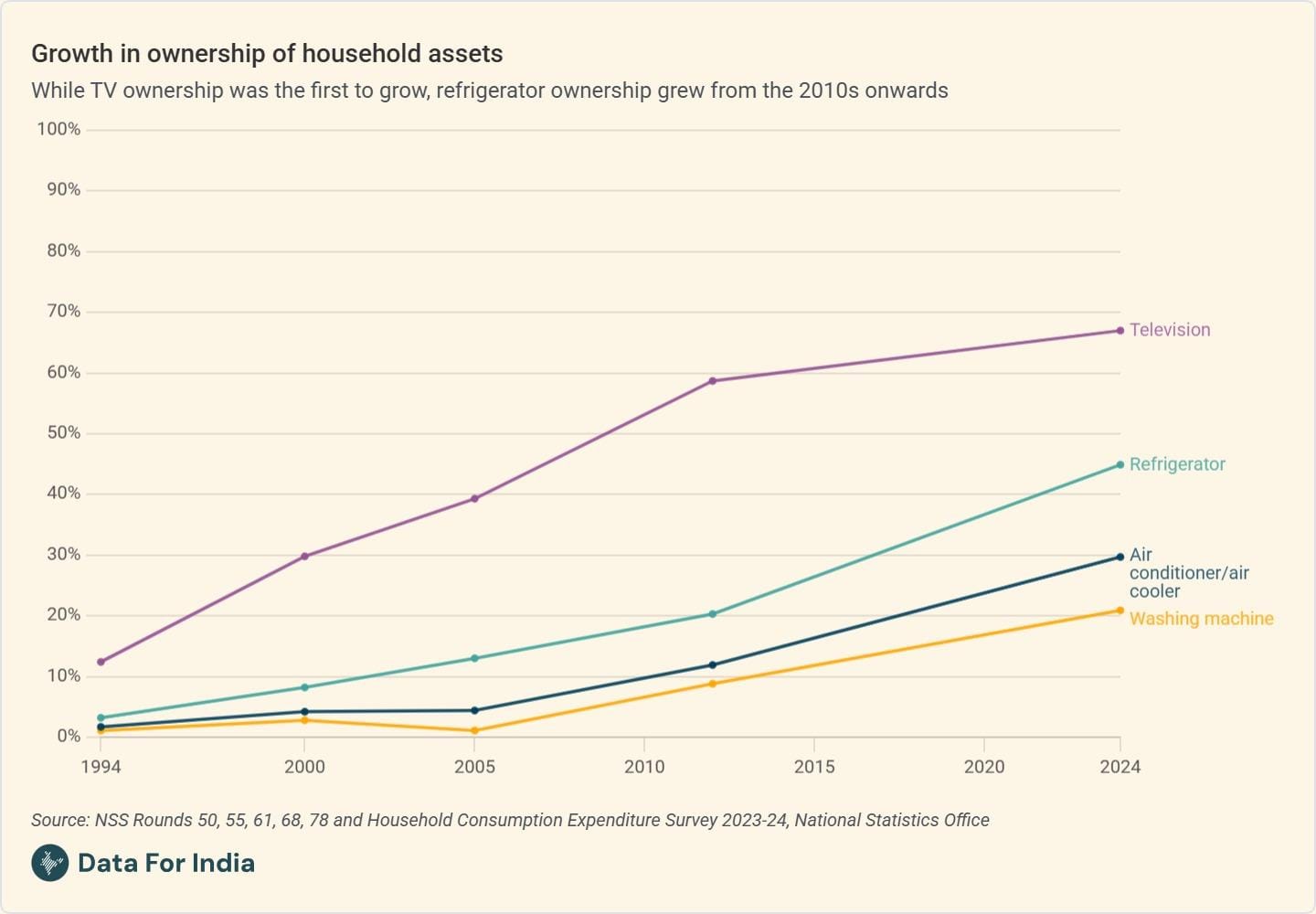
Two-thirds of Indian households owned a television as of 2024, my colleague Abhishek Waghmare finds in his piece for us on physical asset ownership. In urban India, this share is nearly 80%. This means that over 200 million of India's 350 million households own a TV, making it the most widely owned of the major assets that he looked at.
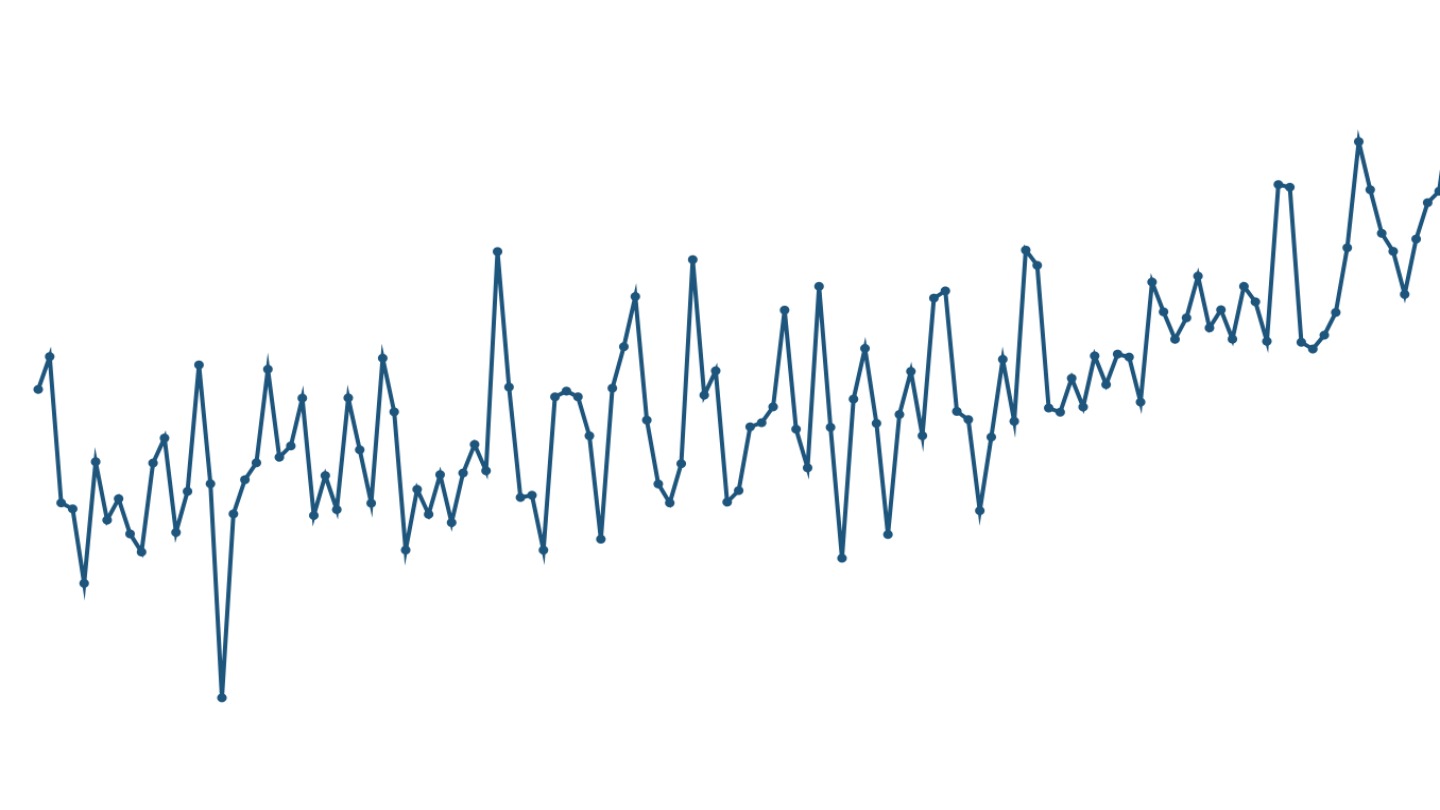
In the early 1990s, just 10% of Indian households owned a television. TV ownership grew rapidly from the 1990s onwards, but the pace of growth has fallen in recent years, suggesting that household ownership of televisions is nearing saturation. Refrigerators, ACs and washing machines, on the other hand, have grown faster in the recent past, and also have larger headroom for growth.
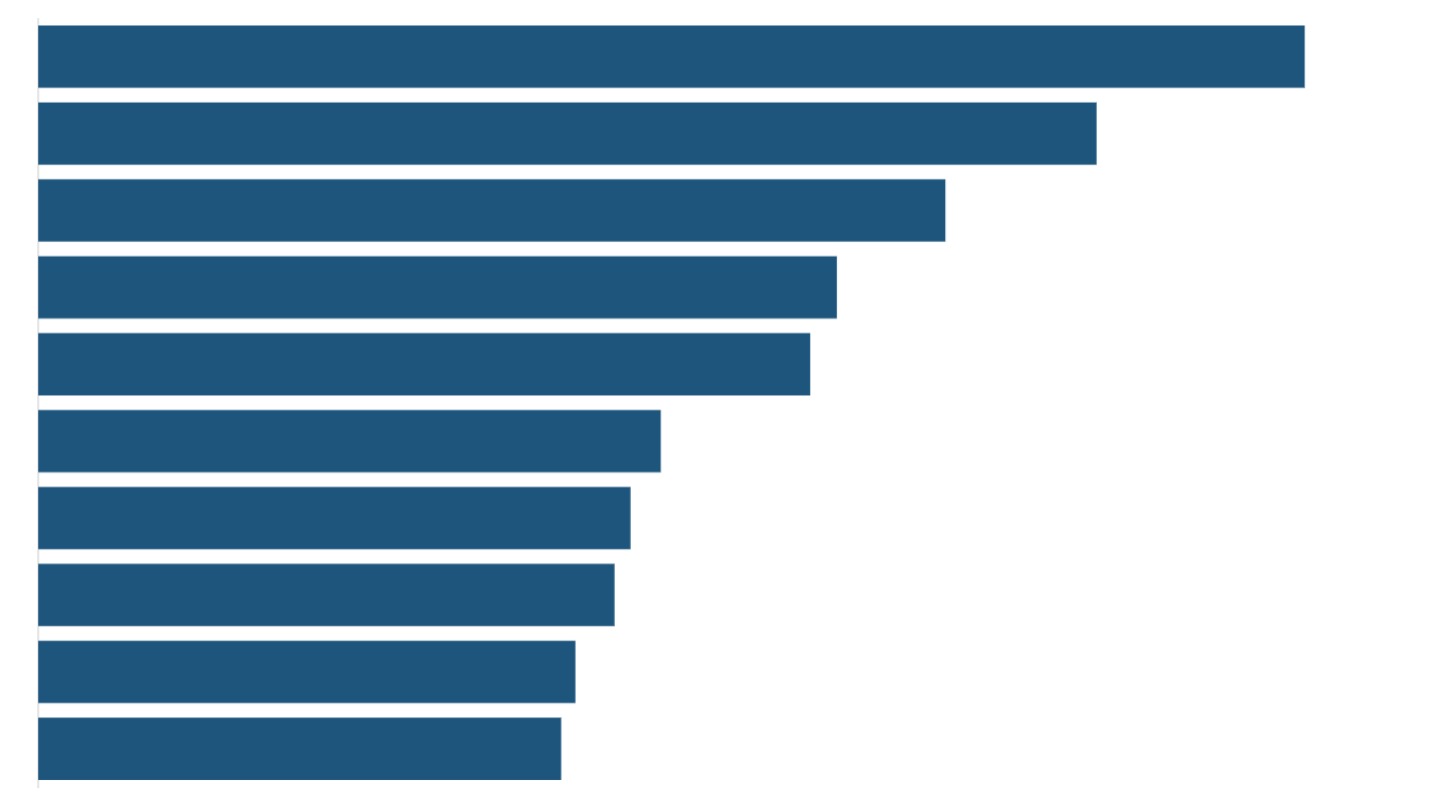
There is a tight connection between incomes and asset ownership, including of television sets. Television ownership is lowest among the poorest households - 40% of the poorest households own TVs, compared to 90% of the richest households. India's poorest states also have the lowest levels of household television ownership - 37% in Jharkhand vs 87% in Tamil Nadu, for instance.
All of this certainly suggests headroom for growth. But whether future buyers will purchase TVs to do their video watching or bypass the middle screen entirely is something that remains to be seen.