One of the most interesting stories in Indian demographics, and one that reminds me that my social circle is not reflective of broader Indian realities, is the age at which women have children.
As I found in my work on women's age at childbirth, the median Indian woman still has her first child very early, at just over 21 years of age. That, and the fact that the age at first birth for Indian women has grown very little over the last two decades, can sometimes give the impression of a country where very little is changing. That's where decomposing the number gets interesting.
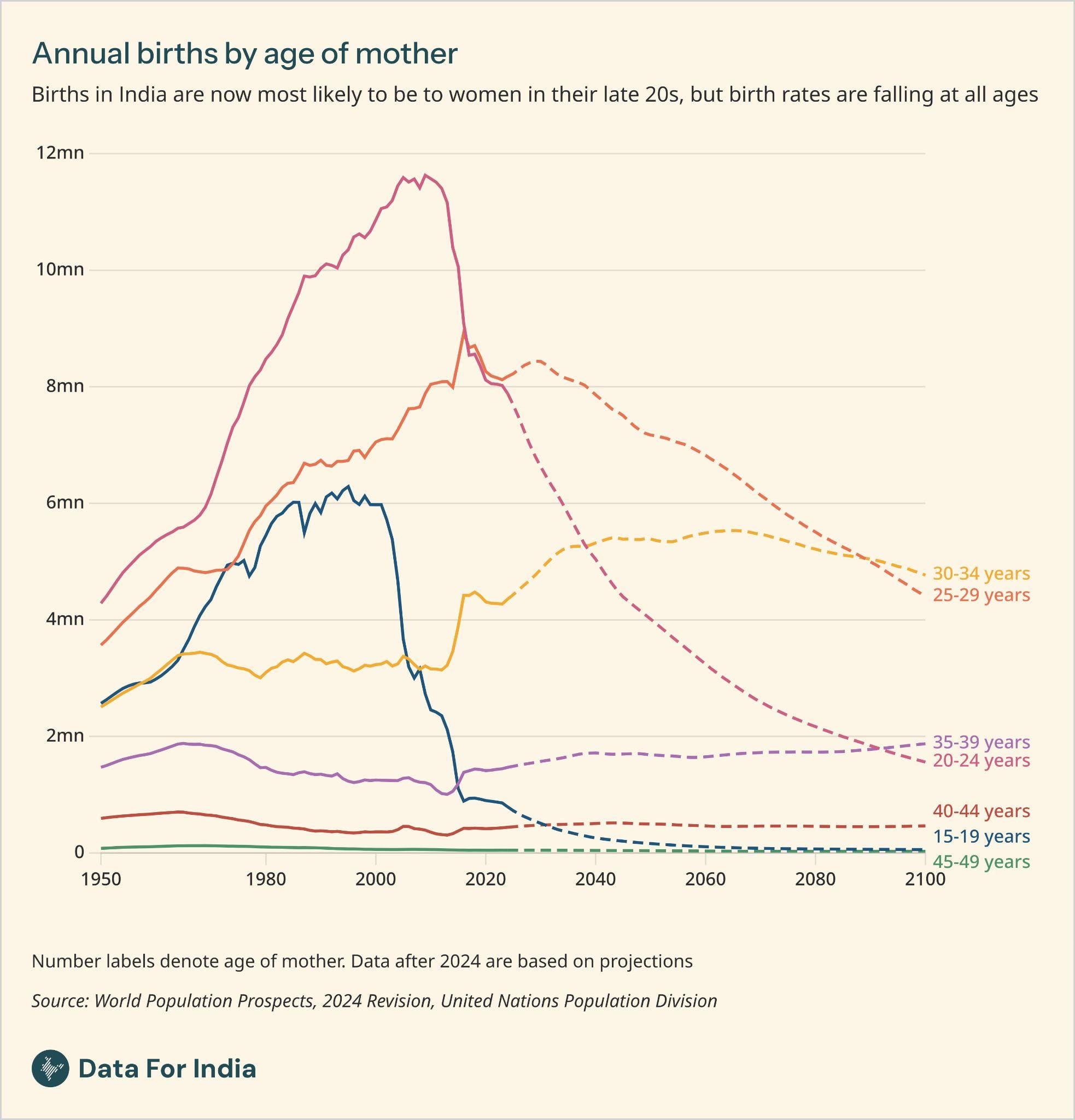
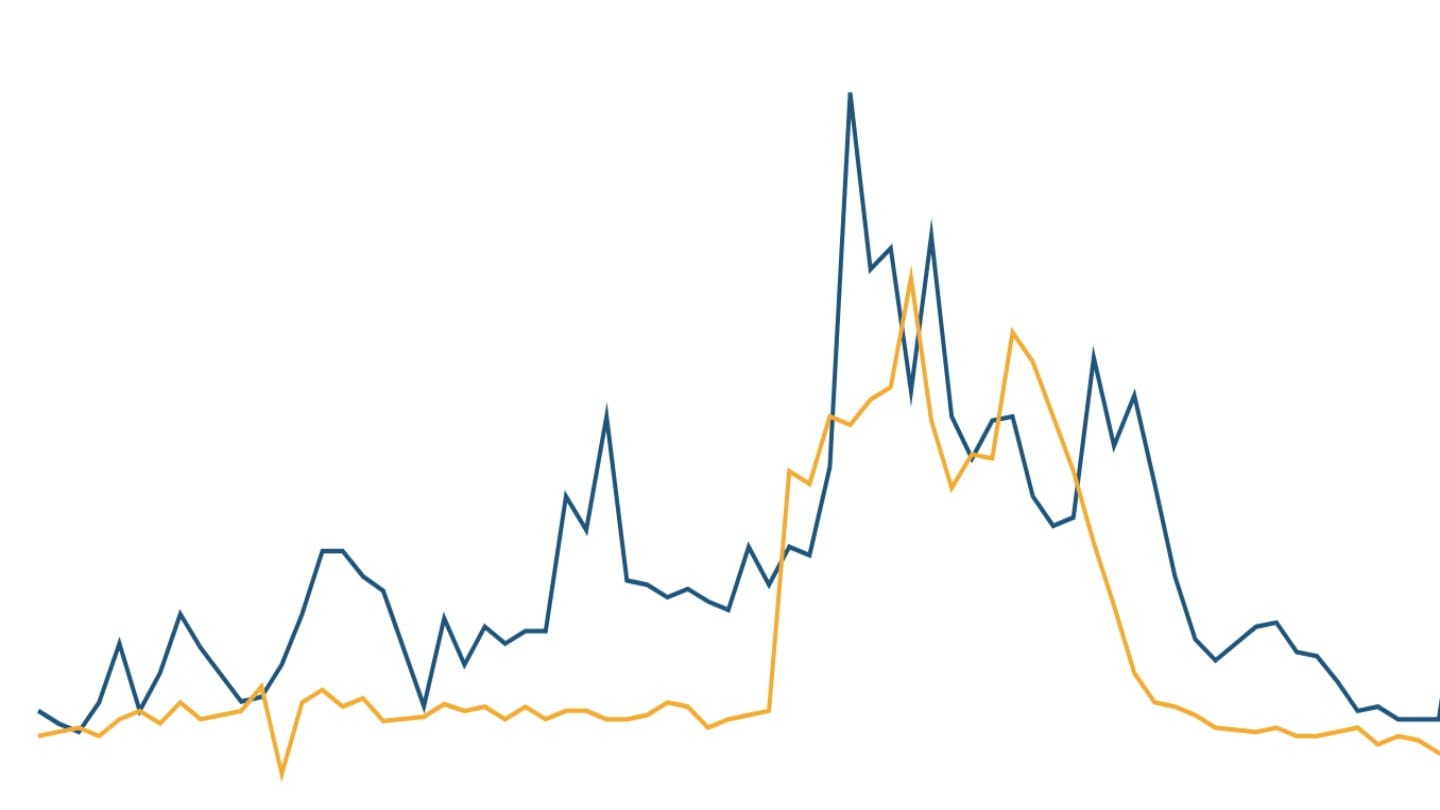
There's a lot going on in this chart, but let's break it down into two main processes, and it's important to look at them both.
The first is that the absolute number of children born every year in India is falling, and it's largely falling among women of all ages.
The second is that sometime around now, more children began to be born to women in their late twenties than to those in their early twenties for the first time in India's recorded history. What's essentially happening is that some (but not the majority of) Indian women are having their first child in their late twenties, and many are having their second child in their late twenties, leading to this pretty momentous big shift.
In most of the developed world where the age at marriage and first birth is much higher than in India, this change took place some time ago. In the United Kingdom, for instance, this change took place in the early 1970s. By the early 2010s, in fact, the largest share of babies in the UK were born to women in their early 30s.
It's interesting to see that this particular shift will be a long time coming for India - women in their early thirties are projected to be the ones most likely to be having babies only towards the end of this century.
Much of the conversation around falling birth rates focuses on East Asia and Europe, and in doing so, misses valuable nuance that the Indian story brings to the global fertility story. India's big shifts both mirror those of the rest of the world, and look very different from them, as I've written about elsewhere. The global fertility conversation needs to catch up to this.