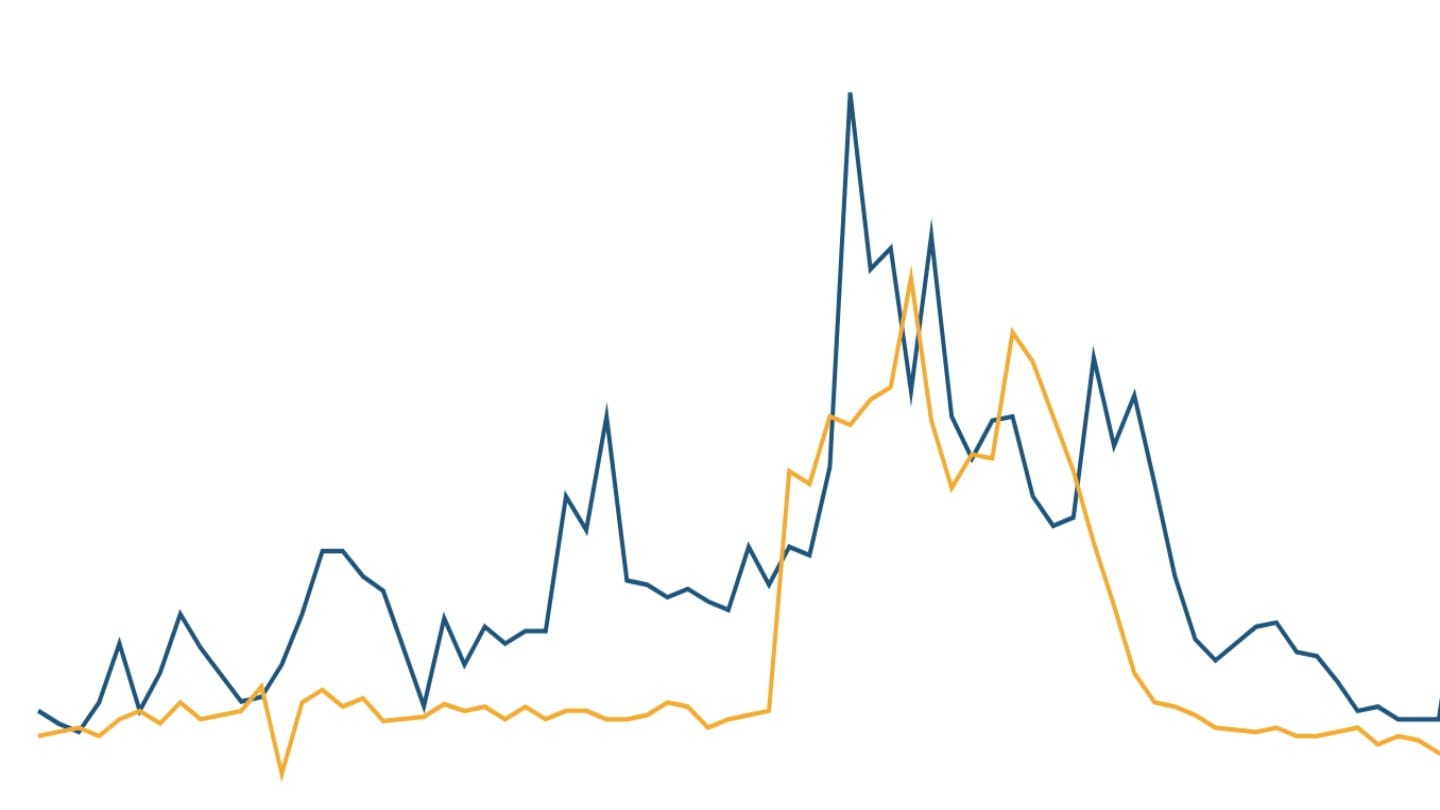
Most big shifts that we've looked at have been a long time in the making. Access to toilets in rural India has been steadily improving over the last twenty years, for instance, while the fall in fertility rates across the country has been going on even longer. So it feels quite rare and unusual to find a big shift for which the critical moment is right now.
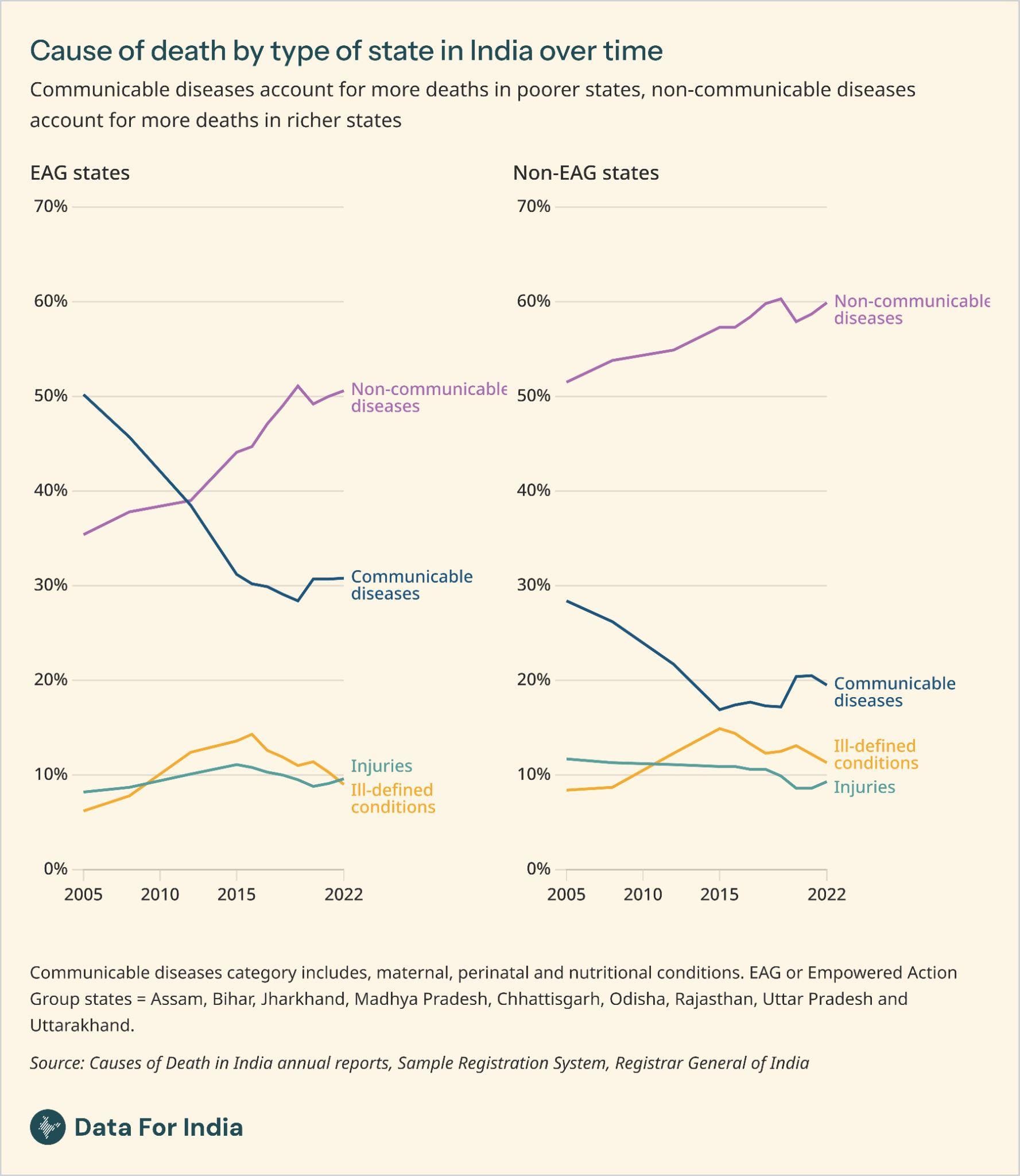
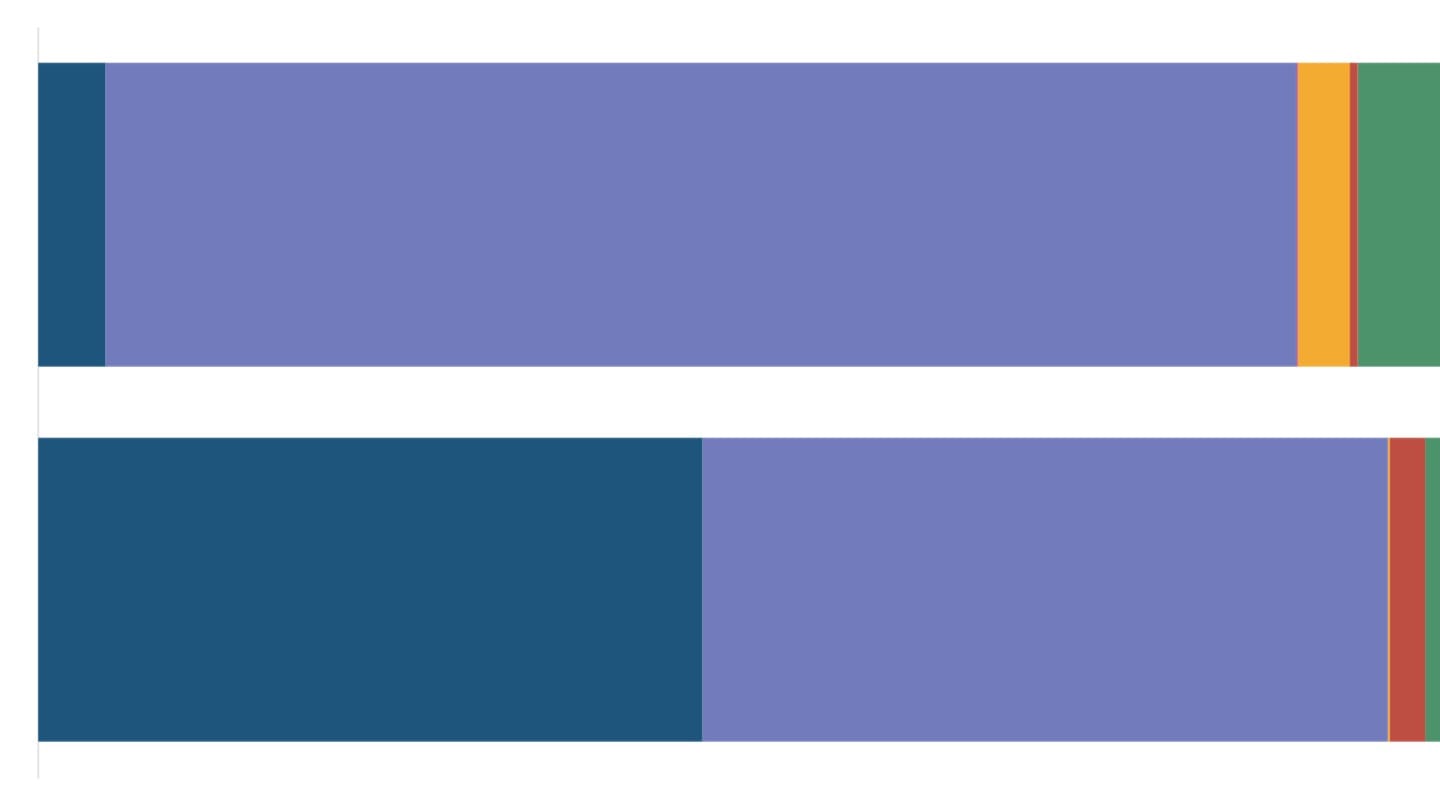
As I've written about in an early edition of this newsletter, life in India has got a lot safer, particularly for the very young. This is because "[a]s countries grow and develop, the risk of dying from communicable diseases like diarrhoea and malaria, particularly in infancy and early childhood, begins to fall," I wrote in this piece for us on mortality in India. But over time, this mortality advantage gained by countries in their development journey begins to run out, as they begin to age. Growth and development drive up life expectancy and push the risk of mortality to its rightful place later in life, but as a population begins to age, it is inevitable that mortality rates will once again begin to rise. And it's that very tipping point that we're at right now.
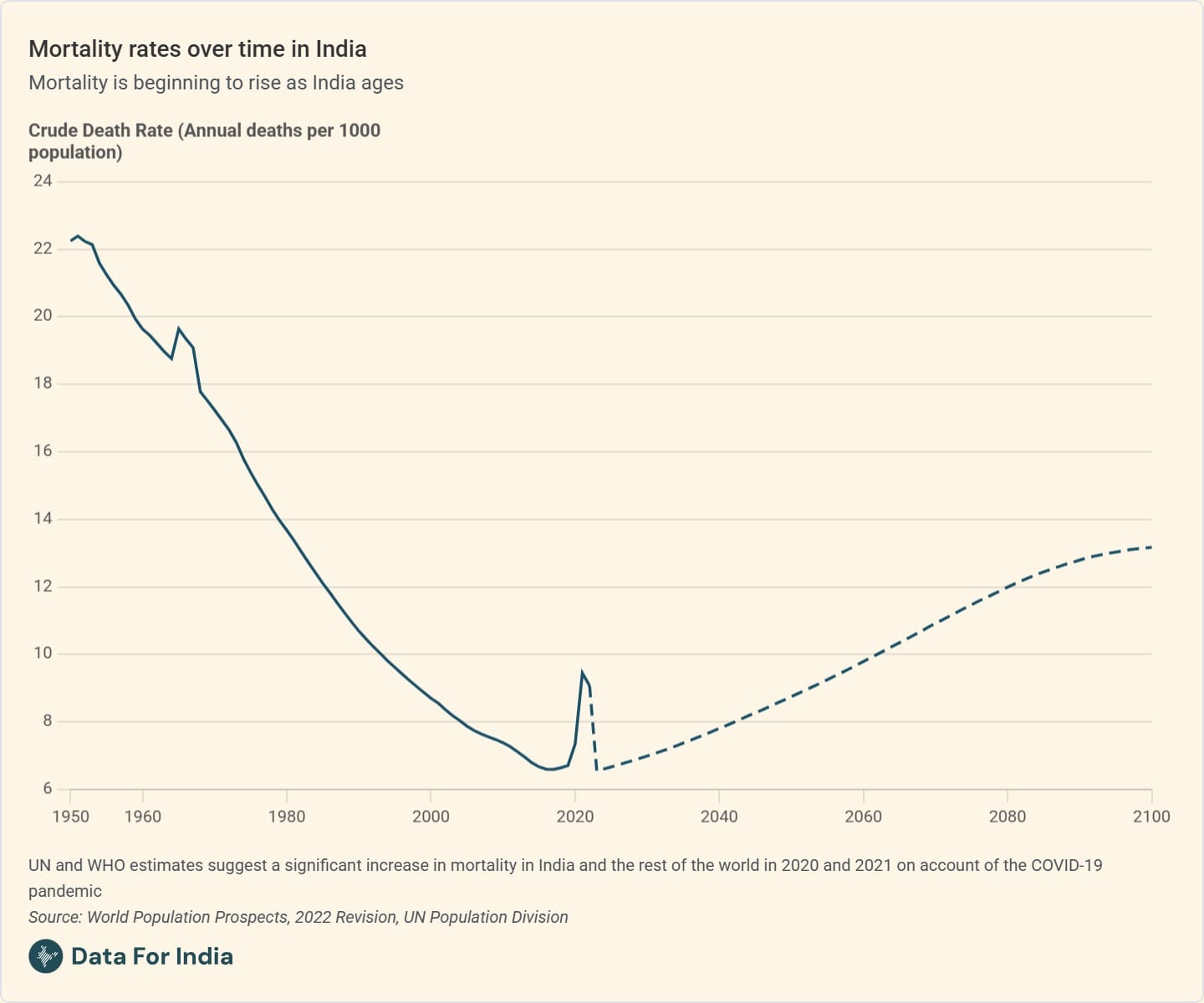
After steadily falling since the 1950s, India's Crude Death Rate - the number of estimated deaths every year relative to the population - rose sharply in 2020 and 2021 as a result of the COVID-19 pandemic. By 2023, the CDR had returned to pre-pandemic levels, and you might have expected it to continue to fall. But from 2024 onwards, India's CDR is projected to rise, and to continue to rise every subsequent year.
From a public health and demographic perspective, this is along expected lines and as long as the relative burden of mortality continues to shift to higher age groups (and we've seen that it does), this is not cause for alarm. Yet, it's a sobering thought, and one that invites reflection about what this might mean for society and public policy. Both the number and the frequency of deaths in India has started rising, and it poses potential challenges to social life, mental health and government welfare. From the data we have a signal of a big shift that is coming; to meet it with fortitude will take a much deeper national conversation.