This is the story of what we thought the big shift was versus what it turned out to be, while looking at data on anaemia in India.
It started out simple enough. We looked at the rates of anaemia among women in India (because they are much higher than among men, and have potential effects on the health of both women and their children if any), using data from all rounds of the National Family Health Survey. It looked like this, and confirmed a lot of news reporting you will have seen around this.
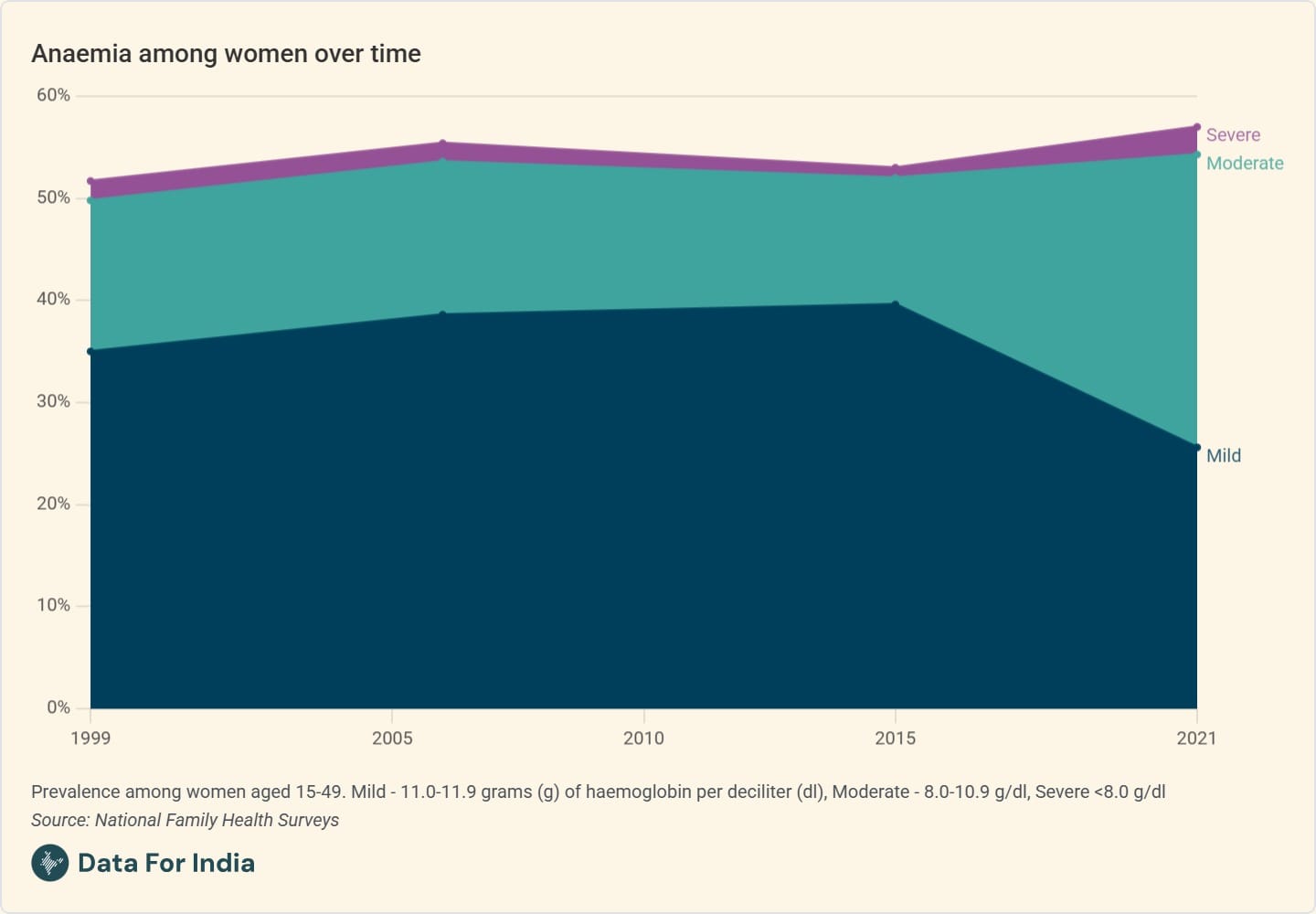
What the data seemed to say was that the overall rates of anaemia among women had not fallen over time, but had in fact grown slightly, particularly when it comes to what is defined as "moderate" levels of anaemia. That would be a big shift of the kind that you neither expect to see nor want to see - given other health indicators in India are improving, incomes are growing and food consumption is rising, we shouldn't expect to see a worsening in the rates of anaemia, unless something is going seriously wrong in what we consume, or in the overall environment.
Unless we're measuring anaemia wrong.
The premise of this argument certainly sounds problematic; it sounds as if we're saying that since the numbers look bad, the problem must be the numbers. But when we looked at the research and data around the measurement of anaemia with an open mind, we found compelling evidence that the way India measures anaemia (by drawing blood from a fingertip instead of from a vein) produces results that are both higher than the more reliable venous method, and are more inconsistent. The global health community, as I wrote about in our piece, too is reevaluating the use of the capillary method that India has used so far, a method that was borne out of necessity in low-income settings.
So one big shift might be in the very way we measure anaemia going forward. But is there anything we can say about what has changed so far?
To answer that, we looked at two countries that both use the capillary method - India and Rwanda, whose per capita income is half that of India's.
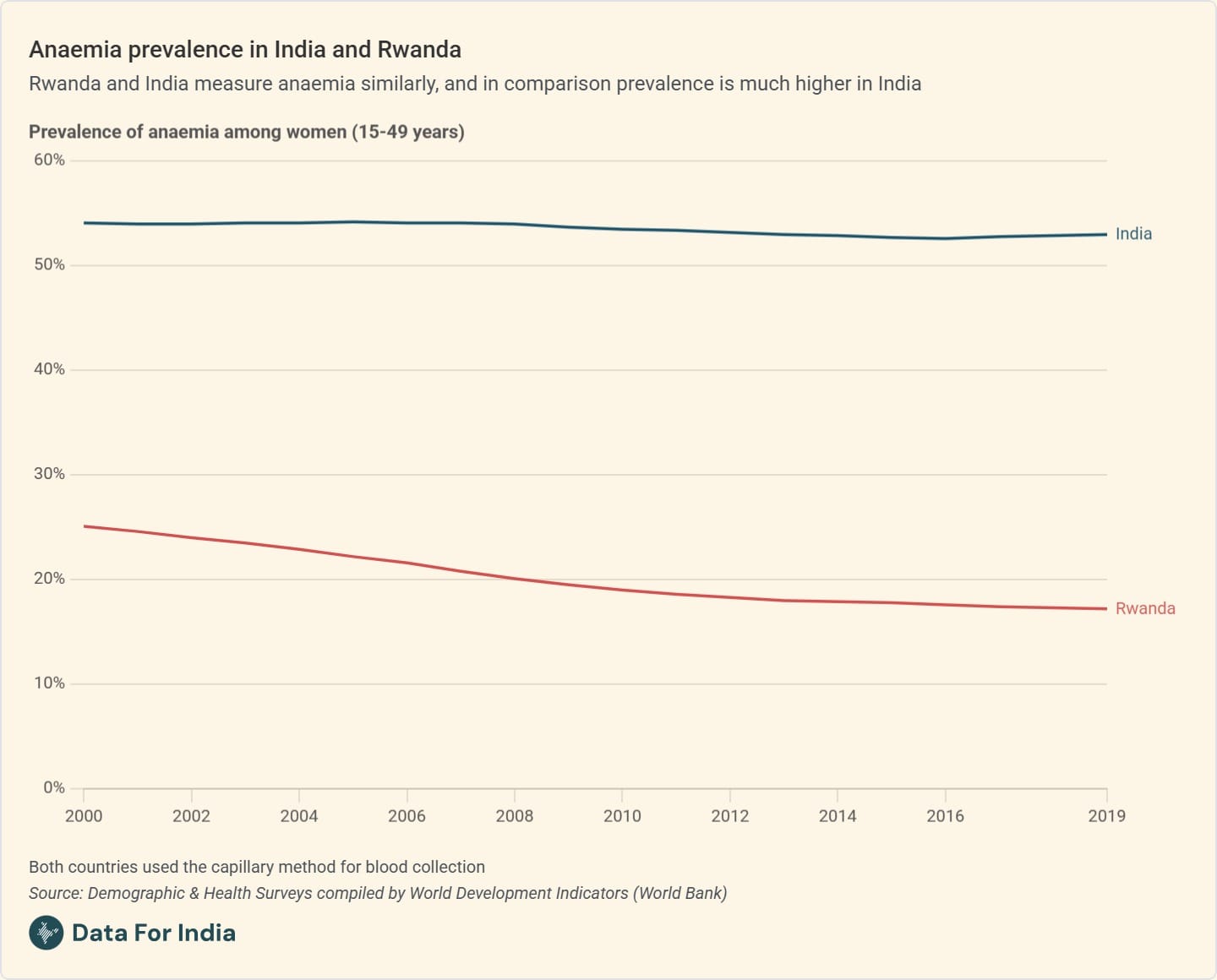
We certainly need more reliable ways to measure anaemia. But there's also no good reason for this chart to look this way, even given data issues, for two countries that used the same method of measurement.
We will need better data to more accurately quantify the problem. But then there's a big shift we'll need to make to get Indian numbers down.