Two striking charts from my colleague Abhishek Waghmare's recent work for us on factories in India have been on my mind lately as key to understanding organised manufacturing employment in India.
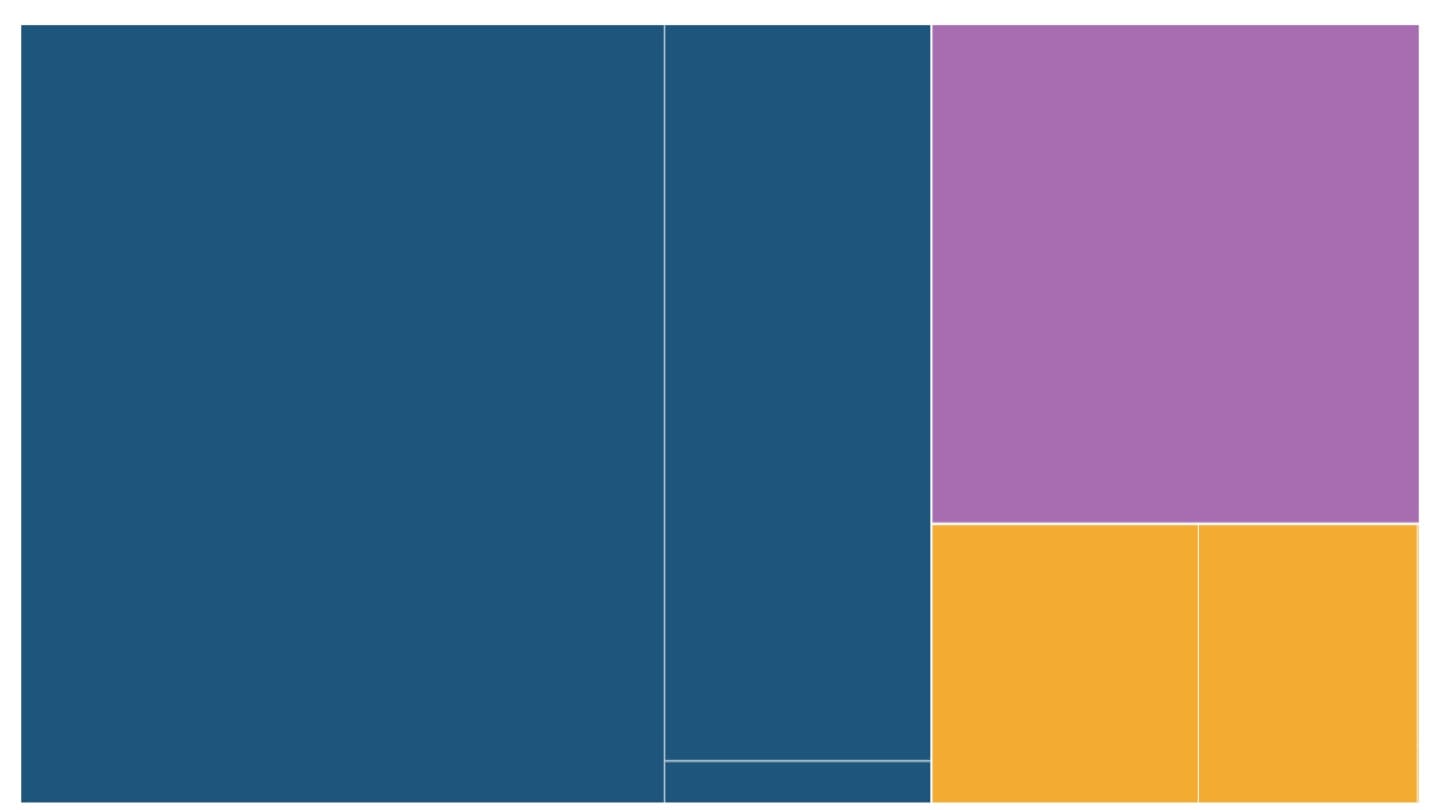
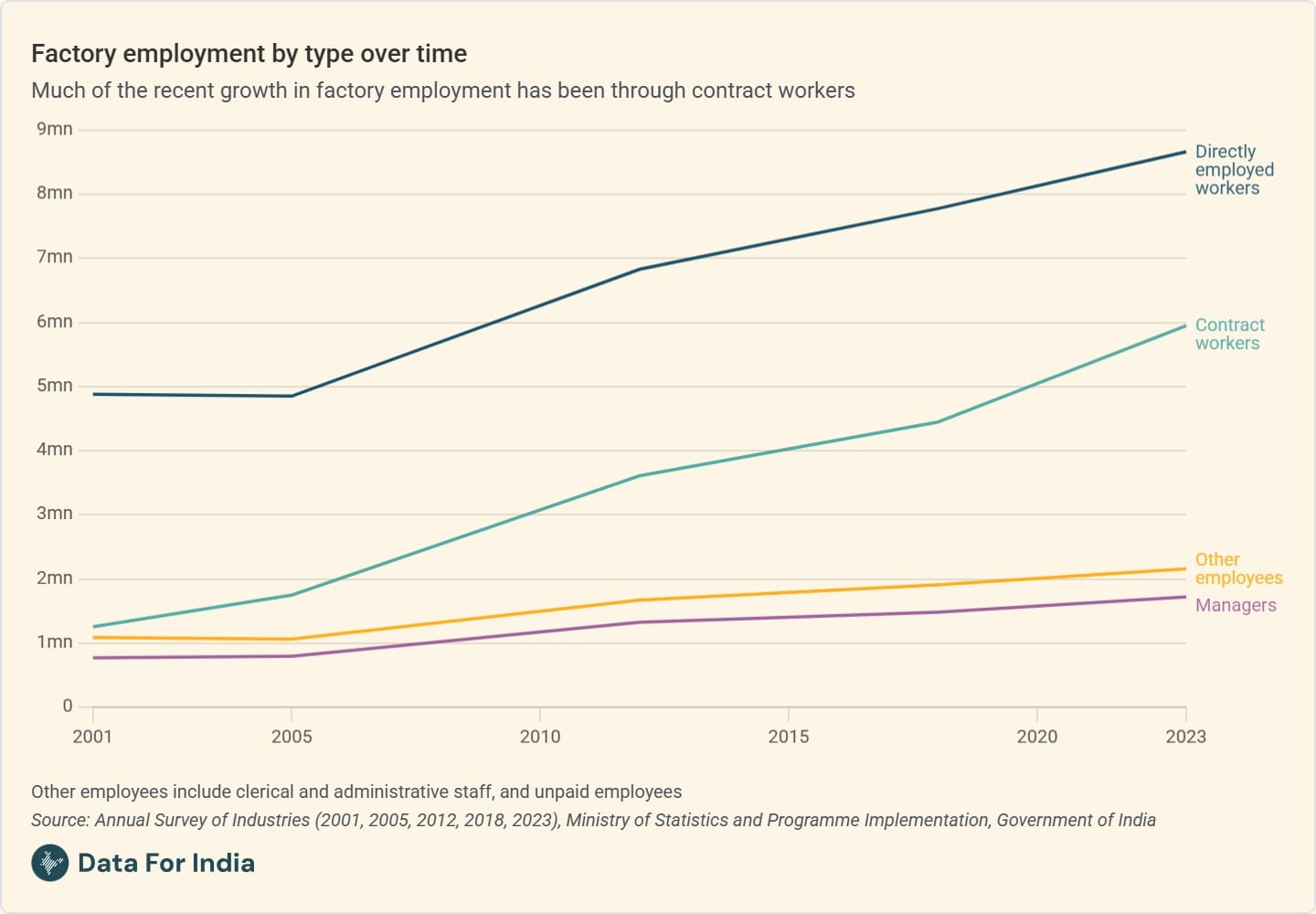
First there's this one on how factory jobs have grown. People working in a factory can be of three types. First, there are workers who are employees in a factory who are directly involved with the manufacturing process, and may be directly employed by the factory, or indirectly through contractors. Then, there are managers and supervisors who oversee the manufacturing process and the workers. Finally, other employees include those involved in administrative, technical and clerical functions. They could also include unpaid workers, who could be working proprietors or unpaid family members. Of the 18.5 million people working in factories in 2023, nearly 80% are workers, who are increasingly hired contractually.
And then there's this chart on wages. Managers account for fewer than 10% of factory jobs, but the increase in their salaries has far outpaced those of any other factory employees, and factory workers in particular.
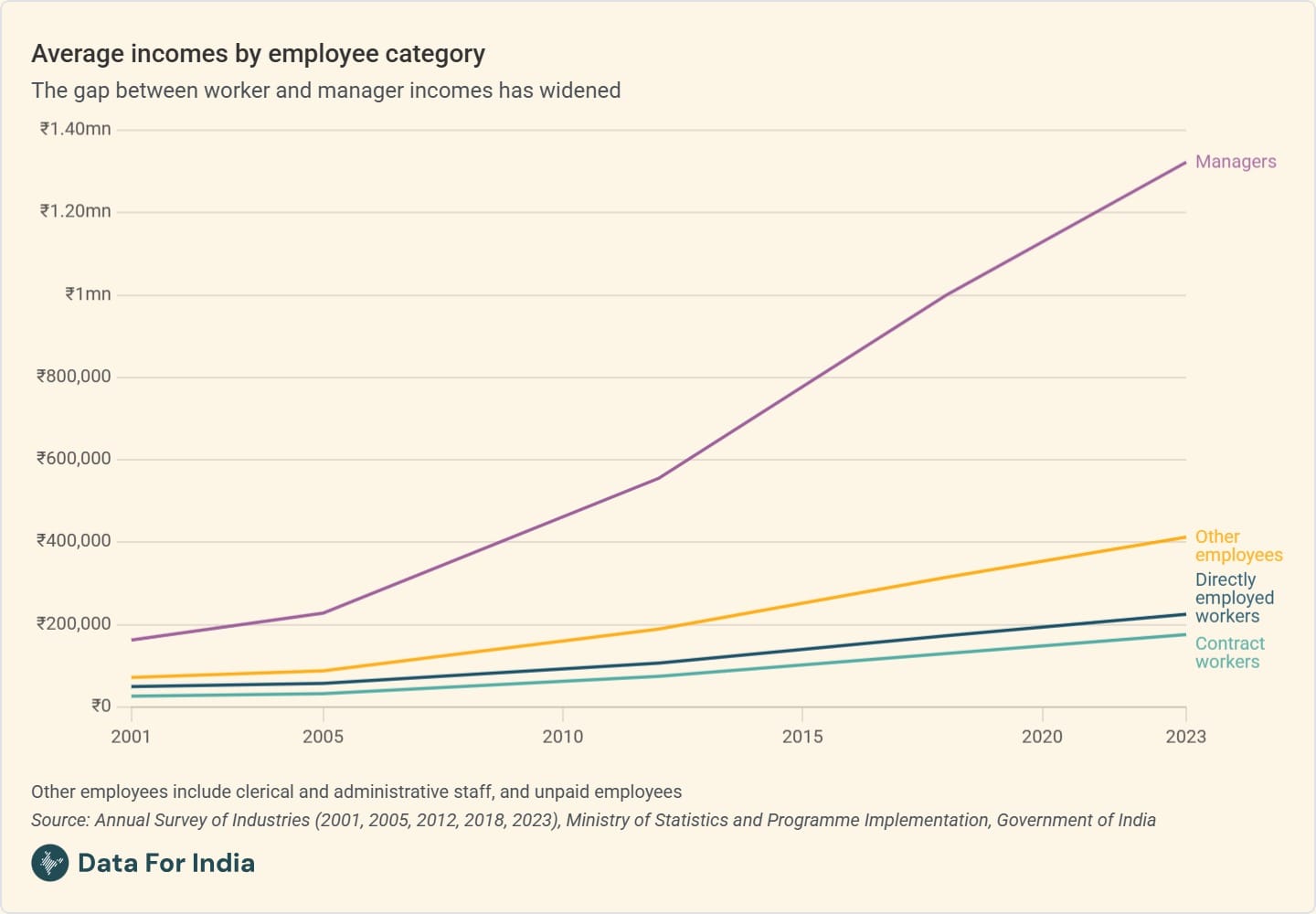
Managers are overall better educated than factory workers and there is, across the board in the labour market, an education premium on wages. But the diversion in these lines should give some pause.
This is against the backdrop of wages in corporate India growing far slower than profits, something that the most recent Economic Survey, published by the Government of India, flagged. Abhishek's work shows that even within organised manufacturing wages, inequality has widened. "The mean income of a manager/supervisor is more than five times that of a worker. The gap between the incomes of managers and workers has also widened over the last two decades," he finds.
The Economic Survey saw the growing gap between wage growth and corporate profits as an impediment to growth. "[T]he disproportionate rise in corporate profits-predominantly among large firms-raises concerns about income inequality," the 2024-25 Economic Survey said. "A higher profit share and stagnant wage growth risk slowing the economy by curbing demand. Sustained economic growth hinges on bolstering employment incomes, which directly fuel consumer spending, spurring investment in production capacity. To secure long-term stability, a fair and reasonable distribution of income between capital and labour is imperative."
As big shifts go, it's both a story of job growth and widening gaps.