At the risk of giving away the ending of many future editions of The Big Shift, I can say this about most data on access to amenities in India - access is broadly improving. So too the data on access to drinking water in India is one of broad gains. "At the beginning of the 2000s, fewer than eight in ten Indians had access to basic drinking water,...lower than the world average. Over the last two decades, India has made steady progress. Nearly 95% of Indian households now have access to basic drinking water, a rate of progress that has surpassed the world's on average," I wrote in my piece on drinking water. But here's the thing - it's never just one simple story.
There has been a steady rise in the share of Indians whose principal source of drinking water is bottled water, so much so that 15% of urban Indians now get their drinking water from bottled water. As the piece shows, the majority of urban Indians get their drinking water from taps, while most rural Indians still get their drinking water from handpumps. Piped water access has grown very slowly in urban India, but what has grown steadily is bottled water as the principal source of drinking water.
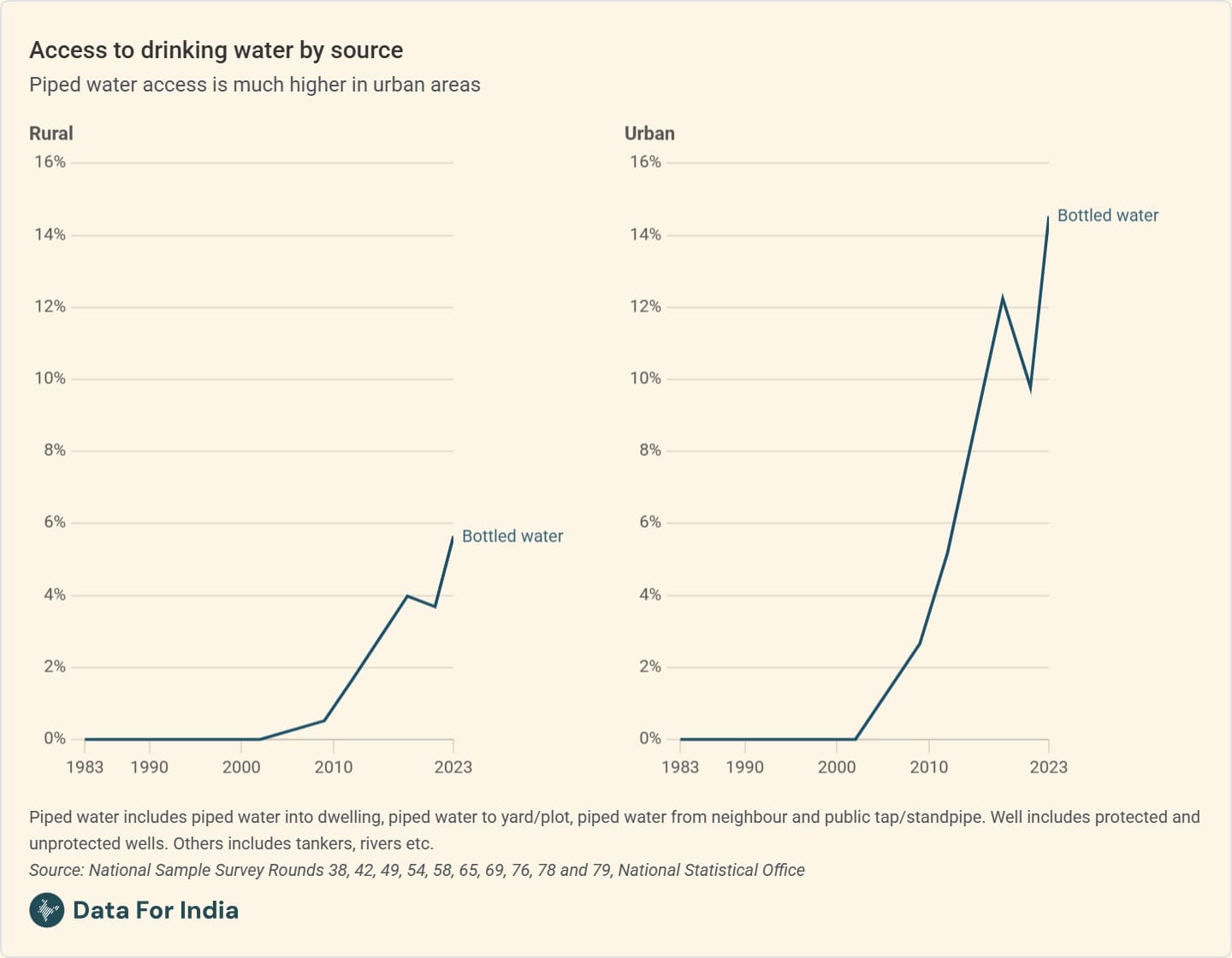
India's National Statistical Office, whose National Sample Surveys this data comes from, defines bottled drinking water as "drinking water packaged in bottles, jars, pouches, and similar containers…Tap water, well water, etc., kept by households in bottles, for convenience, was not treated as bottled drinking water." This includes, I was told, the ubiquitous bubble top containers which are such an Indian urban staple now.
The southern Indian states in particular are beginning to see a heavy dependence on bottled water. Over a third of urban households in Telangana and Andhra Pradesh, and a quarter of urban households in Karnataka and Tamil Nadu now get their drinking water from bottled water.
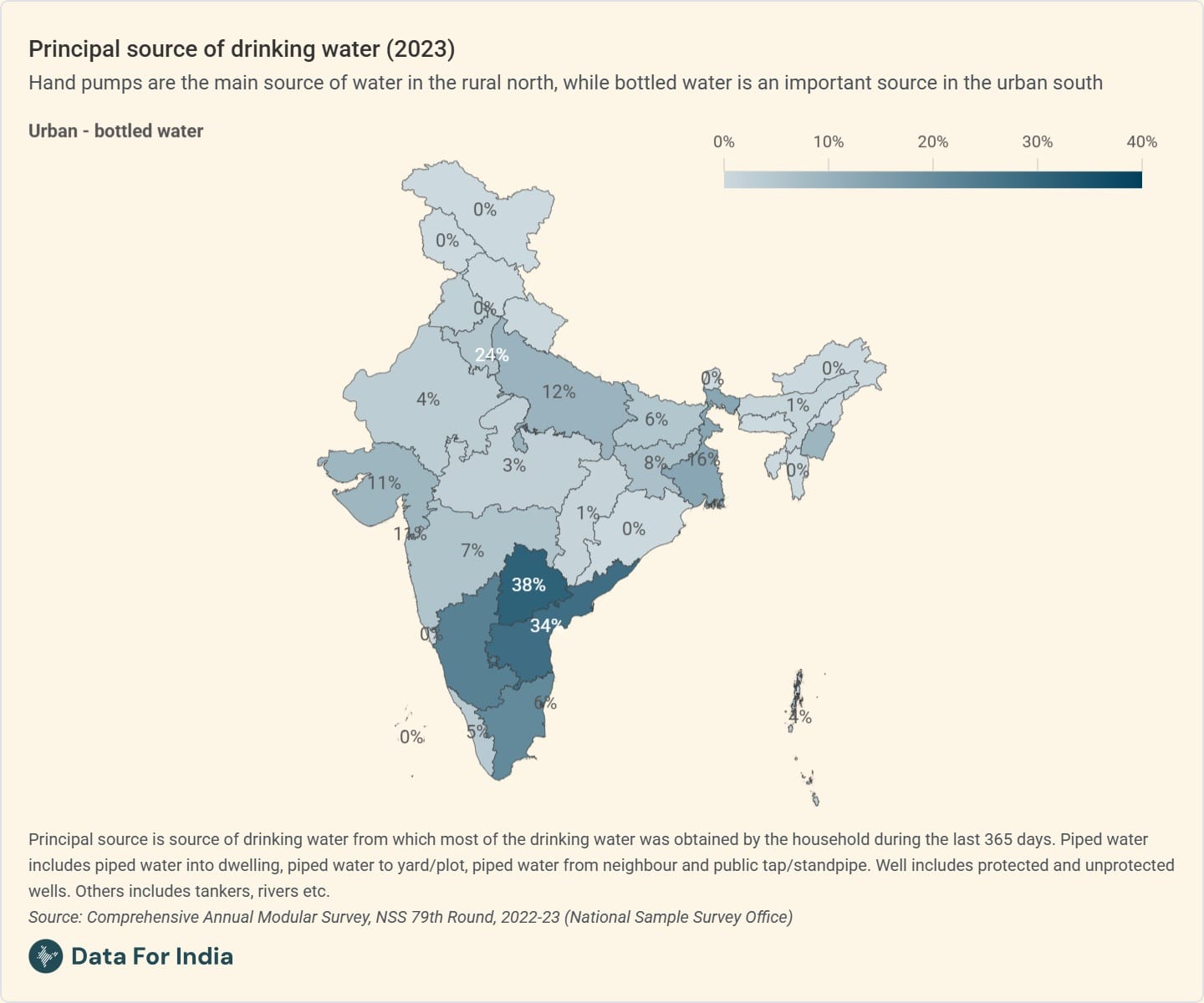
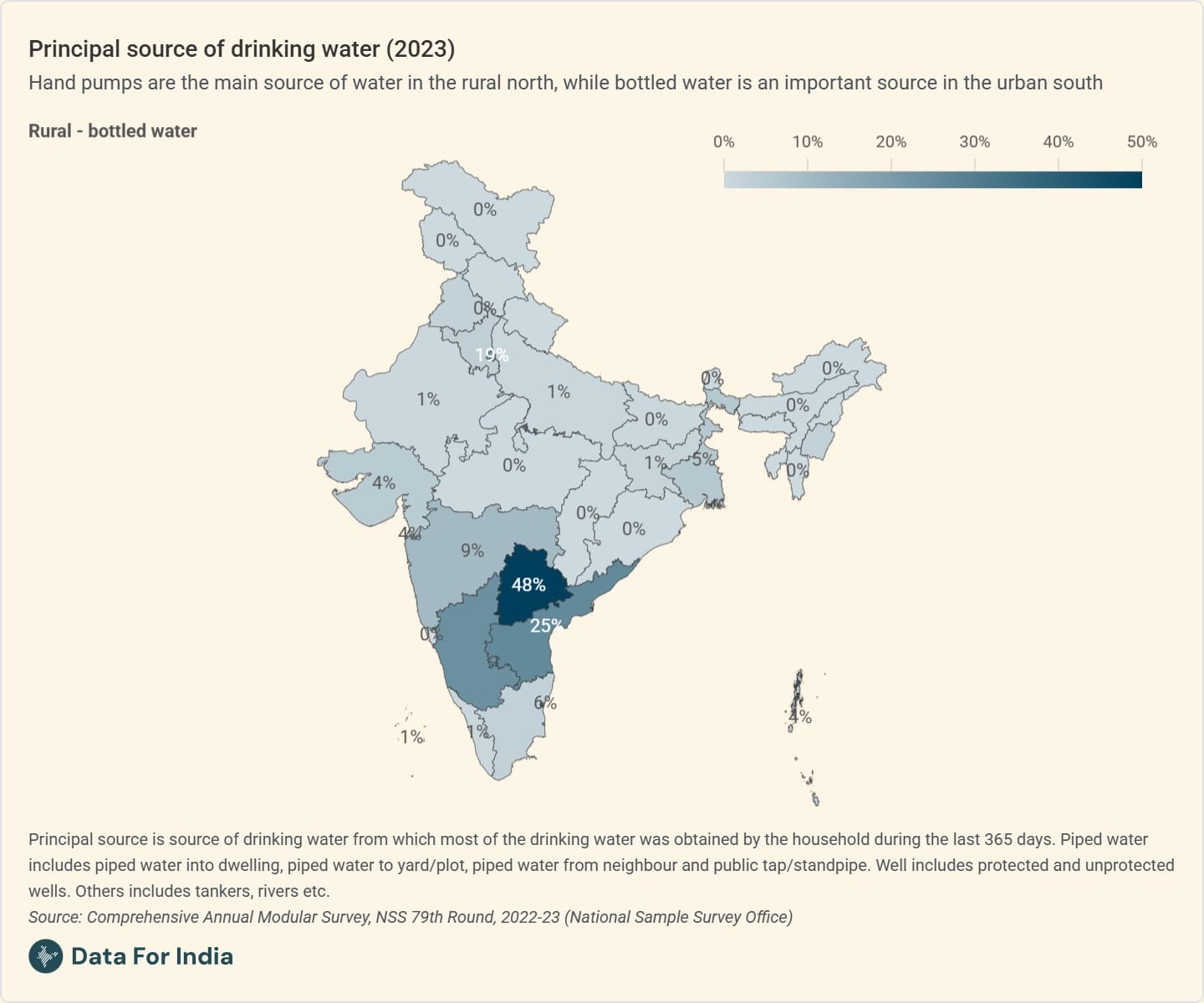
I was particularly surprised, however, by the extent of usage of bottled water in rural southern Indian households. Nearly half of rural households in Telangana rely on bottled water, and nearly a quarter of rural households in Andhra Pradesh and Karnataka.
Looking at the data by income group shows that piped water access is equally widespread across all income groups in urban India. Among households without access to piped water, richer groups turn to bottled water as a replacement for the handpumps and tubewells that poorer groups use.
In rural areas, tap water access is far more widespread among richer groups, but here too, bottled water is what richer households without tap water increasingly turn to, while poorer households without access to tap water have to use handpumps and tubewells.
From a public health perspective, bottled water is classified as safe and an improvement over the past. But it's hard not to see the steady rise of bottled water in India as something of a failure to provide to people one of the most basic human needs - clean drinking water - especially in some of India's richest and most developed states. It's an improvement over the past, but one that raises some disconcerting questions, and it's this week's big shift.