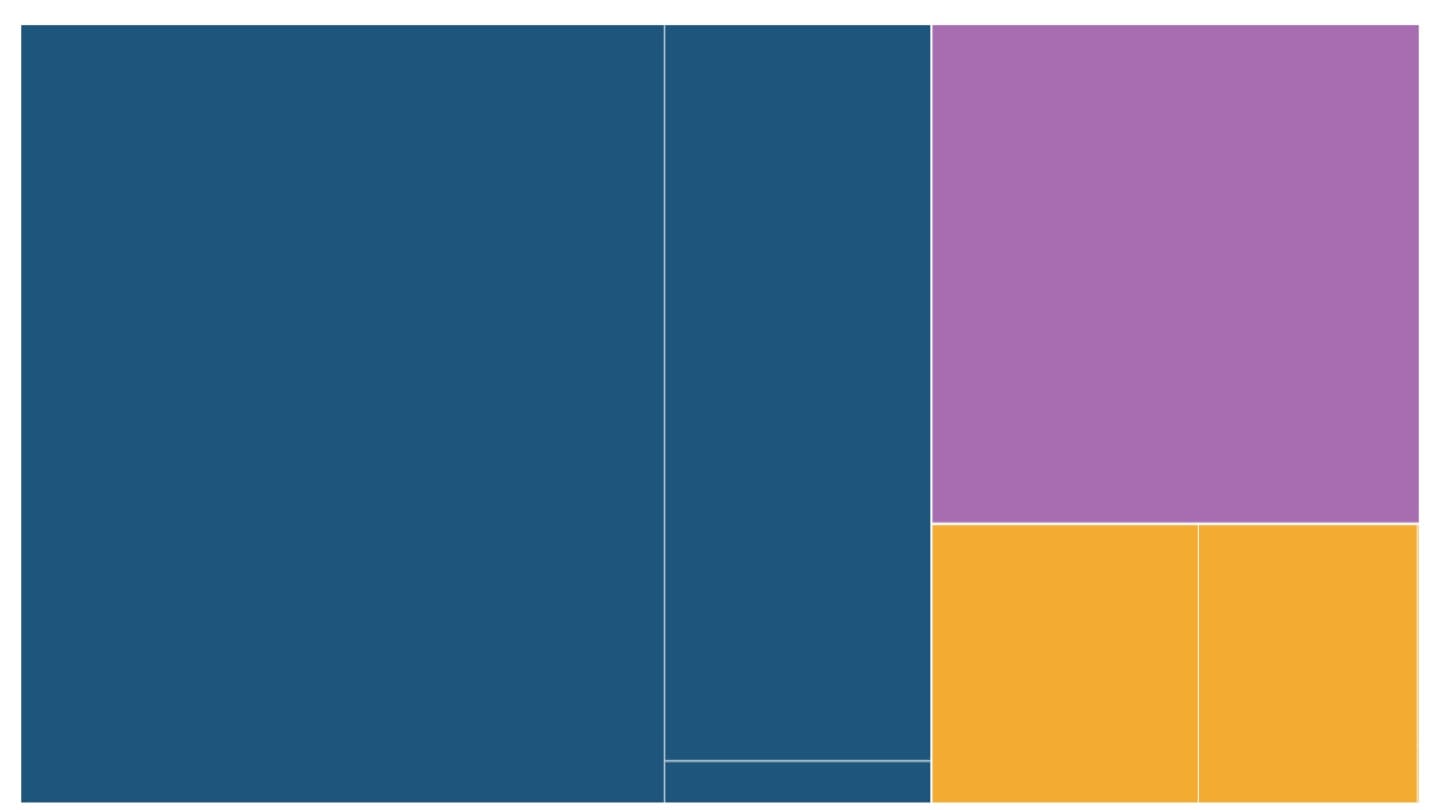
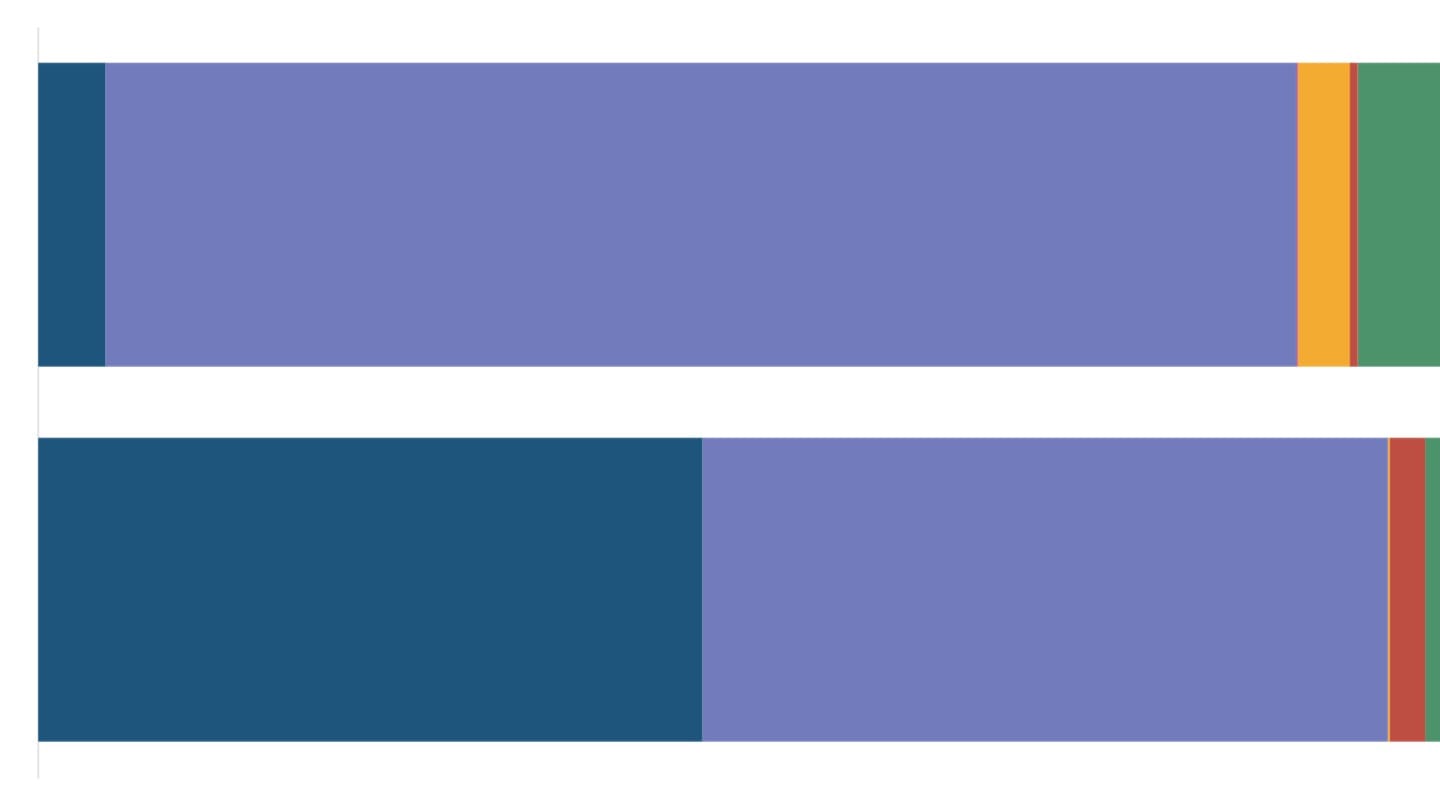
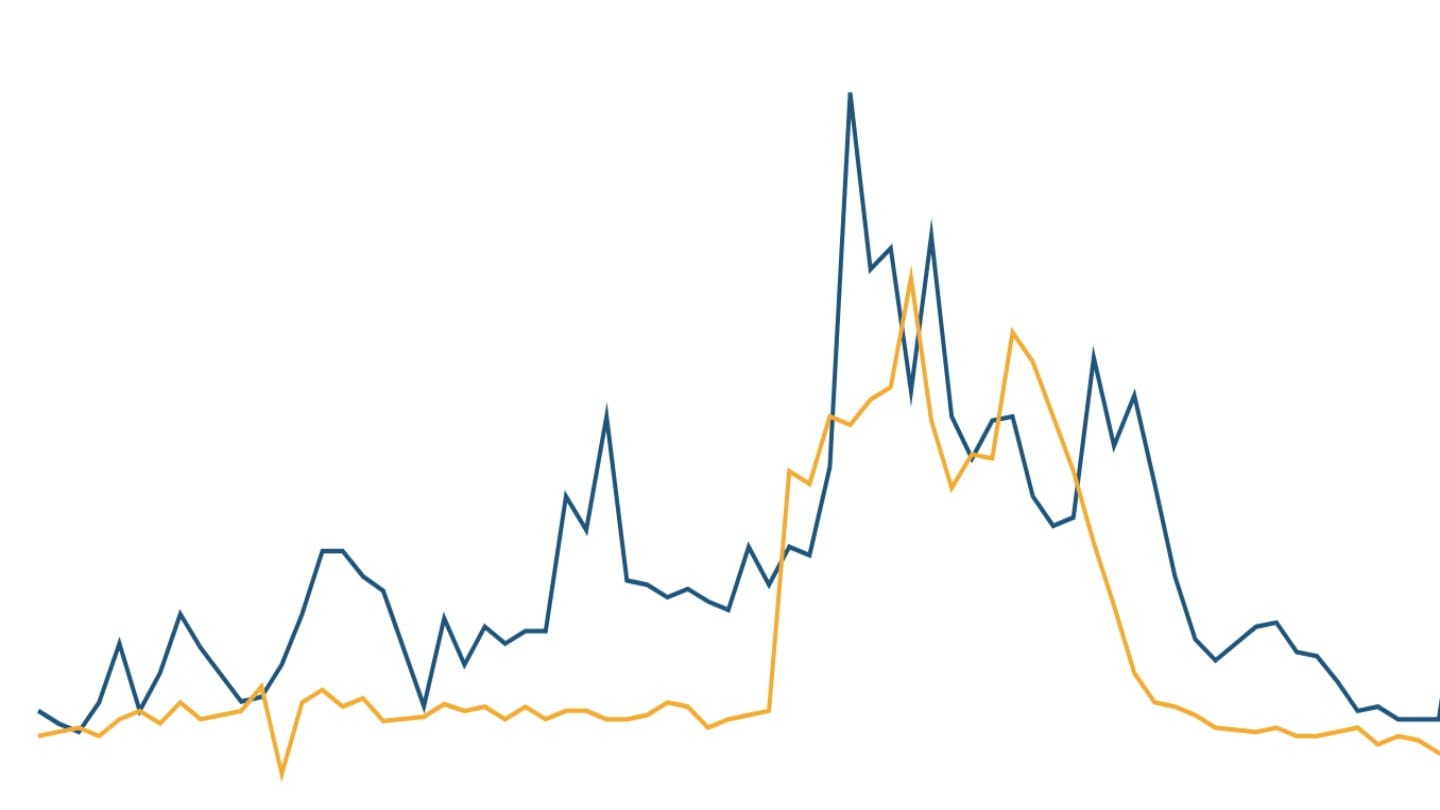
I still remember seeing my father pull out his cheque book to make a major purchase in a store. Just two decades ago, 99% of the money spent every month on major retail payments was done using cheques, my colleague Abhishek Waghmare finds in his piece for us on retail payments in India.
But in the years since, cheques have disappeared from my life - I have never made a purchase using a cheque. As a friend recently remarked, the only time we use our cheque books any more is to cancel a cheque for some piece of paperwork.
It's clearly not just me. Just 8% of retail payments now involve cheques.
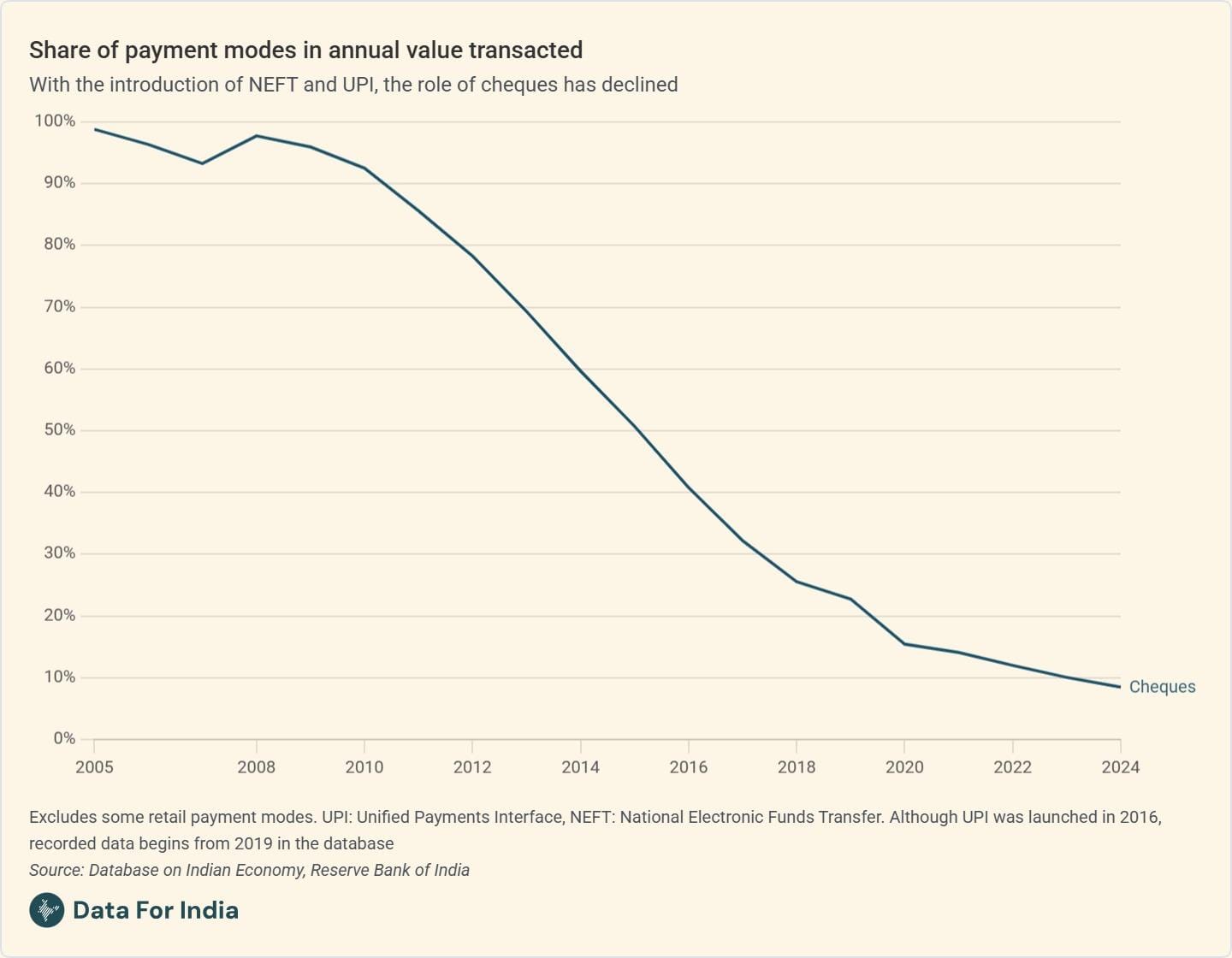
It's a big shift in a short period of time, and two innovations have eaten up the market share of cheques. First, the introduction of the National Electronic Funds Transfer (NEFT) system in 2005-06 took over high-value retail payments. Later with the rise of the Unified Payments Interface (UPI), digital retail payments took over low-value high-volume transactions.
UPI is mainly used for small peer-to-peer and peer-to-merchant payments, while NEFT is used for transactions with a larger ticket size; while the average value of a UPI transaction is around Rs 1,500, that of an NEFT transaction is a little under Rs 50,000.
The largest daily transactions by value take place via NEFT, Abhishek finds. From 2020 to January 2025, the average daily transaction value on NEFT doubled from Rs 600 billion to Rs 1.2 trillion.
Meanwhile, driven by the rise in the use of mobile phone-based internet, the average number of daily transactions via UPI has shot up. In the five years to 2025, the average daily number of UPI transactions grew from 40 million to 550 million per day, outstripping all other modes of digital payments.
It's such a big shift, that cheques have essentially exited the cultural conversation as well. Not everywhere though.
Growing up, one of the abiding images for me of a large payment was the super-sized cheque that the Man or Woman of the Match would receive after a cricket win. Funnily enough, all these years later, it's still a cheque, and now, one of the few places I see a cheque any more.