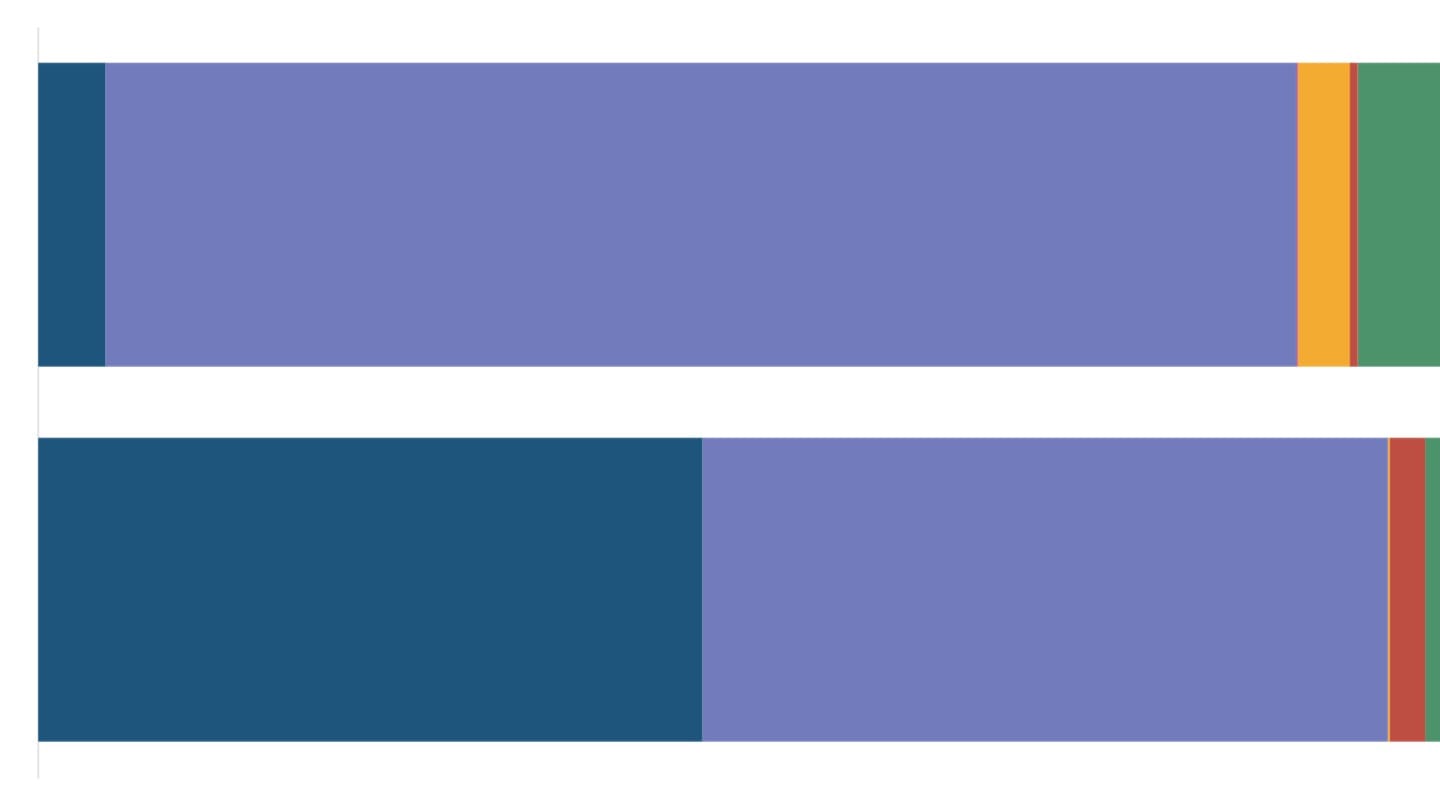
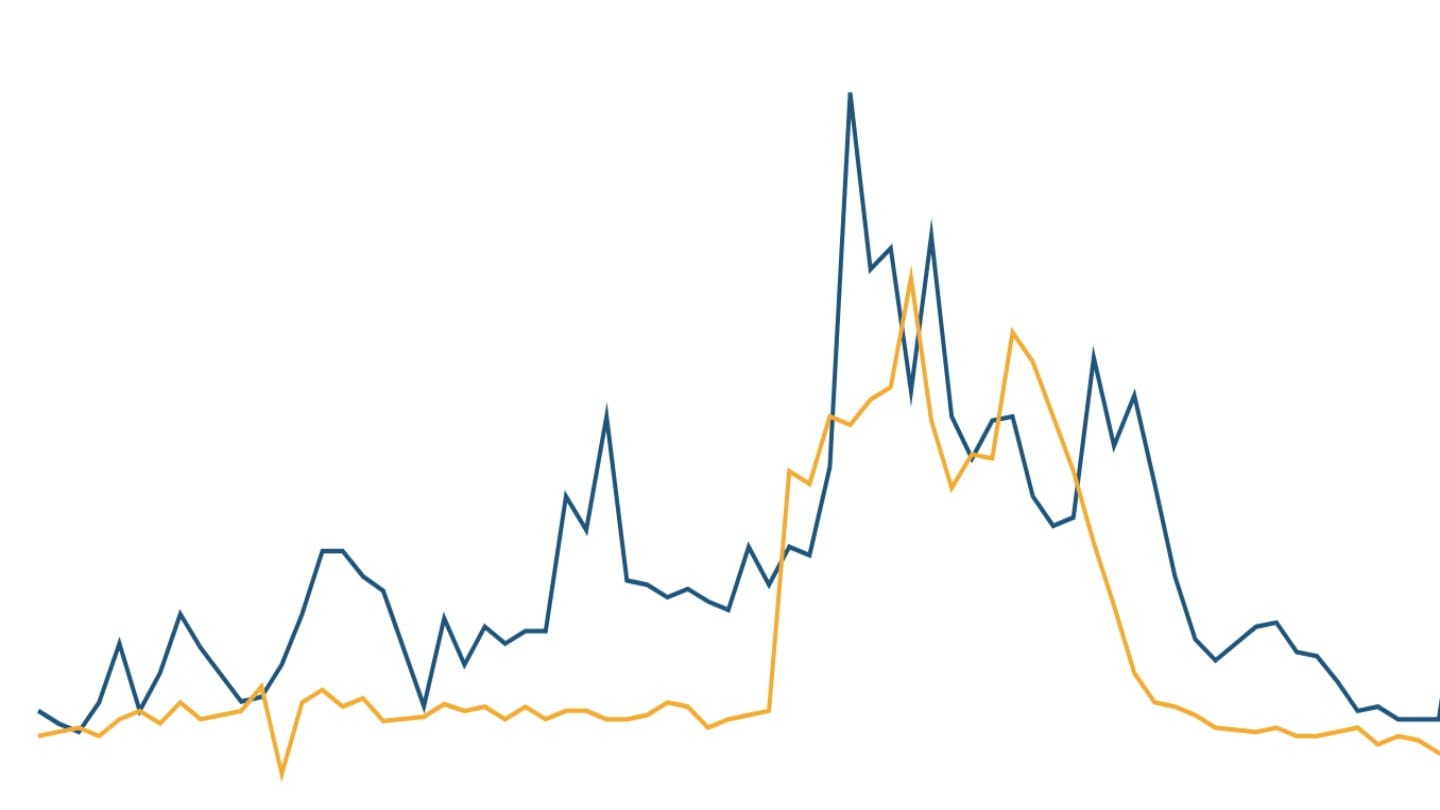
In 1999, over a century after the first telephone exchanges were set up in the country, 7% of Indian households had a landline phone. By 2005, this was up to 14%. In a country where access to services usually looks like a line-graph inching forward every year, this number steadily fell over the next twenty years. Today, fewer than 1% of Indian households have a landline phone.
What changed? The introduction of the mobile phone, heralding a big shift, from a failed experiment to one that took off.
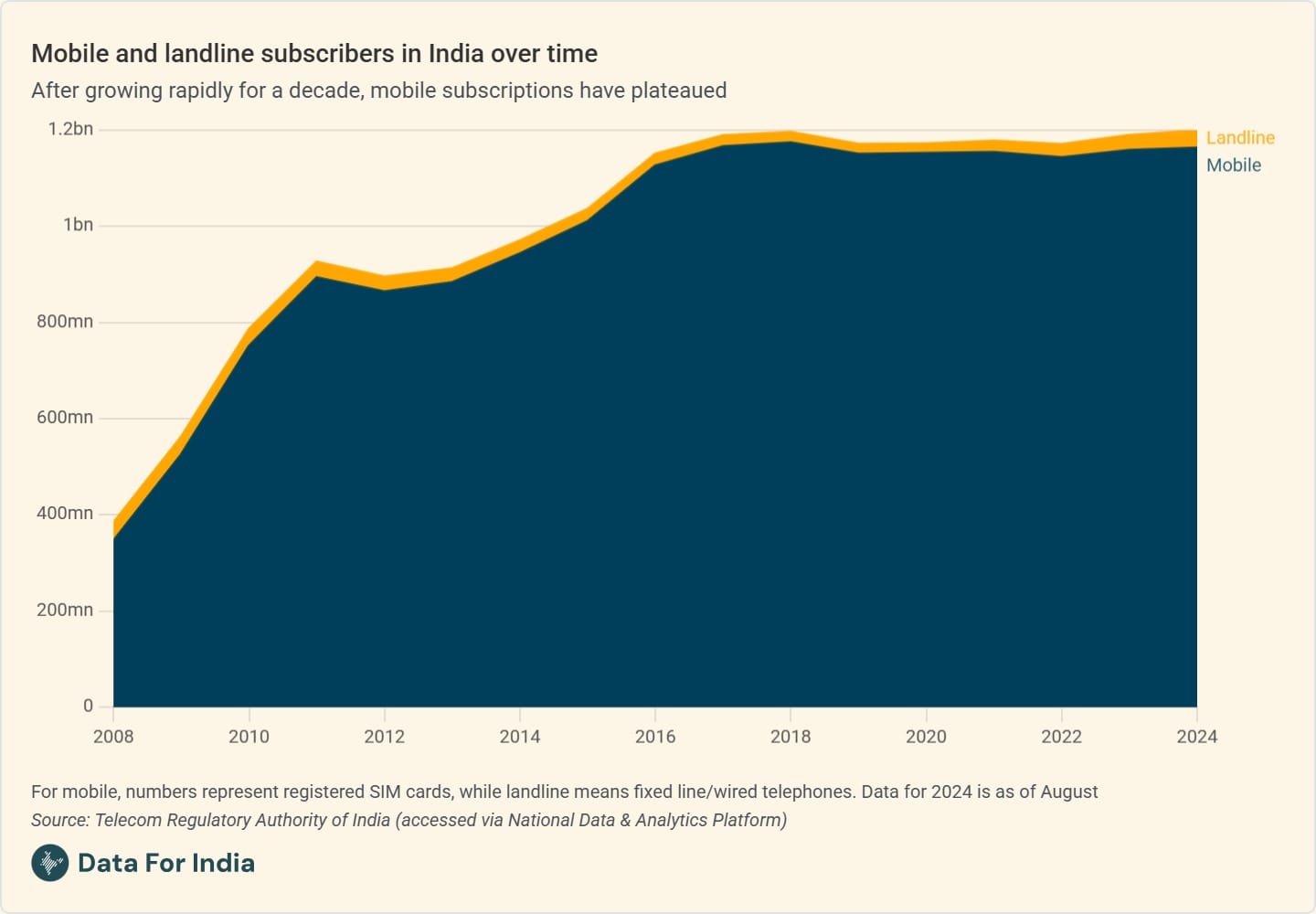
And take off it did.
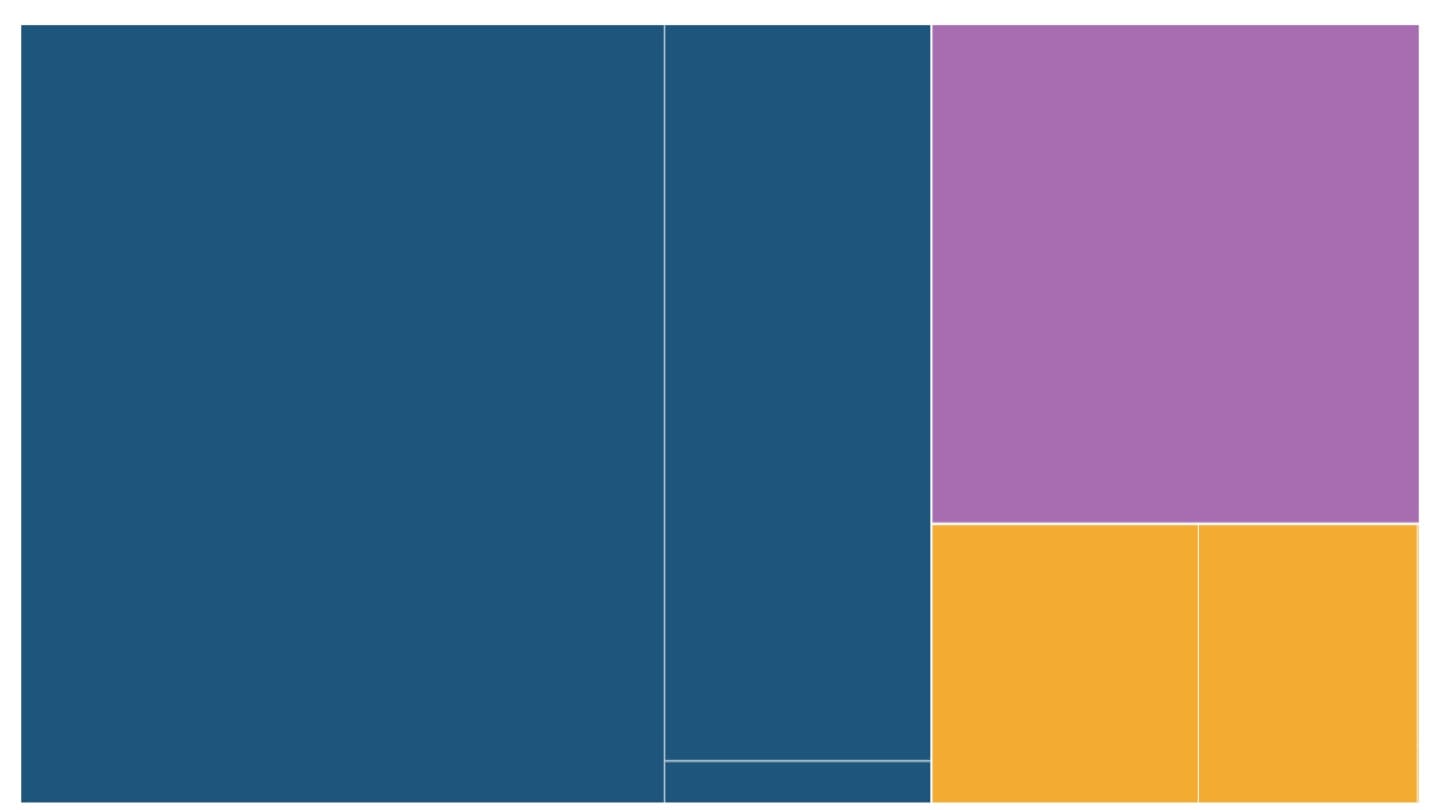
Since the first mobile phone call was made in India in 1995, the mobile phone has been a natural fit for Indians. In 2004, the number of mobile phone connections surpassed the number of landline connections and by the mid-2010s, India had hit a billion mobile phone connections. "Mobile phone ownership … took off rapidly, and democratised phone ownership in a way that landline phones were never able to. In 2008, there were 346 million registered mobile SIM cards in India. Between 2008 and 2024, this number more than tripled," my colleague Abhishek Waghmare writes in his piece on access to phones and the internet in India. That thin yellow stack of landline phone ownership on the other hand, as you see in the chart above, hasn't really changed.
But there's something else in the chart that you will notice from the late-2010s onwards: the growth of mobile phone connections has plateaued in the region of under 1.2 billion or so.
This would seem to make sense - if every adult already has a phone, as this chart seems to suggest, and our population growth has slowed, there can't really be much more headroom for growth.
Except, phones are not people.
Even though there are 1.2 billion registered SIM cards in India, not every adult Indian uses a phone. In his piece, Abhishek uses data from large-sample household surveys conducted by the Indian government, and finds that a substantial number of Indians, particularly women, do not yet use a phone, or do not yet have a mobile phone of their own to use.
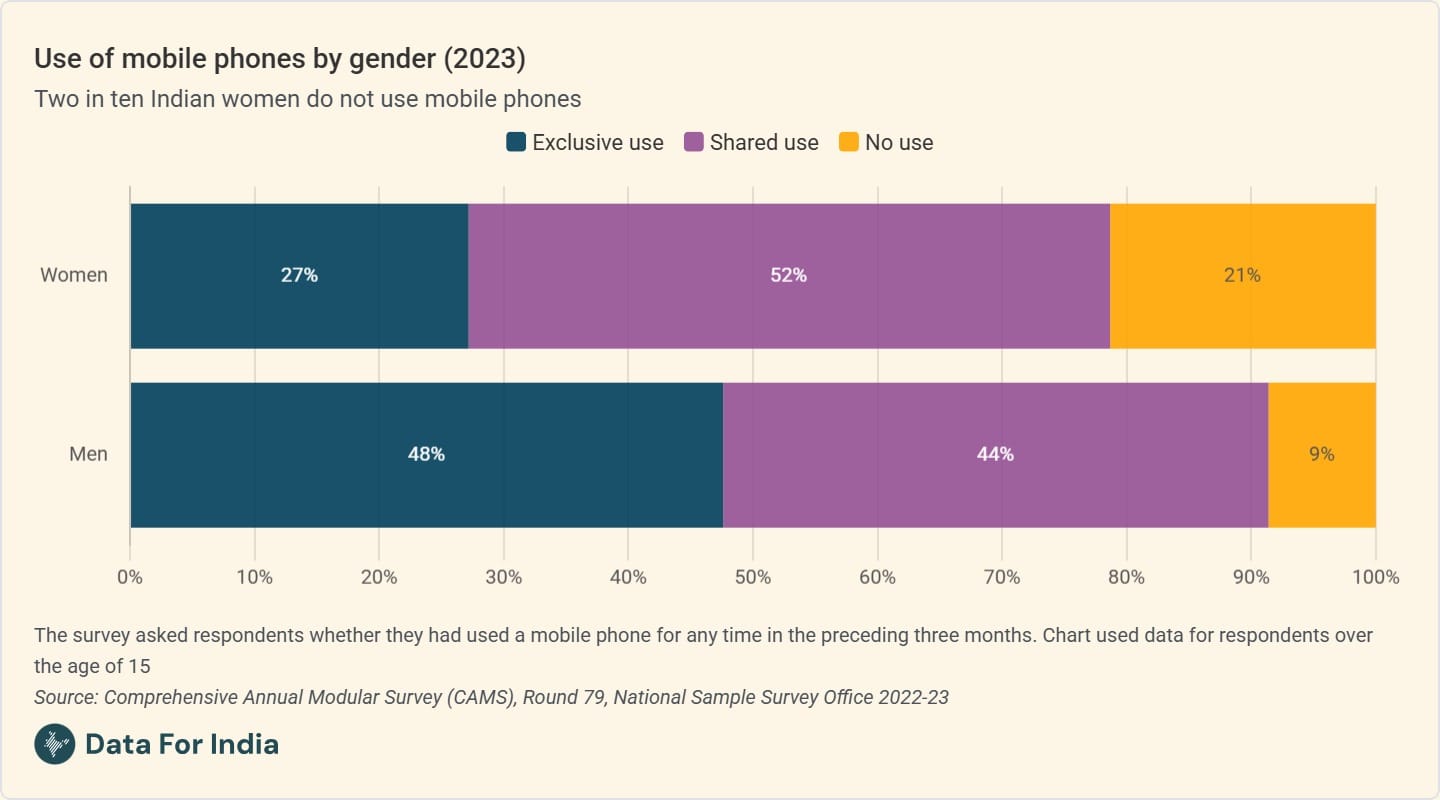
Looking at more granular data, Abhishek finds that "[t]hree characteristics stand out among India's phone non-users: gender, education and age. More than seven in ten of those who do not use phones are women. The lack of phone usage is also highest among illiterates, and among the elderly".
This does not appear to be as a result of a lack of access to devices; nine in ten people who do not use a phone live in households where someone else does own a mobile phone.
The first big shift here was the rise of mobile phones. Even though it may look like there's no more space for growth, the second big shift could be when mobile phones reach every Indian person, and not just every household.