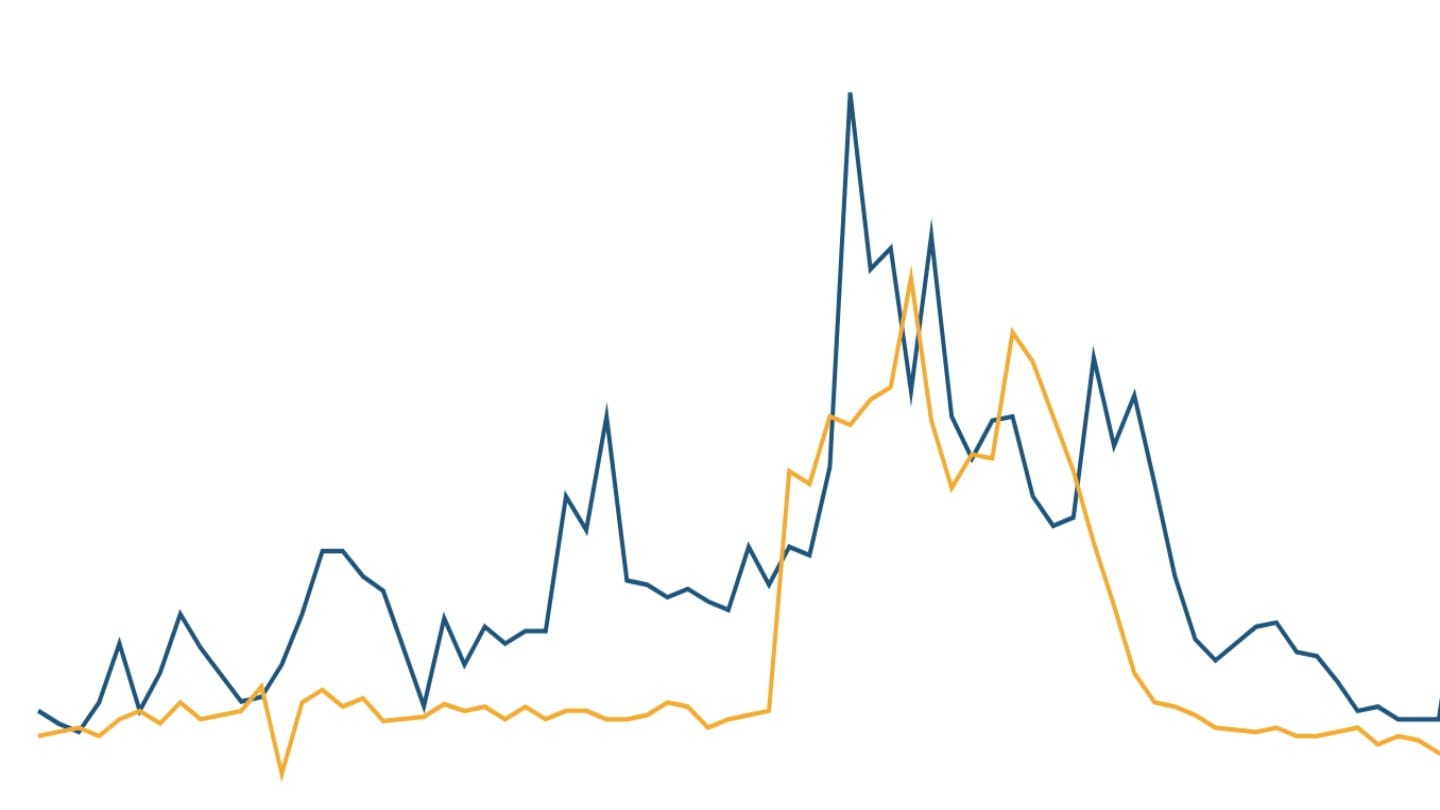
In India's employment landscape, the main big shift over time has been the move of workers away from agriculture into industry (to a lesser extent) and services (to a greater extent). This hasn't been as linear a process as the sentence suggests - the exit of workers from agriculture has been slower than in many other comparable parts of the world, and the uptake of these workers by manufacturing in particular has been slow. But even within this limited move, the trajectory has not been the same for men and women.
As my colleague Abhishek Waghmare wrote in his piece for us on the move of Indian workers away from agriculture, "[r]ural men moved out of agriculture at a faster pace than rural women". While the share of rural men working in agriculture fell to less than half (with many moving to construction jobs in rural areas), over 75% of rural women still work in agriculture.
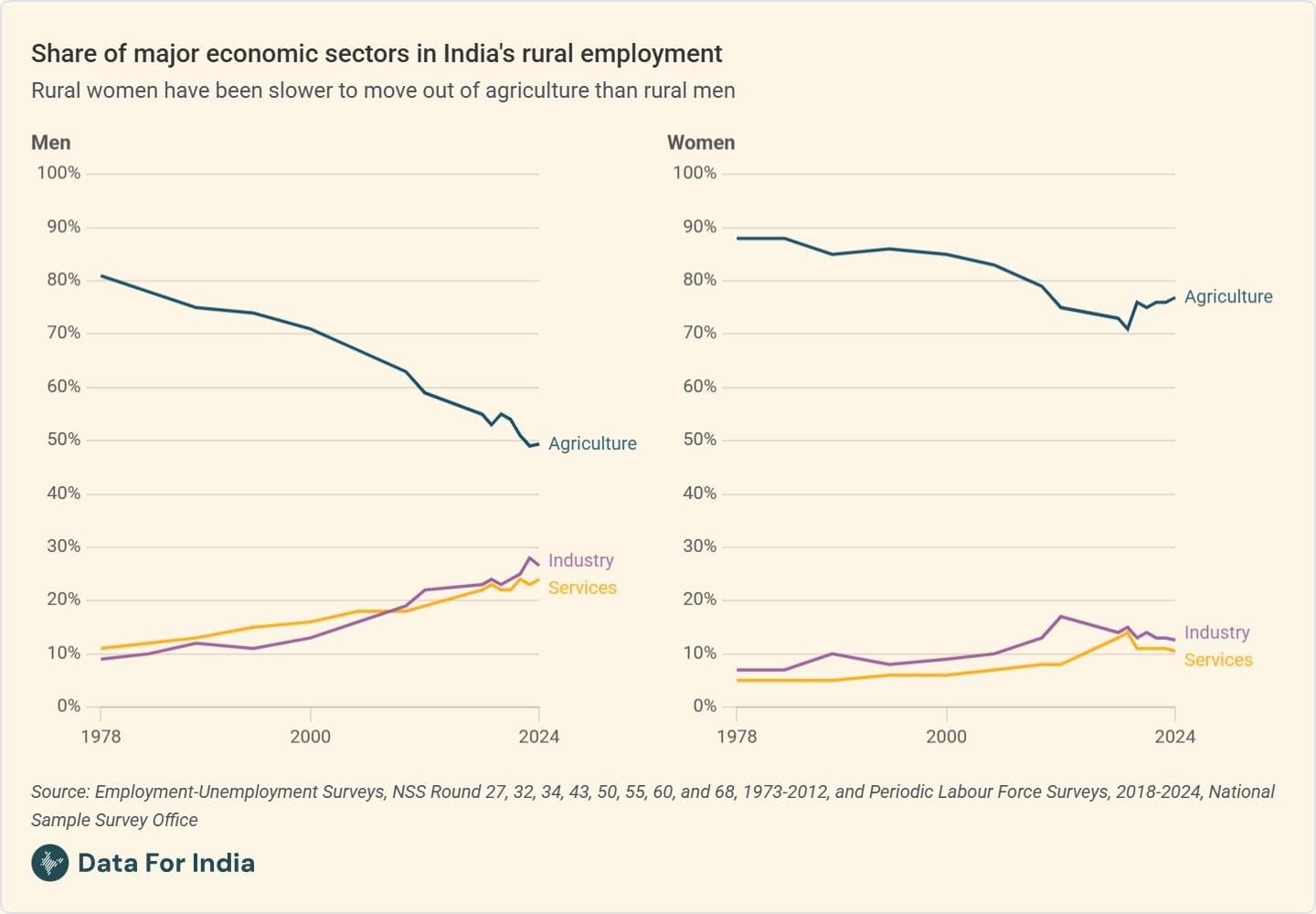
Over the last five decades, agriculture in India has become heavily feminised. Given low female labour force participation, the number of male workers vastly outnumber the number of female workers in industry and services. But not so in agriculture, where now the female: male ratio of workers is the highest it has ever been - 48%: 52%.
A few different processes are contributing to this. The first is that men are exiting agriculture faster than women. The second is that female labour force participation is higher in rural than in urban areas, and the rural women who are making themselves available for "productive work" (you can read Abhishek's work to understand this term, as well as women's unpaid work, better) are finding it in agriculture. The third is that we don't yet fully understand what propels the exit and return of women from India's workforce, but we do know that when they leave or return, it is agriculture that absorbs most of the impact.
This has implications not just for our understanding of women's work, but also for the way we think about agriculture.
In the long arc of economic history, India may appear to be following much the same trajectory as most other countries - moving from agriculture to either industry or services, or both. But for the lives of India's women workers, these shifts appear to be anything but preordained or linear, and the shifts, while big, are much more volatile than averages would suggest.