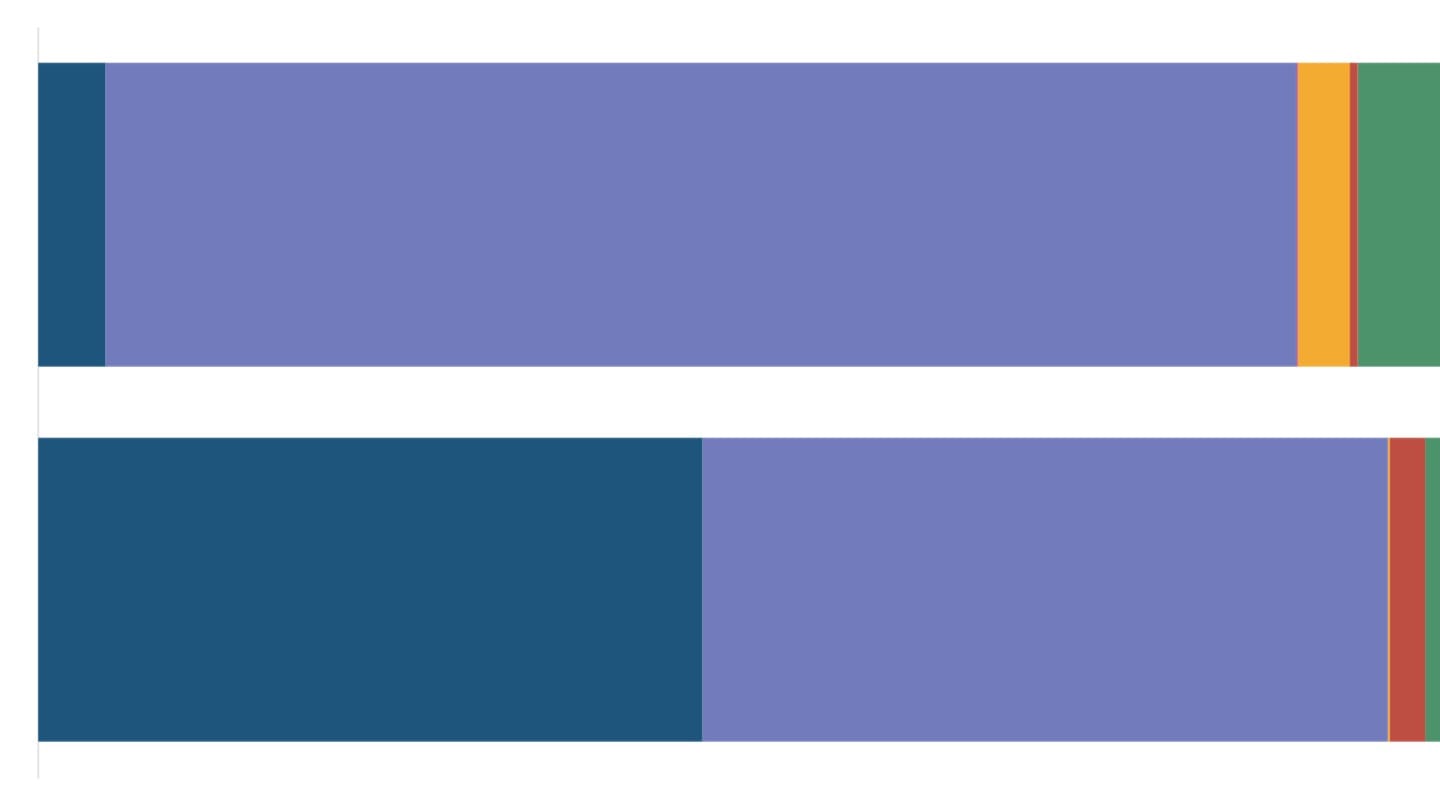
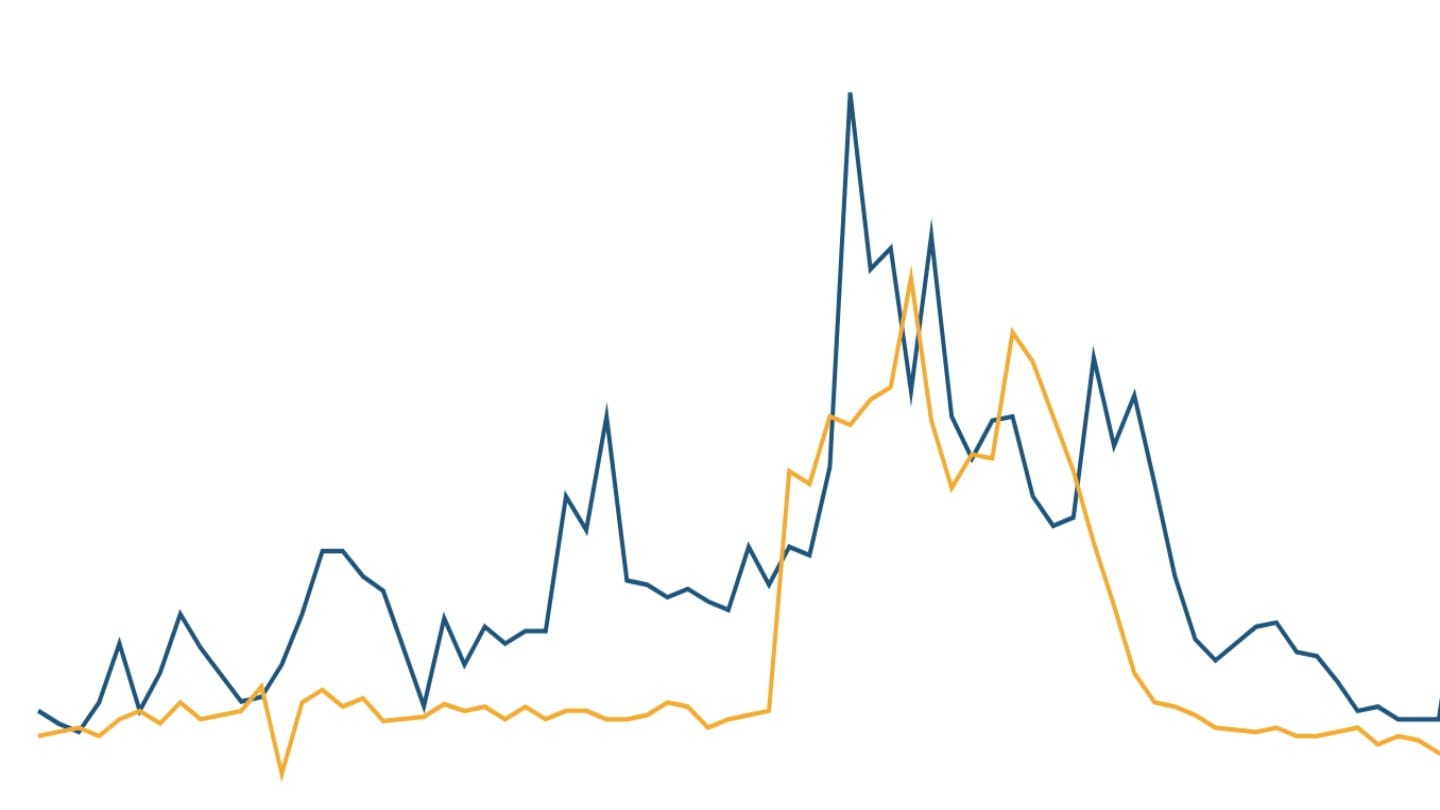
Food has for a long time defined Indian statistics and economics. Until just a decade ago, India's poverty line was based on how much a person would need to spend to be able to consume a certain minimum number of calories in a day. As a result, the collection of data around spending too was heavily focused on spending on food. And with good reason - in the 1960s, more than three-quarters of all that a household spent in a year was on food alone.
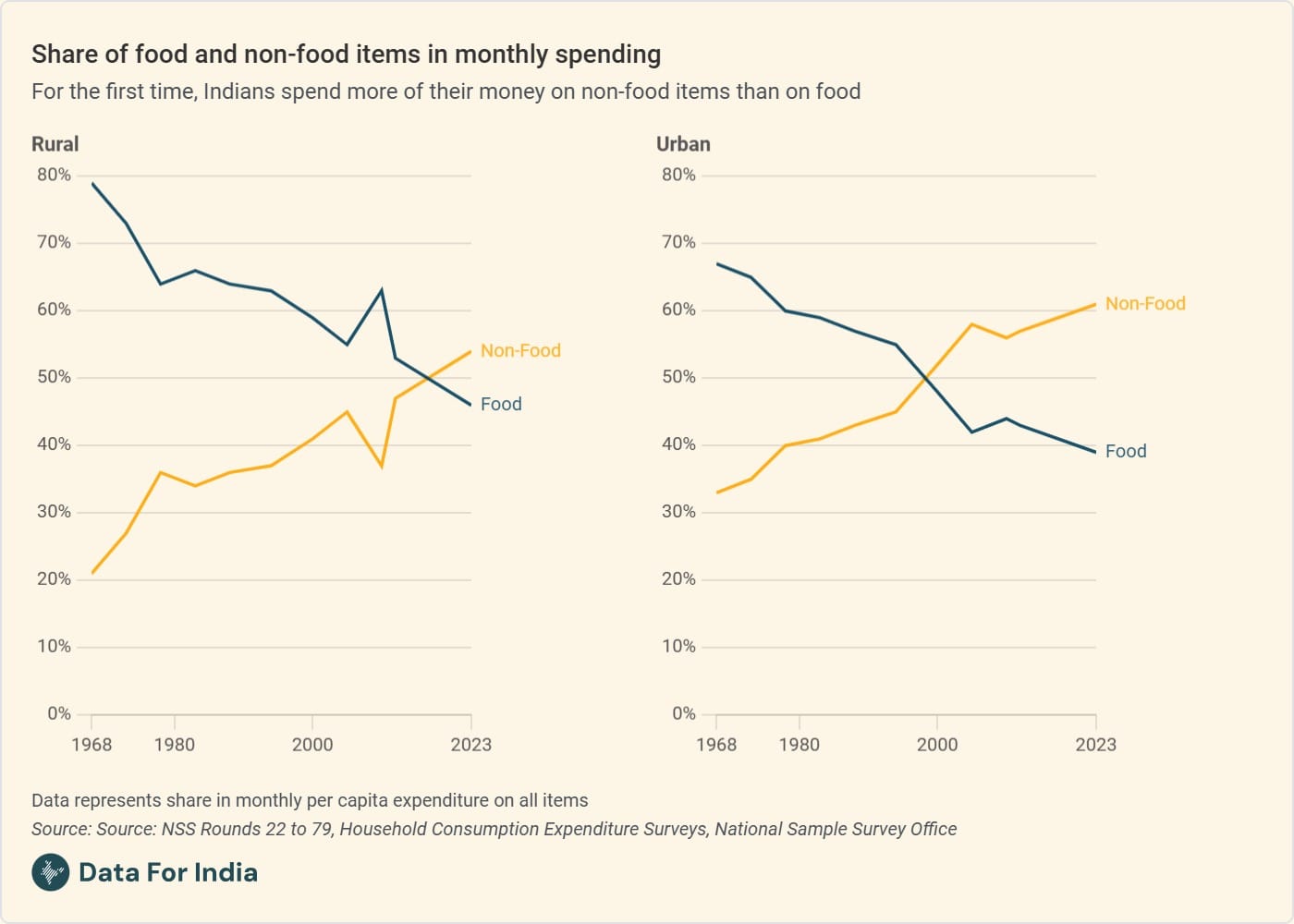
Across the world, people have to spend less of their consumption basket on food as they get richer - they're eating more and spending more on food, but they're also making more money, and more able to spend it on things other than food too. Urban India saw this shift happen by the late 1990s, as spending on fuel and rent in particular, but also durable goods, medical expenses, education and commuting grew.
Over the last few years, however, rural India has seen this big shift as well; for the first time, spending on non-food goods and services has outstripped spending on food. "Food now occupies less than half of rural and urban monthly expenditure, and this share has seen a steep fall over the last few decades," my colleague Abhishek Waghmare writes in his recent piece for Data For India on household consumption expenditure. "This is in line with trends seen across the world, where growth in incomes and a move away from manual labour leads to relatively lower spending on food," he writes - food accounts for just 15% of household spending in richer countries like the US and Germany, for example.
Where the data for this comes from is vital to understand, because there is often deep scepticism and even suspicion of data on household spending in India. Since the 1950s, India's National Sample Survey Office (NSSO) has been collecting data on household spending, through surveys called Household Consumption Expenditure Surveys. In these surveys, trained enumerators ask a large, representative sample of households about their consumption of over 500 items - from salt to cars - within reference periods ranging from a week to a year.
(The most recent survey was conducted in 2022-23 and published in 2024 and we use this new data in Abhishek's piece. It, however, used a revised methodology, including changes in the way the sample was canvassed, as well as a changed format of asking questions, which could affect the comparability of the data; we discuss that change as well as its possible implications in this piece.)
If we can be reasonably confident of the quality of the data, then, we want to know what's driving this shift and what its implications are. For one, we do see that the total amount people spend on food, whether in rural or urban India, is growing in absolute terms - so it's not that Indians are spending less on food, it's just that the share of food in the total household budget is falling.
Then, when we look at the components of spending on food in India, we see that what's driving this decline in India is a big drop in spending on cereals - chiefly wheat in north India and rice in south India.
There has been a large expansion in state provisioning of cereals through government schemes, meaning that many poor families have to spend much less on cereals than they did before.
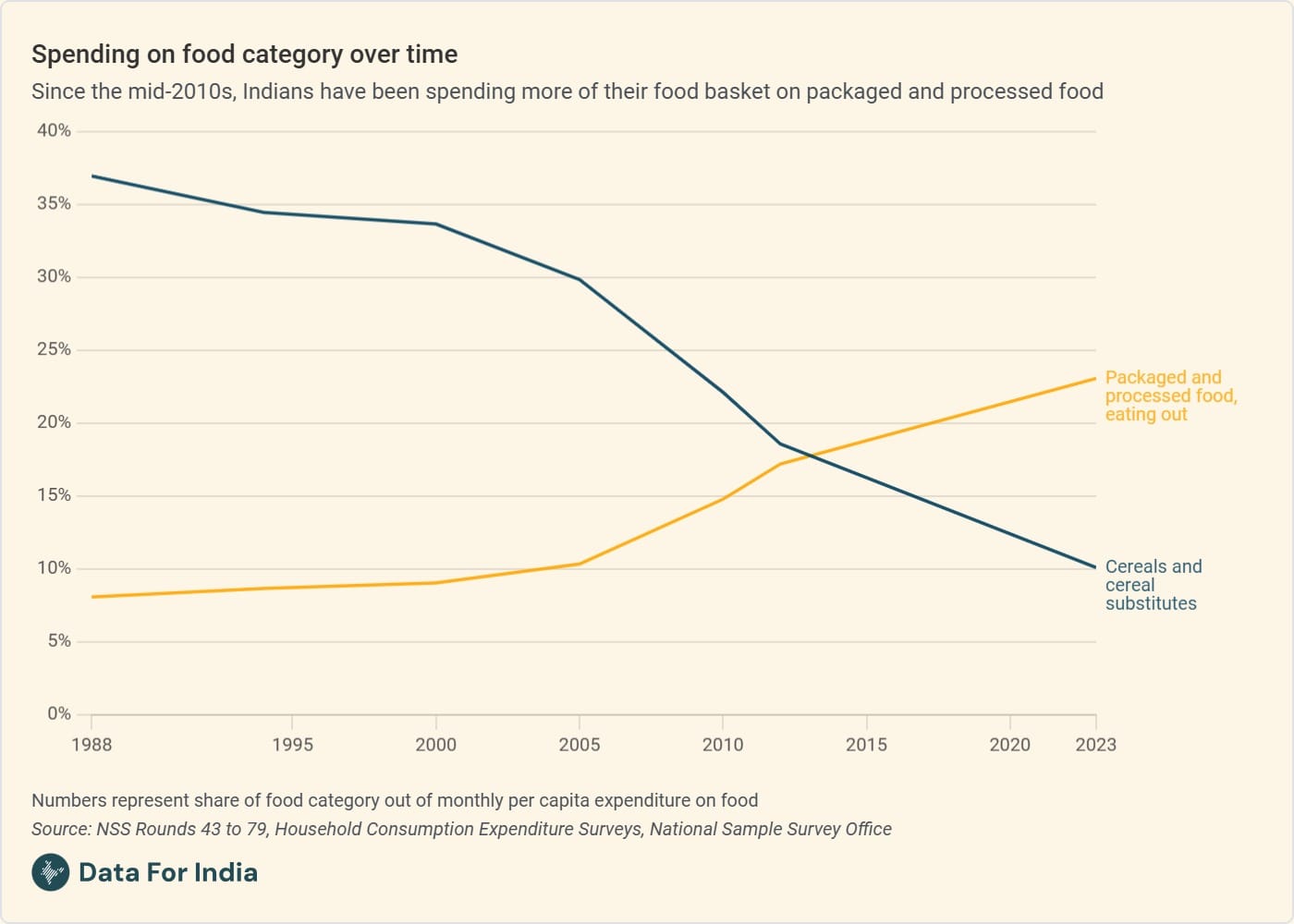
But we're also seeing a steady increase in spending on packaged and processed food and on eating out, in urban India in particular.
For the poorest families, rice and wheat are crucial - they make up a large part of meals and as a result budgets. But as families get richer, they are able to diversify their diets to include more vegetables, fruits, dairy products, dals and meats. Eating better is expensive: cost is a key factor in eating as healthily as the global recommendation. But even among the richest Indians, protein consumption is too low, and processed food consumption too high, research finds.
Economic growth has freed up Indian household budgets a little over the last few decades, and that's a big shift. But what it's going to take for a future in which we all eat more comfortably but also eat better is less straightforward.