Anyone who has looked at any good Indian data knows by now that the vast majority of the country eats meat. Nearly eight out of ten people eat some form of animal sourced protein, my colleague Nileena Suresh writes in this piece for us on meat consumption in India. Eggs are the most widely eaten animal source protein with 78% of Indians eating them, followed by chicken/ meat (75%) and fish (72%). These numbers are even higher in the southern and eastern states, and only four states - Punjab, Haryana, Rajasthan and Gujarat - have a vegetarian majority.
The data is from the large, nationally representative National Family Health Survey conducted in 2021, and comes from asking adult men and women about their dietary practices, so it's a good, reliable measure of food practices in India.
This much is (or should be) fairly widely known.
What's less well known, and represents a steady (even if not a big) shift, is that the share of meat-eaters in the Indian population is growing over time. Over the years, Nileena writes, the share of Indian adults who eat meat has increased slightly, rising from 74% in 2006 to 80% in 2021. It's higher still among men at 87% as compared to women.
The frequency of consumption has also grown over time. For instance, in 2006, nearly half of those who ate eggs consumed them only occasionally. By 2021, this share had dropped to a third, while the share of weekly egg consumers rose to over half, Nileena finds. Across types of animal-sourced proteins, those who are consumers eat it on a weekly basis.
What we're also seeing is that over time, people are choosing to spend more of their household food budgets on meat. Since the 1950s, India's National Statistics Office has been collecting data on household spending, through surveys called Household Consumption Expenditure Surveys. In these surveys, trained enumerators ask a large, representative sample of households about their consumption of over 500 items - from salt to cars - within reference periods ranging from a week to a year. And here's where we see a really big shift.
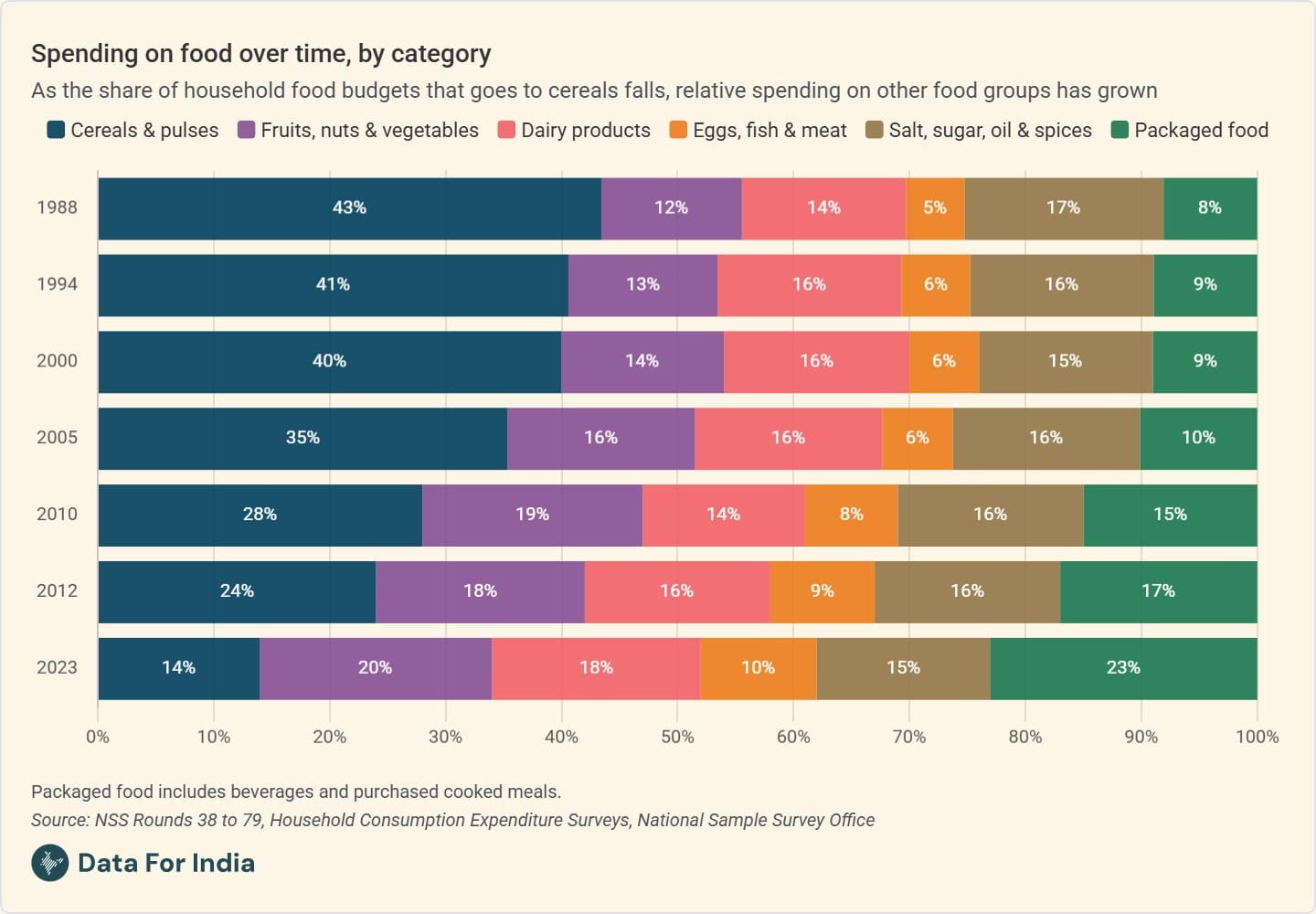
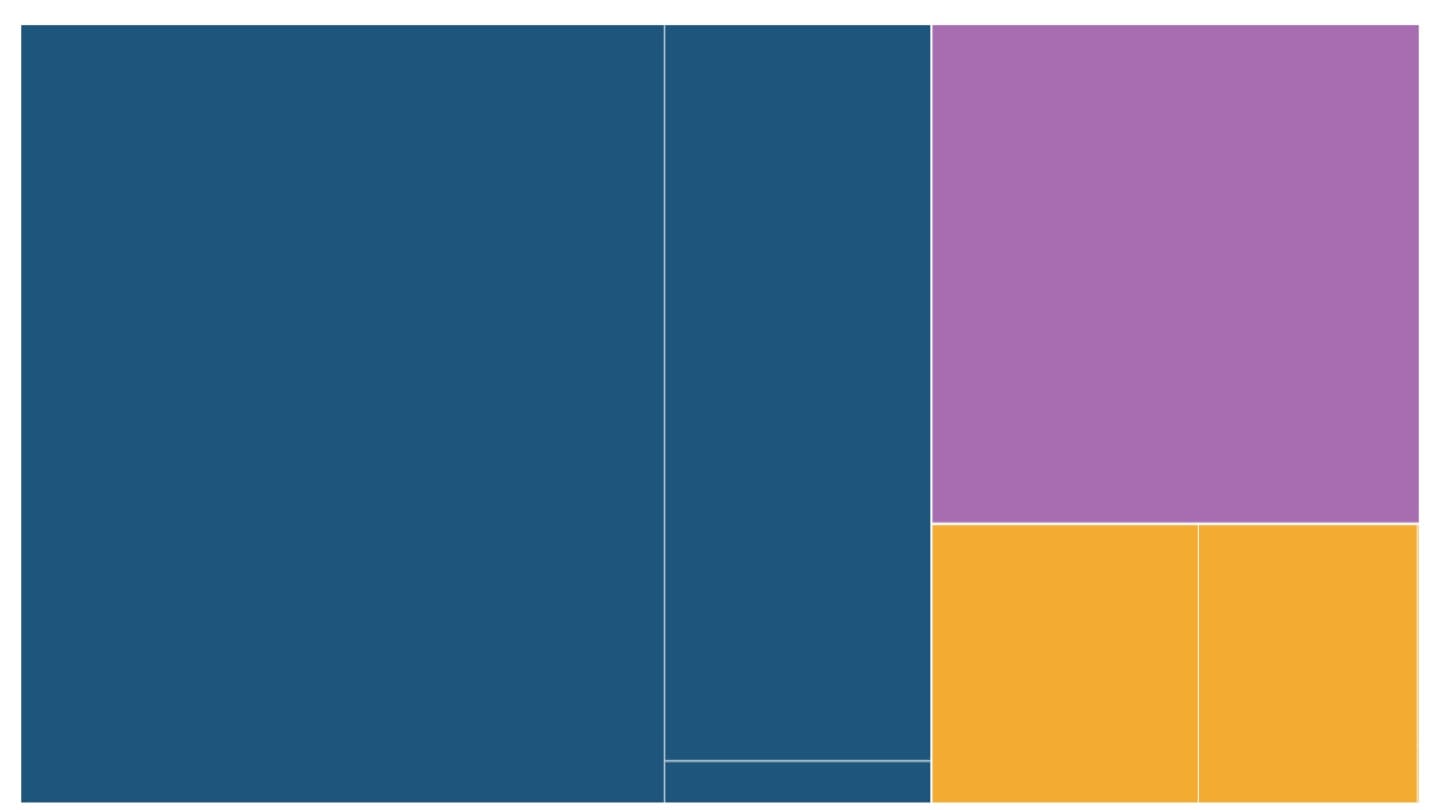
The share of household spending on food that goes towards meat has doubled in the last four decades. (You will also notice the decline in the share of the food budget that goes to cereals, and the rise in spending on processed foods, which we discussed in an earlier edition of The Big Shift, "Eating better".)
Given how severely protein-deficient most Indian diets are, these changing priorities are significant, even if the average quantities of meat consumed are still very low. To bring the conversation on meat-eating away from its current tone and tenor and closer towards protein and nutrition - that might just be the big shift that's most needed.