One of the key reasons that Data For India exists is that it's often difficult to quickly access reliable, well-sourced data on questions that keep popping up in daily conversation.
One such question is around meat-eating: before Data For India launched, I'd have a friend or acquaintance reach out at least once a week to tell me that they were having an argument (usually on WhatsApp) with someone, and needed accurate numbers on the extent of meat-eating in India. My colleague Nileena Suresh wrote this piece for us about meat consumption in India, and one of the observations she makes is that the share of Indians who eat animal-sourced protein is not just high, but also growing.
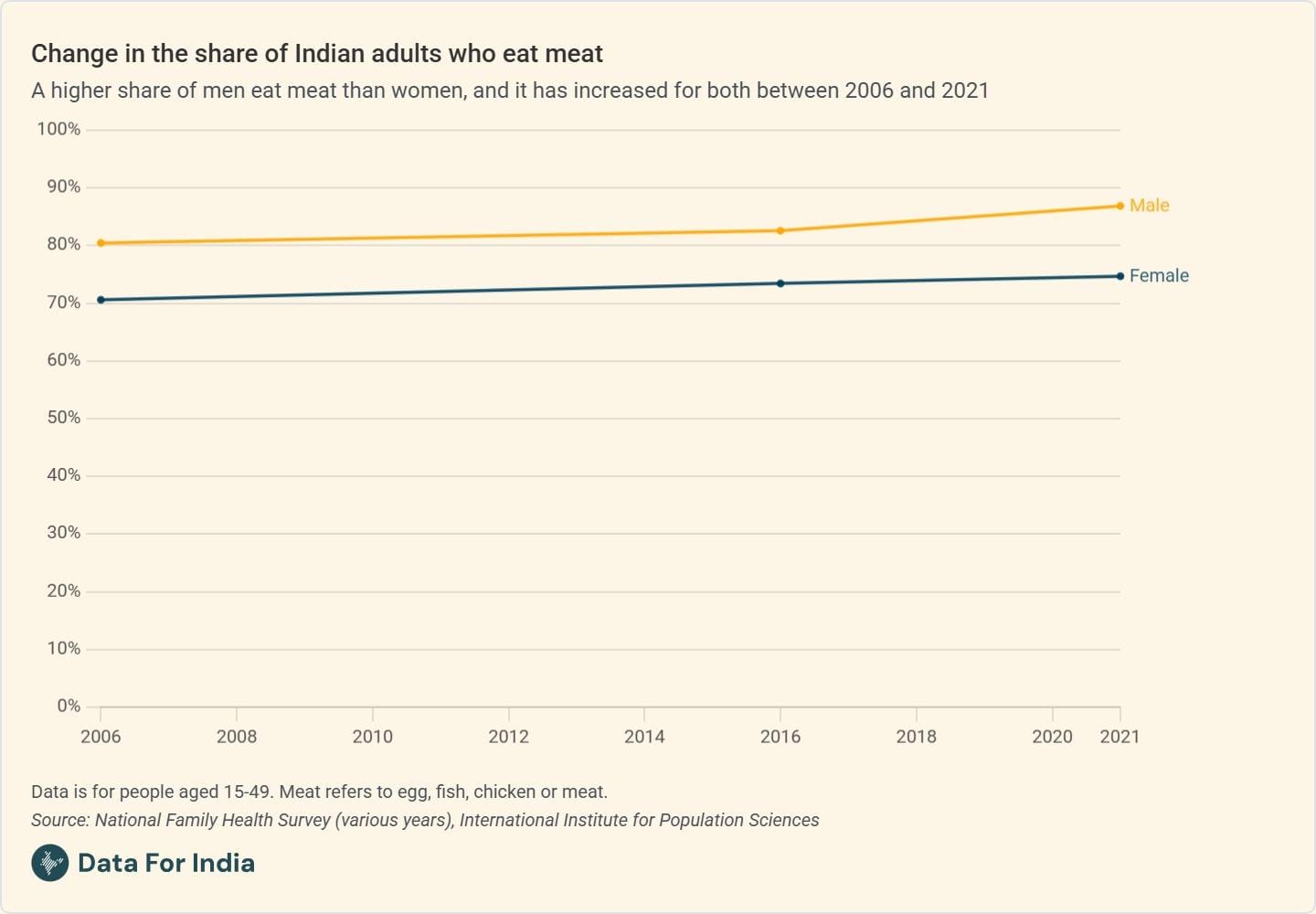
This is particularly interesting because this isn't, unlike most indicators involving food, tied to wealth. Being richer does not make you more likely to consume meat - in fact, it makes you less likely to be a meat-eater in India. This likely has to do with the intersection of caste and religion with economic class in India. Forward castes among caste groups, and Jains among religious groups, are some of India's economically richest groups, but are most likely to be vegetarian.
As of now, the shift over time is a small one towards more meat-eating, but the direction it takes in the future in India will be hard to predict given these intersections. Getting richer as a country might mean more people being able to eat more nutritious food, but whether that will play out the same way in the consumption of meat is unclear.