The big shift in India's education story cannot just be to get kids into school - but it's unquestionably the first big one, without which little else can happen.
Every part of the enrolment story that my colleague Abhishek Waghmare writes about in his piece for us is both fascinating and surprising to me.
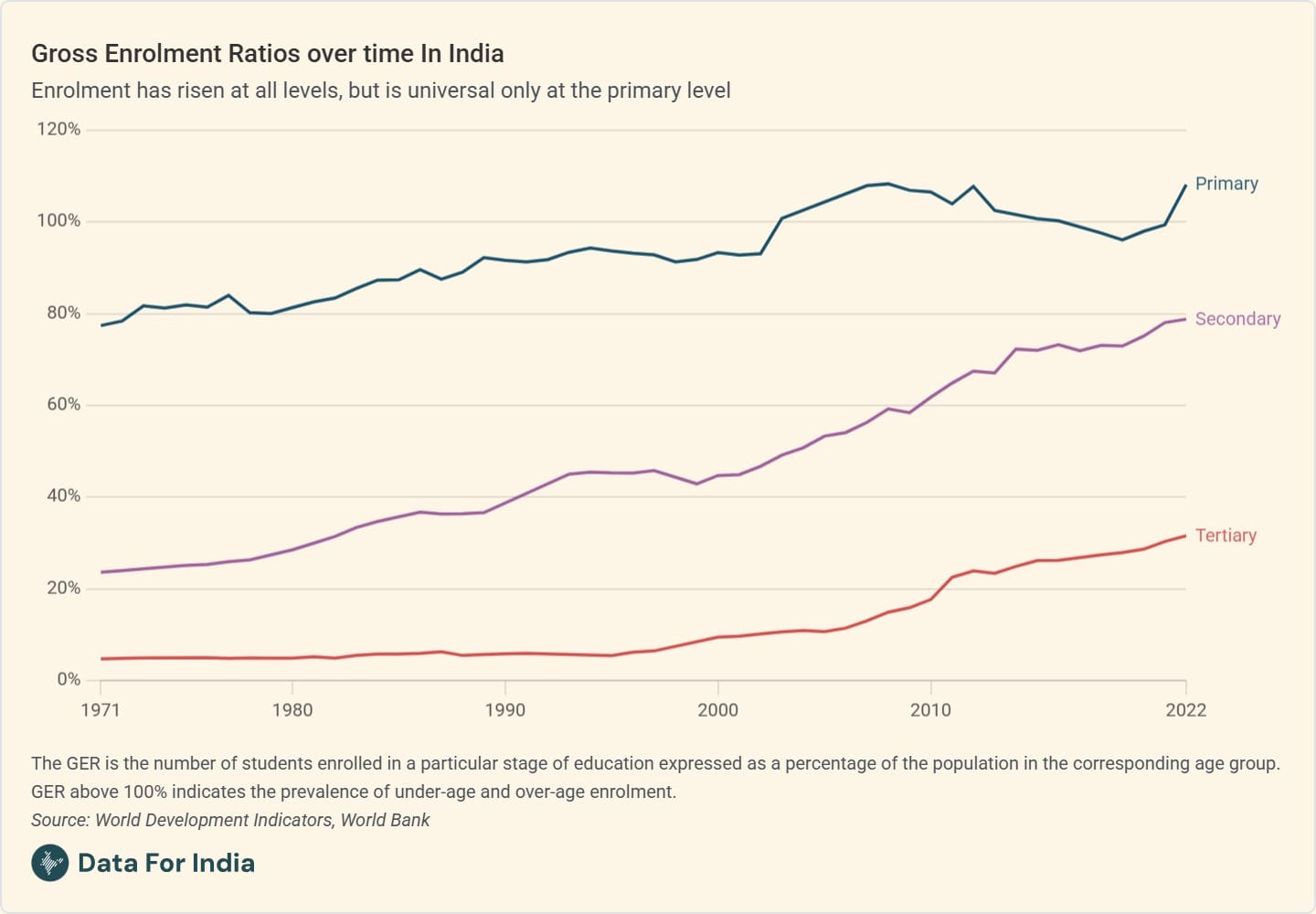
First, of course, is that big shift when it comes to primary enrolment - since 2000, most Indian children between the ages of six and fourteen have been enrolled in school.
Then, there is the steady growth in secondary school enrolment (from grades nine to twelve), which has gone from 20% to 80% over the last 50 years.
And finally, there is the higher education enrolment number, which is much lower than I'd have imagined; as I pointed out in an earlier edition of this newsletter, India's higher education enrolment rates were similar to those of China in the early 1990s. Today, more than seven in ten young Chinese adults are now in higher education, as compared to three out of ten Indian young adults.
Underpinning all of this is another silent revolution - the closing of the gender gap across all levels of enrolment.
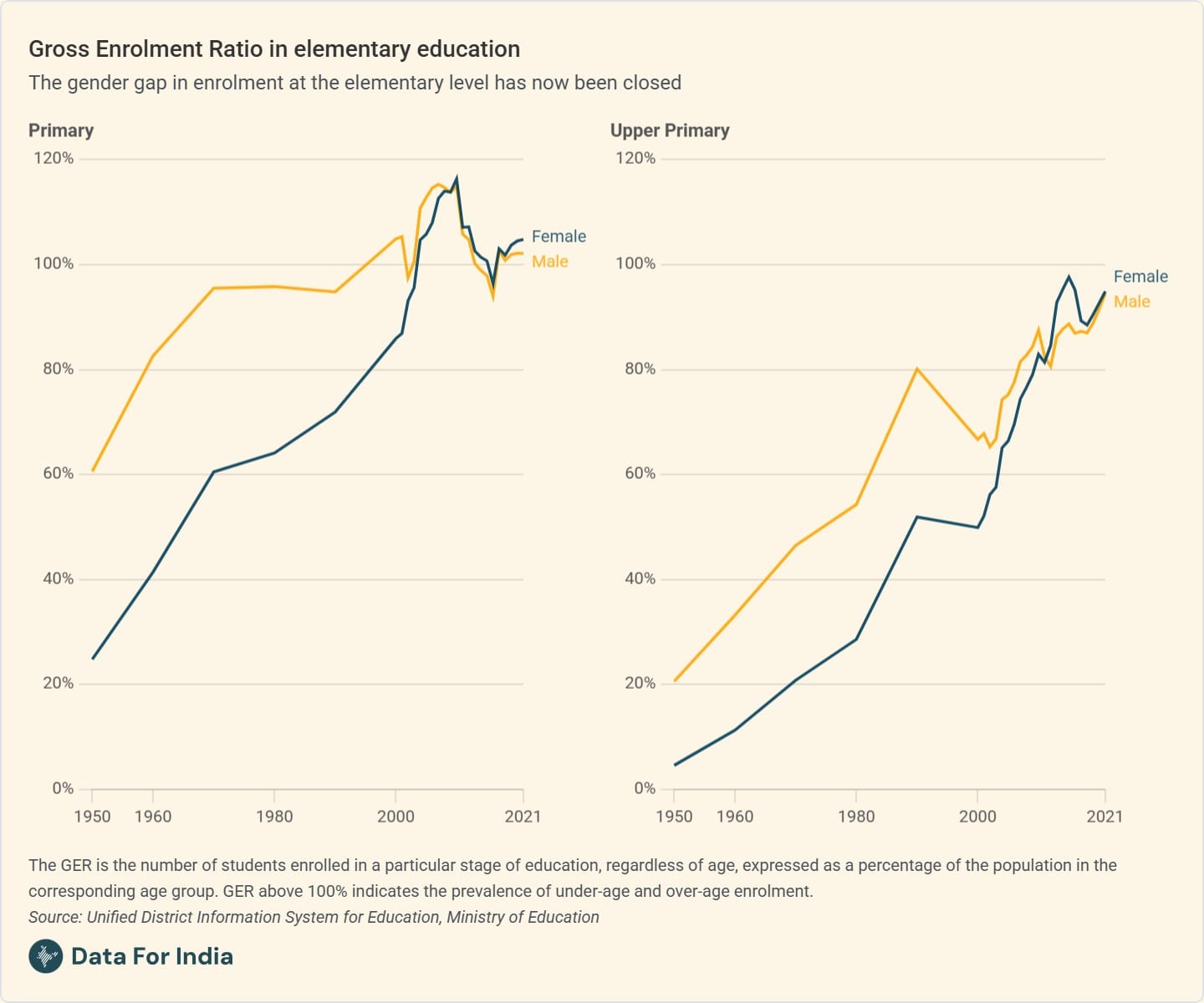
The big shift is not just that most Indian children are now in school, but also that the children most likely to be out of school are not girl children.
Now that India can look back with satisfaction at this key milestone, it's time to think harder about what the kids who are now in school are learning. Abhishek discusses this in a related piece on how literacy in India is measured, and finds that many children enrolled in school are not functionally literate. It's what India will need as its next big shift in education.