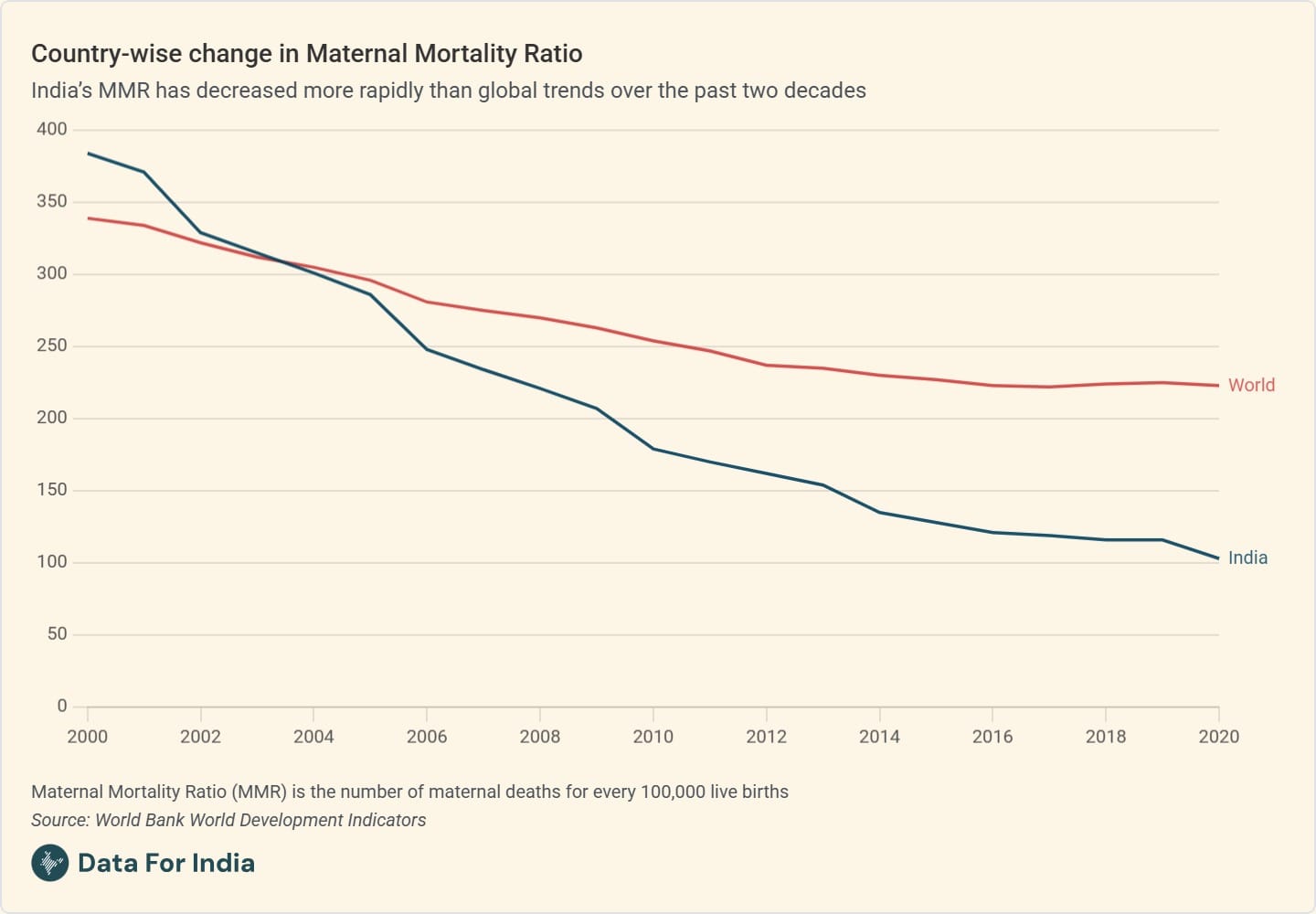
Just a little over twenty years ago, pregnancy was more dangerous in India than it was in most of the rest of the world - the likelihood of an Indian woman dying in childbirth was higher than in the world on average. The last two decades have seen an incredible big shift when it comes to maternal mortality.
We do not have good historical data on maternal mortality but my colleague Nileena Suresh finds that even as of 2000, for every 100,000 births that took place in India, roughly 400 Indian women were dying as a result of complications from pregnancy or childbirth. (Maternal mortality refers to the death of a woman during pregnancy or within 42 days of its end, due to causes related to the pregnancy, excluding accidental or unrelated incidents. The Maternal Mortality Ratio or MMR is the number of deaths from maternal mortality for every 100,000 live births.)
That risk has dropped substantially; by 2020, fewer than 100 women were dying from maternal causes for every 100,000 live births. In some Indian states, maternal mortality ratios are as low as in the developed world; Kerala, for instance, has had an MMR of less than 100 for over twenty years, and it's now under 20.
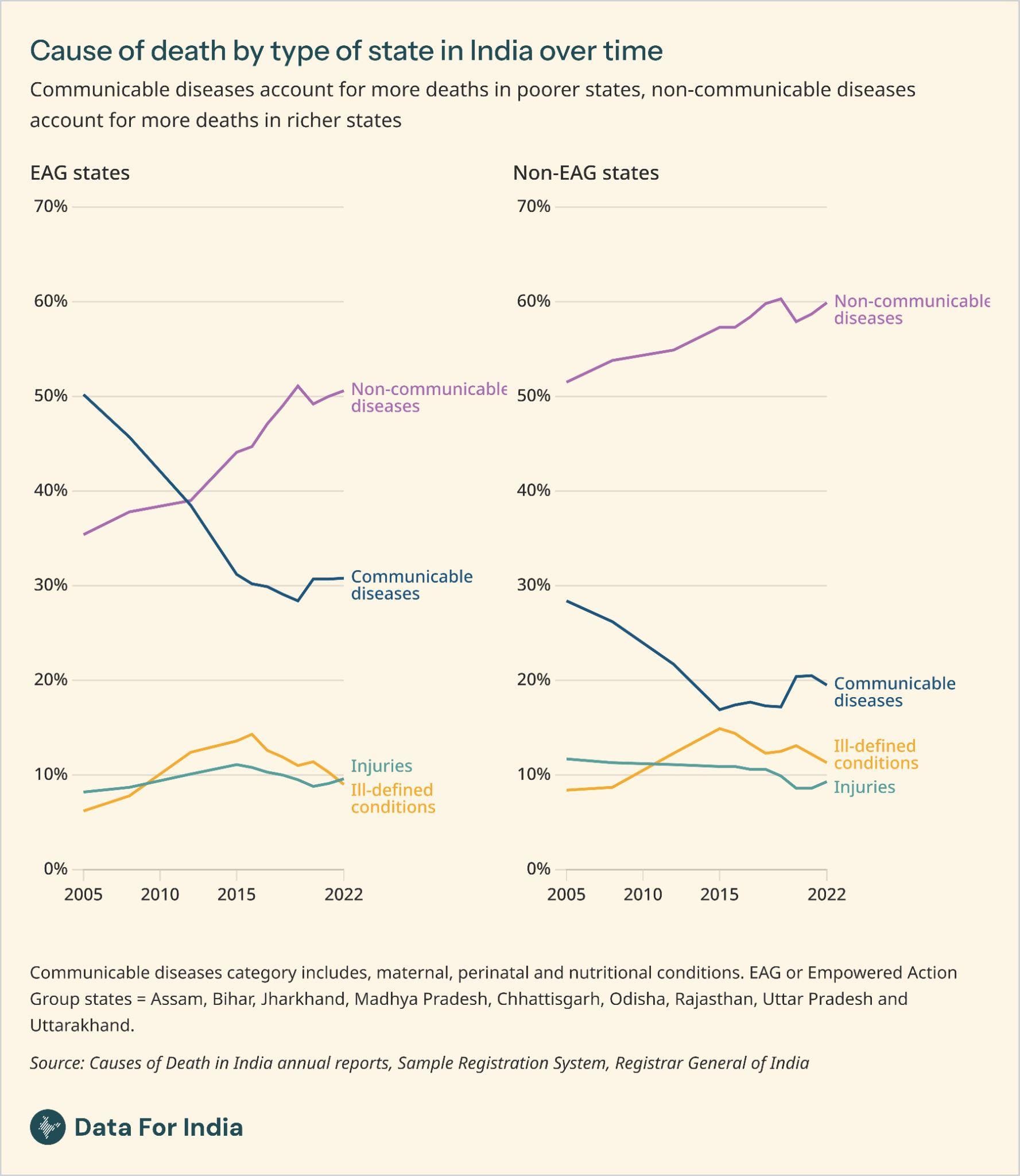
Even so, the continuing shadow of maternal mortality on the lives of Indian women remains a cause for concern. As Nileena writes, India has missed past targets, and is not on track to meet its Sustainable Development Goal of reducing MMR to fewer than 70 deaths for every 100,000 live births by 2030. Among women aged 15-29 (among whom the majority of births take place), "maternal conditions" kill as many women as cancer. (You can see this in our data explorer on mortality in India.) The poorest parts of the country still have maternal mortality rates of well over 100 maternal deaths for every 100,000 live births.
India has done a remarkable job of lowering the risk of dying in childbirth by making sure that most women are seen by a medical professional the recommended four or more times during their pregnancies, and by ensuring that the majority of births now happen in medical institutions. Simultaneously with growth and development, Indian mothers are now less likely to be underage and malnourished, and so more likely to survive childbirth. However as the country ages and non-communicable diseases become more widespread, there will be new challenges - more mothers who are overweight or hypertensive, in particular. Despite the big shift, the shadow of maternal mortality still lingers.