The future is supposed to be, almost by definition, uncertain, but there's a certain inevitability to how demographics are going to change in India and its states for the near future - women will have fewer children and people will live longer. The population will first stabilise and then fall in size. The living population will on average get older. This is the big shift, in some ways.
That is certainly how the Indian story is panning out, as I wrote in this early piece for us (even if population projections start to lose their edge a little when they're too far out from a Census, as my colleagues Pramit Bhattacharya and Nandlal Mishra found). It is also essentially what's in store for Indian states, but if you picture them as cogs moving within a large machine, they are at speeds that are dissimilar enough to produce some interesting and complicated dynamics for the next decade.
"Across the country, the number of children born every year has begun to fall in absolute terms - fewer children are born every year than the previous year," I wrote in this piece on the age distribution of the populations of Indian states. But even if the trend is broadly the same, they're starting from very different positions. Bihar's Total Fertility Rate - the average number of children a woman is expected to have in her lifetime - in 2020 was at the same level that Kerala's was in 1980 (a TFR of 3.0). That essentially is the generation that separates India's poorer and richer states.
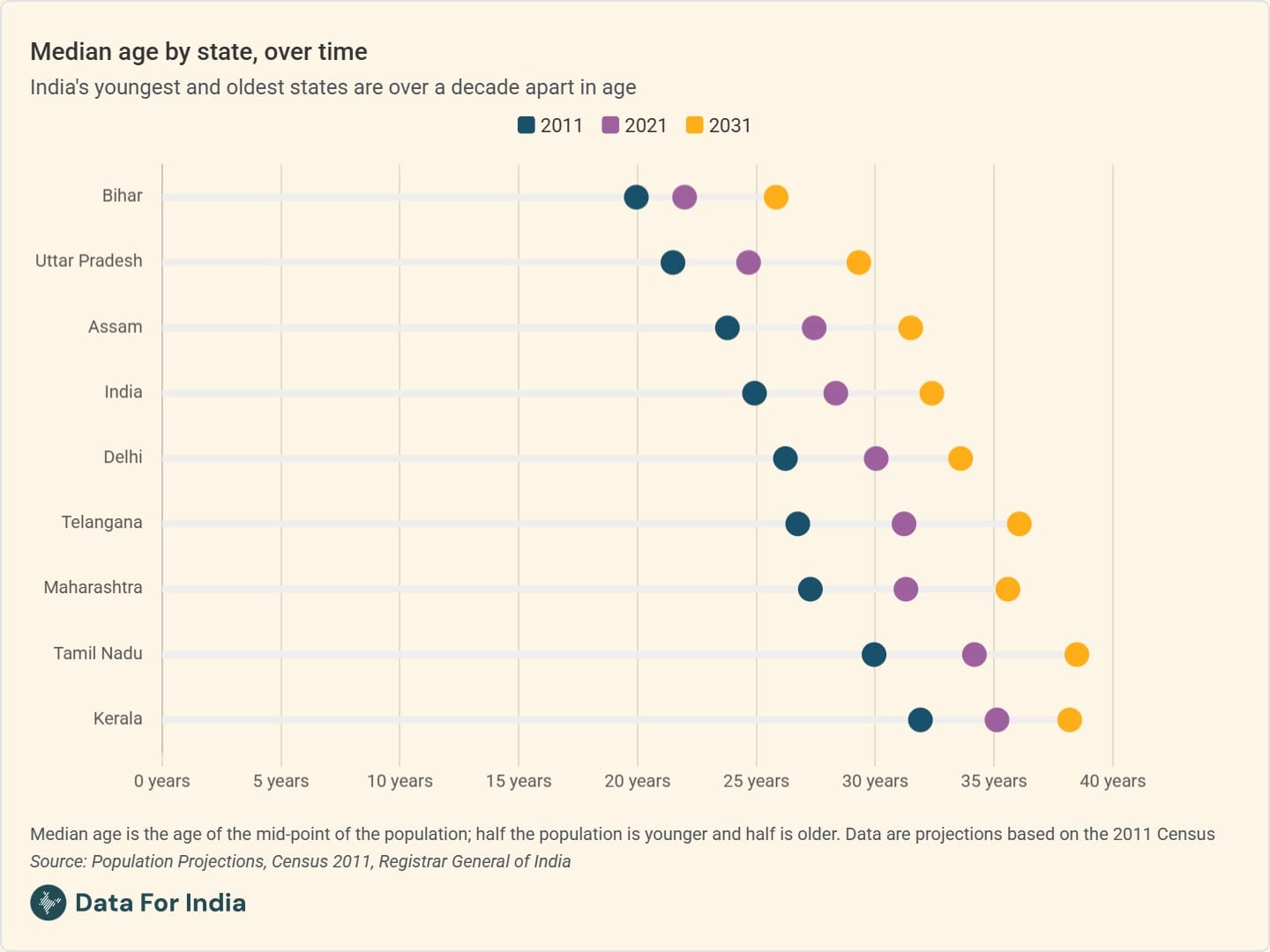
The median Tamil person is already more than twelve years older than the median person from Bihar, and the gap is only projected to grow.
Beyond the politics of it all, there is one very real implication here, and it's on the workforce. As I argued in an earlier edition of The Big Shift ("Rising tides"), fertility is falling in the poorer northern and eastern states as well. But since that process started later, there is still a steady stream of children who are growing up and joining the workforce, in a way that the richer southern and western states are no longer seeing.
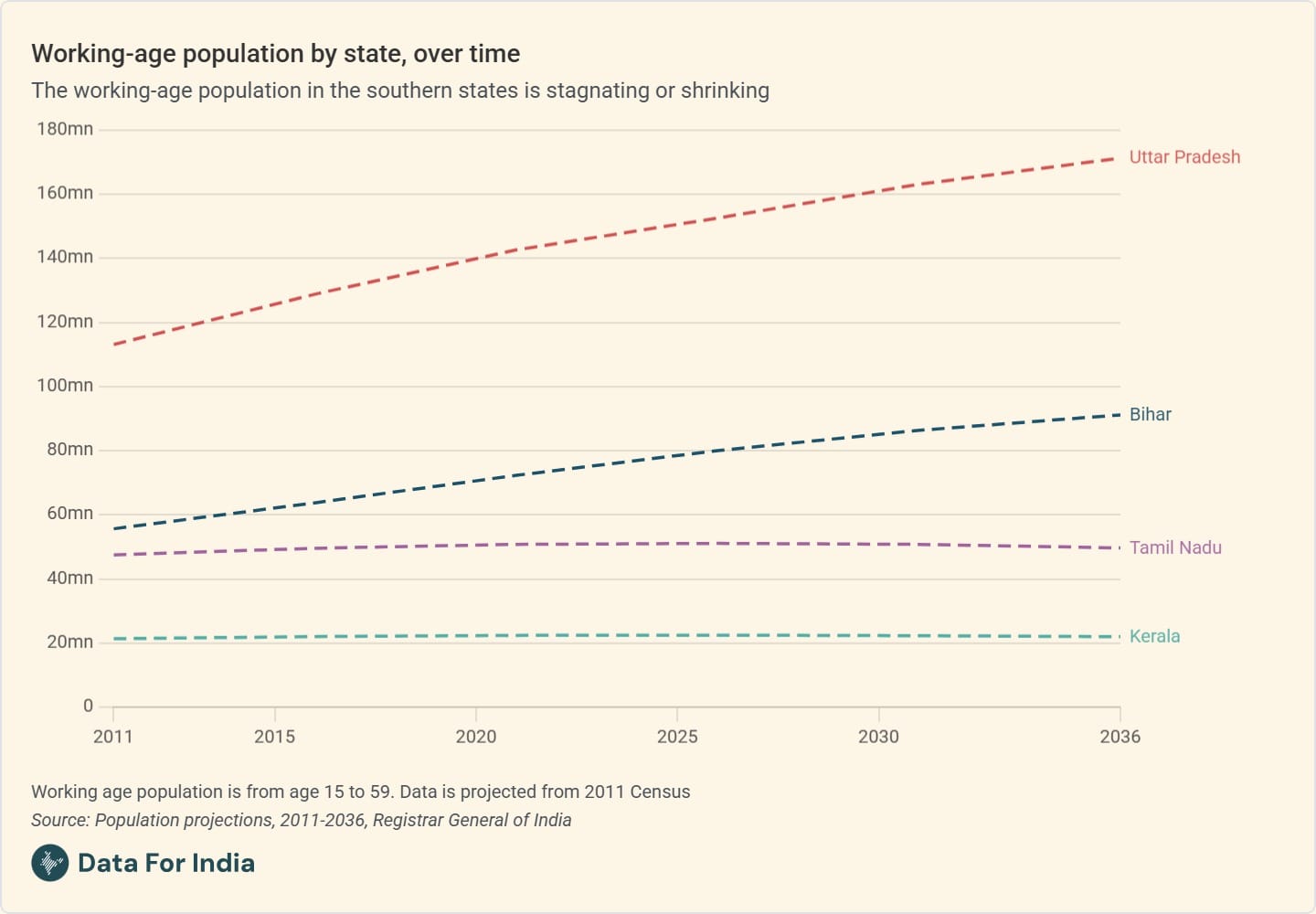
Who will do the jobs of the future is not a question to which the answer is an inevitability. It will depend on what those jobs are and where they are being created and the skills they need. But where the people to do those jobs will come from is also currently an open question, and for Indian states to come to terms with this might need its own big shift in thinking.