This is one of those times where instead of a big shift, we're flagging the lack thereof.
One expectation of a developing country is that as it industrialises, its economy becomes more formal, and the share of salaried jobs in the economy rises. In the last 40 years, we've seen very little of that happen in India.
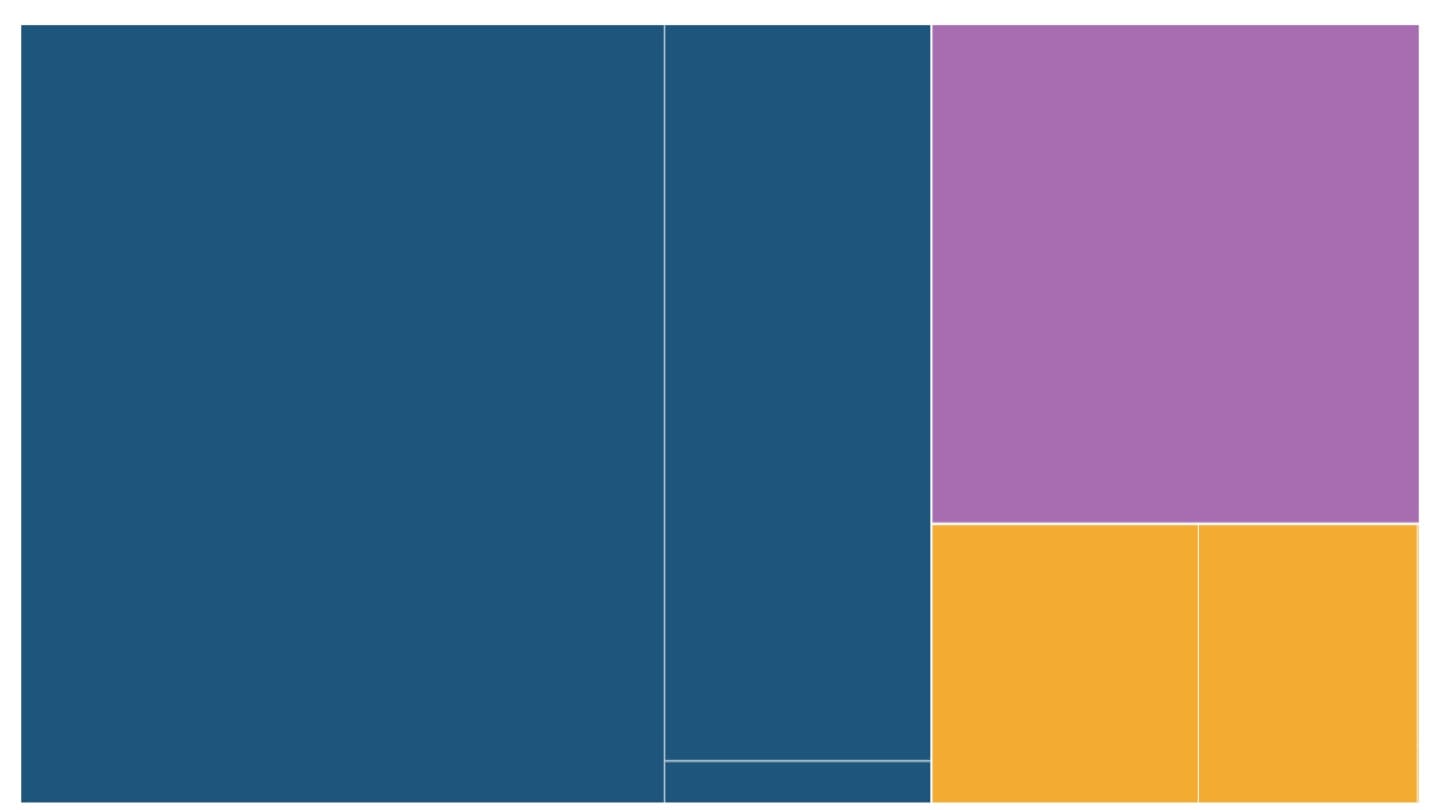
India's labour statistics classify workers into three broad categories - salaried, casual and self-employed workers. Salaried or regular wage employees, my colleague Abhishek Waghmare writes for us, are those persons working in others' farm or non-farm enterprises (both household and non-household) and getting salary or wages on a regular basis in return. This includes both full time and part-time work. They are different from casual workers who get daily or periodic wages, and the self-employed whose earnings are the profits from the enterprise.
As you can see from this chart, the share of salaried employment in India has grown, but not by a lot - even now, fewer than one in four Indian workers have salaried jobs.
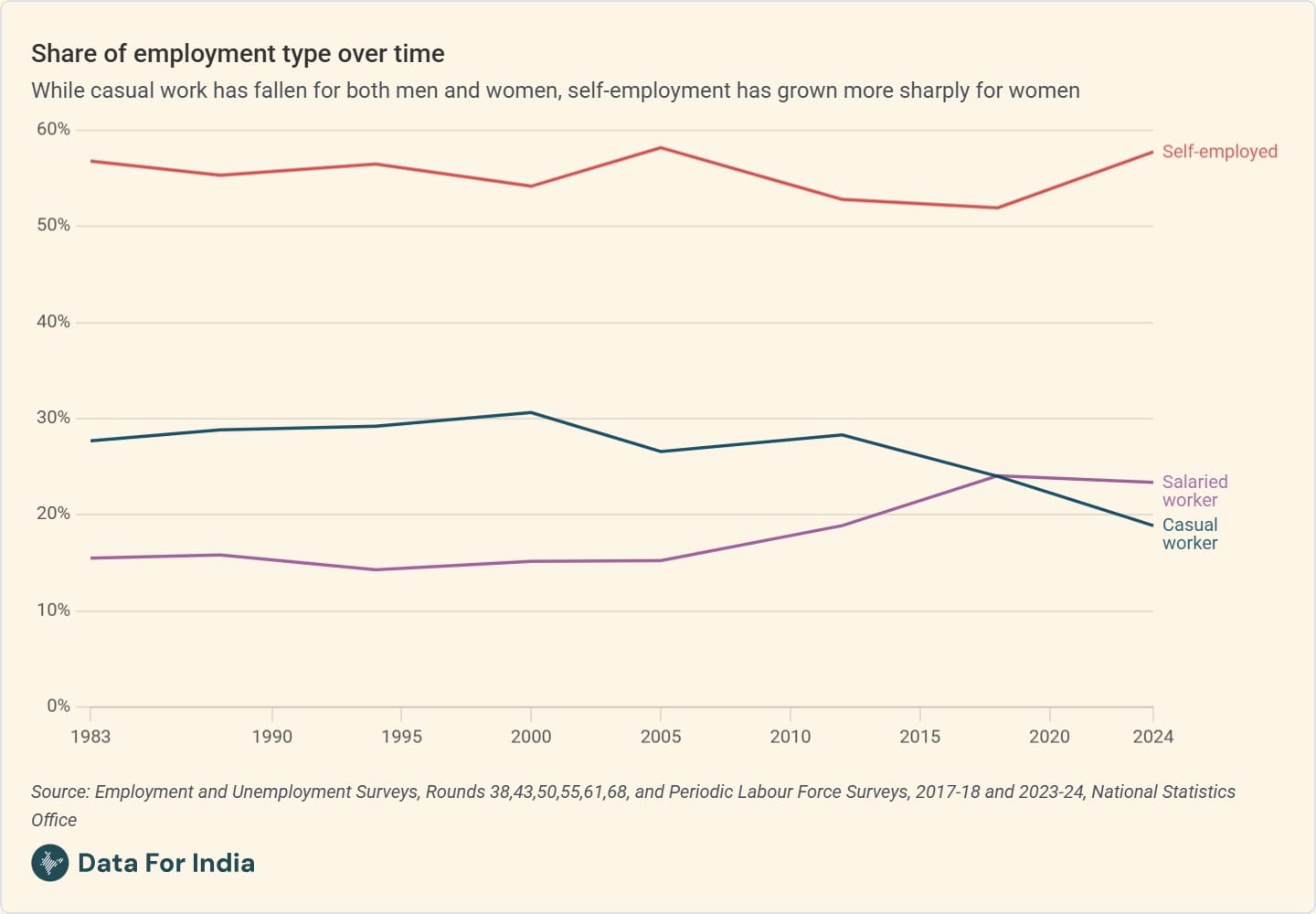
This is substantially lower than 55% in China, 58% in Sri Lanka, and more than 90% in the US, according to International Labour Organisation statistics.
This matters particularly because, as Abhishek finds, incomes from salaried jobs are the highest. This despite the fact that the bulk of salaried jobs in India have few of the benefits that most of us associate with such jobs. Only 42% of Indian salaried workers have a written official contract, Abhishek finds, just half are eligible for paid leave, and just under half have at least one social security benefit among gratuity, provident fund and healthcare.
Education substantially raises the chances of a salaried job. The local economy matters significantly too. Salaried workers make up a higher share of the workforce in the more industrialised southern and western states, Abhishek finds: nearly 40% of workers in Kerala are in salaried jobs, as against fewer than 10% in Bihar.
There is little doubt that the Indian workforce is changing in significant ways: more women are now entering it, and casual work is declining. But the big shift to salaried work that was expected from a growing economy, as well as the socio-economic effects of more salaried employment that include less precarity, more predictability and better social security, have not yet materialised.