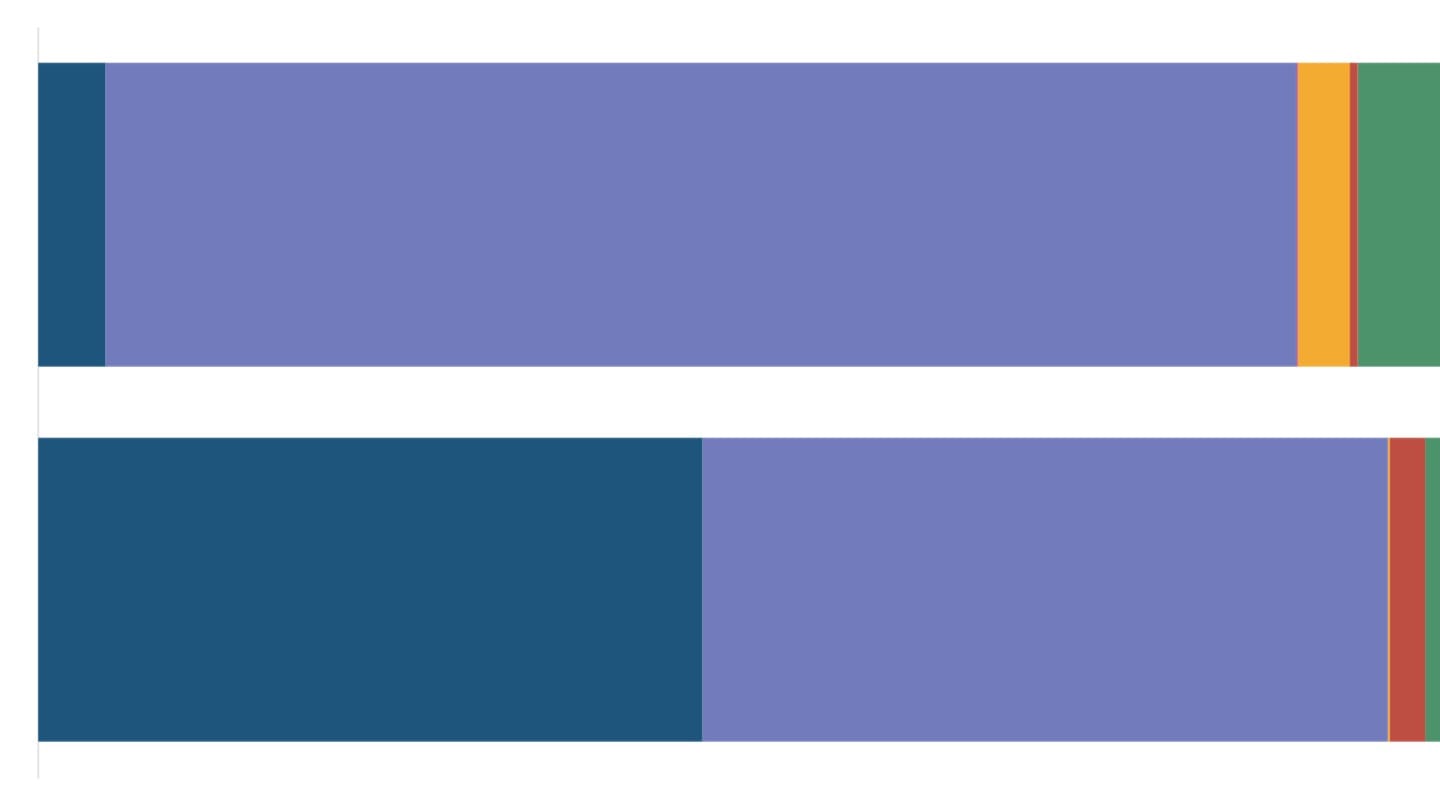
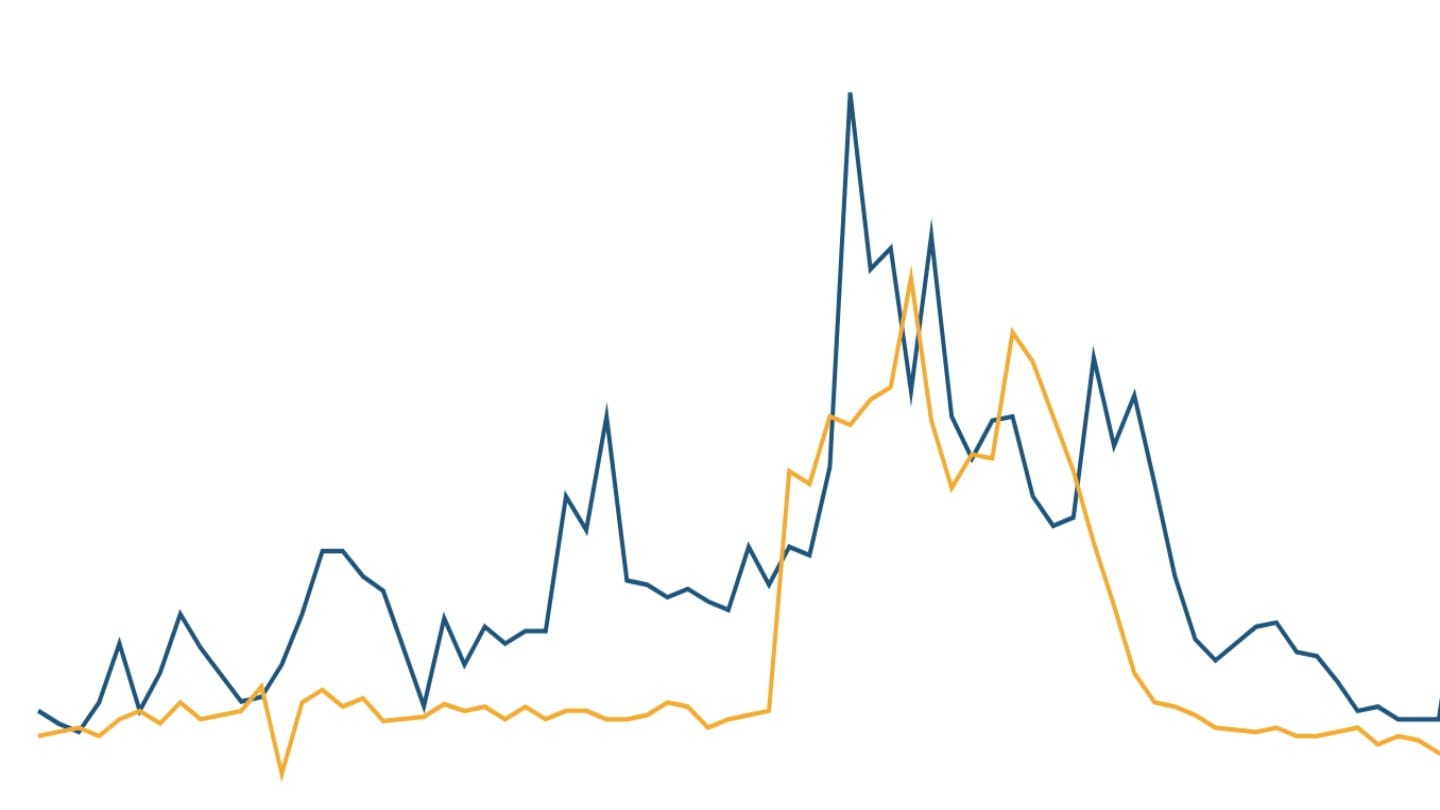
One of the most staggering aspects of data on mortality is just how risky childhood is. "Wherever you live in the world, early childhood, especially infancy (the period before a child turns one) is a time of relatively high risk compared to later in life," I wrote in one of my first articles for Data For India. In the poorer regions of the world, infancy is a particularly dangerous time on account of a combination of birth disadvantages as a result of maternal undernutrition and the high risk of contracting communicable diseases.
But looking at recent data on infant mortality alone can obscure the big shift India has undergone - a radical transformation of what living can look like, and a redefinition of what childhood itself can mean.
At Data For India, our mission is to broaden the understanding of India through the data, which often requires us to look at the newest possible numbers. Once every week, The Big Shift newsletter will take a step back to see the long view of change in India.
Newly independent India was a very dangerous place to be a child. Of every hundred babies born in India that year, nearly twenty would not have made it to their first birthdays. Another ten would not have made it to their fifth birthdays. These rates - of infant, and under-five mortality in India - were far higher than they were in the world as a whole at the time.
As a result, over half of all deaths in India in 1950 were those of children under the age of five, and over a third were of children under the age of one. It was more dangerous to be very young than it was to be very old.
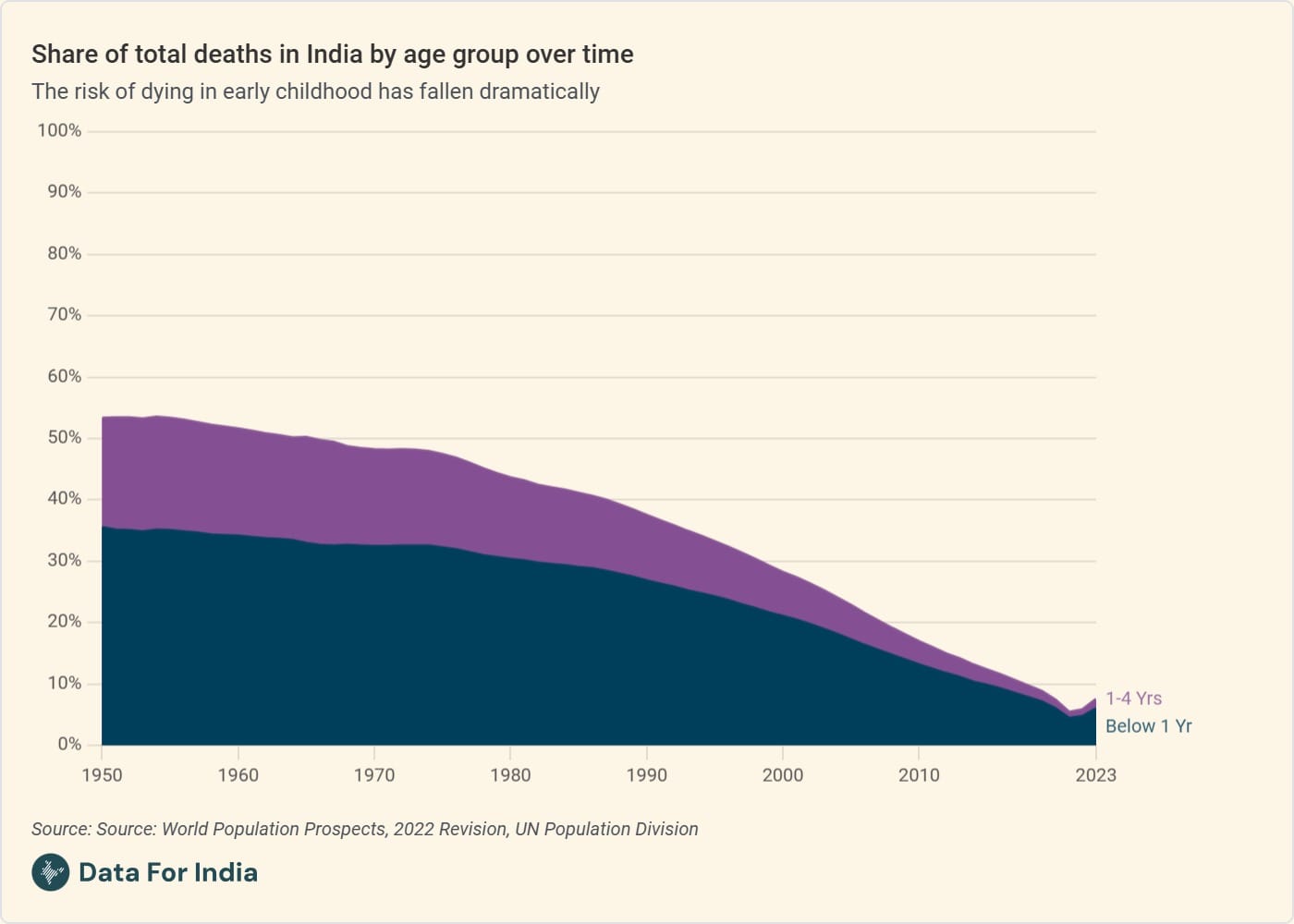
That picture has changed dramatically. While infancy remains a time of high risk, children under the age of five now account for fewer than one in ten deaths annually, and infants account for just 6% of annual deaths. (The apparent decline followed by a rise in 2021-22 is on account of the pandemic; adult mortality spiked, and as a result, the relative share of child deaths in total mortality fell, and then returned to pre-pandemic levels.)
India's infant mortality rate is now down to 28 infant deaths for every 1,000 live births, and has fallen below the global average. Yet, the avoidable death of even one infant is an indictment of a country's inter-generational health and disease environment. Despite these massive gains, over half a million infants died in India in 2023. Infant mortality is higher among the poorest and most marginalised groups. There are significant gaps between the more developed and less developed states - in Madhya Pradesh and Uttar Pradesh, for instance, the risk of dying before the age of one is still similar to the risk of dying in a person's early seventies.
But the big shift is unmistakable, and it's happening across the country.
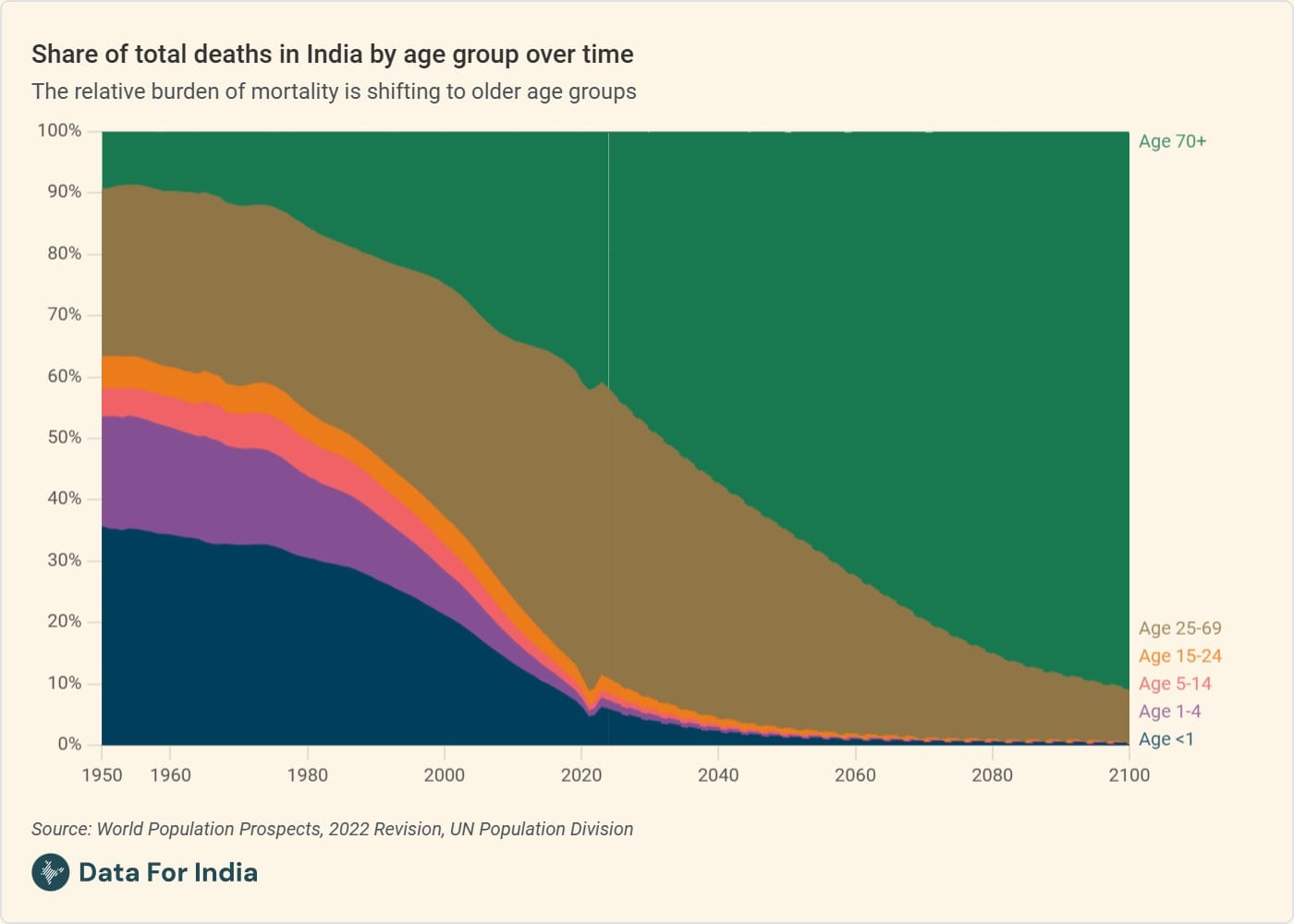
As India ages, more people are dying every year, but they're not dying young. Over time, the burden of mortality shifts away from the youngest Indians to the oldest Indians - as countries get richer and childhood becomes less dangerous, dying in old age becomes the more natural and common course of events, and this change is on its way in India too. By 2031, people over the age of 70 are expected to account for half of all deaths, and this share will only keep growing.
High infant and childhood mortality in many ways defined newly independent India. The very real risk of losing a child in part drove decision-making around family sizes, and in turn made investing in a child's growth and education challenging. It was both a symptom and a cause of maternal malnutrition and ill-health. Above all, it caused incalculable pain and trauma to generations of Indian families.
Dying old may seem like only the natural order of things. But to get there has taken India many hard decades, and that was this week's big shift - surviving childhood.