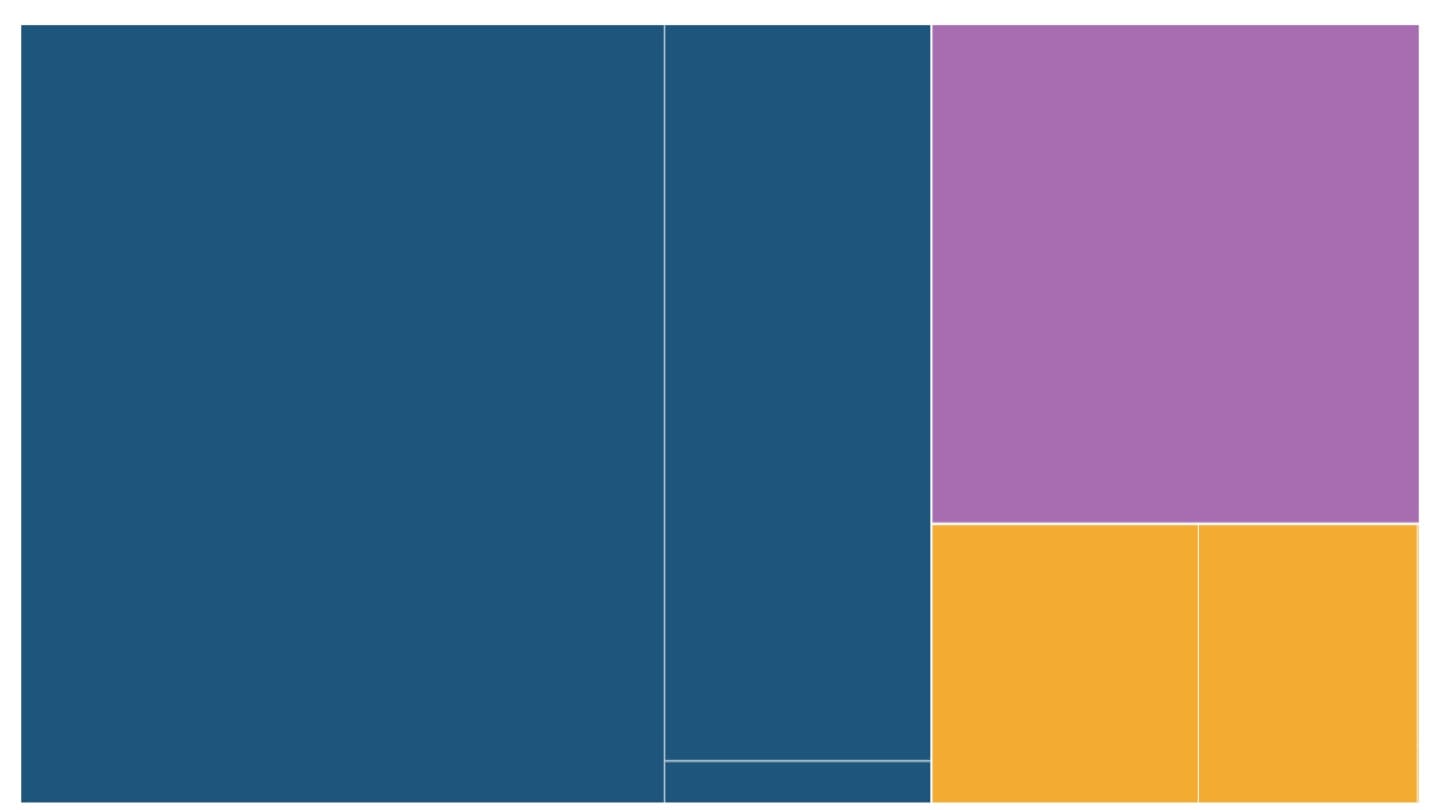
It's one of those things that you think you know, conceptually but it's still something of a reality check when you look at the actual numbers. Even though the conversation about Indian emigrants tends to be dominated by people of Indian origin in the United States, United Kingdom and Canada, the median Indian emigrant is most likely to live in the Gulf (Western Asia). Of the 18.5 million people of Indian origin living overseas in 2024, 3.25 million were in the United Arab Emirates (UAE) alone, making it the biggest destination country for Indian out-migrants, another two million in Saudi Arabia, and another 1.25 million in Kuwait.
(A quick word on the data, because this was definitely the first question on my mind when my colleague Nileena Suresh began to work on her piece: who counts as an out-migrant? We use United Nations Department of Economic and Social Affairs data for this piece, and according to the UN, Nleena notes, "a person is considered an international migrant if they moved across an international border to another country, and changed their usual place of residence. Typically they must have lived there continuously for at least 12 months to qualify as a migrant." However, the UN database gets its data from destination countries, and country conventions around defining international migrants may vary from being based on either their country of birth or citizenship. Finally, this is data for "international migrant stock", meaning the cumulative foreign-born population in a destination country as of a given year, and not new migrant movements during that year alone.)
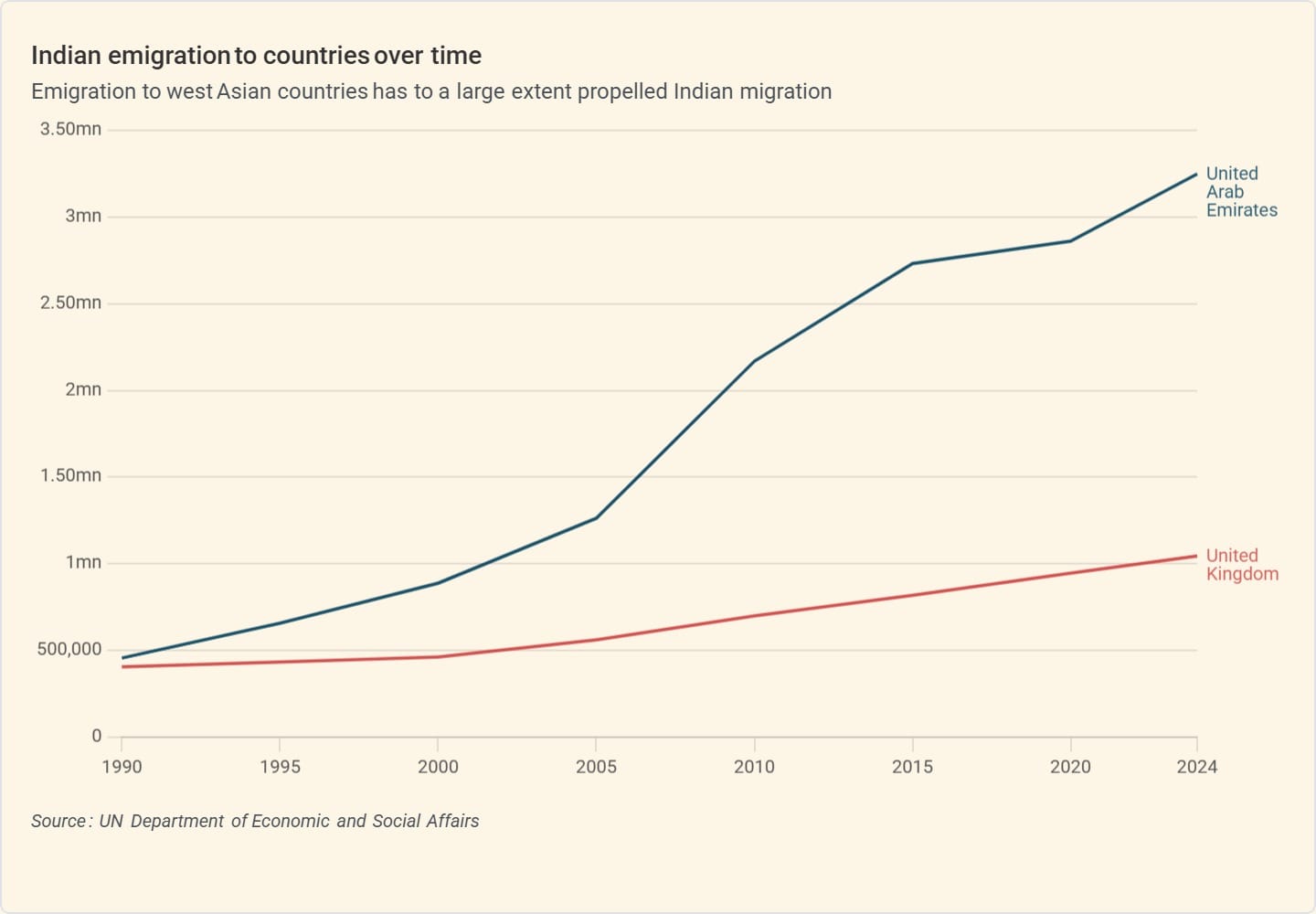
Emigration to the Gulf has always been a feature of Indian out-migration, but its scale really comes into relief here in this chart. Thirty-five years ago, nearly as many Indian-origin people lived in the UK as the number in the UAE. Today, three times as many Indian-original people live in the UAE as in the UK.
One notable feature of Indian migration to the Gulf that Nileena finds is how much more male-dominated it is, suggesting that these are solo male work migrants, while in countries like the US and UK, the sex ratio is much more equal, suggesting more family emigration.
Migration trends are strongly driven by economic and historical factors, but increasingly, we are likely to find that shifting global political attitudes seem set to affect migration pathways to North America and Europe.The big shifts in Indians taking flight in the last three decades could look very different from the ones of the coming years.