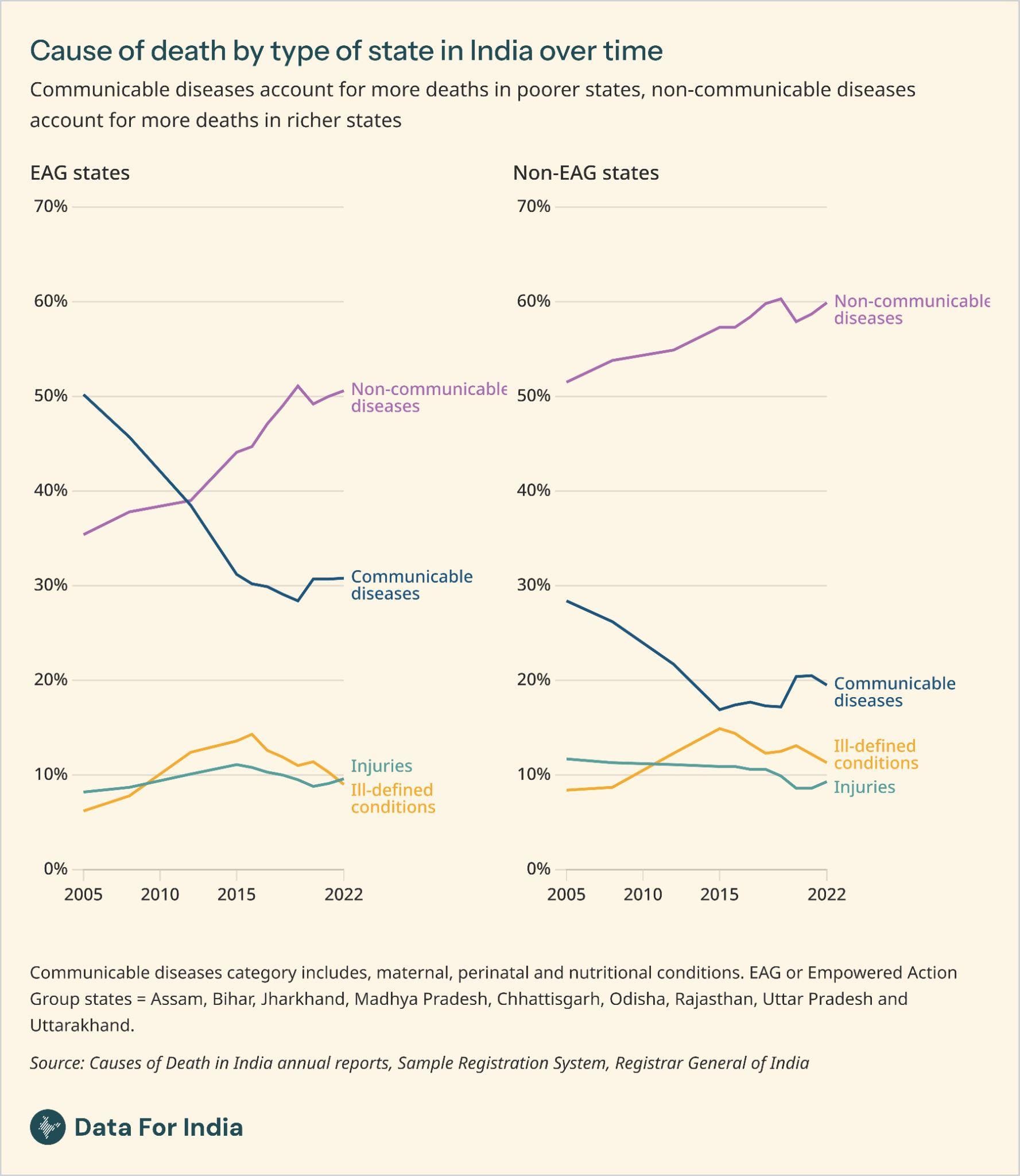
When you're looking at changes in mortality, numbers can sometimes start to feel a little zero sum. Is it a big shift, really, that people die less of one thing now and more of another, when the levels of mortality are not falling at the moment? It's when you think about a specific illness and its determinants that it starts to get real. Take malaria.
This is a disease that is entirely preventable - malaria is caused by plasmodium parasites spread through mosquito bites, meaning that being able to prevent getting bitten by the female anopheles mosquito, through the use of bed-nets, or insect-repellent spray, or by clearing stagnant water that breeds mosquitoes is what saves you from getting the disease. If you do get bitten, access to good and quick healthcare for diagnosis and treatment is what saves you. This makes the disease particularly likely to be mediated by the privileges of location and income.
In 1990, India reported at least 33 million new cases of malaria just in one calendar year, my colleague Nileena Suresh writes for us. (Nileena explains where Indian malaria numbers as well as the numbers that we use in this piece come from in this excellent piece in our Measurement section.) This closely mirrored the global malaria incidence rate of around 4,000 new cases every year for every 100,000 people. By 2019, this number was down to 5.5 million annual cases. So while the global incidence rate decreased to 3,000 new cases for every 100,000 people, India's rate fell sharply to less than 400 per 100,000 people.
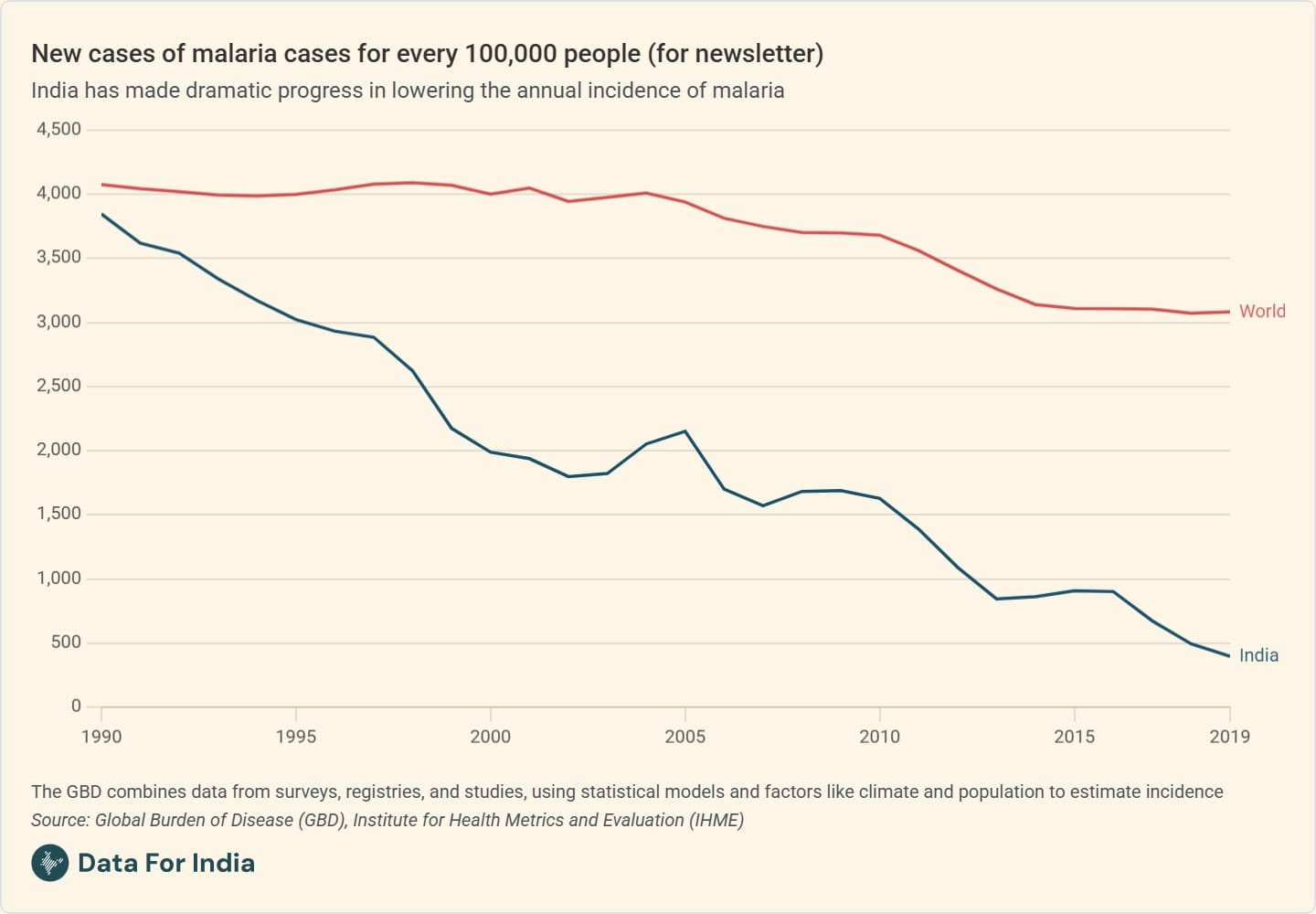
Among young children in particular, malaria was a leading killer. So the annual mortality from malaria falling from over 200,000 deaths to 35,000 annual deaths is an important public health achievement, although a lot remains to be done - India aims to be malaria-free by 2030, and that target is driven by officially reported statistics which, as Nileena shows, are a massive underestimate.
But to return to our question of big shifts - it does matter when fewer people die of one thing and more of another, particularly when it means that the shadow that preventable infectious diseases cast on the lives of the very young and the very poor is beginning to shrink. It also has enormous policy ramifications.
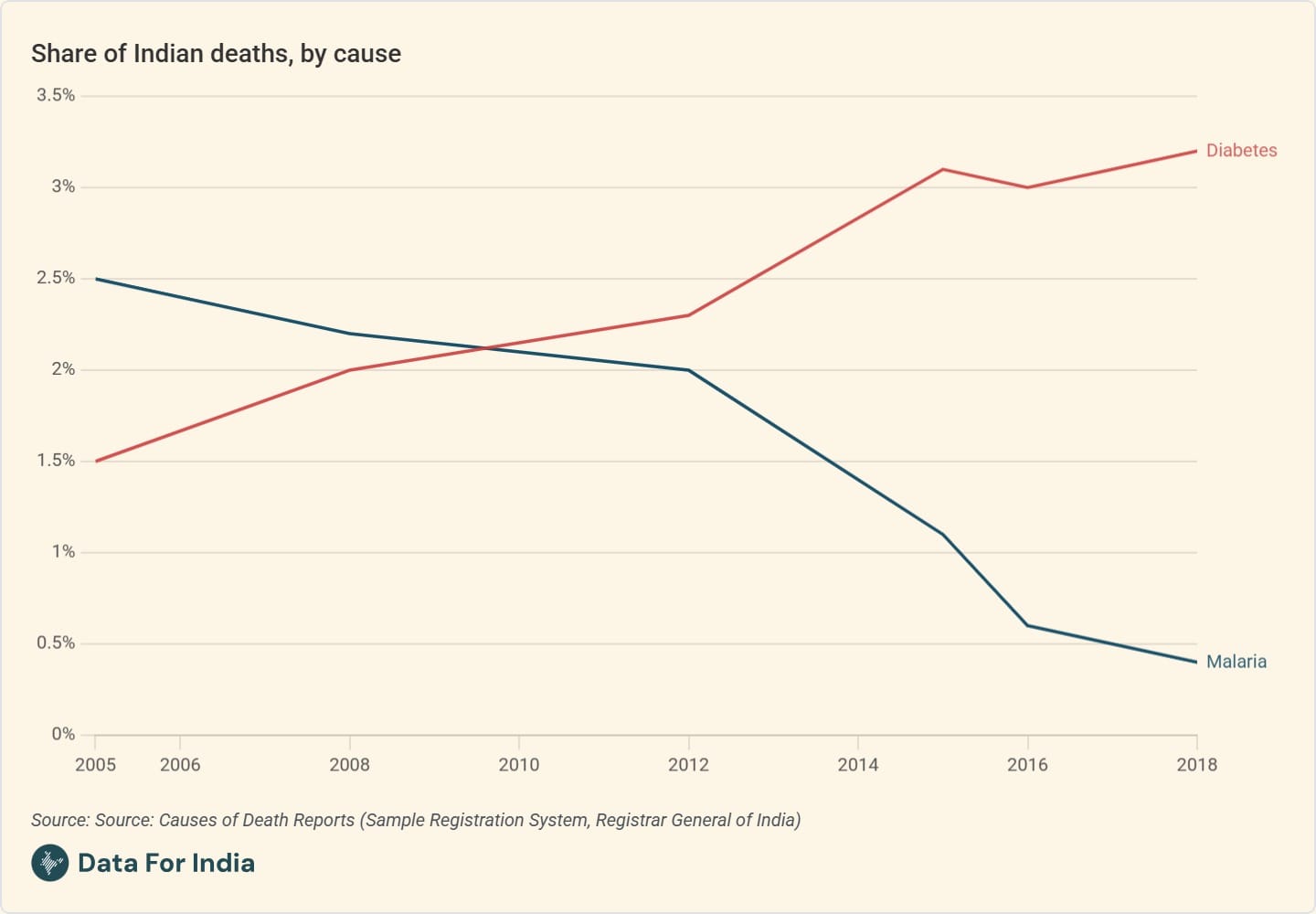
Just twenty years ago malaria killed more Indians than diabetes did, and now diabetes kills eight times as many people as malaria. As we've seen, it doesn't mean we can take our foot of the malaria-prevention pedal yet, but it does signal a big shift in the future of Indian health.