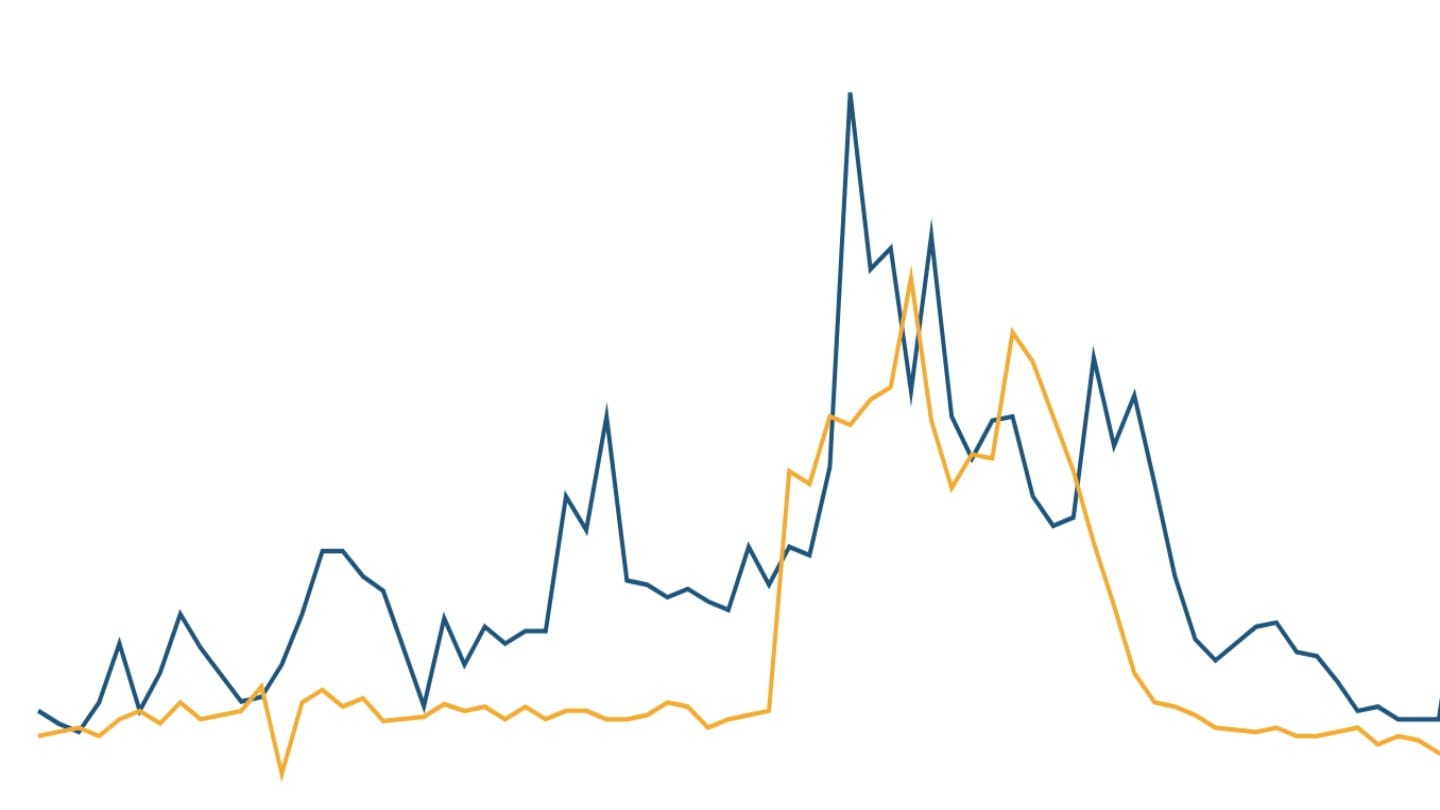
Some stories of change in India have to be told through carefully assembled time series data; my colleagues Abhishek and Pragnya used over 15 separate surveys to stitch together this piece on how employment had changed over time, and Abhishek, along with our research team, had to create a relatively new methodology to even be able to compare state economies over time for this piece.
Other big shifts are told through the very lives of our countrymen and, especially, in this case, our countrywomen.
Among the many chasms that have separated men and women in India has been this key one: the very ability to be able to read, to write, to understand and communicate. At Independence, fewer than one in ten Indian women and girls were literate; even though literacy rates were low among men and boys too at the time, they were still three times the female literacy rate.
For many Indians, these resonate in family stories of illiterate grandmothers, who ran their households with accomplishment despite being unable to write down accounts or read the newspaper. But there's no doubt that, despite their fiery resolve, illiteracy held back millions of Indians. It's not just direct economic indicators like employment and wages that are closely tied up with literacy; most development indicators including health and nutrition outcomes are also closely correlated with education. Being poor, marginalised and poorly educated was a deadly combination.
As the country grew and developed, literacy rates improved rapidly; additionally, the gender gap in literacy began to narrow, driven by the closing of the once large gender gap in enrolment.
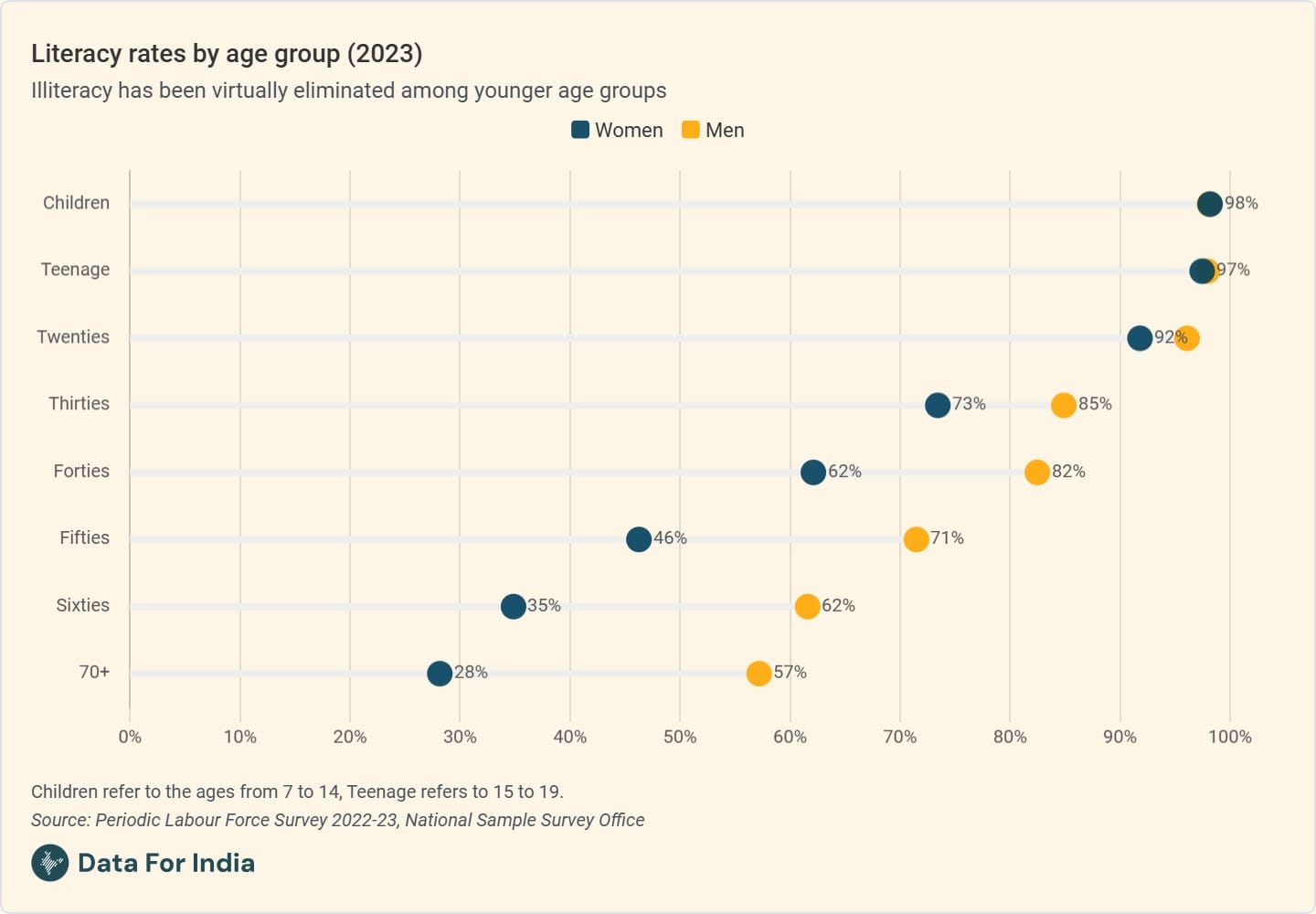
And so we reach today, where very few young Indians are illiterate any more, whether they are male or female. From a time when opportunity was so sharply rationed on gender lines, this is a truly transformational shift within a few generations, and often, within the same households.
As always, the argument is never that this is enough, that this is it.
For one, there is the question of how literacy is defined and measured, and whether our current methodology is adequate in a country where we now know that many children who are in school, or have been in schools for several years, are still functionally illiterate. Abhishek has an eye-opening new piece on that in our Measurement section.
Then there is the issue that enrolment in higher education remains low among both men and women, and much lower than in countries that we would like to compare ourselves with.
But for now, for this first day of a new year, there is this big shift to take some measure of joy or satisfaction in - that among the many unfair disadvantages that the lottery of birth continues to confer on some Indians, at least illiteracy will no longer be one of them.