A term that I've learnt from the economists and statisticians on my team is "decomposition". It is what it sounds like - splitting an aggregate indicator into its parts to better understand the micro-changes going on inside, separate from what the whole seems to suggest. My colleague Nileena Suresh does that effectively in her work for us in vocational training.
Like the phrase "demographic dividend", the phrase "skill gap" had a real moment about ten years ago, when a whole slew of experts suggested that providing additional skills to the young people coming out of India's high schools and colleges was what was needed to power jobs, growth and development. I think people are more circumspect about the prospects of skilling now, and the numbers certainly suggest that we should be.
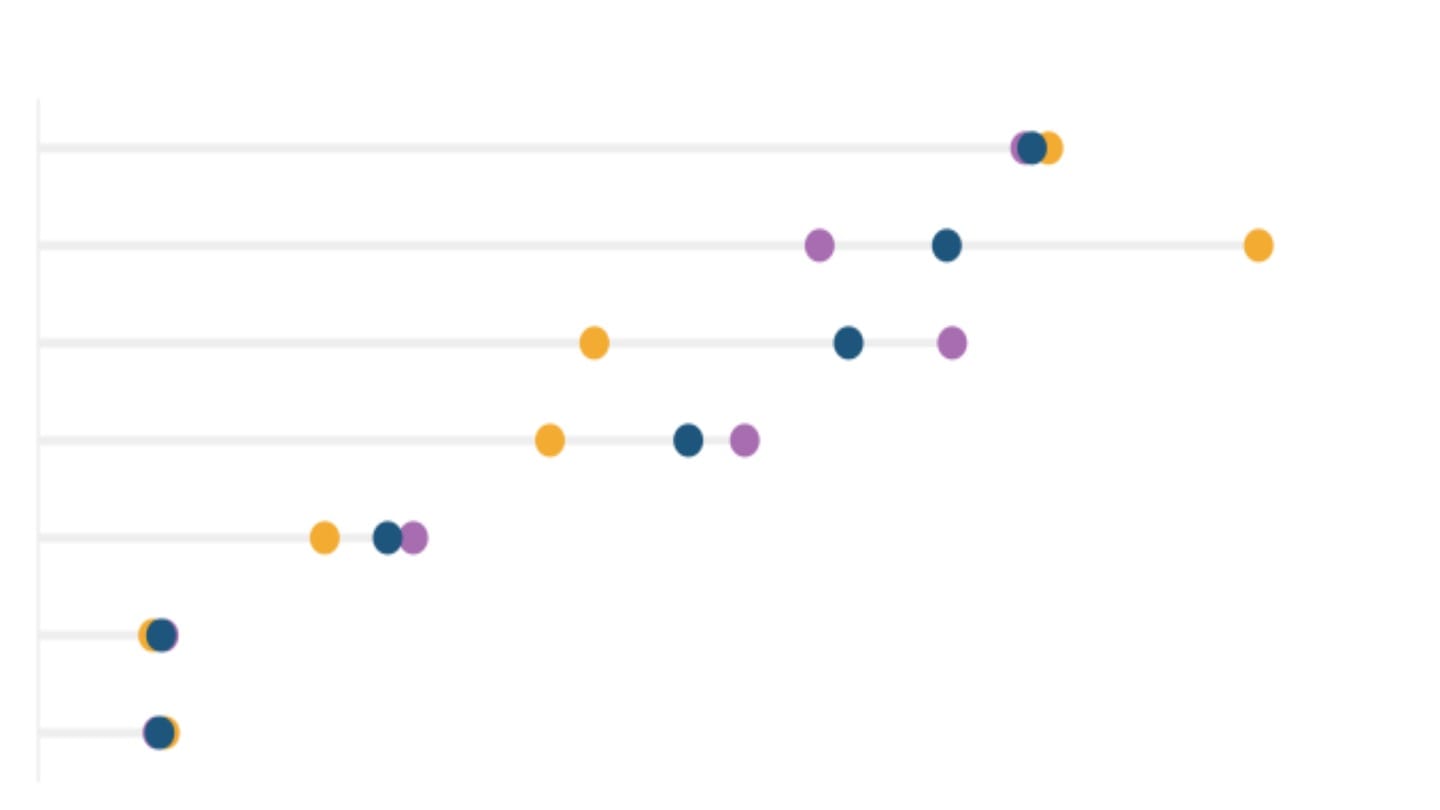
Roughly one-third of working-age Indians have received vocational training, Nileena finds, and this is an increase over time. But almost all of this increase has been in informal training, which is essentially learning on the job. Formal vocational training refers to structured, usually paid courses with a defined curriculum that lead to certification. Informal training includes hereditary skills passed down within families, self-learning, learning on the job, and short-term training that is not formally recognised.
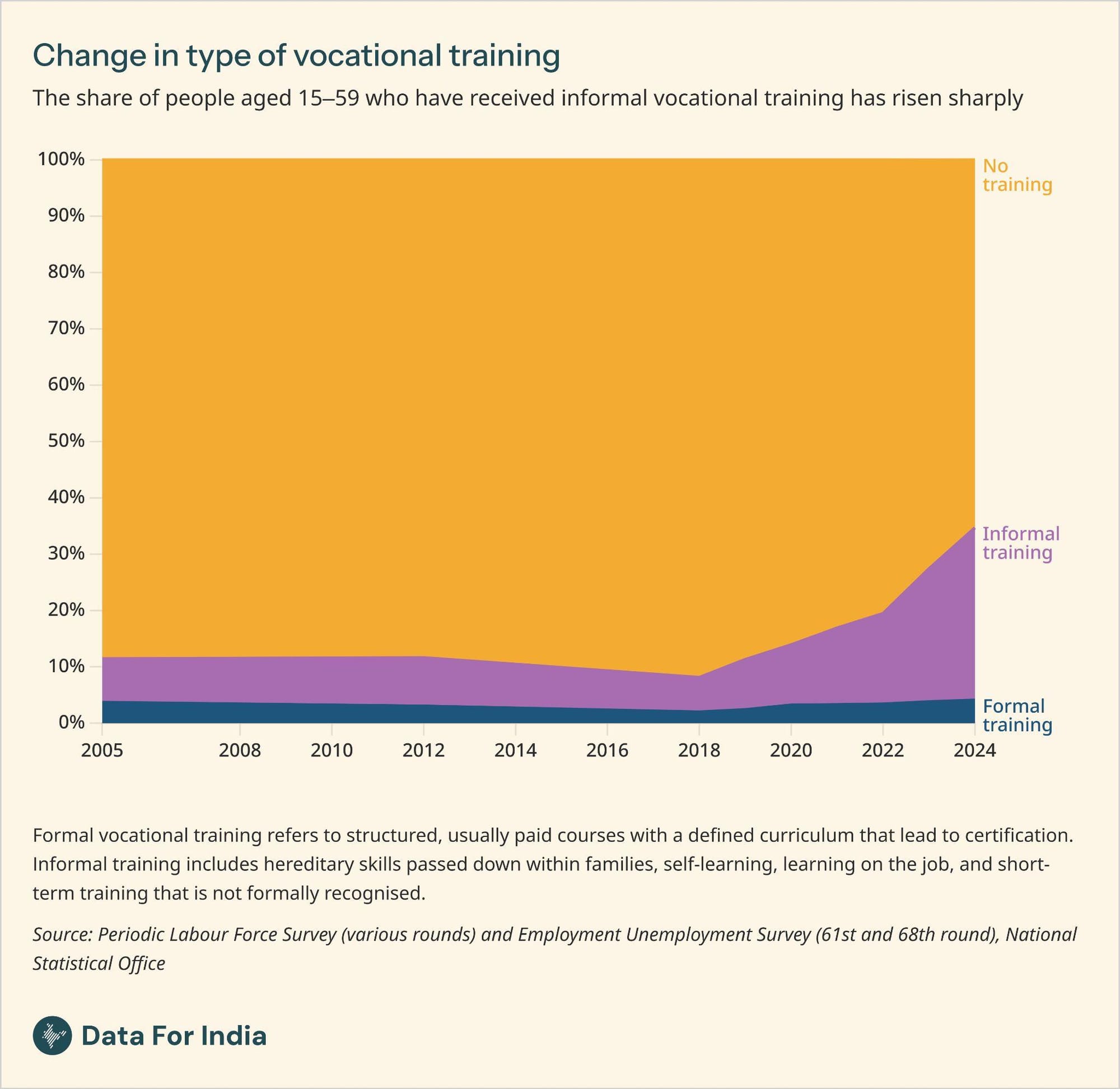
Between 2005 and 2024, the share of working-age Indians getting informal training more than tripled to 30%. But the share of Indians getting formal vocational training has remained roughly 4% over the entire time period.
This shouldn't really matter if opportunities are equitably distributed, and informal training provides the same leg up that formal does. But that is not the case: better-off people and those with a higher education are more likely to get formal training, and it is more likely to be in higher skilled and better paid industries including information technology and healthcare. Those with formal training are more likely to get salaried jobs and be better paid.
There's the fear, then, that what we're seeing is not a big shift, but something of a circle. If the already better off are the ones who get formal training and more opportunities, then thinking of how to expand the ambit of training might be the next unlock.