Women's absence from India's workforce is most evident in their 20s
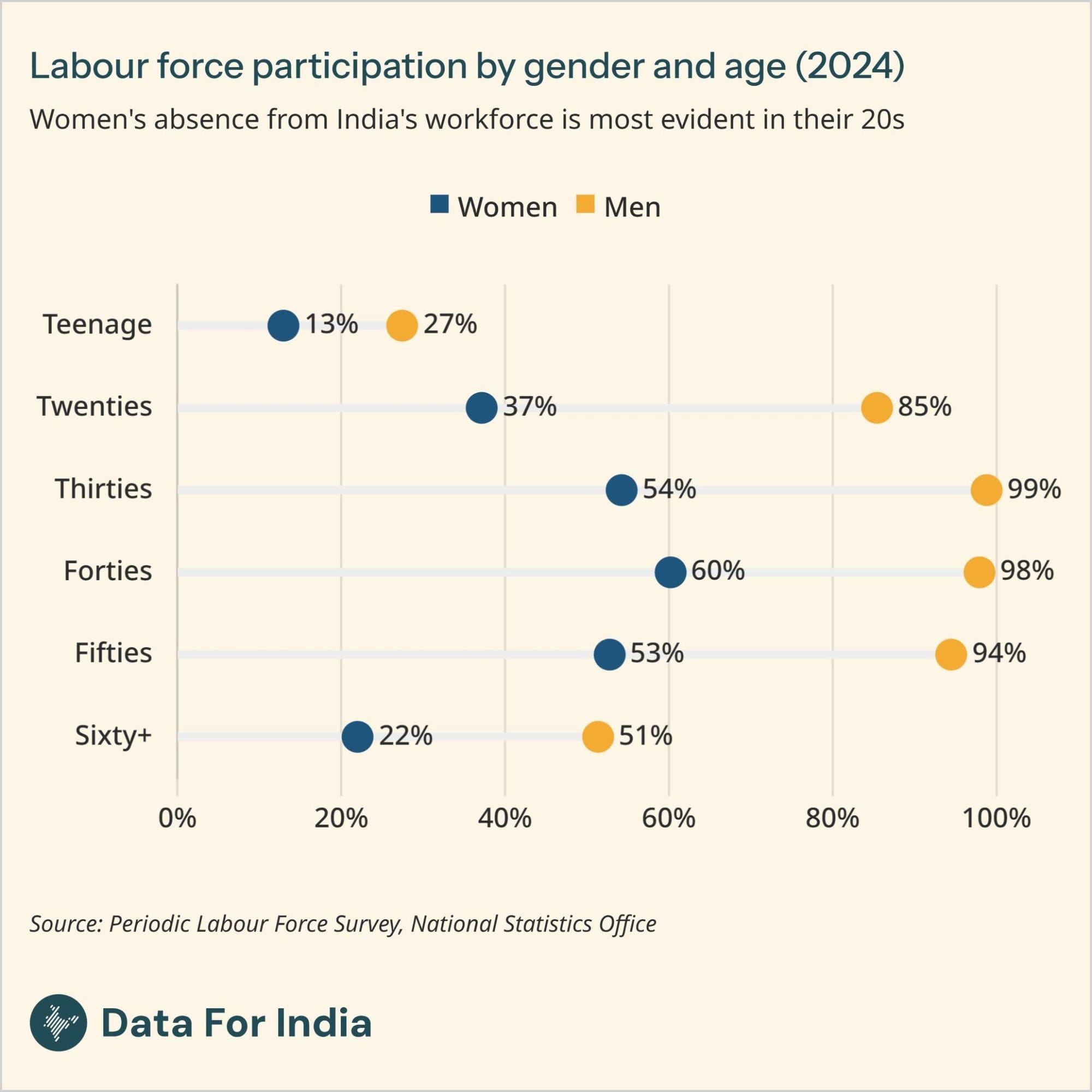
The share of people in an age group who are either working or looking for work is known as the labour force participation rate (LFPR). The LFPR is an important indicator to measure whether most adults are in the productive economy. In India, female labour force participation is far lower than that of males at every age.
Across the world, labour force participation rises with age once adults complete their education, and then falls in old age. This is certainly the case for men in India.
Men's LFPR increases sharply from the teenage years until the mid-twenties, and remains at nearly 100% during the prime working years. It then reduces slowly until the age of 60, and sharply after that.
The likelihood of an Indian woman being in the labour force (two in five) is half of that of an Indian man (four in five). In India's Periodic Labour Force Survey, women report household duties, including child care and chores, as the main reason for staying out of the labour force.
But the gap between male and female labour force participation rates is widest in their twenties and thirties. The main reason for this demographic blip in women's labour participation is child-bearing and child-rearing. About 70% of births in India are now to women in their twenties.
Read more about what brings women back into the labour force here.