Every once in a while, I have to write not about a big shift, but about the absence of a big shift.
That India has a large informal workforce is known. But one of the changes that you might have expected to see in India's economy and workforce over time is a growing formalisation, and the conversion of precarious informal jobs into formal ones. In labour terms, it's one of the biggest shifts that is conspicuous by its absence.
For his work for us on the informal sector, my colleague Abhishek Waghmare first started by figuring out how to define informal jobs. Using a combination of international statistical norms, and Indian labour statistics, Abhishek landed on this definition of a formal job: workers who have any two of the following three benefits:
- at least one social protection among healthcare/ maternity, provident fund/pension and gratuity,
- eligible for paid leave, and
- a job contract that is for a period more than one year.
(You can read the piece for a fuller explanation of the provenance of this definition.)
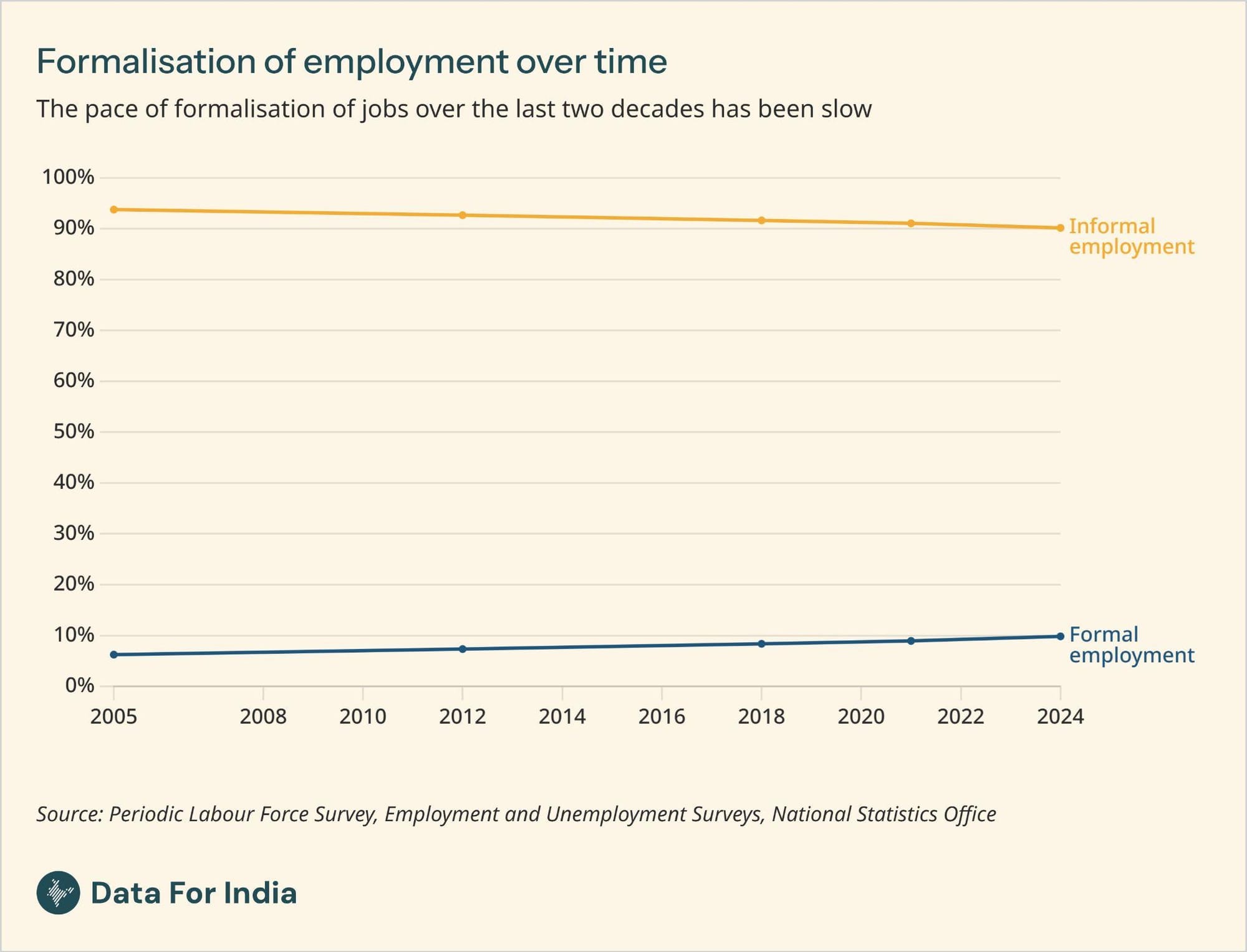
By that fairly liberal definition, here's where he landed: the share of formal jobs has remained below 10% for the last twenty years that we have comparable data for.
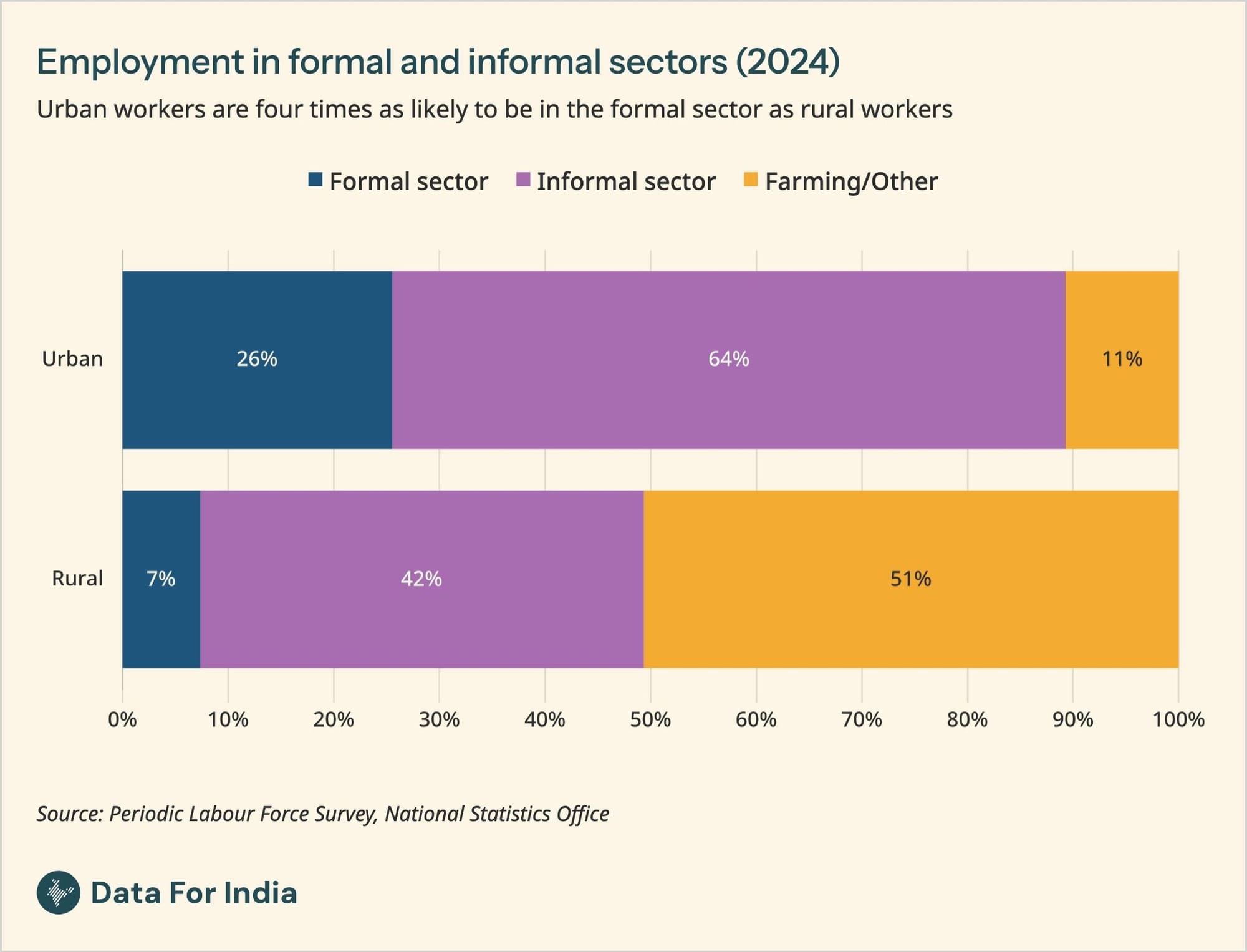
There's another way you can look at it - you look at the enterprises that employ people, and think of them in three categories:
- the formal sector which includes government and private enterprises recognised by various laws
- the informal sector that largely covers enterprises run by households, which are not recognised by laws, and do not maintain accounts, and
- a residual or 'other' sector (including households working in farming, households who produce only for their own use, cooperatives and trusts) that is seen as being outside the definition of formal and informal sectors.
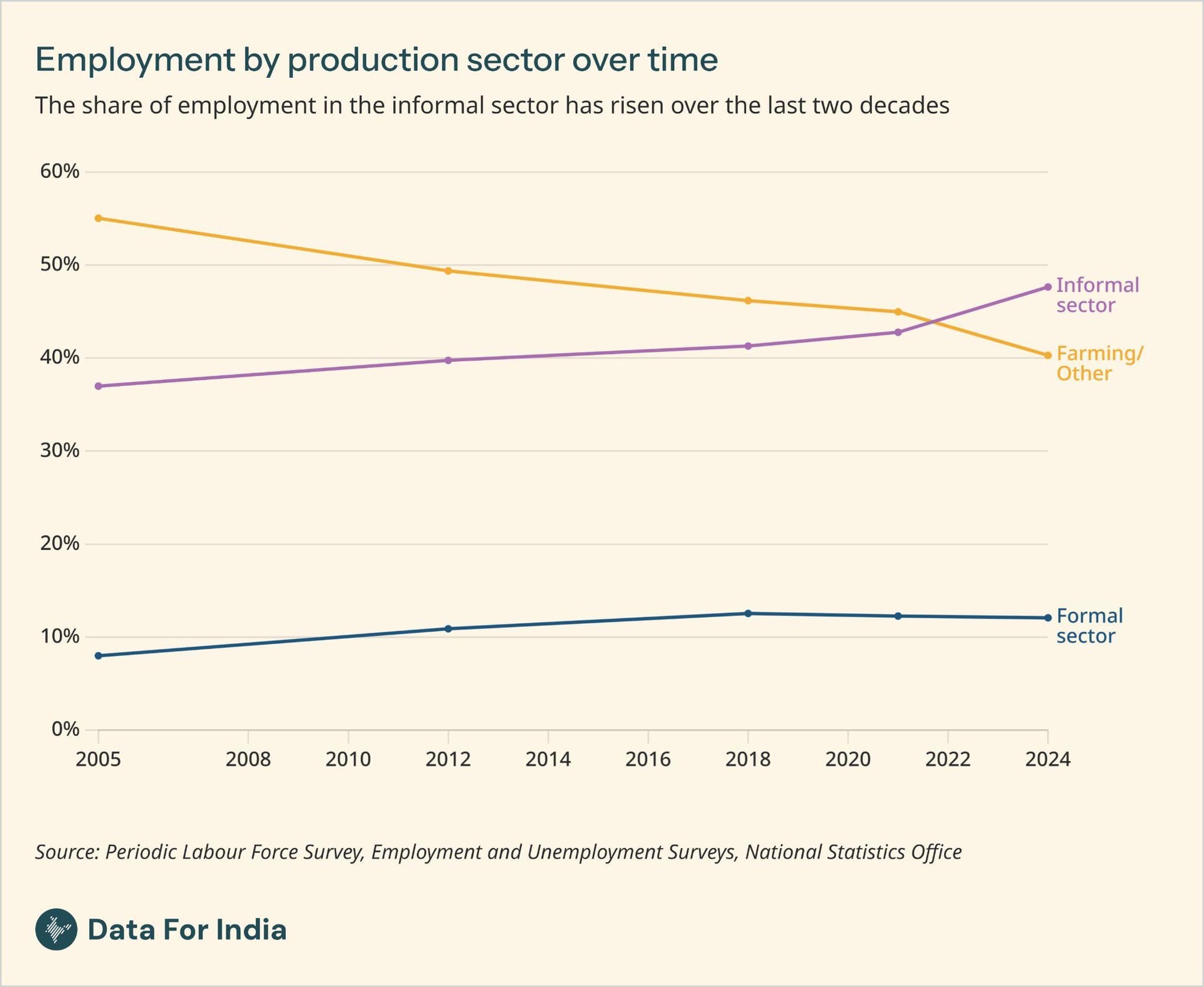
Here too Abhishek finds that the share of the formal sector has hovered around 10% for the last 20 years.
There's certainly room to talk about how best to define the formal sector, and whether these definitions fit how you might like to think of formal and informal jobs. But from the point of view of well-accepted global norms around informality, this is the picture, and it's quite revealing in its lack of change.