One of the things that we're passionate about at Data For India, and that I'd argue we do both well and uniquely, is to interrogate datasets. Our job as we see it is not just to work with the data to explain India, but also to look more closely at the underlying data itself. Better data, and a better understanding of this data helps strengthen the entire data ecosystem.
Nowhere is this more evident than in our work on mortality estimation. The accurate counting of deaths in a country is essential to planning for public health and demographic change. Driving my colleague Nandlal Mishra's inquiry was one fundamental question: what are we missing when we look at the national average alone?
The two most prominent sources of data on mortality in India are best looked at together. Estimates of annual deaths from the Civil Registration System come from deaths registered with local authorities. But this would miss deaths that go unregistered. So the government also produces estimates of annual deaths from the Sample Registration System, a large household survey conducted by the government. In a country where every death is registered, and the survey methodology is perfect, these two sets of estimates would be a perfect match.
On the face of it, that's what seems to now be the case in India - we appear to be at the happy end of a major shift.
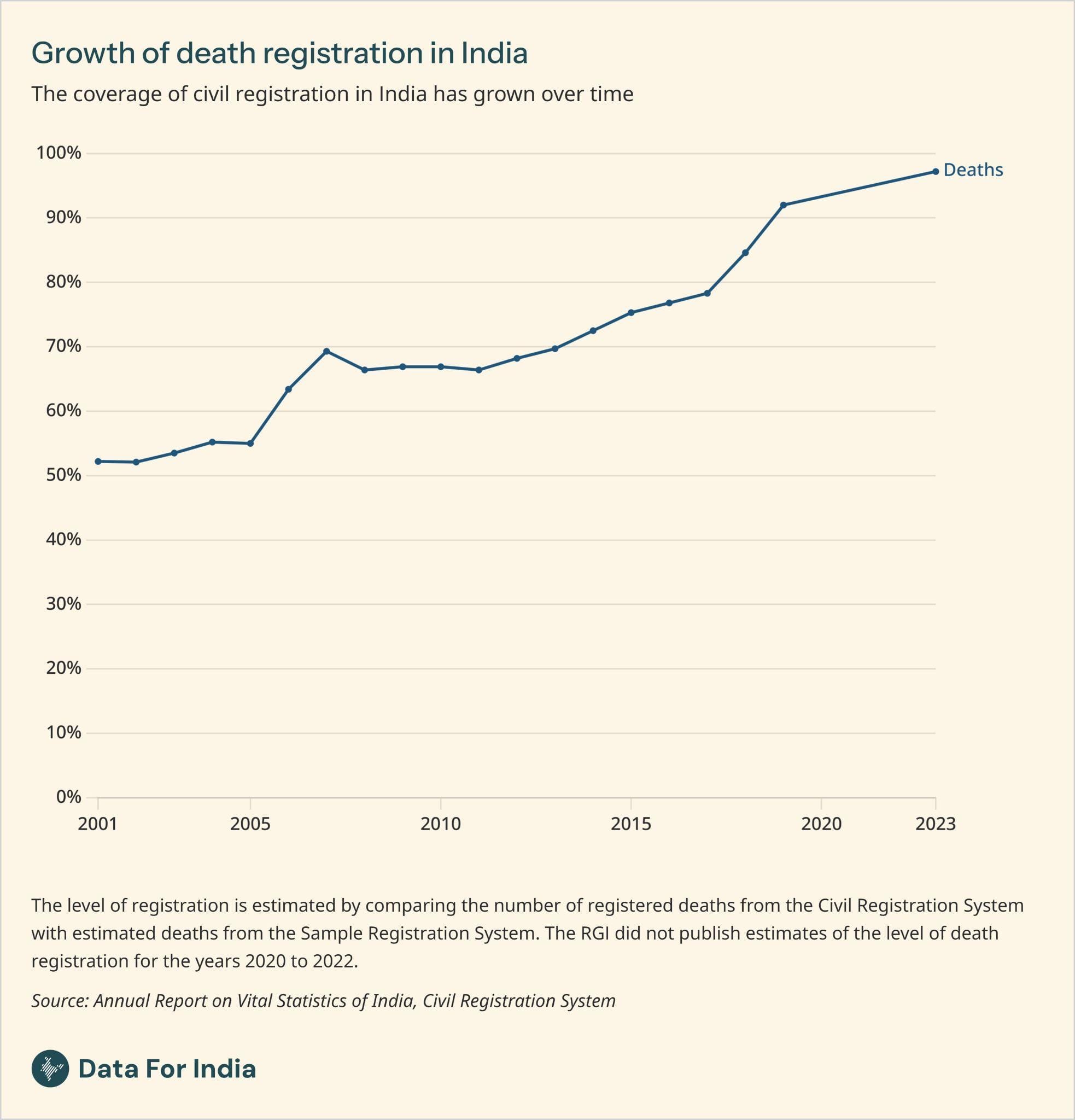
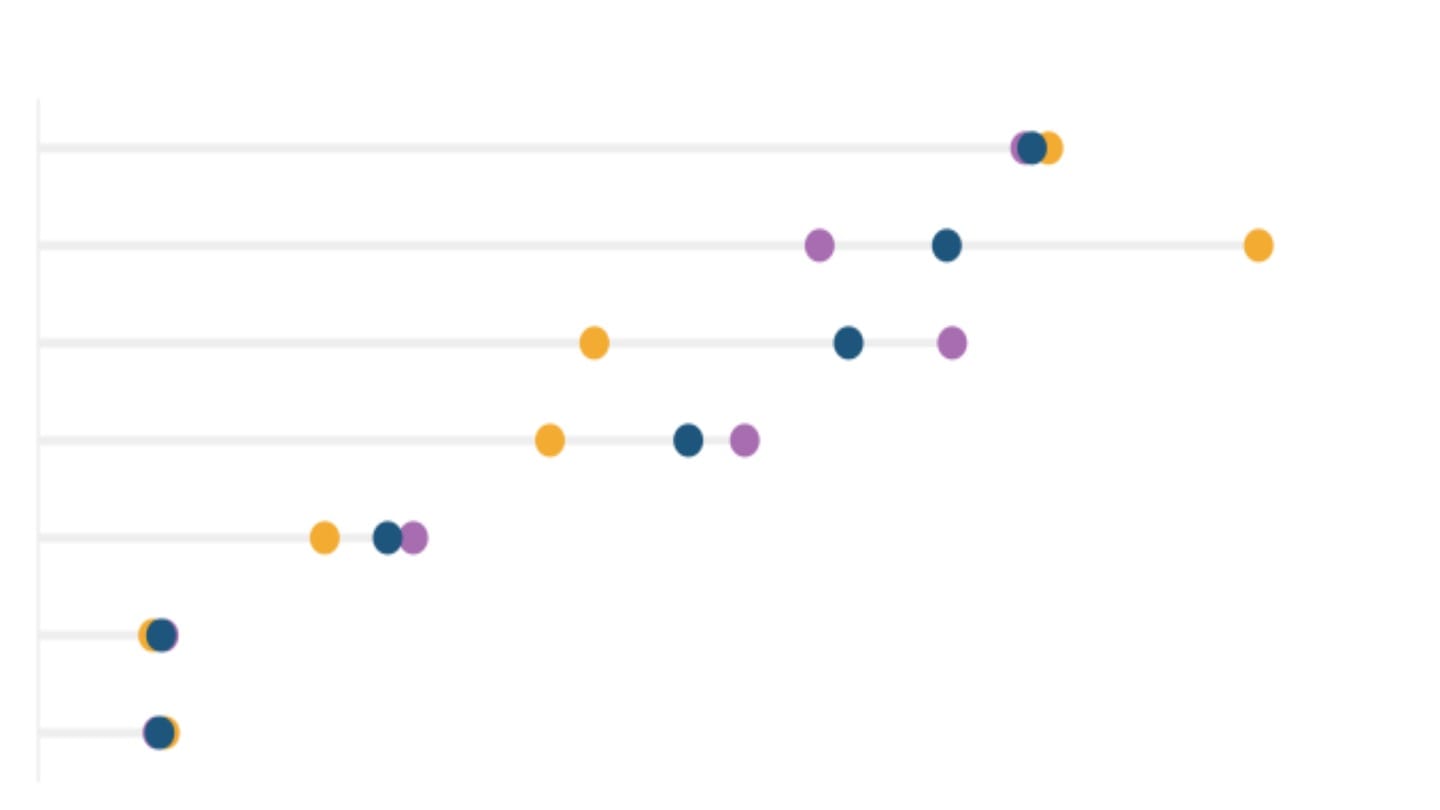
The chart here shows registered deaths proportionate to estimate actual deaths, expressed as a percentage. From 50% in the early 2000s, this number is now approaching 100%. It would seem like we've fixed the problem of death registration, and can get the count of annual deaths from death registrations.
Except, that's the national average. For the national average to be 100%, one of two things could be happening. Either every state is now at nearly 100%, or some states are well below 100% while some are well above 100%. Unfortunately, the latter case is what is happening.
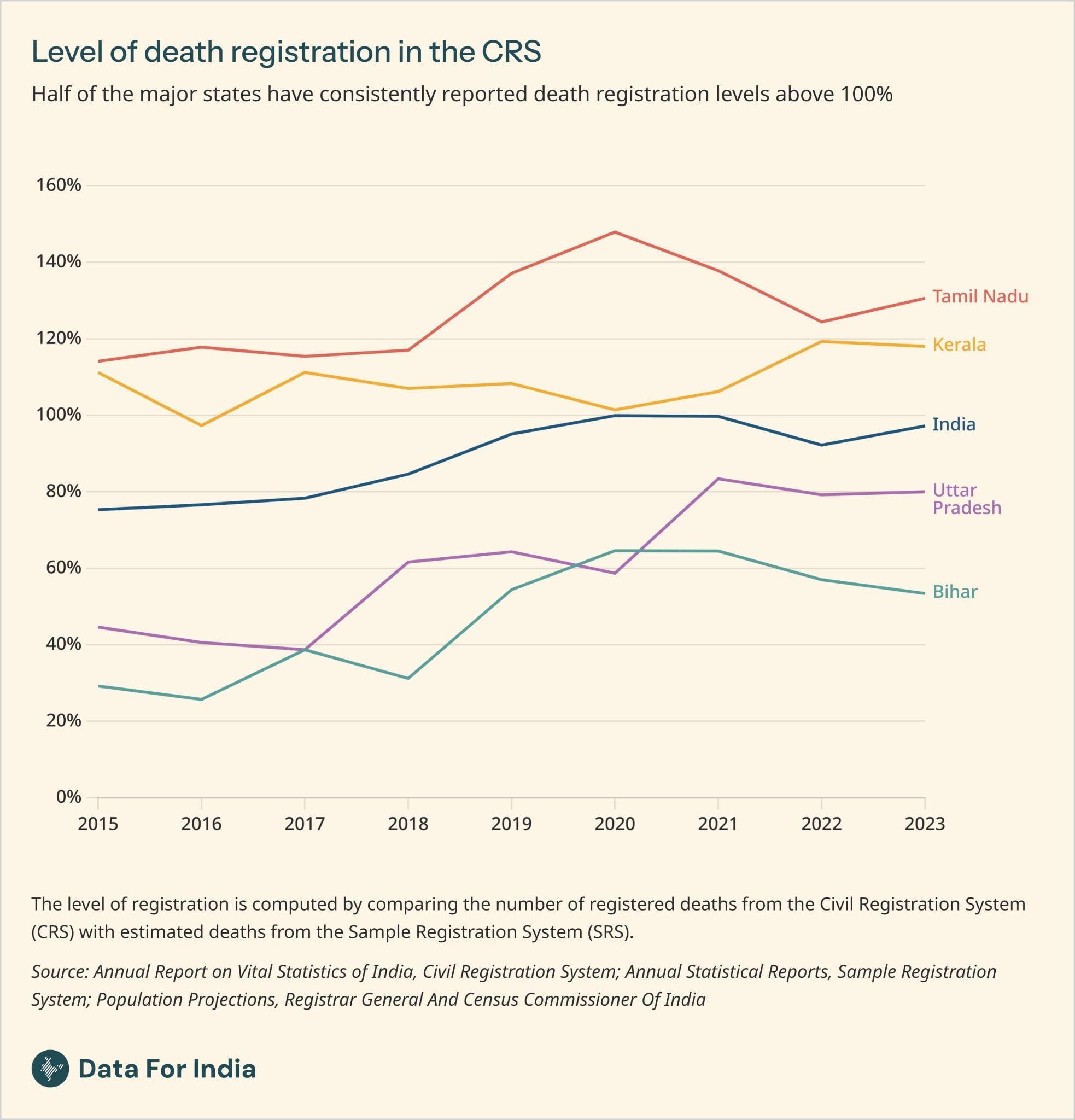
For reasons that Nandlal explains in his work for us, several Indian states are now reporting statistically impossible rates of death registration, while others don't yet capture even half of all deaths. This has important implications not just for the total count, but also for which source we use and where, and Nandlal has some suggestions there.
My work in this newsletter is to examine big shifts by looking at what the numbers say, but what feeds into it is the work of my colleagues that ensures that what we're capturing really is one big shift, and not many small mistakes.