One of the reasons that we set Data For India up is because not having access to data and data-driven insights about India can lead to inaccurate narratives developing and taking hold over public discourse. This is certainly the case when it comes to India's demographics.
The narrative about India being a young country is quite deeply ingrained in our vision of ourselves. It feeds into the 'demographic dividend' argument - India is much younger than the rest of the world, the argument goes, and so will have a growing working-age population for decades ahead, while the world greys and looks for workers.
The truth is that while India was younger than many comparable countries and than the world on average for a long time, this is set to change soon. Within the next ten years, India will become older than the world on average, reversing a trend that has defined our post-Independence vision of ourselves.
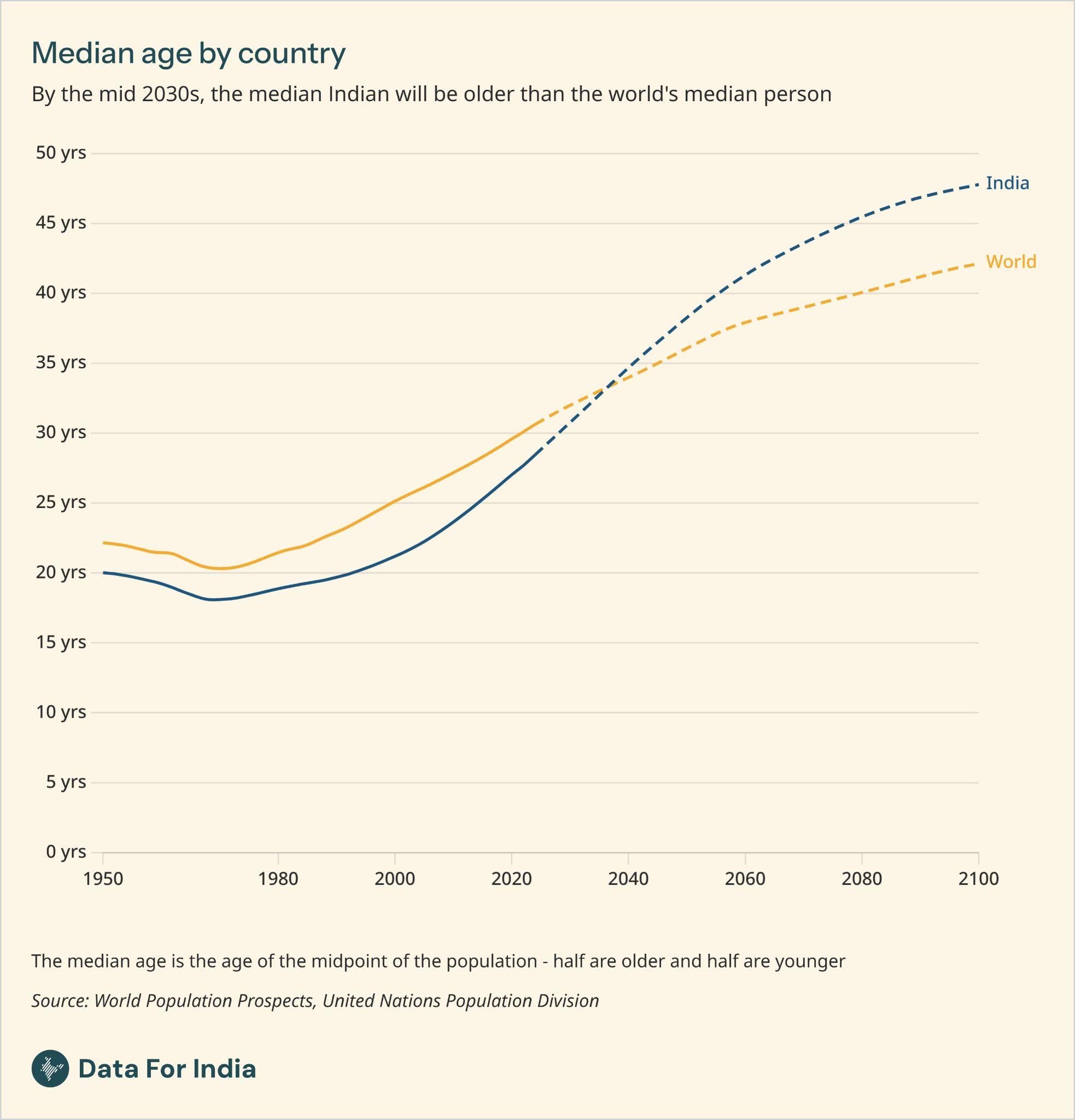
The median age of the population is affected by the number of children born every year as well as the number of people who die every year, I wrote in my piece for us on population growth. India's child population has been declining since the early 2000s. Simultaneously, improvements in health outcomes particularly for very young children have meant that the risk of dying very young in India has been declining. As a result, India's population is beginning to live longer, driving up the age of the population.
In many southern Indian states where the fertility transition occurred decades ago, the median age is already higher than the world's on average. While India's median age is now 29 years, and the world's 31, the median Tamil person is already in their late 30s.
As this happens, the share of Indians who are of working age will peak in the next three to four years according to UN population projections, after which it will begin to decline, potentially marking the end of what was known as the demographic dividend.
These are not normative points: there is nothing inherently good or bad in ageing as a country, and the world is full of varied examples of success, as long as the country knows how to both use and serve its people well. It is, however, vital that we recognise a big shift when we see one, and reorient our vision of ourselves accordingly.