One of my favourite stories from when I was a child was the one about the three blind men and the elephant. Each 'felt' a part of the elephant and pictured what it might be, but without being able to see or sense the whole, they could necessarily not see the literal big picture - the elephant.
I am often reminded of this when I see commentators and even academics shoot off quick responses to incredibly complex processes and changes in the economy. Their answer may be part of the answer, but it's rarely the whole thing. We may not even be able to fully explain some phenomena, but it needs humility to be able to admit that.
One striking trend in my colleague Abhishek Waghmare's study of unemployment among graduates is how this rate shifts over a graduate person's lifetime. New graduates have a 36% unemployment rate, the highest of any group in India, and higher still among women. In contrast, the unemployment rate among graduates in their forties is under 1%.
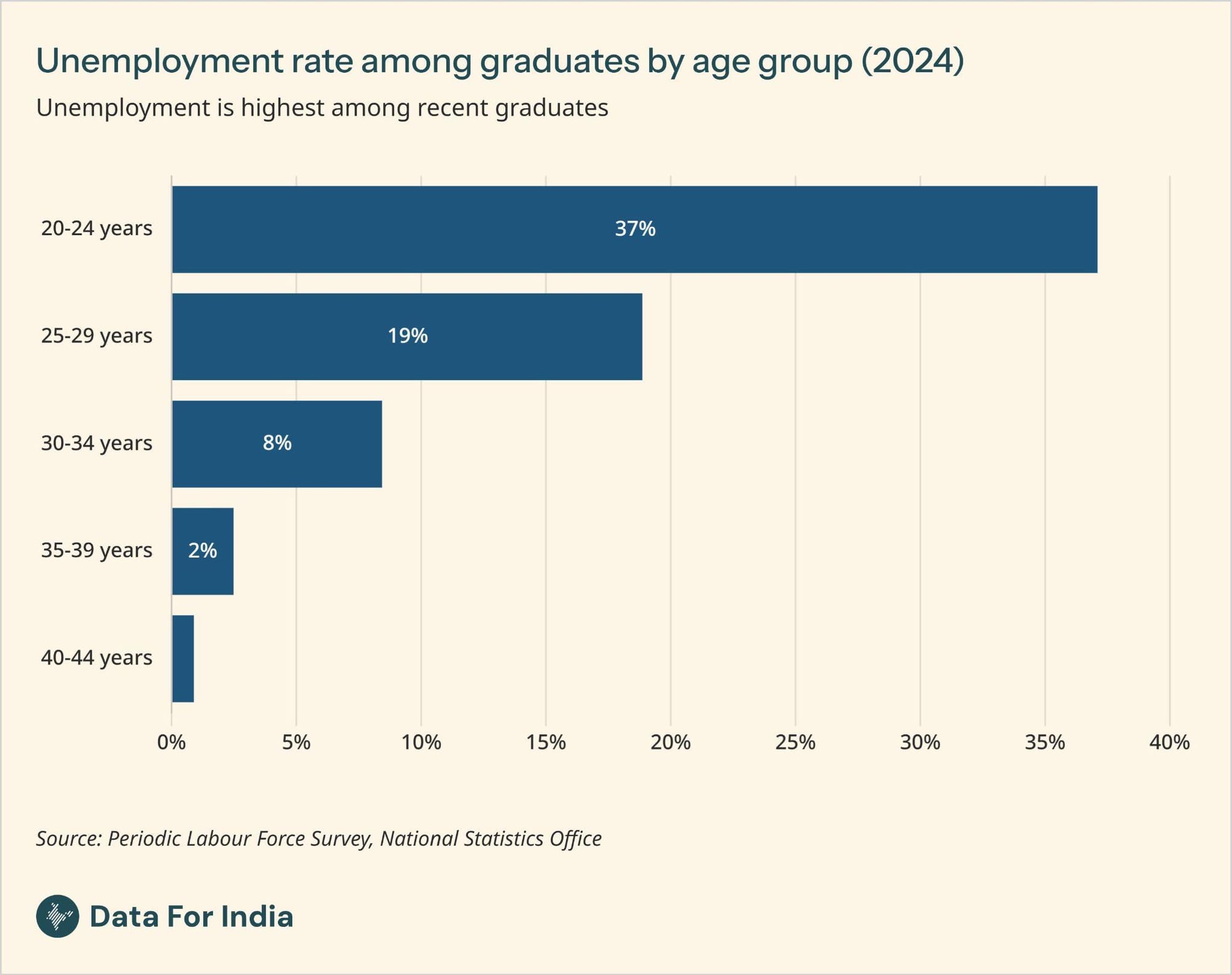
Now one way to interpret this could be that the job market today is worse for graduates than it was for them 20 years ago. But other research finds several other striking explanations. For one, younger people with fewer responsibilities are much more able to hold out for the better-paying, higher-skilled, white-collar, formal jobs that they believe their education merits. This is particularly likely because people with a graduate degree are much more likely to come from richer families. Younger graduates are also less likely to have collected work experience, contacts, references and skills.
It's likely that a combination of these factors affect the unemployment rate, each of them a different limb or fold of the elephant. Answering the 'why' is something many readers want, and many industry leaders seek as a way to move the needle. But answering the why accurately and with all of its complexity is so much more important, even if less satisfying, than one quick take.