Indians now spend more money on processed foods than on cereals
Historically, the largest share of the Indian household food budget went to cereals - chiefly wheat in north India and rice in south India - and pulses.
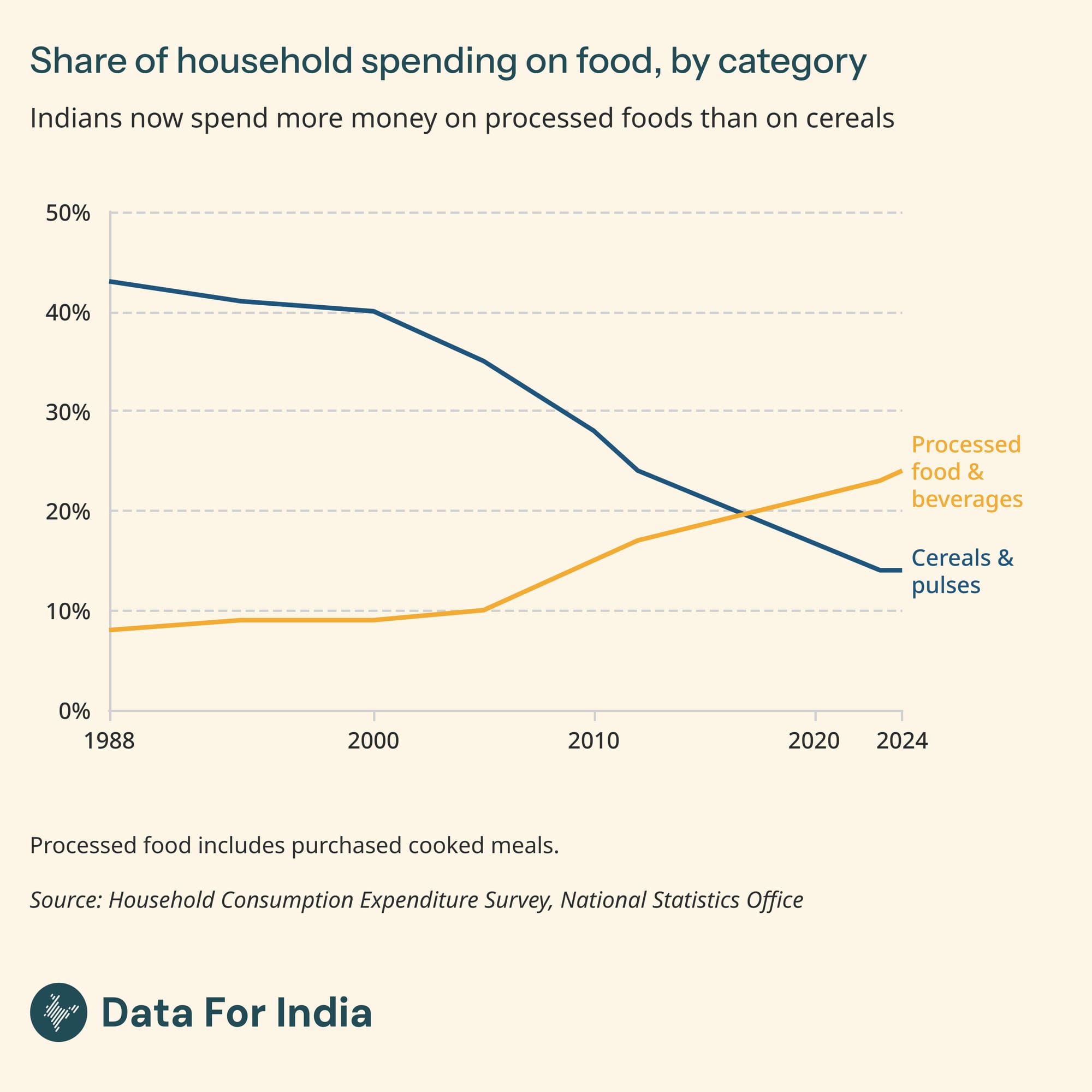
In the late 1980s, over 40% of the average food spending of Indians was on cereals and pulses alone. As households got richer, their overall food budgets grew, and they were able to better diversify their food expenditure, spending more on meats, fruits and vegetables and dairy products. As a result, the share of their household spending that went to cereals declined over time.
Simultaneously, there was a significant expansion in state provisioning of free or subsidised cereals from the early 2000s onwards, meaning that fewer households had to pay for the cereals that they were consuming. Taken together, spending on cereals declined.
With family purse strings loosening up a little, households have chosen to spend more on processed foods including packaged food, non-alcoholic beverages and purchased cooked meals.
Since the late 1980s, the share of the food budget that goes to processed food has more than tripled, and is now higher than the amount spent on cereals. Processed foods now make up the single largest category of food-related spending in India. 10% of the entire budget of Indian households - including food, rent, fuel, education and other expenses - goes towards processed foods alone.
This change isn't restricted to richer households alone - India's poorest and richest households spend the same share of their food budgets on fried foods, for instance.
Read more on what Indian households spend on as they get richer.