Every time I am in Bengaluru on work, get into a cab and put on Google Maps, I think of life expectancy. Not because the traffic makes me acutely conscious of how I want to spend my remaining time on earth (or not just because of that), but because the unique experience of watching my ETA move further away even while I am moving reminds me of how life expectancy is calculated.
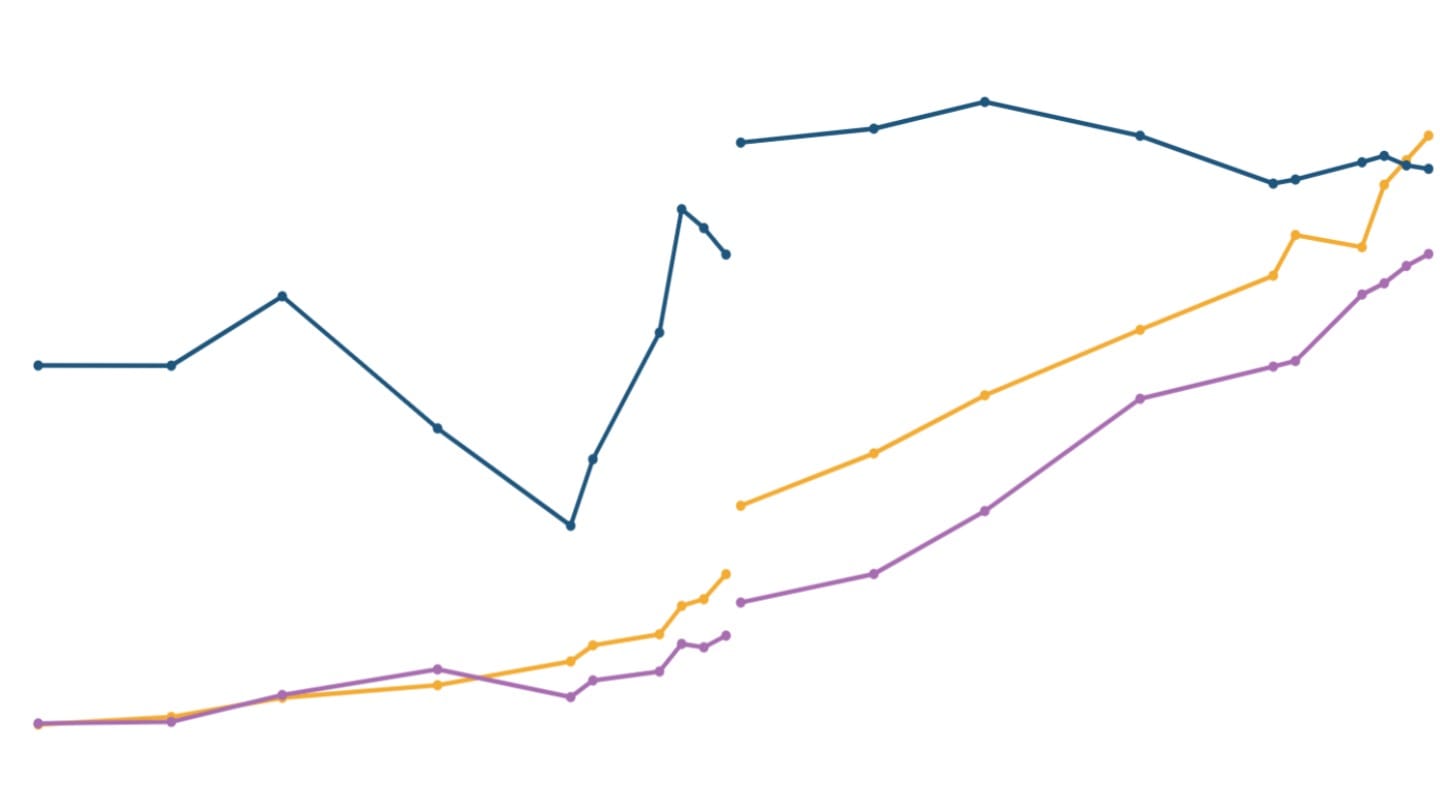
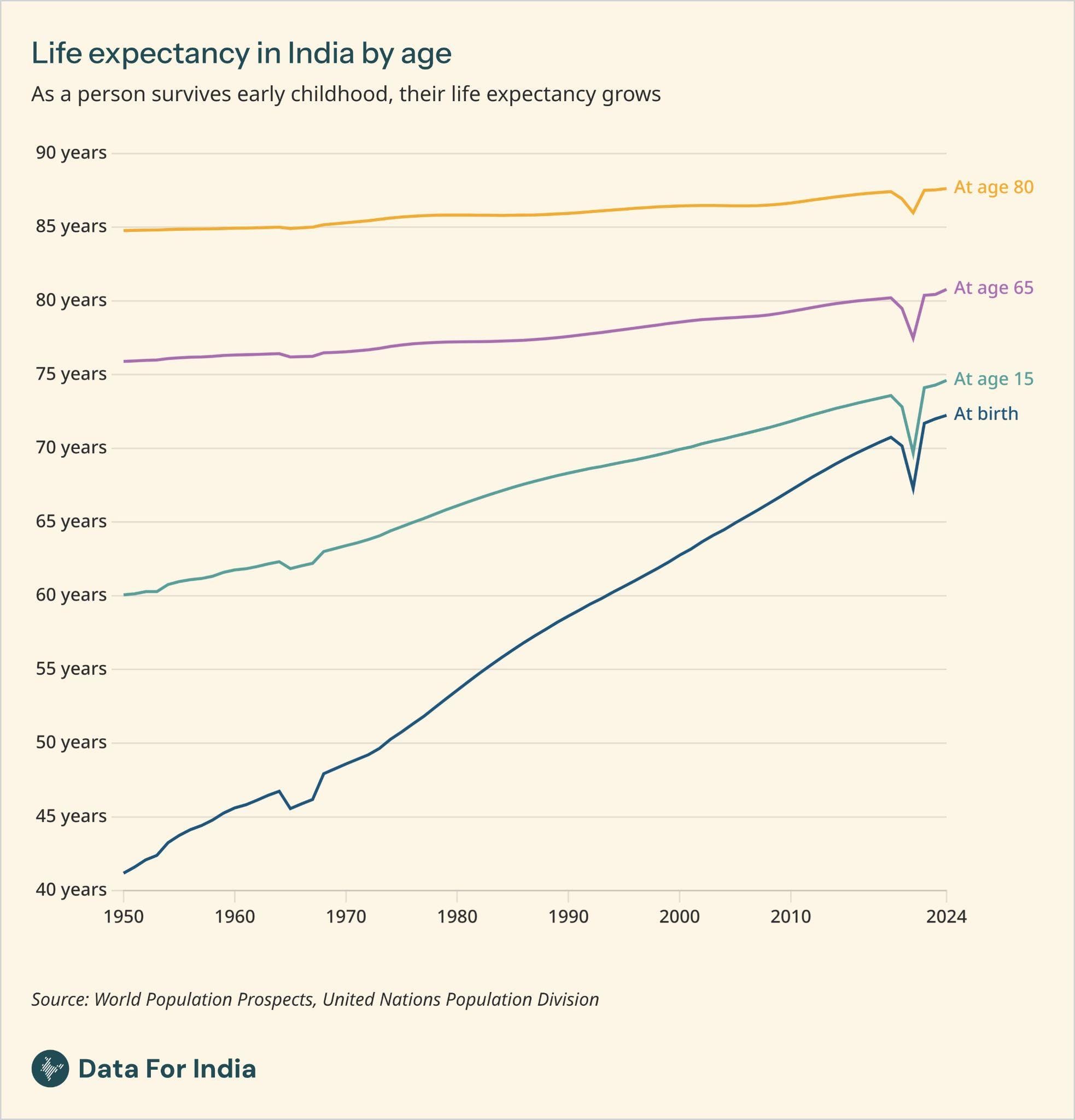
The most commonly used measure of life expectancy, I found while working on this piece for us, is life expectancy at birth. Life expectancy at birth is now over 72 years in India, which means that a child born in 2026 can expect to live until he or she is over 72.
Life expectancy at birth is an exceedingly crude measure: essentially, you average the death rates for all age groups in a population to produce an estimate of how long a child born in that year could live if the death rates remain unchanged. But that doesn't mean that a 70-year-old today can only expect to live two more years.
Life, to really stretch this analogy to its limit, is like a Bengaluru cab ride. The longer you sit in it, the longer you're going to be in it.
In India, as in most developing countries, mortality rates are high among infants and young children. The average death rate across all age groups in India is six deaths in a year for every 1,000 people. The average death rate for children under the age of one, on the other hand, is 26 deaths in a year for every 1,000 children in that age group. Surviving babyhood is still a major achievement.
As a result, life expectancy increases substantially once a person has successfully made it through early childhood. While life expectancy at birth in India is now 72 years, a 15-year-old today can expect to live to be nearly 75. An Indian who has already made it to age 65 can expect to live to be over 81.
As infant mortality decreases, life expectancy at birth will rise too and the gap between life expectancy at different ages will start to narrow. Not only will the journey grow longer, but its length will also become easier to estimate at the very beginning.