India is warming, but less than the global average so far
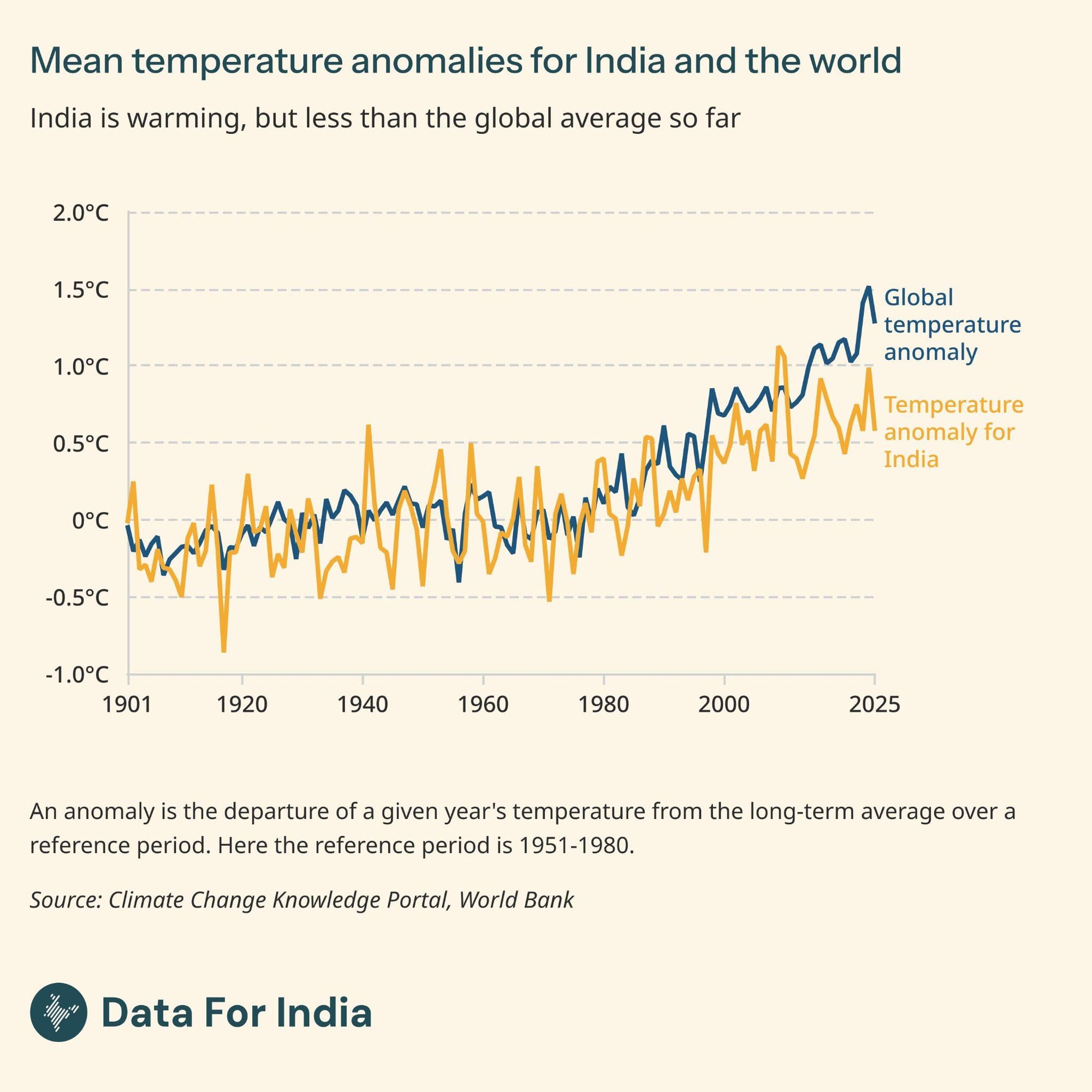
India has warmed substantially over the past century, but the rate and magnitude of its warming remain lower than the global average. Since the beginning of the 20th century, mean temperatures rose by 0.10°C per decade globally compared with 0.07°C per decade in India.
A temperature anomaly measures how much warmer or cooler a given year is relative to a long-term baseline. Using a baseline of 1951-1980 for both India and the world, we find that the mean global temperature anomaly was about 1.5°C above the baseline in 2024, which is the hottest year on record, compared with about 0.9°C for India. Warming was higher than the global average in some European and North American countries including Germany (+2.8°C), Russia (+2.6°C), Japan (+2.3°C) and the United States at +2.11°C in 2024. Countries such as Brazil, India, Indonesia and Argentina were below the global average, showing substantial geographical variation in warming.
However, lower average warming does not mean that India is insulated from climate risks. Global warming provides the broader climatic context within which regional and local changes occur, but its effects can vary across regions. Local temperature and variability can either amplify or mitigate climate impacts, even when a region's average warming is lower than the global mean.
Read more about the pattern of warming in India.