Few things make you more aware of the limits of national averages in being able to accurately capture regional realities than living in Chennai in November. The rest of the country is done and dusted with its monsoon and talking about winter, while we are just starting to get some use out of our umbrellas.
In the India Meteorological Department's classification of seasons, the north-east monsoon period of October-December is actually called the 'post-monsoon season', I learnt from my colleague Juhi Chatterjee's work for us on climate, and I'm trying very hard not to take that postscript-like classification personally.
To give it its rightful place in our national weather discourse, I wanted to call attention to two big shifts that the "post-monsoon season" has seen over the last 100 years. The first, as Juhi pointed out in her earlier work for us on seasonal rainfall, is that the north-east monsoon has been much more variable than the south-west monsoon, making it significantly less predictable, and leading to more frequent swings between floods and dry spells.
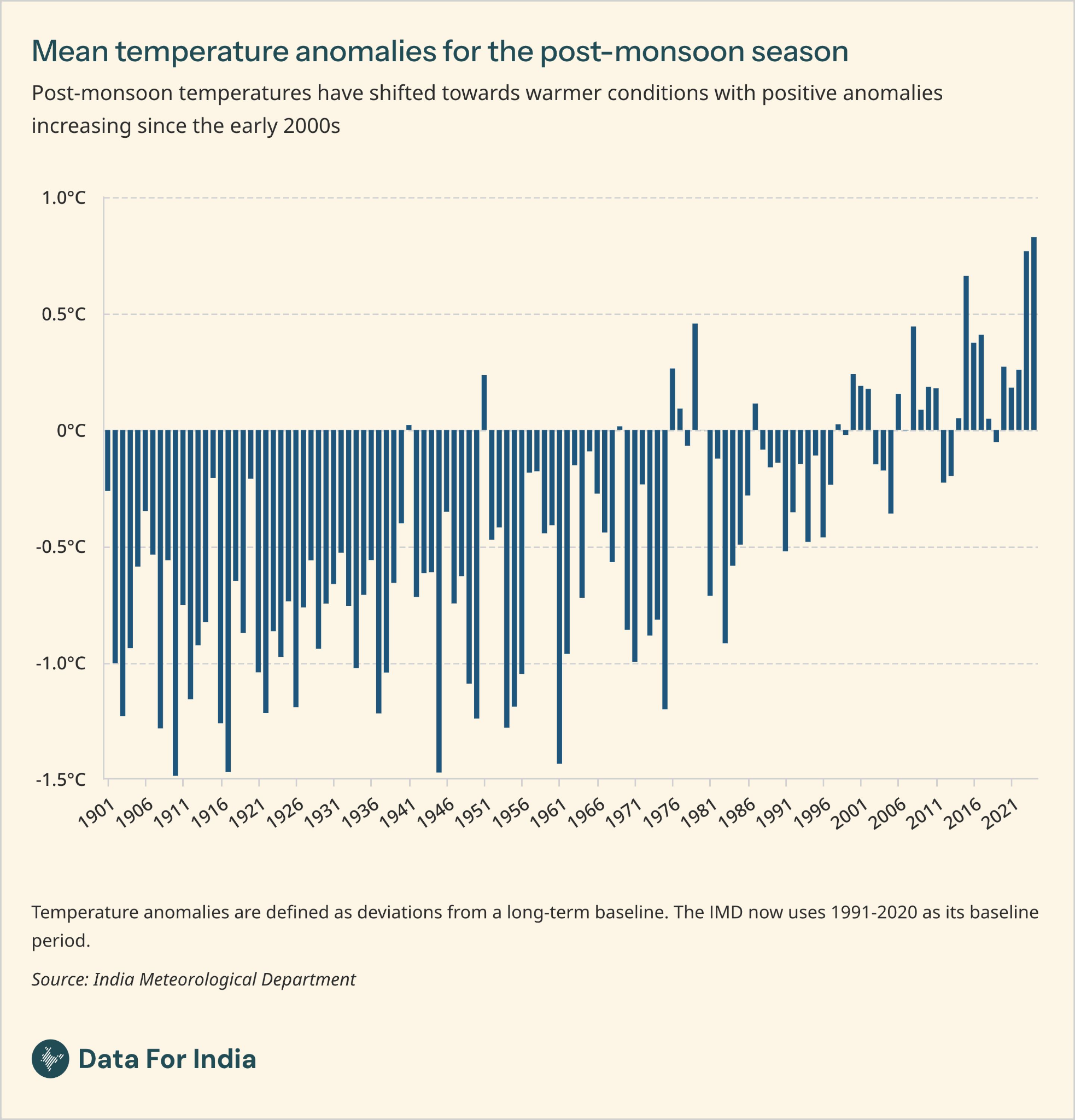
The second, as Juhi finds in her new work for us on seasonal temperatures, is that this season is also becoming much hotter for the country as a whole over time.
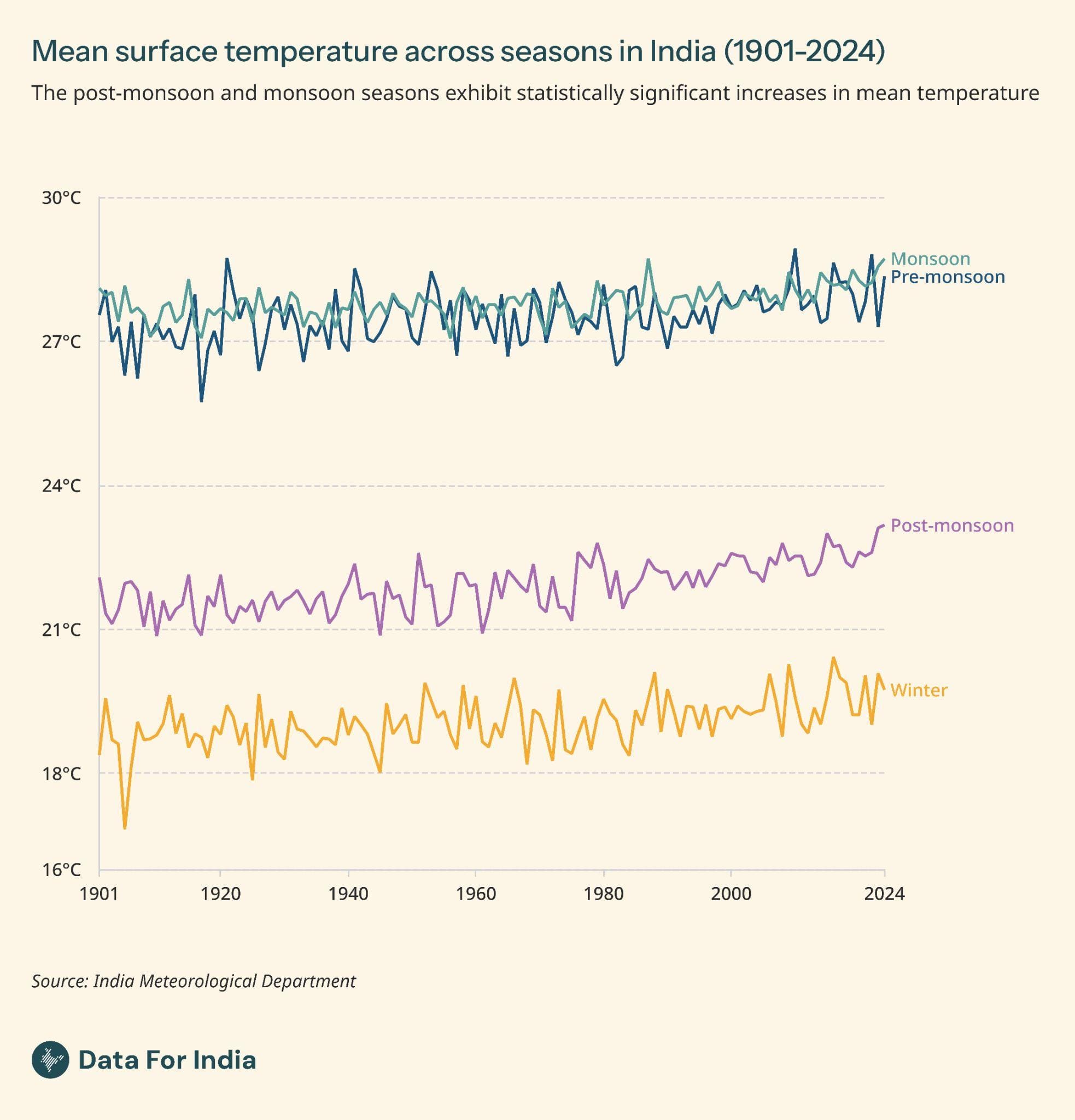
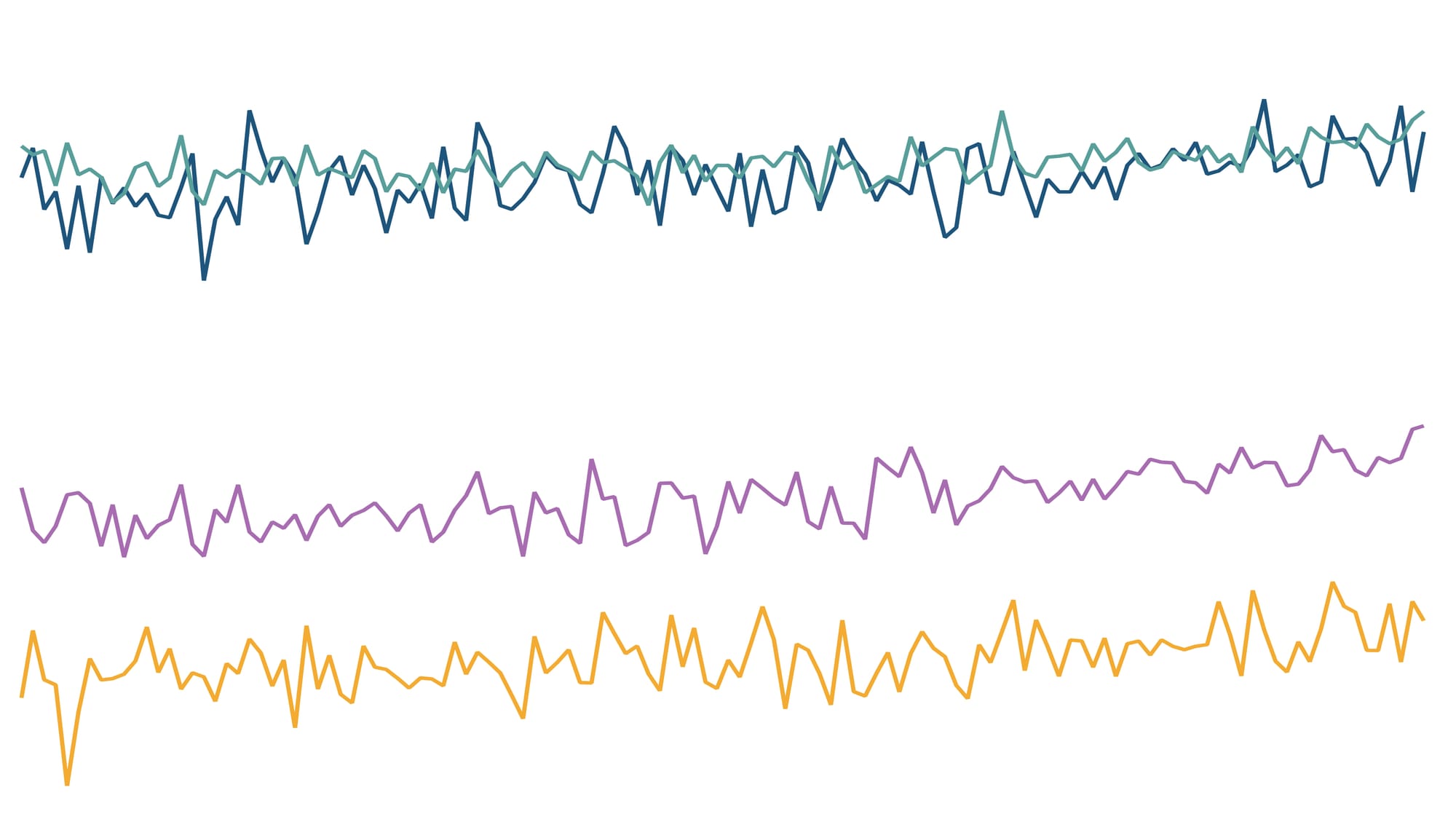
"The post-monsoon season shows the strongest rate of long-term warming among all seasons, with mean temperatures increasing by 0.10°C per decade over 1901-2024," Juhi finds. This is even more important when you look at it in terms of departures from the long-term average, known as temperature anomalies. The post-monsoon warming is also distinct in being driven by rising minimum temperatures, indicating that nights are warming faster than days during this season.
These changes in both rainfall and temperature in this season will affect the agro-climatic and hydrological future of the southern states, but also the rest of the country. Underpinning every seemingly small climatological data point are monumental regional and seasonal shifts.