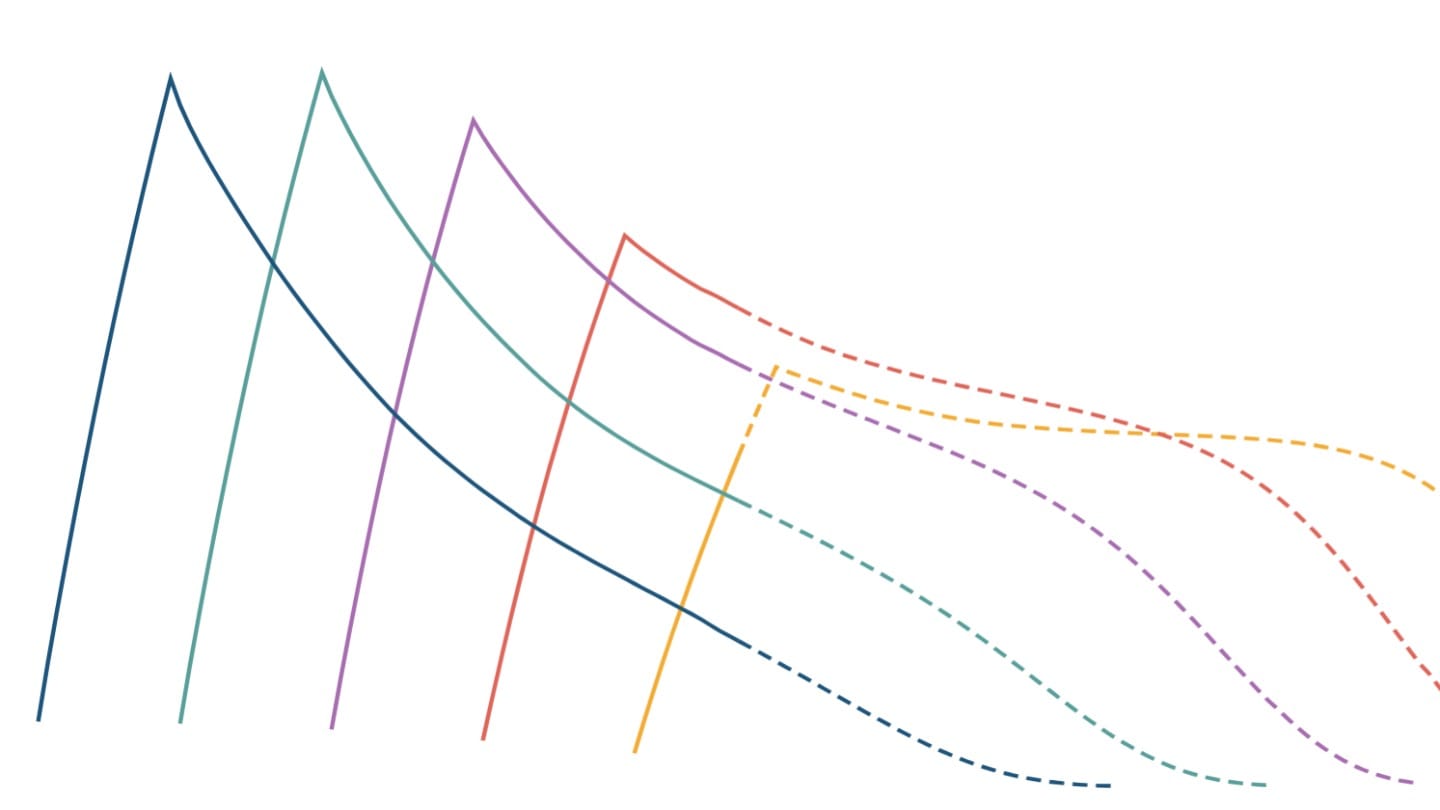
In India's modern demographic history, three years in particular stand out to me as milestone years, specific years that marked the beginning of a major shift.
First, with steadily declining fertility since the 1980s, the total number of children born every year in India peaked in 2001 at just over 29 million annual births, and has been in decline since then. The further fall since then has been steady, as I found; by 2026, annual births are now down to under 23 million, according to projections by the United Nations Population Division's 2024 Revision to the World Population Prospects.
Then in 2010, the absolute number of children (aged 0 to 14) started to decline. With the number of babies born every year reducing, the number of five-, ten- and fifteen-year-olds began to gradually decline too. As a result, the child population peaked at under 390 million children in 2010, and began to decline since then. By 2026, the child population was down to an estimated 351 million children, as a result.
These are two major historical milestones that I believe have gone largely unremarked upon in the public conversation, and we haven't yet oriented ourselves to thinking of a country in which we should expect to start seeing fewer children around us.
Even before this reorientation could happen, we have arrived at the next milestone. As a result of the domino effect of this same falling fertility, the impact has now reached India's youth population. In 2026, India's population aged 15-29 is estimated to peak and then decline, I found. This means that not only will we now have fewer children in India every year, we will also have fewer young people.
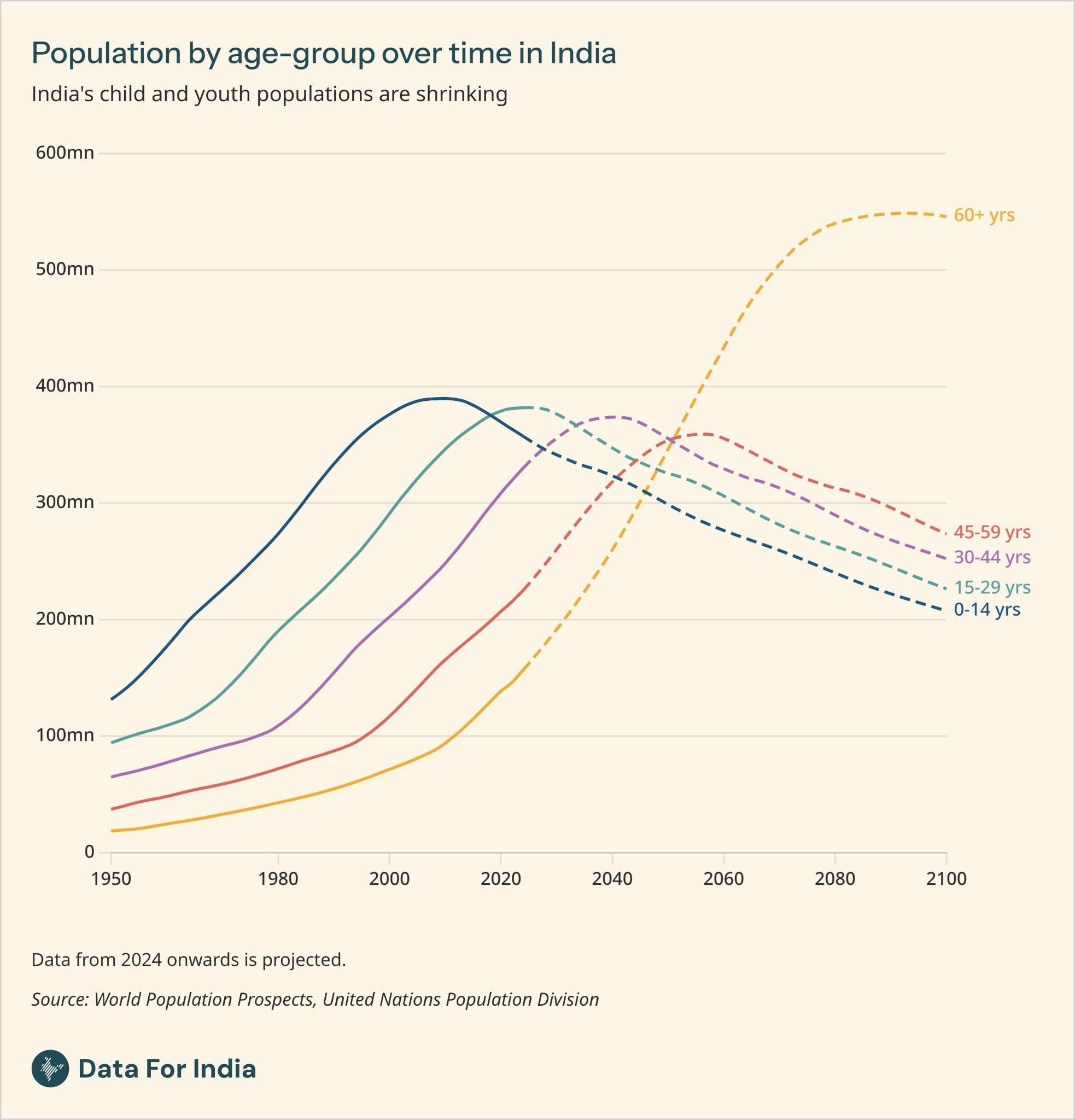
For someone whose job here in this newsletter is to identify big shifts that have either already passed us by, or are coming up, being in the actual midst of a shift this momentous is both thrilling and worrying. What worries me is that most people I meet still do not know that India's child population is in decline, and the next wave of this change is already upon us. Big shifts are exciting to identify, but the hope then is that they advance wider thinking and, more importantly, action, before the next big shift.