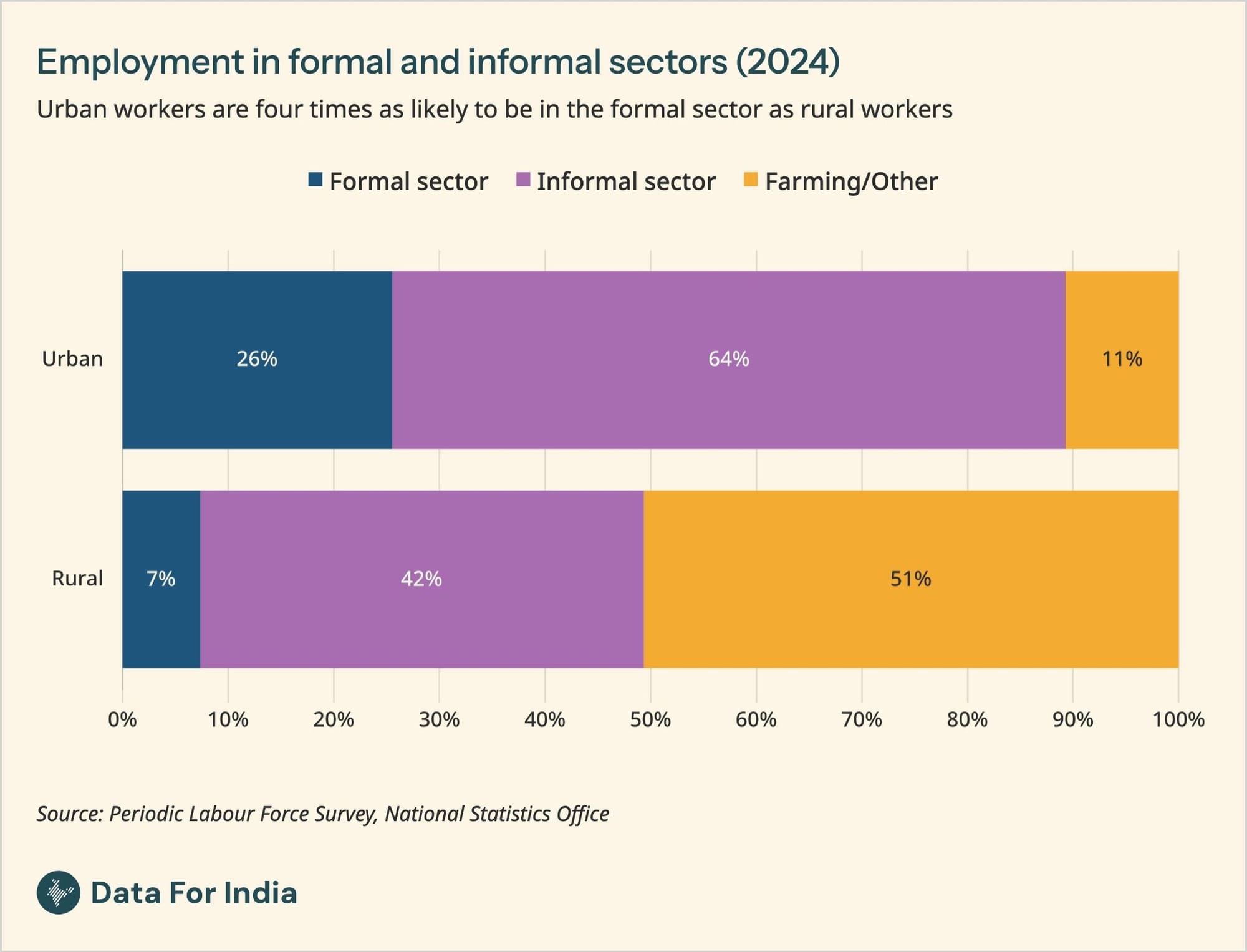
As someone who comes to India's statistics as an outsider with an open mind, I am often enlightened by a definitional category that I was unaware of. I did not know that "Lady Health Visitors" were a category of healthcare professionals until my colleague Nileena Suresh mentioned them in her work on the availability of skilled healthcare professionals in India. I did not know how formal jobs were defined until my colleague Abhishek Waghmare investigated that for us.
And then sometimes, I thought I knew a term, but it turns out I didn't really know how it was defined. That was certainly the case when it came to the terms "kutcha" ("non-durable" in Hindi) and "pucca" ("durable" in Hindi) for houses.
From years of being a field reporter and reading policy documents, I had certainly heard the term. But my colleague Nileena's work for us on housing conditions in India finally decoded the precise definition.
The most fundamental way to measure the condition of a house in India has typically been by looking at the materials used for its walls, roof, and floor, Nileena found. Houses where all three components are made of strong, long-lasting materials like concrete or burnt bricks are considered durable or pucca. If at least one component is durable, the house is partially durable or semi-pucca. If all components use non-durable materials like mud, bamboo, or unburnt bricks, the home is non-durable or kutcha.
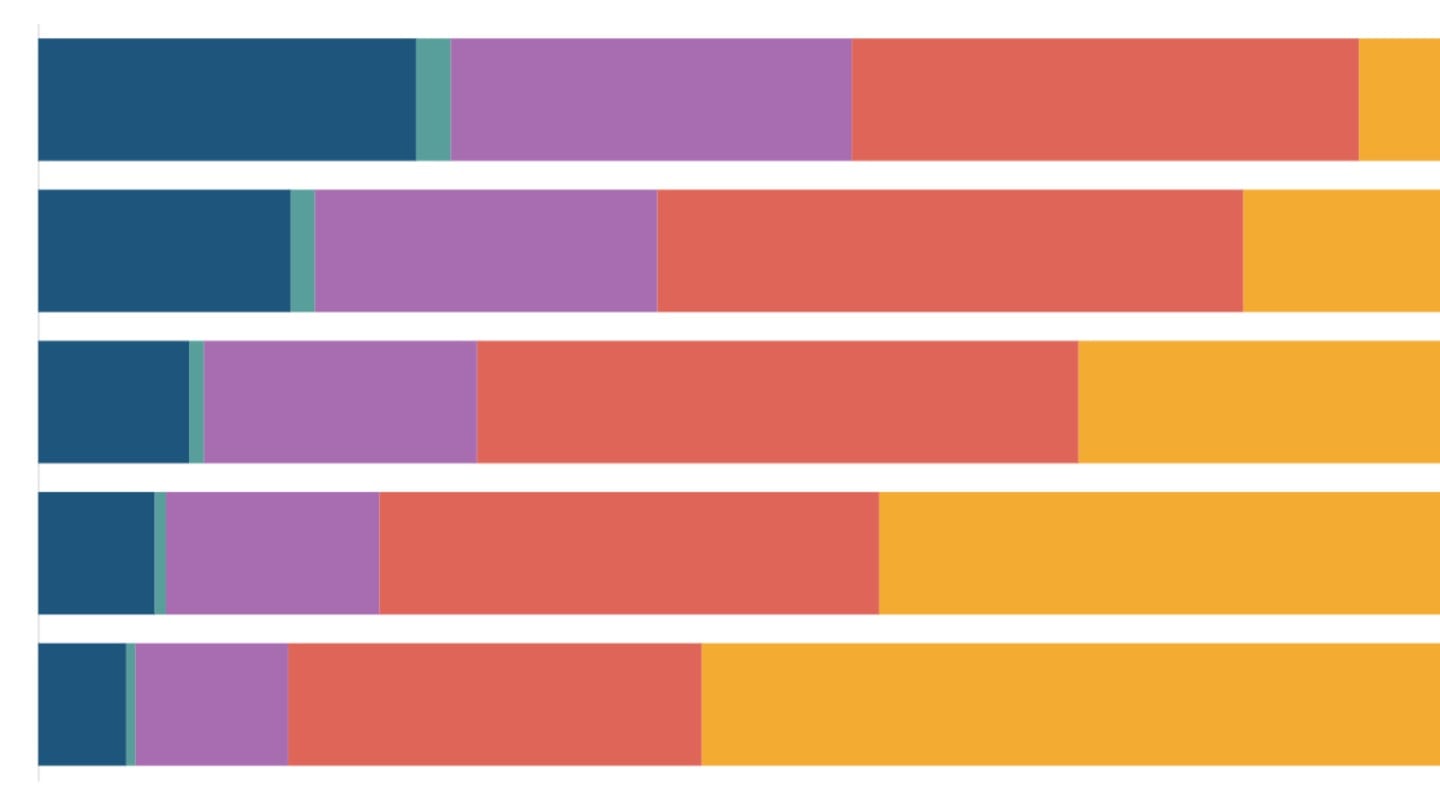
By those definitions, here's how the condition of Indian houses has shifted over time.
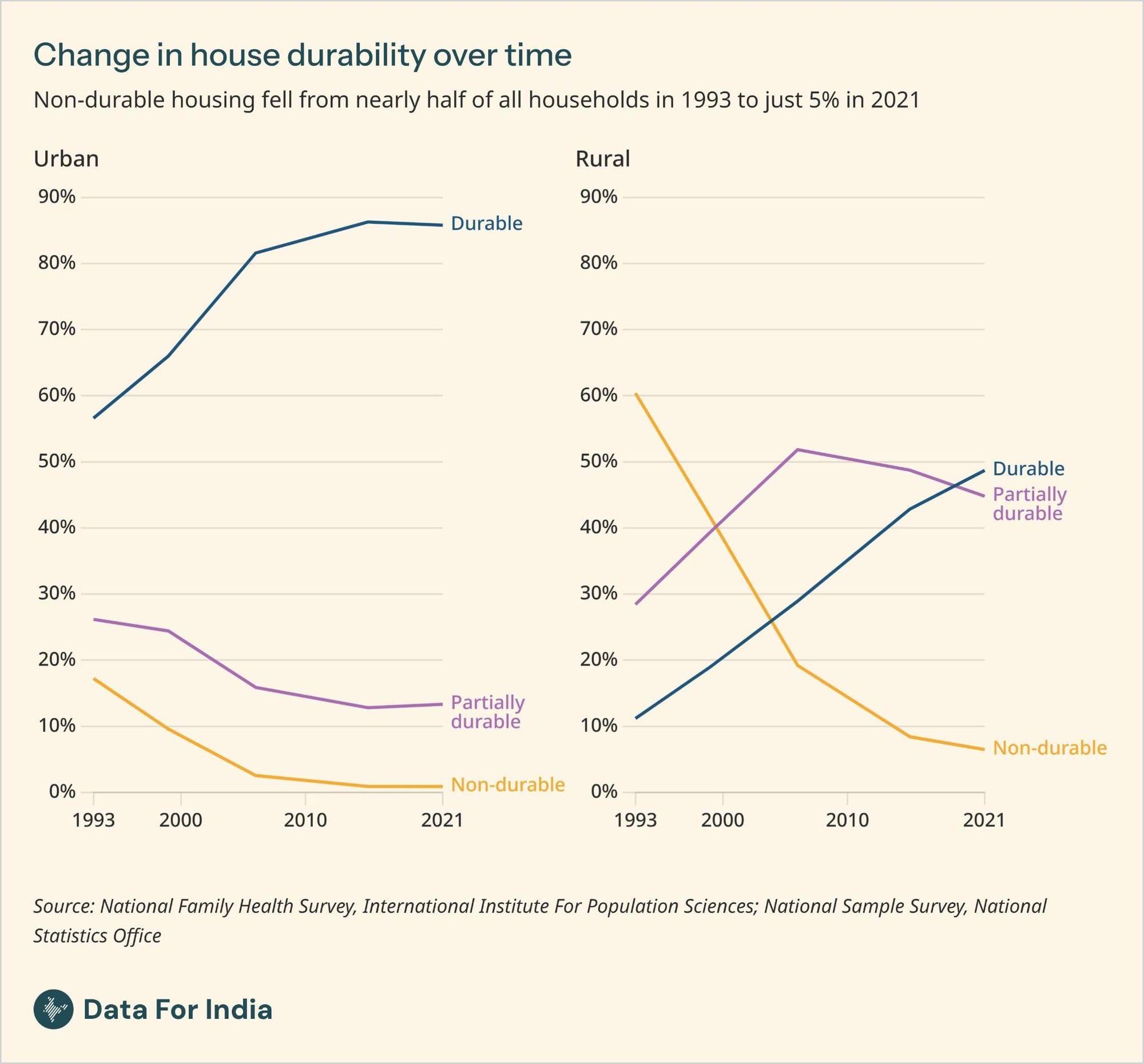
That's one big shift, then, and one category I've often seen mentioned but now, finally, understand.
I like to remind myself, though, that definitional categories can also become prisons of the mind, if we never try to break them down.
While researching these categories, Nileena found that the share of durable (pucca) houses is lowest among India's north-eastern states, which are not its poorest states. There are a few reasons for this, she found: in hilly and forested regions, transporting construction materials is difficult and expensive, in addition to cultural preferences. Are we sure, then, that these are the best ways to define housing conditions?
We find this also when we look at categories of work. The largest share of Indian workers are those defined as self-employed. However, Abhishek found that within the self-employed, there exists another definitional category - 'unpaid helpers'. These are workers counted under the self-employed category, but they actually work on a household member's enterprise, and get paid no wages for it. This is a particularly large category when it comes to women - over one in three working women in India are in this category. So at Data For India, we pulled the 'unpaid helpers' category out of the 'self-employed' category, and now show it as its own category, so that Indian women's realities do not get lost in national averages.
Definitions can help organise the world - but they also need to be living things that evolve if we really want to capture big shifts.