Some big shifts happen as downstream effects of growth and development. Others are a clear result of intentional state policy and of ground machinery that works. India's childhood immunisation successes are one example of the latter.
The smallpox vaccine reached the Indian subcontinent as early as 1802, although the coverage was very limited initially, my colleague Nileena Suresh found in her work for us on immunisation in India. After independence in 1947, the government of India took steps to build a structured public immunisation system, starting with the Bacillus Calmette Guerin (BCG) vaccine in 1948 against tuberculosis. The launch of the Expanded Programme on Immunization (EPI) in 1978, and its evolution into the Universal Immunization Programme (UIP) in 1985, marked a turning point for childhood immunisation in India. Under the UIP, India provides free-of-cost immunisation against 12 vaccine-preventable diseases including vaccines that prevent poliomyelitis, tuberculosis, rotavirus diarrhoea and measles.
The results of these policy decisions, coupled with impressive ground strength in the form of health workers, are here to see.
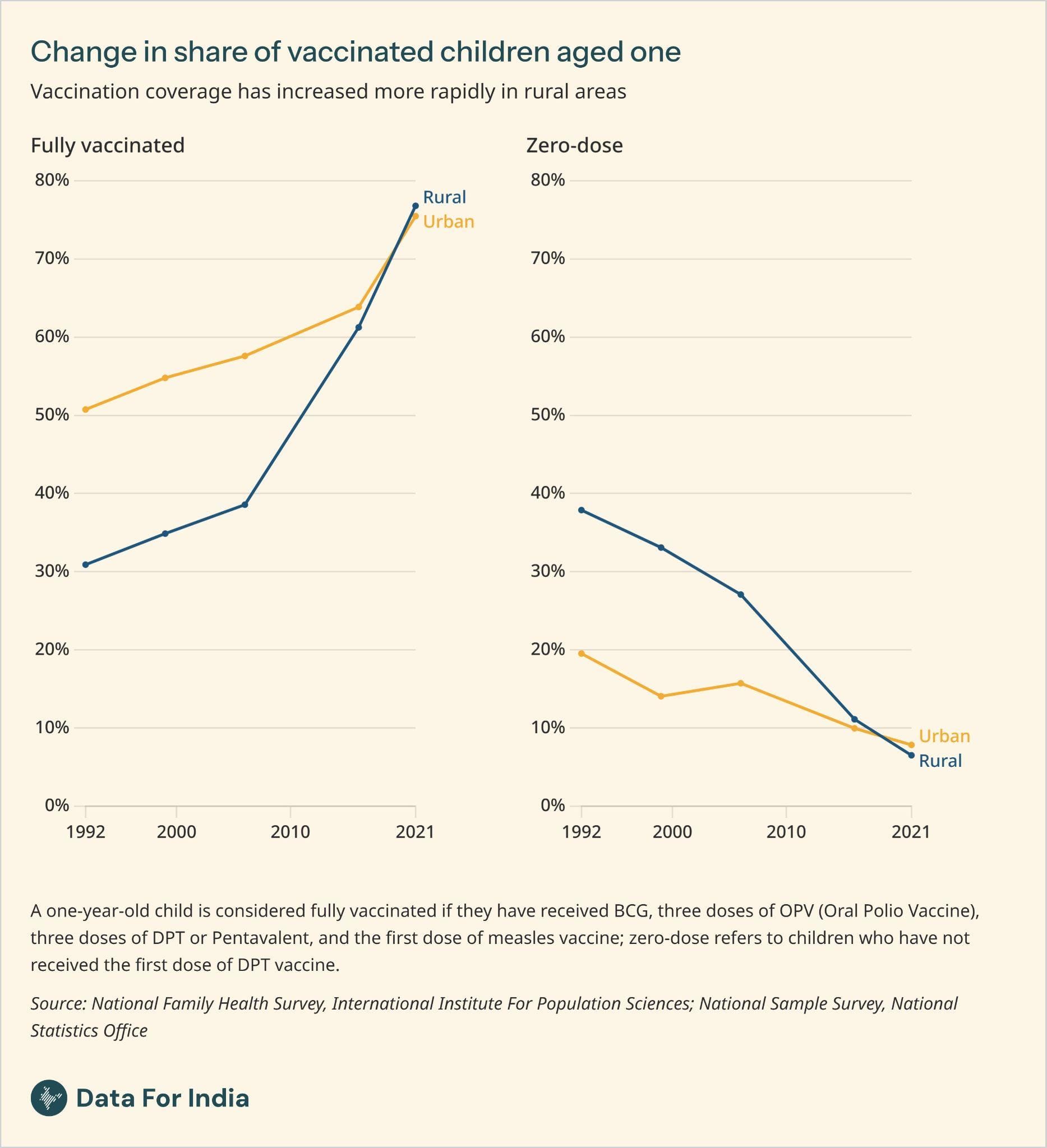
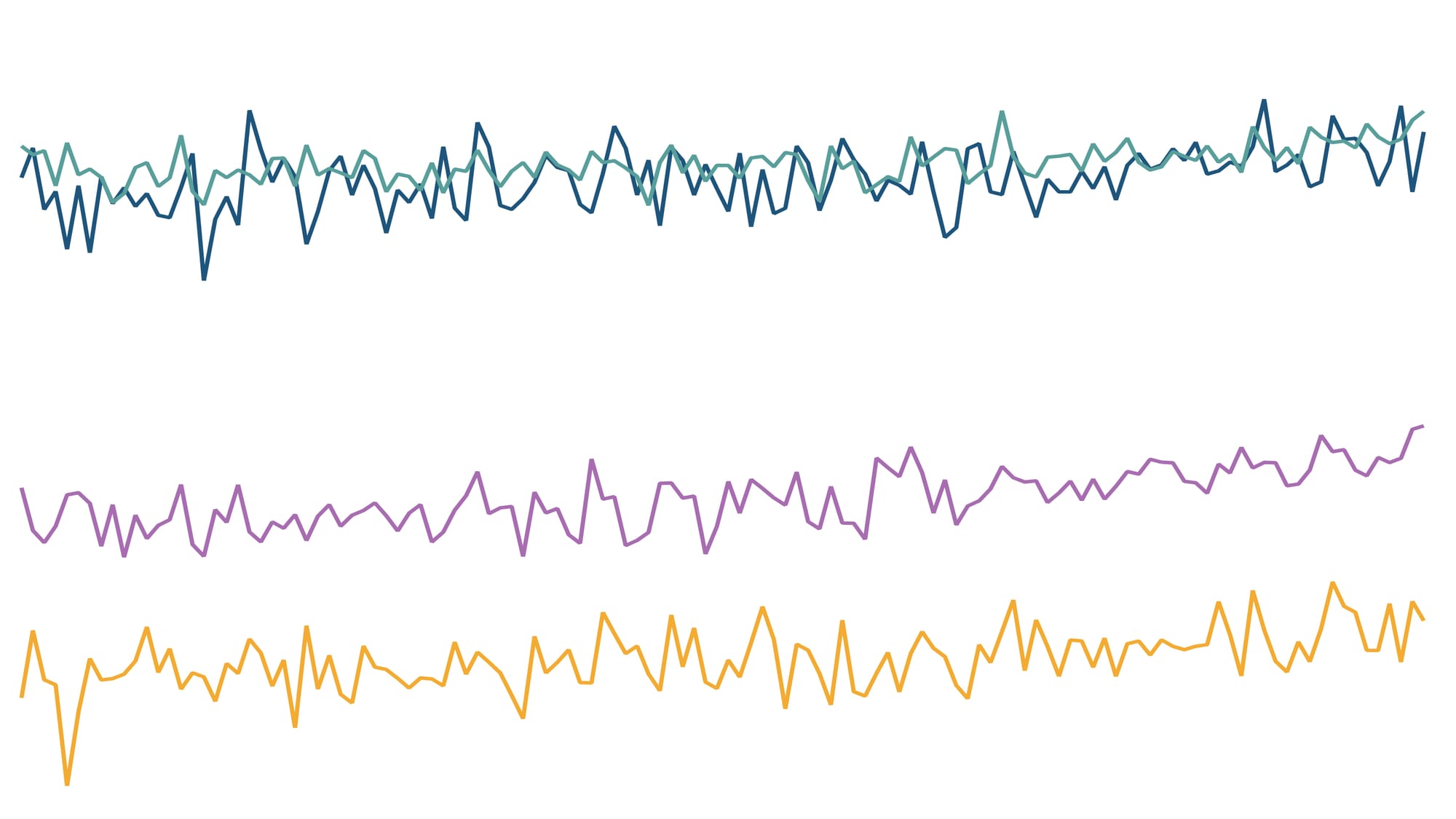
Three in four children aged one year were fully vaccinated by 2021, the most recent year for which data is available. The share of zero-dose children, meanwhile - children who have not received the first dose of the DPT vaccine, since this is included in most national immunisation programmes and is one of the first vaccines given across countries - is about 7% overall in India.
More importantly, as Nileena notes, the gap between the richest and poorest households is smaller than for many other health indicators. This is particularly important because vaccination is only effective if a large share of the population is covered.
It's a lesson that the US, for instance, is in the midst of learning, painfully.
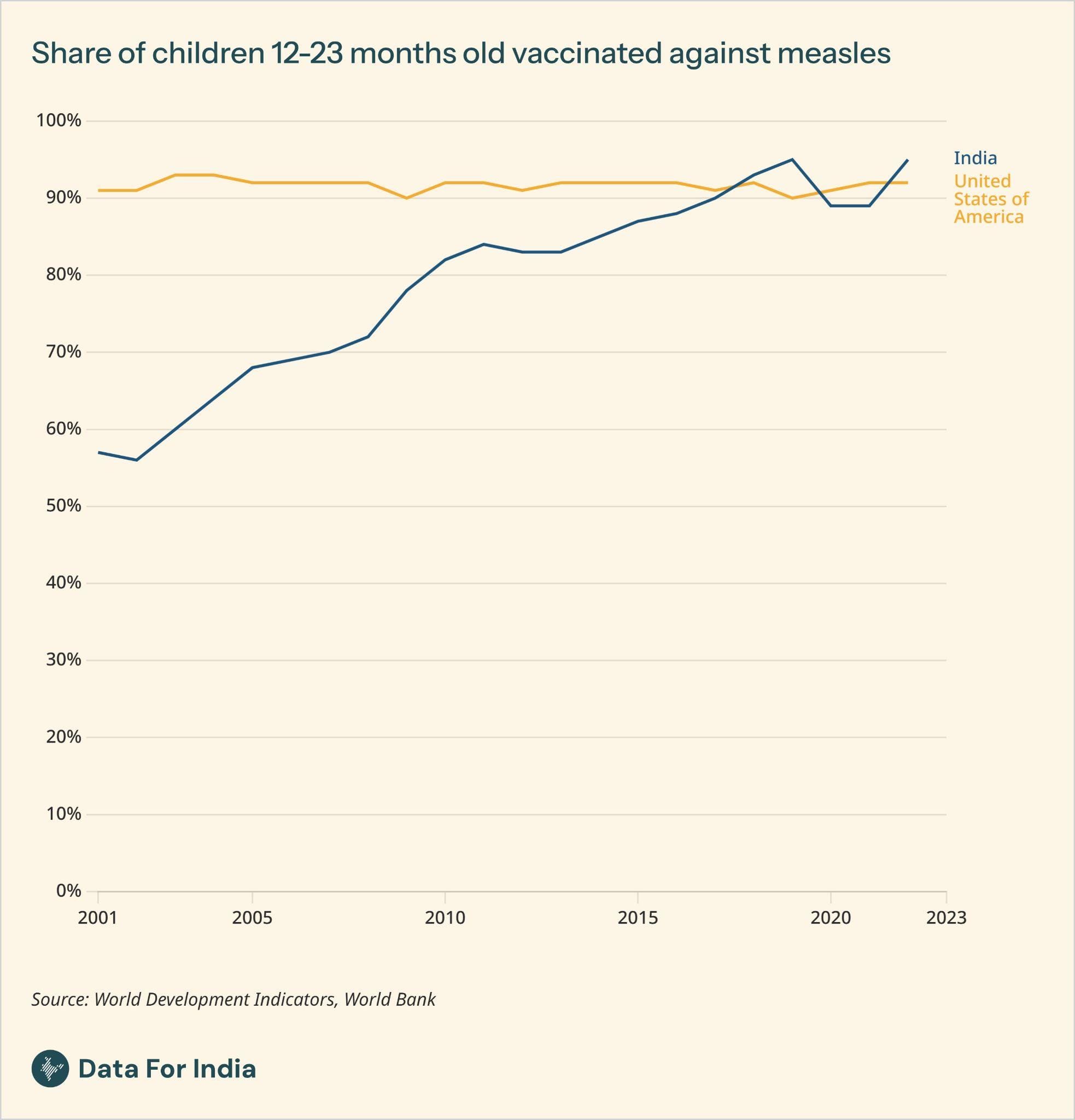
Despite having such a massive headstart with high vaccination rates for over 20 years, as against a developing country like India that has had to fight to get there, the US is currently experiencing its worst outbreak of measles in 35 years, driven by immunisation rates dropping below the threshold required for population-level immunity (the most recent data is not captured by this chart).
The state can, when its will bends towards the people, produce incredible change. Unfortunately, as we're all learning, will is a capricious thing, and the effects of caprice can be devastating.