Time is a resource that everyone has in equal measure. We all divide our 24 hours between work, leisure and rest. However, how those hours are divided varies enormously. Gender, age, employment, education, wealth and where we live shape how much of the day goes to earning, learning, caring and resting.
The National Statistical Office's (NSO) Time Use Survey (TUS) offers a way to understand these differences, by recording what people actually do throughout the day.[1] In 2024, the TUS survey collected time diaries from around 450,000 people aged six and above across the country. These diaries recorded the activities people engaged in over a 24-hour period.
The average day
The activities recorded in the survey are broadly classified into employment, learning, unpaid domestic and caregiving work, socialising, leisure, self-care and sleep.
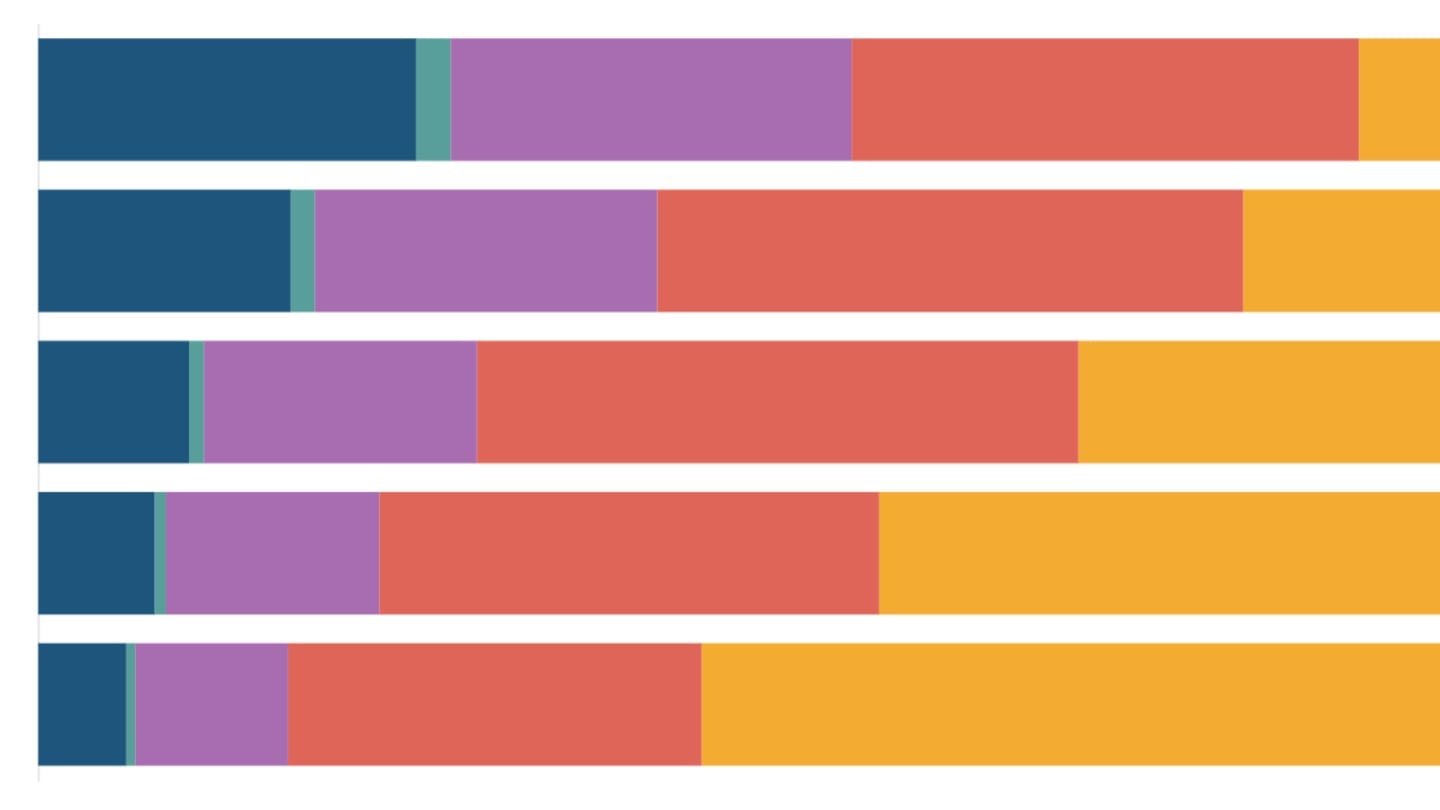
Averaged across age groups, gender, employment and wealth status, an Indian spends about half their waking hours working, either in paid employment, studies or domestic work and caregiving. The other half is spent on leisure, socialising and personal care, like eating and showering. On an average, about nine hours are spent sleeping, including naps.
The gender gap in how we spend our time
However, the averages hide a sharp gender divide, especially when it comes to the average time spent on paid and unpaid work.
Men spend over six hours every day on average on learning and paid work. Women, on the other hand, spend less than half this time each day on learning and paid work. However, women spend over five hours every day on unpaid work, while men spend just 56 minutes each day on the same.
The rest of their days tend to be similar on average, with men getting a little more time for leisure and self-care, and women getting a little more time to sleep.
Paid and unpaid work
Women's participation in the labour force - either in employment or seeking work - has historically been low in India. While about eight in ten men participate in the labour force, only four in ten women do so.
This discrepancy is reflected in the average hours of paid work that men and women do.[2] However among those outside the labour force as well, there are deeply gendered distinctions in terms of what men and women do. Most men who are not in the labour force are pursuing higher education, while most women outside the labour force are engaged in "child care and personal commitments in home-making".[3]
But the differences between how men and women spend their time extend beyond the simple binary of whether they are in or out of the labour force.
Employed women spend two fewer hours on paid work than employed men. However, employed women also spend nearly five hours on domestic work and caregiving. This is over three hours more than employed men spend on household chores. This excess time on household chores cuts into the time that employed women have for leisure, self-care and sleep, compared to employed men.
The gap is even starker among those out of the labour force. Men who are out of the labour force spend most of their day on learning and on leisure, while women who are not employed spend about seven hours on domestic work and caregiving. Men in the same position spend only 40 minutes on it.
The gender gap in time spent on unpaid work remains high across wealth groups and in both urban and rural areas.
Days off
Holidays highlight these differences even more. For men, the big change on days off is in terms of time for leisure. While the average time spent by men on household work increases by about 40 minutes on such days, their leisure time almost doubles from four hours to nearly eight hours. For women, holidays don't look as different from work days. Women's leisure time on holidays increase by a relatively smaller margin of about two hours, with time for unpaid work reducing, but only from six hours to four-and-a-half hours.
The gender gap in states
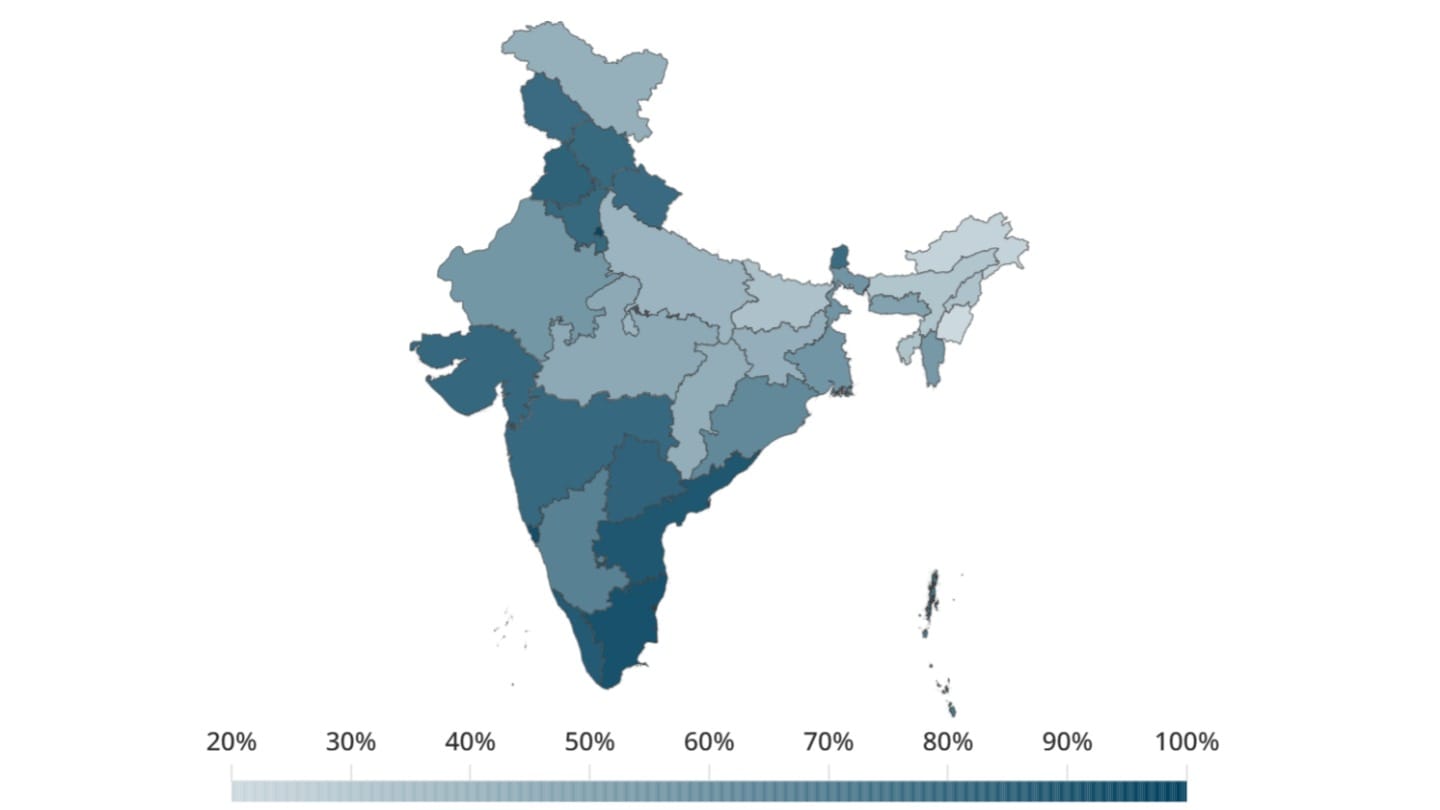
Households in India's richer states spend less time on unpaid domestic chores relative to households in India's poorer states. This reduces the time that both men and women spend on domestic chores in states like Tamil Nadu and Goa.
The gender gap in average time spent on unpaid domestic and caregiving activities between women and men is also larger in India's poorer states in its central and eastern regions. Tamil Nadu, Goa and Telangana, along with Chhattisgarh, are among the larger states with relatively lower gaps, though women still spend about four hours more than men on unpaid domestic and caregiving work even in these states. In many other states, this gap is closer to six hours. A lower gap can reflect greater participation by men in domestic work, as seen in states like Nagaland and Chhattisgarh.
Leisure and sleep
The TUS tells us not only how Indians work, but also how they spend the hours outside work.
A range of activities exist outside work and learning. These include the time spent with family and friends, participating in community and religious events, and leisure activities such as hobbies, sports, exercise, watching television and other forms of media, and relaxation. They also include self-care and maintenance, such as eating, showering and sleep.
The time available for these activities changes over the course of life, due to the shifting demands of education, employment and domestic responsibilities. Children and adults over the age of 60 spend most of their waking hours on non-work activities. However, for adults aged 25-45, paid employment and unpaid domestic and care work together account for almost nine hours of the day, leaving an average of about four hours for talking to family and friends and for leisure.
Children aged 6-14 years
With near-universal enrolment now in India, most children in this age group are students.[4]
On a regular day, children spend over seven hours studying or on related activities, and about three hours on leisure. On a holiday, leisure rises to over six hours, mostly playing games or watching television and videos.
There are slight variations in the time spent on broad categories, across gender or wealth groups. For poorer groups, the average time spent on paid and unpaid work is a few minutes higher. Girls spend relatively more time on unpaid work on both normal and other days, and spend less time on leisure activities on both days, but only by a few minutes, compared to boys.
People aged 15-59 years
Adults aged 15-59 spend an average of about seven hours a day on leisure, socialising, and self-care and maintenance, which is about an hour less than what they spend on work and studies. However, as with work, the availability of this time and how it is spent varies across groups.
Most time spent socialising involves having conversations with friends and family, either in person or over the phone. The time spent on this does not vary as much across genders, unlike other activities like attending social gatherings. While men spend relatively more time attending social gatherings, women spend more time on religious practices.
Watching TV or videos is the most popular leisure activity, though women in the labour force spend the least time on it. Men outside the labour force are the only group that spends a notable amount of time on hobbies, games and sports.
Sleep follows a similar pattern. Adults in the 25-45 age group spend the least time sleeping, on average, relative to those in younger and older age groups.
Older population over 60 years of age
India's ageing population is growing, with about one in ten people in the country now aged 60 and above.[5] More than a third of this population remains in the labour force, driven primarily by economic necessity. Over half of men above the age of 60 are working, and the numbers are higher in the poorest wealth groups. Labour force participation in this age group is also higher in rural areas.
However, among older people as a whole, the total time spent on paid and unpaid work is lower than in younger age groups, although differences between men and women persist. On average, both men and women spend around four hours a day on paid and unpaid work combined. Leisure and socialising account for the largest share of their day, taking up more than three hours each for both men and women. As time spent working declines with age, sleep increases.
Leisure time rises with wealth, for men and particularly for women. For women, time spent on unpaid domestic work and caregiving also falls as wealth increases.
Where one lives matters too. Rural men and women spend more time on paid or unpaid work, while their urban counterparts get a little more time for leisure.
[1] Time Use Survey (TUS), January 2024-December 2024.
[2] Since TUS does not record subsidiary activity status, those who engage in seasonal or intermittent work for less than six months of the year are not included.
[3] Women and work, Data For India.
[4] For three of four child respondents, it was a normal day, not a day off or not a day when routine was not followed.
[5] Is India's demographic dividend over?, Data For India.